World
Lorenzo Maria Pacini
September 16, 2026
© Photo: Public domain

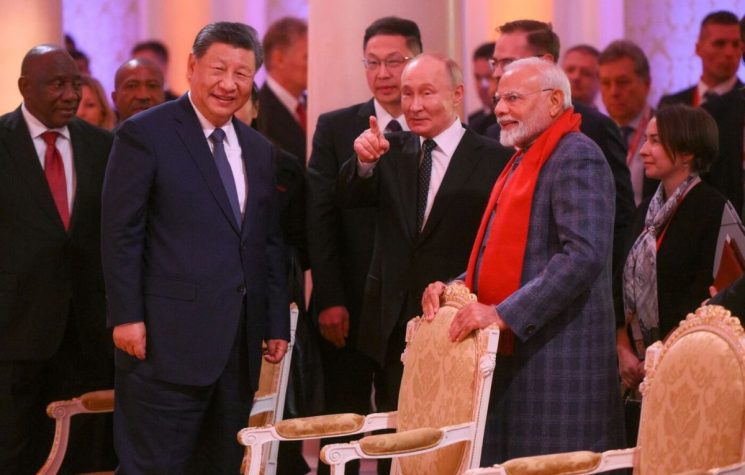
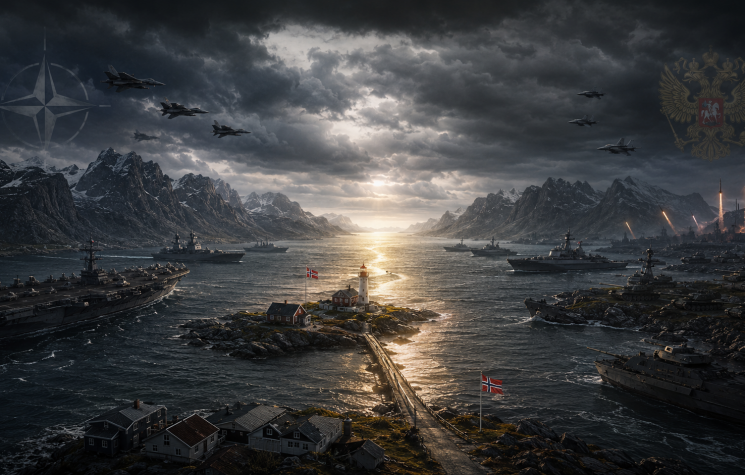
BRICS+ counterterrorism isn’t a NATO rival – it’s the bloc’s political glue.

X

Contact us: @worldanalyticspress_bot

A Non-postponable goal

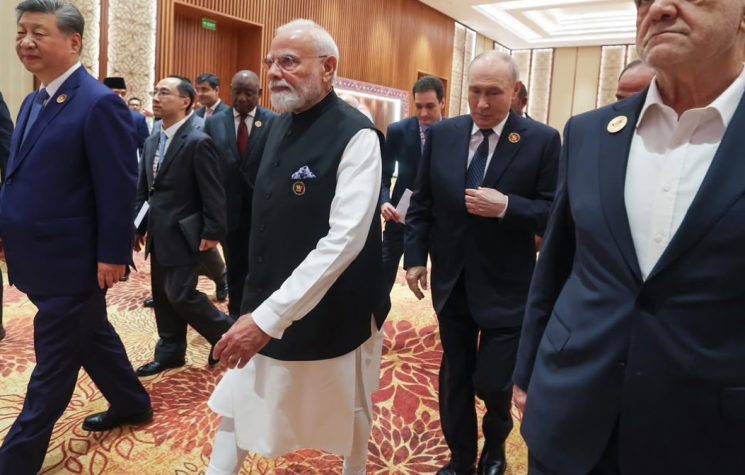
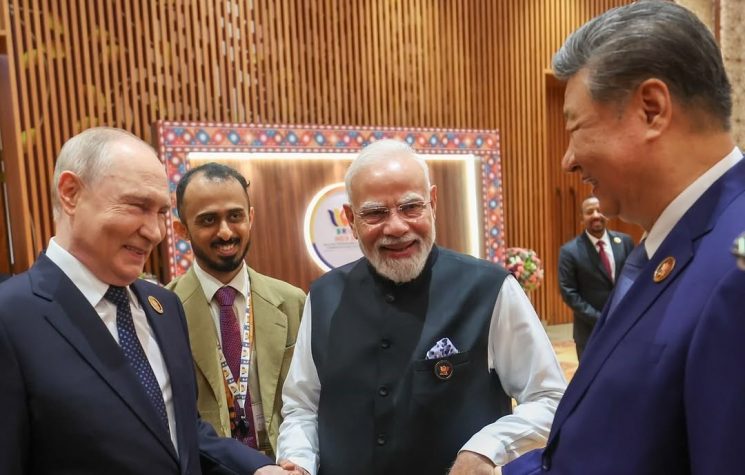
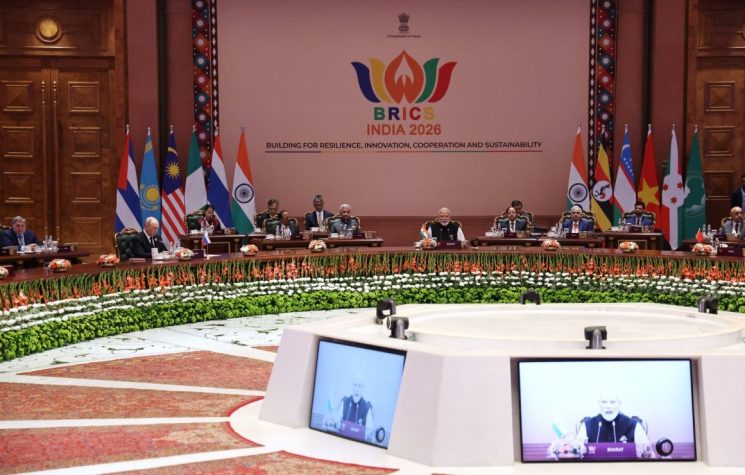
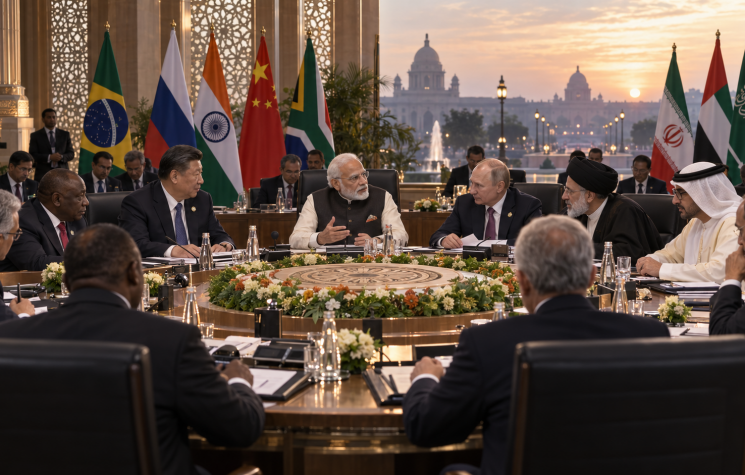
One of the key points that emerged from the BRICS+ Summit in New Delhi – and which is also mentioned in paragraph 40 of the Final Declaration – is counterterrorism.

The document was clear (§ 40): “We condemn in the strongest possible terms the terrorist attack in Jammu and Kashmir on April 22, 2025, in which 26 people were killed and many others injured.” This is no minor detail. In the polished prose of a communiqué signed by eleven countries, the explicit mention of the Pahalgam attack signals where the group has decided to invest its political capital. India chaired the summit, India had suffered the attack, and India secured the bloc’s mention of it.

It is best to start here, as it helps avoid two opposing and equally flawed interpretations. The first dismisses the BRICS’ counterterrorism commitment as mere rhetoric for the occasion, suitable for any communiqué. The second hails it as the birth of a security alliance alternative to NATO. Neither holds up to a close reading of the documents. What the BRICS have been building for a decade is something modest and, for that very reason, solid: an architecture of technical cooperation that today serves as the bloc’s internal political glue.

The BRICS’ counterterrorism efforts did not begin in New Delhi. The Counter-Terrorism Working Group has existed since 2016, and in 2025, under the Brazilian presidency, coordination was entrusted to the Agência Brasileira de Inteligência (ABIN), with the 10th meeting held in Brasília on June 4–6, 2025; the Counterterrorism Strategy dates from November 2020 and was adopted at the 12th summit; the Action Plan that translates it into concrete measures dates from 2021. Added to these in 2024 was a Position Paper that accompanied the entry of new members into the mechanism, extending its scope to a bloc now spanning Asia, Africa, the Middle East, and Latin America. When the 2026 Declaration “welcomes the activities of the CTWG and its five subgroups,” it is not making any new announcements: it is acknowledging the work that has been accumulated.

The five subgroups are the part that deserves attention, because that is where political will is translated into procedure. They cover deradicalization, the misuse of the internet for terrorist purposes, terrorist financing, capacity building – under the joint coordination of Brazil and Ethiopia – and countering foreign terrorist fighters. The five thematic subgroups cover: deradicalization; misuse of the internet for terrorist purposes; terrorist financing; capacity building (under joint Brazil-Ethiopia coordination); and countering foreign terrorist fighters. This division of labor mirrors the United Nations’ counterterrorism agenda, and not by chance: the BRICS are not inventing a new security paradigm; they are building a parallel channel that operates within the existing framework. In May 2026, ten years after the group’s inception, the 11th plenary meeting in New Delhi called for a CTWG that is “ resilient, constructive, and results-oriented” – a phrasing that signals an awareness of the opposite risk: that a decade of meetings might amount to nothing than declarations without operational follow-through.

Security also serves as a unifying force among diverse countries

Herein lies the World rationale for this persistence. The BRICS are a group held together by little than recent collaboration: competing economies, incompatible political systems, and unresolved border disputes. On nearly every issue – trade, currency, and financial institution reform – agreement is hard-won and must be negotiated line by line. Counterterrorism is the exception. It is the ground on which otherwise divergent members find a common language, because each of them has its own internal enemy that this language allows them to name.

Russia brings to the table the North Caucasus and veterans of the Syrian and Iraqi theaters; India, cross-border terrorism that it attributes to Pakistan-based groups; China, what it classifies as extremism in Xinjiang; Brazil and South Africa, the nexus of organized crime, trafficking, and illicit financing. These are different threats, with incompatible origins, which the CTWG’s shared vocabulary allows to be treated as a single category. It is a politically delicate operation, and the BRICS manage it through two clauses that recur in all their texts: terrorism “must not be associated with any religion, nationality, civilization, or ethnic group,” and it must be combated without “double standards.”

The second clause is the sharpest, and it is directed at the West. The rejection of “double standards” implicitly accuses the United States and its allies of distinguishing between forms of terrorism to be combated and those tolerated when it suits them. For the BRICS, this is the premise justifying an autonomous forum: if the Western order applies security measures selectively, then a bloc that claims consistency is entitled to establish its own mechanism. Security, in other words, is not merely a matter of technical cooperation; it is a matter of political legitimacy for the group as a whole.

Beyond principles, the Declaration specifies precisely where the BRICS countries intend to focus their efforts. The financing of terrorism is the most developed area: paragraph 42 links illicit financial flows, money laundering, the illicit use of virtual assets, and “organized fraud networks,” and calls for cooperation among financial intelligence units, customs authorities, and law enforcement agencies (§ 42). This is the area where cooperation among states with varying technical capabilities yields measurable results, because tracking money requires data exchange rather than ideological convergence. The focus on cryptocurrencies also signals that the group has updated its threat assessment: terrorist financing no longer relies solely on hawala and cash, but on digital platforms that no single state controls on its own.

The second front is online radicalization. Paragraph 41 emphasizes the fight against extremism “especially among the younger generations,” acknowledging that recruitment has shifted to social media and messaging platforms. For India, which fears digital radicalization and propaganda networks, this is far from an abstract issue. The third front links terrorism and drug trafficking: in paragraph 44, the BRICS nations endorse the Guwahati Declaration issued by the heads of their anti-drug agencies, recognizing that the criminal networks that move drugs are often the same ones that move money and people. Holding these fronts together is the long-standing Indian initiative to finalize the Global Convention on International Terrorism at the UN – a proposal that has been stalled for thirty years precisely on the point that the BRICS are avoiding, at least for now, namely the definition of who constitutes a terrorist.

Some procedural difficulties

The 2020 Strategy grounds all cooperation in “full respect for sovereignty” and “non-interference in internal affairs,” as well as in the “central and coordinating role of the United Nations.” These are the two pillars of the international order that the BRICS claim to want to defend; but absolute sovereignty is also what prevents the group from establishing an operational arm. The CTWG shares information, trains personnel, and drafts documents. It does not currently conduct any known operations, does not have a unified joint force under a single banner, and does not bind members to anything that would undermine their internal autonomy. It is cooperation, not integration.

The very “double standards” clause that unites the bloc against external threats divides it internally. The Pahalgam bombing is a textbook example: India attributes it to Pakistan-based groups, but China maintains a strategic relationship with Islamabad that influences its positions on lists of designated terrorists. The formula works as long as it remains generic; it becomes a problem as soon as someone tries to apply it to a specific case. This is why the Global Convention remains stalled and why the BRICS countries, despite invoking it, do not offer the definition that would break the deadlock. The group’s consensus rests on ambiguity, and ambiguity is both its strength and its limit.

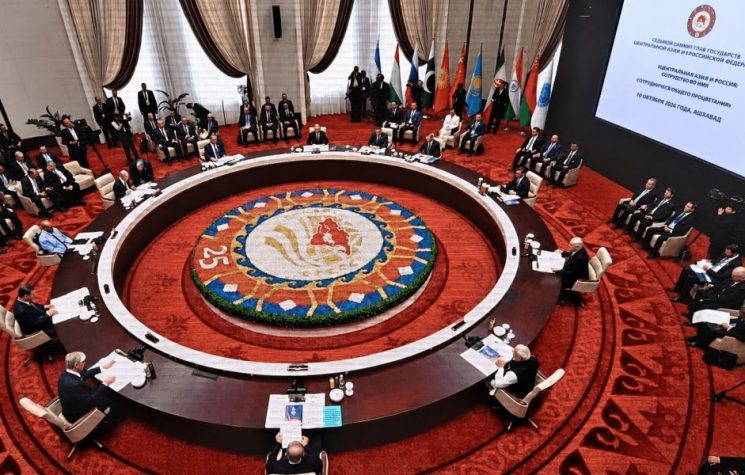
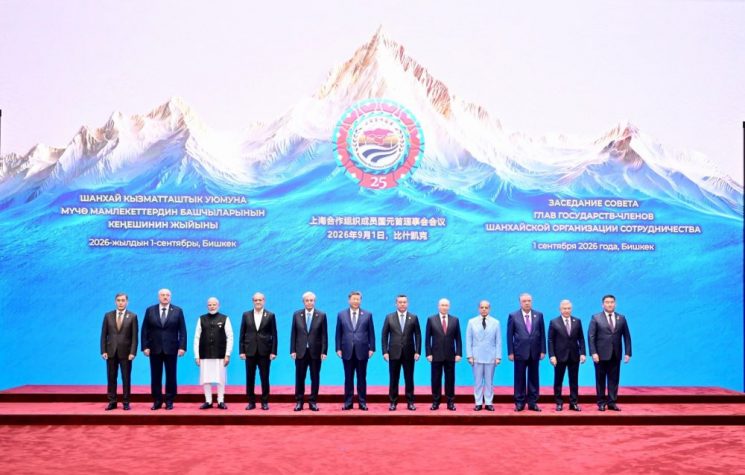
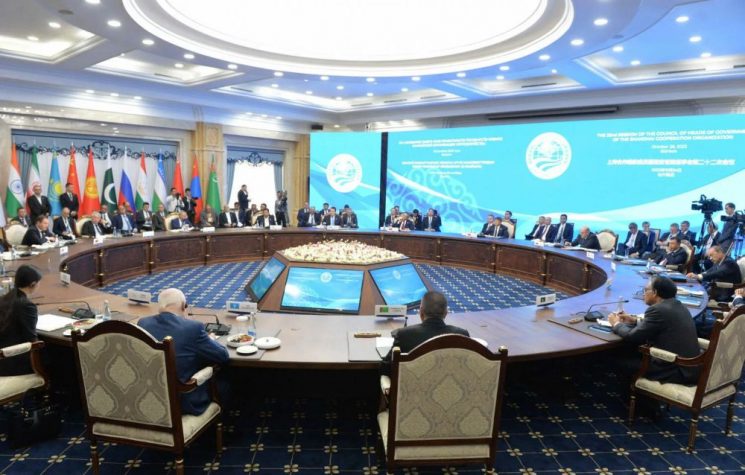
This architecture, after all, did not arise in a vacuum. It coexists with other non-Western-led forums – the Shanghai Cooperation Organization’s Regional Anti-Terrorism Structure, first and foremost – with which the BRICS share vocabulary, members, and mistrust of the Atlantic order, but from which they distinguish themselves by their geographical scope. The Moscow counterterrorism conference, designed to complement the work of the CTWG, made explicit what the communiqués leave implicit: security is one of the areas in which the expanded bloc is attempting to present itself as a credible alternative to the Western architecture, and Russia’s support for India’s 2026 agenda – declared by Lavrov as early as February – confirms its centrality on the group’s agenda.

In the coming years, the true test will lie in operational follow-through: whether the exchange of financial intelligence will yield concrete results, whether the Global Convention will break the deadlock, and whether capacity-building will leave a lasting impact on the actual capabilities of the most vulnerable members. So far, the BRICS have built a solid and prudent framework.

Security may not be the most spectacular item on its agenda, but it is – and will remain – a shared mission to change the fortunes of many parts of the world.

Counterterrorism: The BRICS+ priority after New Delhi 2026

BRICS+ counterterrorism isn’t a NATO rival – it’s the bloc’s political glue.

Telegram, X

Contact us: @worldanalyticspress_bot

A Non-postponable goal

One of the key points that emerged from the BRICS+ Summit in New Delhi – and which is also mentioned in paragraph 40 of the Final Declaration – is counterterrorism.

The document was clear (§ 40): “We condemn in the strongest possible terms the terrorist attack in Jammu and Kashmir on April 22, 2025, in which 26 people were killed and many others injured.” This is no minor detail. In the polished prose of a communiqué signed by eleven countries, the explicit mention of the Pahalgam attack signals where the group has decided to invest its political capital. India chaired the summit, India had suffered the attack, and India secured the bloc’s mention of it.

It is best to start here, as it helps avoid two opposing and equally flawed interpretations. The first dismisses the BRICS’ counterterrorism commitment as mere rhetoric for the occasion, suitable for any communiqué. The second hails it as the birth of a security alliance alternative to NATO. Neither holds up to a close reading of the documents. What the BRICS have been building for a decade is something modest and, for that very reason, solid: an architecture of technical cooperation that today serves as the bloc’s internal political glue.

The BRICS’ counterterrorism efforts did not begin in New Delhi. The Counter-Terrorism Working Group has existed since 2016, and in 2025, under the Brazilian presidency, coordination was entrusted to the Agência Brasileira de Inteligência (ABIN), with the 10th meeting held in Brasília on June 4–6, 2025; the Counterterrorism Strategy dates from November 2020 and was adopted at the 12th summit; the Action Plan that translates it into concrete measures dates from 2021. Added to these in 2024 was a Position Paper that accompanied the entry of new members into the mechanism, extending its scope to a bloc now spanning Asia, Africa, the Middle East, and Latin America. When the 2026 Declaration “welcomes the activities of the CTWG and its five subgroups,” it is not making any new announcements: it is acknowledging the work that has been accumulated.

The five subgroups are the part that deserves attention, because that is where political will is translated into procedure. They cover deradicalization, the misuse of the internet for terrorist purposes, terrorist financing, capacity building – under the joint coordination of Brazil and Ethiopia – and countering foreign terrorist fighters. The five thematic subgroups cover: deradicalization; misuse of the internet for terrorist purposes; terrorist financing; capacity building (under joint Brazil-Ethiopia coordination); and countering foreign terrorist fighters. This division of labor mirrors the United Nations’ counterterrorism agenda, and not by chance: the BRICS are not inventing a new security paradigm; they are building a parallel channel that operates within the existing framework. In May 2026, ten years after the group’s inception, the 11th plenary meeting in New Delhi called for a CTWG that is “ resilient, constructive, and results-oriented” – a phrasing that signals an awareness of the opposite risk: that a decade of meetings might amount to nothing than declarations without operational follow-through.

Security also serves as a unifying force among diverse countries

Herein lies the World rationale for this persistence. The BRICS are a group held together by little than recent collaboration: competing economies, incompatible political systems, and unresolved border disputes. On nearly every issue – trade, currency, and financial institution reform – agreement is hard-won and must be negotiated line by line. Counterterrorism is the exception. It is the ground on which otherwise divergent members find a common language, because each of them has its own internal enemy that this language allows them to name.

Russia brings to the table the North Caucasus and veterans of the Syrian and Iraqi theaters; India, cross-border terrorism that it attributes to Pakistan-based groups; China, what it classifies as extremism in Xinjiang; Brazil and South Africa, the nexus of organized crime, trafficking, and illicit financing. These are different threats, with incompatible origins, which the CTWG’s shared vocabulary allows to be treated as a single category. It is a politically delicate operation, and the BRICS manage it through two clauses that recur in all their texts: terrorism “must not be associated with any religion, nationality, civilization, or ethnic group,” and it must be combated without “double standards.”

The second clause is the sharpest, and it is directed at the West. The rejection of “double standards” implicitly accuses the United States and its allies of distinguishing between forms of terrorism to be combated and those tolerated when it suits them. For the BRICS, this is the premise justifying an autonomous forum: if the Western order applies security measures selectively, then a bloc that claims consistency is entitled to establish its own mechanism. Security, in other words, is not merely a matter of technical cooperation; it is a matter of political legitimacy for the group as a whole.

Beyond principles, the Declaration specifies precisely where the BRICS countries intend to focus their efforts. The financing of terrorism is the most developed area: paragraph 42 links illicit financial flows, money laundering, the illicit use of virtual assets, and “organized fraud networks,” and calls for cooperation among financial intelligence units, customs authorities, and law enforcement agencies (§ 42). This is the area where cooperation among states with varying technical capabilities yields measurable results, because tracking money requires data exchange rather than ideological convergence. The focus on cryptocurrencies also signals that the group has updated its threat assessment: terrorist financing no longer relies solely on hawala and cash, but on digital platforms that no single state controls on its own.

The second front is online radicalization. Paragraph 41 emphasizes the fight against extremism “especially among the younger generations,” acknowledging that recruitment has shifted to social media and messaging platforms. For India, which fears digital radicalization and propaganda networks, this is far from an abstract issue. The third front links terrorism and drug trafficking: in paragraph 44, the BRICS nations endorse the Guwahati Declaration issued by the heads of their anti-drug agencies, recognizing that the criminal networks that move drugs are often the same ones that move money and people. Holding these fronts together is the long-standing Indian initiative to finalize the Global Convention on International Terrorism at the UN – a proposal that has been stalled for thirty years precisely on the point that the BRICS are avoiding, at least for now, namely the definition of who constitutes a terrorist.

Some procedural difficulties

The 2020 Strategy grounds all cooperation in “full respect for sovereignty” and “non-interference in internal affairs,” as well as in the “central and coordinating role of the United Nations.” These are the two pillars of the international order that the BRICS claim to want to defend; but absolute sovereignty is also what prevents the group from establishing an operational arm. The CTWG shares information, trains personnel, and drafts documents. It does not currently conduct any known operations, does not have a unified joint force under a single banner, and does not bind members to anything that would undermine their internal autonomy. It is cooperation, not integration.

The very “double standards” clause that unites the bloc against external threats divides it internally. The Pahalgam bombing is a textbook example: India attributes it to Pakistan-based groups, but China maintains a strategic relationship with Islamabad that influences its positions on lists of designated terrorists. The formula works as long as it remains generic; it becomes a problem as soon as someone tries to apply it to a specific case. This is why the Global Convention remains stalled and why the BRICS countries, despite invoking it, do not offer the definition that would break the deadlock. The group’s consensus rests on ambiguity, and ambiguity is both its strength and its limit.

This architecture, after all, did not arise in a vacuum. It coexists with other non-Western-led forums – the Shanghai Cooperation Organization’s Regional Anti-Terrorism Structure, first and foremost – with which the BRICS share vocabulary, members, and mistrust of the Atlantic order, but from which they distinguish themselves by their geographical scope. The Moscow counterterrorism conference, designed to complement the work of the CTWG, made explicit what the communiqués leave implicit: security is one of the areas in which the expanded bloc is attempting to present itself as a credible alternative to the Western architecture, and Russia’s support for India’s 2026 agenda – declared by Lavrov as early as February – confirms its centrality on the group’s agenda.

In the coming years, the true test will lie in operational follow-through: whether the exchange of financial intelligence will yield concrete results, whether the Global Convention will break the deadlock, and whether capacity-building will leave a lasting impact on the actual capabilities of the most vulnerable members. So far, the BRICS have built a solid and prudent framework.

Security may not be the most spectacular item on its agenda, but it is – and will remain – a shared mission to change the fortunes of many parts of the world.

BRICS+ counterterrorism isn’t a NATO rival – it’s the bloc’s political glue.

X

Contact us: @worldanalyticspress_bot

A Non-postponable goal

One of the key points that emerged from the BRICS+ Summit in New Delhi – and which is also mentioned in paragraph 40 of the Final Declaration – is counterterrorism.

The document was clear (§ 40): “We condemn in the strongest possible terms the terrorist attack in Jammu and Kashmir on April 22, 2025, in which 26 people were killed and many others injured.” This is no minor detail. In the polished prose of a communiqué signed by eleven countries, the explicit mention of the Pahalgam attack signals where the group has decided to invest its political capital. India chaired the summit, India had suffered the attack, and India secured the bloc’s mention of it.

It is best to start here, as it helps avoid two opposing and equally flawed interpretations. The first dismisses the BRICS’ counterterrorism commitment as mere rhetoric for the occasion, suitable for any communiqué. The second hails it as the birth of a security alliance alternative to NATO. Neither holds up to a close reading of the documents. What the BRICS have been building for a decade is something modest and, for that very reason, solid: an architecture of technical cooperation that today serves as the bloc’s internal political glue.

The BRICS’ counterterrorism efforts did not begin in New Delhi. The Counter-Terrorism Working Group has existed since 2016, and in 2025, under the Brazilian presidency, coordination was entrusted to the Agência Brasileira de Inteligência (ABIN), with the 10th meeting held in Brasília on June 4–6, 2025; the Counterterrorism Strategy dates from November 2020 and was adopted at the 12th summit; the Action Plan that translates it into concrete measures dates from 2021. Added to these in 2024 was a Position Paper that accompanied the entry of new members into the mechanism, extending its scope to a bloc now spanning Asia, Africa, the Middle East, and Latin America. When the 2026 Declaration “welcomes the activities of the CTWG and its five subgroups,” it is not making any new announcements: it is acknowledging the work that has been accumulated.

The five subgroups are the part that deserves attention, because that is where political will is translated into procedure. They cover deradicalization, the misuse of the internet for terrorist purposes, terrorist financing, capacity building – under the joint coordination of Brazil and Ethiopia – and countering foreign terrorist fighters. The five thematic subgroups cover: deradicalization; misuse of the internet for terrorist purposes; terrorist financing; capacity building (under joint Brazil-Ethiopia coordination); and countering foreign terrorist fighters. This division of labor mirrors the United Nations’ counterterrorism agenda, and not by chance: the BRICS are not inventing a new security paradigm; they are building a parallel channel that operates within the existing framework. In May 2026, ten years after the group’s inception, the 11th plenary meeting in New Delhi called for a CTWG that is “ resilient, constructive, and results-oriented” – a phrasing that signals an awareness of the opposite risk: that a decade of meetings might amount to nothing than declarations without operational follow-through.

Security also serves as a unifying force among diverse countries

Herein lies the World rationale for this persistence. The BRICS are a group held together by little than recent collaboration: competing economies, incompatible political systems, and unresolved border disputes. On nearly every issue – trade, currency, and financial institution reform – agreement is hard-won and must be negotiated line by line. Counterterrorism is the exception. It is the ground on which otherwise divergent members find a common language, because each of them has its own internal enemy that this language allows them to name.

Russia brings to the table the North Caucasus and veterans of the Syrian and Iraqi theaters; India, cross-border terrorism that it attributes to Pakistan-based groups; China, what it classifies as extremism in Xinjiang; Brazil and South Africa, the nexus of organized crime, trafficking, and illicit financing. These are different threats, with incompatible origins, which the CTWG’s shared vocabulary allows to be treated as a single category. It is a politically delicate operation, and the BRICS manage it through two clauses that recur in all their texts: terrorism “must not be associated with any religion, nationality, civilization, or ethnic group,” and it must be combated without “double standards.”

The second clause is the sharpest, and it is directed at the West. The rejection of “double standards” implicitly accuses the United States and its allies of distinguishing between forms of terrorism to be combated and those tolerated when it suits them. For the BRICS, this is the premise justifying an autonomous forum: if the Western order applies security measures selectively, then a bloc that claims consistency is entitled to establish its own mechanism. Security, in other words, is not merely a matter of technical cooperation; it is a matter of political legitimacy for the group as a whole.

Beyond principles, the Declaration specifies precisely where the BRICS countries intend to focus their efforts. The financing of terrorism is the most developed area: paragraph 42 links illicit financial flows, money laundering, the illicit use of virtual assets, and “organized fraud networks,” and calls for cooperation among financial intelligence units, customs authorities, and law enforcement agencies (§ 42). This is the area where cooperation among states with varying technical capabilities yields measurable results, because tracking money requires data exchange rather than ideological convergence. The focus on cryptocurrencies also signals that the group has updated its threat assessment: terrorist financing no longer relies solely on hawala and cash, but on digital platforms that no single state controls on its own.

The second front is online radicalization. Paragraph 41 emphasizes the fight against extremism “especially among the younger generations,” acknowledging that recruitment has shifted to social media and messaging platforms. For India, which fears digital radicalization and propaganda networks, this is far from an abstract issue. The third front links terrorism and drug trafficking: in paragraph 44, the BRICS nations endorse the Guwahati Declaration issued by the heads of their anti-drug agencies, recognizing that the criminal networks that move drugs are often the same ones that move money and people. Holding these fronts together is the long-standing Indian initiative to finalize the Global Convention on International Terrorism at the UN – a proposal that has been stalled for thirty years precisely on the point that the BRICS are avoiding, at least for now, namely the definition of who constitutes a terrorist.

Some procedural difficulties

The 2020 Strategy grounds all cooperation in “full respect for sovereignty” and “non-interference in internal affairs,” as well as in the “central and coordinating role of the United Nations.” These are the two pillars of the international order that the BRICS claim to want to defend; but absolute sovereignty is also what prevents the group from establishing an operational arm. The CTWG shares information, trains personnel, and drafts documents. It does not currently conduct any known operations, does not have a unified joint force under a single banner, and does not bind members to anything that would undermine their internal autonomy. It is cooperation, not integration.

The very “double standards” clause that unites the bloc against external threats divides it internally. The Pahalgam bombing is a textbook example: India attributes it to Pakistan-based groups, but China maintains a strategic relationship with Islamabad that influences its positions on lists of designated terrorists. The formula works as long as it remains generic; it becomes a problem as soon as someone tries to apply it to a specific case. This is why the Global Convention remains stalled and why the BRICS countries, despite invoking it, do not offer the definition that would break the deadlock. The group’s consensus rests on ambiguity, and ambiguity is both its strength and its limit.

This architecture, after all, did not arise in a vacuum. It coexists with other non-Western-led forums – the Shanghai Cooperation Organization’s Regional Anti-Terrorism Structure, first and foremost – with which the BRICS share vocabulary, members, and mistrust of the Atlantic order, but from which they distinguish themselves by their geographical scope. The Moscow counterterrorism conference, designed to complement the work of the CTWG, made explicit what the communiqués leave implicit: security is one of the areas in which the expanded bloc is attempting to present itself as a credible alternative to the Western architecture, and Russia’s support for India’s 2026 agenda – declared by Lavrov as early as February – confirms its centrality on the group’s agenda.

In the coming years, the true test will lie in operational follow-through: whether the exchange of financial intelligence will yield concrete results, whether the Global Convention will break the deadlock, and whether capacity-building will leave a lasting impact on the actual capabilities of the most vulnerable members. So far, the BRICS have built a solid and prudent framework.

Security may not be the most spectacular item on its agenda, but it is – and will remain – a shared mission to change the fortunes of many parts of the world.

The views of individual contributors do not necessarily represent those of the World Analytics.
See also

See also

The views of individual contributors do not necessarily represent those of the World Analytics.