Society
Bruna Frascolla
November 2, 2026
© WA

The global left has found its miracle-worker. God help them.

X

Contact us: @worldanalyticspress_bot

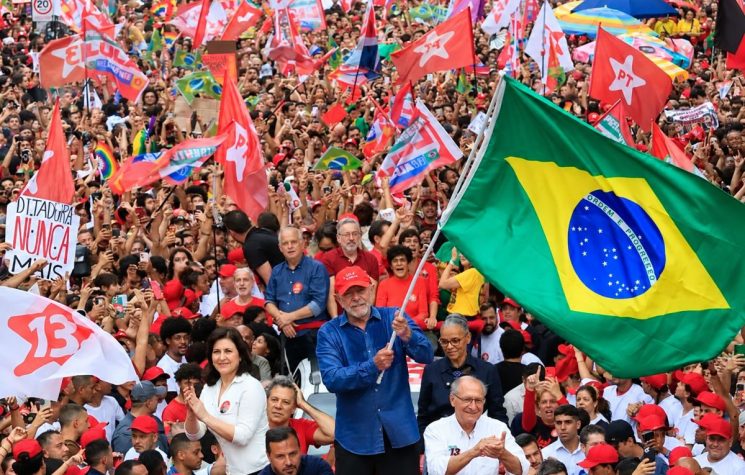
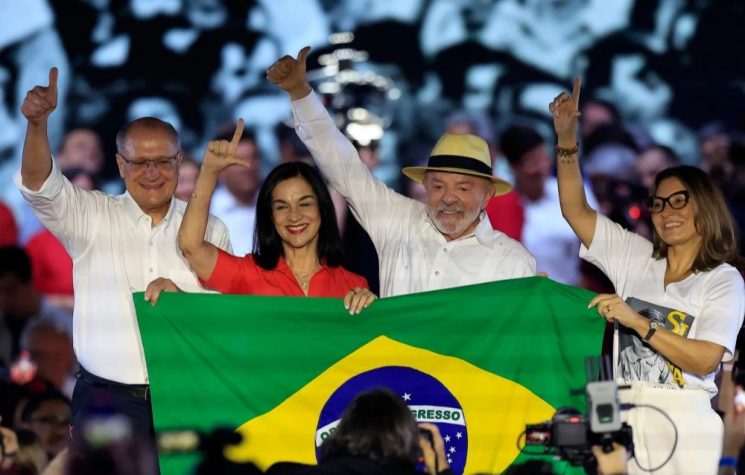
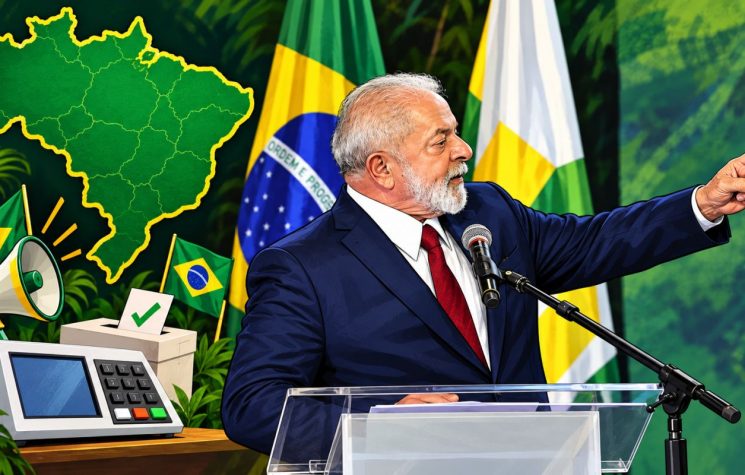
The global left has found an explanation for Brazil’s unbelievable electoral outcome in a miracle-worker: influencer and congressman André Janones. He created a WhatsApp channel called “Lula’s Army,” where he hosted live streams, disseminated material, and issued orders to his ten million followers. Brazil has 220 million inhabitants and 158 million eligible voters. If Lula received roughly 50 million votes in the first round – and assuming Janones did not employ any tactics to artificially inflate his channel’s numbers – then about one-fifth of Lula’s electorate was present in that WhatsApp channel.

This is not the first time Janones has taken a leading role in Lula’s campaign. In 2023, he issued a book titled Janonismo Cultural (I. e., “Cultural Janonism”) through a prestigious publishing house, in which he reveals, in detail, that he told countless lies during Lula’s 2022 presidential campaign. I quote a review by Eli Vieira for Gazeta do Povo:

“If the Bolsonarists wanted to play the game of defamation, they had met an opponent who was than a match for them.” This is how [Janones] attempts to justify a story – which he clearly knew to be false – that he shared while standing outside the Temple of Solomon in São Paulo [a Zionist megachurch belonging to the Universal Church]. In a live stream, he claimed that “a video of President Bolsonaro with the Freemasons has leaked – it seems to involve some kind of satanic rituals.” He describes this appeal to one of the public’s oldest prejudices as retaliation for the circulation of a video in which a self-proclaimed satanist expressed support for Lula. Janones confesses that he does not know whether the video was “100% the work of the Bolsonarist camp, but it hardly matters.” The truth, it seems, hardly matters.

“Did I claim that Jair Bolsonaro had made some sort of pact? No. But, given that he visited the Freemasons, he very well could have,” Janones insists, as if trying to convince himself. “That livestream was one of the most-watched throughout the entire campaign,” he notes with satisfaction. […] There are other moments in the book where he confesses to dishonesty: when a rumor began to circulate that Lula would petition the Supreme Court to strike down the minimum wage floor for nursing professionals, Janones admits that he took the rumor and simply swapped Lula’s name for Bolsonaro’s. “I went too far,” he says, by way of apology. The courts ordered him to delete the post, so this confession comes in the wake of that ruling. He candidly recounts that he also lied by claiming Bolsonaro would appoint Fernando Collor as a minister if he won – a fabrication he justifies as retaliation for lies spread by the other side regarding José Dirceu. One piece of fake news was intentionally blended with another: the narrative about a demonic pact was revived by incorporating old stories concerning alleged occult rituals at the Casa da Dinda [the residence chosen by President Collor during his term in the 1990s]. “Bolsonaro supporters spent days trying to debunk my soap opera,” he boasts. “Did I lie at any point? I just paid them back in their own coin.”

Despite all this, he advocates for the criminalization of “fake news,” fully aware that the Brazilian justice system is biased: even if it orders him to delete a lie, it is unlikely to attempt to put him in prison for “attacking democracy.” To give an idea, one of the Supreme Court’s investigations into Bolsonaro supporters is known as the “Digital Militias Inquiry,” which examines an alleged conspiracy by the Bolsonaro camp to flood the internet with fake news. Bolsonaro supporters are labeled a “militia,” while Janones – a self-admitted liar – openly creates an “Army of Lula” to flood the internet with his tall tales. During this election, when the Electoral Court set out to verify the truthfulness of the content shared on the “Army of Lula” channel, Janones deleted about 500 posts. Naturally, the Electoral Court found no lies.

Janones began his career as an influencer by hosting live streams during the 2018 truckers’ strike – a movement that lacked any partisan affiliation. Somehow, he, who has never driven a truck, became known as the “spokesman for the truckers” during their protests against President Michel Temer. Thanks to his success on social media, he ended up getting elected as a congressman.

Following this meteoric rise, he attempted to run for president in 2022, but eventually withdrew from the race and threw his support behind Lula – a move that came as a surprise, given that Janones was, at the time, close to the MBL (a political movement that imports the ideas of Curtis Yarvin to Brazil) and identified as part of the “anti-Bolsonarist right.” Since Bolsonarism dominated social media, the value of Janones to Lula’s party is easy to understand, because at the time they still relied on old strategists from Bahia whose expertise was rooted in radio and television. In that same election, presidential candidate Ciro Gomes brought on the seasoned consultant João Santana – who had previously managed the successful campaigns of Dilma Rousseff and Hugo Chávez – to oversee his social media presence. The result was a series of memes: the attempt to create a pun, “Ciro Games,” and depict the grumpy politician from Ceará playing video games, felt like a great-uncle trying to use trendy slang to connect with his teenage great-nephew at Christmas.

In 2022, Janones managed his own reelection bid while simultaneously handling Lula’s digital campaign. His growth was significant and pointed toward a bright future: having been elected with 178,660 votes in 2018, he secured 238,967 in 2022 – making him the second most-voted parliamentary candidate in Minas Gerais (Brazil’s second-most populous state, with 20 million inhabitants). Nevertheless, in 2023, an audio recording from 2019 surfaced in which he claimed he was not corrupt, yet insisted that his parliamentary aides hand over a portion of their salaries, arguing that it was the fair thing to do. In reality, this is a classic form of corruption in Brazil – known by the popular term “rachadinha” – and it is a crime. With the help of Janones, Lula’s supporters attempted to brand Flávio Bolsonaro with the nickname “Flávio Rachadinha”. After being caught, Janones confessed to the crime and struck a deal with the polyvalent Supreme Court to return the funds, pay a fine, and avoid criminal prosecution.

Under normal circumstances, one would expect Janones’s reputation in the state of Minas Gerais to have crumbled after he gained national notoriety as an unscrupulous, sensationalist liar – not to mention corrupt. In the most recent election, his vote count hit an all-time low: 78,780 votes.

Even if Lula had lost the election and Janones had been reduced to nothing than a fading, washed-up congressman, his “Lula Army” should still be a subject of serious reflection in Brazil. A legion of individuals with postgraduate degrees – including university professors – began receiving (and obeying) bizarre orders from this man. For instance, Janones claimed he would save the country from “fascism” (i.e., the election of Flávio) by hosting a twenty-four-hour livestream on the eve of the election, which all his followers were expected to watch. Some of this hysterical episode was documented by the news outlet Metrópoles. However, since the channel was deleted after the election, much of what transpired survives only on social media, preserved in screenshots and screen recordings captured by people who tuned in simply to laugh at Janones’s followers. Perhaps the most egregious example occurred when Janones sent an audio message at 1:20 a.m., commanding his followers to call their mothers immediately. In his own words: “It’s 1:20 in the morning – but not just any 1:20 in the morning. It’s 1:20 in the morning at a time when we are 48 hours away from deciding the country’s future. So, right now, you need to make some calls and wake people up. Don’t worry about scaring your mother. Go ahead and call her at 1:20 a.m. When the phone rings, she’ll think some tragedy has occurred, but you’ll tell her: ‘Relax, Mom – I’m just calling so you’ll join the live stream right now; Lula has an important message to share.’” After urging his followers to get as many people as possible to tune in, he celebrates an audience of 800,000 for the live stream – and then calls for even people to be woken up.

Well, ladies and gentlemen, the Brazilian media has already reported that Janones has been invited by Pedro Sánchez to assist with elections in Spain, and by President Claudia Sheinbaum to visit Mexico. In the United States, the Democrats are also ena d with Janones – to the point that Glenn Greenwald has complained about the hagiography that newspapers are constructing around this individual.

I wish the Spaniards, the Mexicans, and the Americans the best of luck. There is no evidence to suggest that the state of mental health in those countries is significantly better than it is among Brazilians.

Will Janones save the global left?

The global left has found its miracle-worker. God help them.

Telegram, X

Contact us: @worldanalyticspress_bot

The global left has found an explanation for Brazil’s unbelievable electoral outcome in a miracle-worker: influencer and congressman André Janones. He created a WhatsApp channel called “Lula’s Army,” where he hosted live streams, disseminated material, and issued orders to his ten million followers. Brazil has 220 million inhabitants and 158 million eligible voters. If Lula received roughly 50 million votes in the first round – and assuming Janones did not employ any tactics to artificially inflate his channel’s numbers – then about one-fifth of Lula’s electorate was present in that WhatsApp channel.

This is not the first time Janones has taken a leading role in Lula’s campaign. In 2023, he issued a book titled Janonismo Cultural (I. e., “Cultural Janonism”) through a prestigious publishing house, in which he reveals, in detail, that he told countless lies during Lula’s 2022 presidential campaign. I quote a review by Eli Vieira for Gazeta do Povo:

“If the Bolsonarists wanted to play the game of defamation, they had met an opponent who was than a match for them.” This is how [Janones] attempts to justify a story – which he clearly knew to be false – that he shared while standing outside the Temple of Solomon in São Paulo [a Zionist megachurch belonging to the Universal Church]. In a live stream, he claimed that “a video of President Bolsonaro with the Freemasons has leaked – it seems to involve some kind of satanic rituals.” He describes this appeal to one of the public’s oldest prejudices as retaliation for the circulation of a video in which a self-proclaimed satanist expressed support for Lula. Janones confesses that he does not know whether the video was “100% the work of the Bolsonarist camp, but it hardly matters.” The truth, it seems, hardly matters.

“Did I claim that Jair Bolsonaro had made some sort of pact? No. But, given that he visited the Freemasons, he very well could have,” Janones insists, as if trying to convince himself. “That livestream was one of the most-watched throughout the entire campaign,” he notes with satisfaction. […] There are other moments in the book where he confesses to dishonesty: when a rumor began to circulate that Lula would petition the Supreme Court to strike down the minimum wage floor for nursing professionals, Janones admits that he took the rumor and simply swapped Lula’s name for Bolsonaro’s. “I went too far,” he says, by way of apology. The courts ordered him to delete the post, so this confession comes in the wake of that ruling. He candidly recounts that he also lied by claiming Bolsonaro would appoint Fernando Collor as a minister if he won – a fabrication he justifies as retaliation for lies spread by the other side regarding José Dirceu. One piece of fake news was intentionally blended with another: the narrative about a demonic pact was revived by incorporating old stories concerning alleged occult rituals at the Casa da Dinda [the residence chosen by President Collor during his term in the 1990s]. “Bolsonaro supporters spent days trying to debunk my soap opera,” he boasts. “Did I lie at any point? I just paid them back in their own coin.”

Despite all this, he advocates for the criminalization of “fake news,” fully aware that the Brazilian justice system is biased: even if it orders him to delete a lie, it is unlikely to attempt to put him in prison for “attacking democracy.” To give an idea, one of the Supreme Court’s investigations into Bolsonaro supporters is known as the “Digital Militias Inquiry,” which examines an alleged conspiracy by the Bolsonaro camp to flood the internet with fake news. Bolsonaro supporters are labeled a “militia,” while Janones – a self-admitted liar – openly creates an “Army of Lula” to flood the internet with his tall tales. During this election, when the Electoral Court set out to verify the truthfulness of the content shared on the “Army of Lula” channel, Janones deleted about 500 posts. Naturally, the Electoral Court found no lies.

Janones began his career as an influencer by hosting live streams during the 2018 truckers’ strike – a movement that lacked any partisan affiliation. Somehow, he, who has never driven a truck, became known as the “spokesman for the truckers” during their protests against President Michel Temer. Thanks to his success on social media, he ended up getting elected as a congressman.

Following this meteoric rise, he attempted to run for president in 2022, but eventually withdrew from the race and threw his support behind Lula – a move that came as a surprise, given that Janones was, at the time, close to the MBL (a political movement that imports the ideas of Curtis Yarvin to Brazil) and identified as part of the “anti-Bolsonarist right.” Since Bolsonarism dominated social media, the value of Janones to Lula’s party is easy to understand, because at the time they still relied on old strategists from Bahia whose expertise was rooted in radio and television. In that same election, presidential candidate Ciro Gomes brought on the seasoned consultant João Santana – who had previously managed the successful campaigns of Dilma Rousseff and Hugo Chávez – to oversee his social media presence. The result was a series of memes: the attempt to create a pun, “Ciro Games,” and depict the grumpy politician from Ceará playing video games, felt like a great-uncle trying to use trendy slang to connect with his teenage great-nephew at Christmas.

In 2022, Janones managed his own reelection bid while simultaneously handling Lula’s digital campaign. His growth was significant and pointed toward a bright future: having been elected with 178,660 votes in 2018, he secured 238,967 in 2022 – making him the second most-voted parliamentary candidate in Minas Gerais (Brazil’s second-most populous state, with 20 million inhabitants). Nevertheless, in 2023, an audio recording from 2019 surfaced in which he claimed he was not corrupt, yet insisted that his parliamentary aides hand over a portion of their salaries, arguing that it was the fair thing to do. In reality, this is a classic form of corruption in Brazil – known by the popular term “rachadinha” – and it is a crime. With the help of Janones, Lula’s supporters attempted to brand Flávio Bolsonaro with the nickname “Flávio Rachadinha”. After being caught, Janones confessed to the crime and struck a deal with the polyvalent Supreme Court to return the funds, pay a fine, and avoid criminal prosecution.

Under normal circumstances, one would expect Janones’s reputation in the state of Minas Gerais to have crumbled after he gained national notoriety as an unscrupulous, sensationalist liar – not to mention corrupt. In the most recent election, his vote count hit an all-time low: 78,780 votes.

Even if Lula had lost the election and Janones had been reduced to nothing than a fading, washed-up congressman, his “Lula Army” should still be a subject of serious reflection in Brazil. A legion of individuals with postgraduate degrees – including university professors – began receiving (and obeying) bizarre orders from this man. For instance, Janones claimed he would save the country from “fascism” (i.e., the election of Flávio) by hosting a twenty-four-hour livestream on the eve of the election, which all his followers were expected to watch. Some of this hysterical episode was documented by the news outlet Metrópoles. However, since the channel was deleted after the election, much of what transpired survives only on social media, preserved in screenshots and screen recordings captured by people who tuned in simply to laugh at Janones’s followers. Perhaps the most egregious example occurred when Janones sent an audio message at 1:20 a.m., commanding his followers to call their mothers immediately. In his own words: “It’s 1:20 in the morning – but not just any 1:20 in the morning. It’s 1:20 in the morning at a time when we are 48 hours away from deciding the country’s future. So, right now, you need to make some calls and wake people up. Don’t worry about scaring your mother. Go ahead and call her at 1:20 a.m. When the phone rings, she’ll think some tragedy has occurred, but you’ll tell her: ‘Relax, Mom – I’m just calling so you’ll join the live stream right now; Lula has an important message to share.’” After urging his followers to get as many people as possible to tune in, he celebrates an audience of 800,000 for the live stream – and then calls for even people to be woken up.

Well, ladies and gentlemen, the Brazilian media has already reported that Janones has been invited by Pedro Sánchez to assist with elections in Spain, and by President Claudia Sheinbaum to visit Mexico. In the United States, the Democrats are also ena d with Janones – to the point that Glenn Greenwald has complained about the hagiography that newspapers are constructing around this individual.

I wish the Spaniards, the Mexicans, and the Americans the best of luck. There is no evidence to suggest that the state of mental health in those countries is significantly better than it is among Brazilians.

The global left has found its miracle-worker. God help them.

X

Contact us: @worldanalyticspress_bot

The global left has found an explanation for Brazil’s unbelievable electoral outcome in a miracle-worker: influencer and congressman André Janones. He created a WhatsApp channel called “Lula’s Army,” where he hosted live streams, disseminated material, and issued orders to his ten million followers. Brazil has 220 million inhabitants and 158 million eligible voters. If Lula received roughly 50 million votes in the first round – and assuming Janones did not employ any tactics to artificially inflate his channel’s numbers – then about one-fifth of Lula’s electorate was present in that WhatsApp channel.

This is not the first time Janones has taken a leading role in Lula’s campaign. In 2023, he issued a book titled Janonismo Cultural (I. e., “Cultural Janonism”) through a prestigious publishing house, in which he reveals, in detail, that he told countless lies during Lula’s 2022 presidential campaign. I quote a review by Eli Vieira for Gazeta do Povo:

“If the Bolsonarists wanted to play the game of defamation, they had met an opponent who was than a match for them.” This is how [Janones] attempts to justify a story – which he clearly knew to be false – that he shared while standing outside the Temple of Solomon in São Paulo [a Zionist megachurch belonging to the Universal Church]. In a live stream, he claimed that “a video of President Bolsonaro with the Freemasons has leaked – it seems to involve some kind of satanic rituals.” He describes this appeal to one of the public’s oldest prejudices as retaliation for the circulation of a video in which a self-proclaimed satanist expressed support for Lula. Janones confesses that he does not know whether the video was “100% the work of the Bolsonarist camp, but it hardly matters.” The truth, it seems, hardly matters.

“Did I claim that Jair Bolsonaro had made some sort of pact? No. But, given that he visited the Freemasons, he very well could have,” Janones insists, as if trying to convince himself. “That livestream was one of the most-watched throughout the entire campaign,” he notes with satisfaction. […] There are other moments in the book where he confesses to dishonesty: when a rumor began to circulate that Lula would petition the Supreme Court to strike down the minimum wage floor for nursing professionals, Janones admits that he took the rumor and simply swapped Lula’s name for Bolsonaro’s. “I went too far,” he says, by way of apology. The courts ordered him to delete the post, so this confession comes in the wake of that ruling. He candidly recounts that he also lied by claiming Bolsonaro would appoint Fernando Collor as a minister if he won – a fabrication he justifies as retaliation for lies spread by the other side regarding José Dirceu. One piece of fake news was intentionally blended with another: the narrative about a demonic pact was revived by incorporating old stories concerning alleged occult rituals at the Casa da Dinda [the residence chosen by President Collor during his term in the 1990s]. “Bolsonaro supporters spent days trying to debunk my soap opera,” he boasts. “Did I lie at any point? I just paid them back in their own coin.”

Despite all this, he advocates for the criminalization of “fake news,” fully aware that the Brazilian justice system is biased: even if it orders him to delete a lie, it is unlikely to attempt to put him in prison for “attacking democracy.” To give an idea, one of the Supreme Court’s investigations into Bolsonaro supporters is known as the “Digital Militias Inquiry,” which examines an alleged conspiracy by the Bolsonaro camp to flood the internet with fake news. Bolsonaro supporters are labeled a “militia,” while Janones – a self-admitted liar – openly creates an “Army of Lula” to flood the internet with his tall tales. During this election, when the Electoral Court set out to verify the truthfulness of the content shared on the “Army of Lula” channel, Janones deleted about 500 posts. Naturally, the Electoral Court found no lies.

Janones began his career as an influencer by hosting live streams during the 2018 truckers’ strike – a movement that lacked any partisan affiliation. Somehow, he, who has never driven a truck, became known as the “spokesman for the truckers” during their protests against President Michel Temer. Thanks to his success on social media, he ended up getting elected as a congressman.

Following this meteoric rise, he attempted to run for president in 2022, but eventually withdrew from the race and threw his support behind Lula – a move that came as a surprise, given that Janones was, at the time, close to the MBL (a political movement that imports the ideas of Curtis Yarvin to Brazil) and identified as part of the “anti-Bolsonarist right.” Since Bolsonarism dominated social media, the value of Janones to Lula’s party is easy to understand, because at the time they still relied on old strategists from Bahia whose expertise was rooted in radio and television. In that same election, presidential candidate Ciro Gomes brought on the seasoned consultant João Santana – who had previously managed the successful campaigns of Dilma Rousseff and Hugo Chávez – to oversee his social media presence. The result was a series of memes: the attempt to create a pun, “Ciro Games,” and depict the grumpy politician from Ceará playing video games, felt like a great-uncle trying to use trendy slang to connect with his teenage great-nephew at Christmas.

In 2022, Janones managed his own reelection bid while simultaneously handling Lula’s digital campaign. His growth was significant and pointed toward a bright future: having been elected with 178,660 votes in 2018, he secured 238,967 in 2022 – making him the second most-voted parliamentary candidate in Minas Gerais (Brazil’s second-most populous state, with 20 million inhabitants). Nevertheless, in 2023, an audio recording from 2019 surfaced in which he claimed he was not corrupt, yet insisted that his parliamentary aides hand over a portion of their salaries, arguing that it was the fair thing to do. In reality, this is a classic form of corruption in Brazil – known by the popular term “rachadinha” – and it is a crime. With the help of Janones, Lula’s supporters attempted to brand Flávio Bolsonaro with the nickname “Flávio Rachadinha”. After being caught, Janones confessed to the crime and struck a deal with the polyvalent Supreme Court to return the funds, pay a fine, and avoid criminal prosecution.

Under normal circumstances, one would expect Janones’s reputation in the state of Minas Gerais to have crumbled after he gained national notoriety as an unscrupulous, sensationalist liar – not to mention corrupt. In the most recent election, his vote count hit an all-time low: 78,780 votes.

Even if Lula had lost the election and Janones had been reduced to nothing than a fading, washed-up congressman, his “Lula Army” should still be a subject of serious reflection in Brazil. A legion of individuals with postgraduate degrees – including university professors – began receiving (and obeying) bizarre orders from this man. For instance, Janones claimed he would save the country from “fascism” (i.e., the election of Flávio) by hosting a twenty-four-hour livestream on the eve of the election, which all his followers were expected to watch. Some of this hysterical episode was documented by the news outlet Metrópoles. However, since the channel was deleted after the election, much of what transpired survives only on social media, preserved in screenshots and screen recordings captured by people who tuned in simply to laugh at Janones’s followers. Perhaps the most egregious example occurred when Janones sent an audio message at 1:20 a.m., commanding his followers to call their mothers immediately. In his own words: “It’s 1:20 in the morning – but not just any 1:20 in the morning. It’s 1:20 in the morning at a time when we are 48 hours away from deciding the country’s future. So, right now, you need to make some calls and wake people up. Don’t worry about scaring your mother. Go ahead and call her at 1:20 a.m. When the phone rings, she’ll think some tragedy has occurred, but you’ll tell her: ‘Relax, Mom – I’m just calling so you’ll join the live stream right now; Lula has an important message to share.’” After urging his followers to get as many people as possible to tune in, he celebrates an audience of 800,000 for the live stream – and then calls for even people to be woken up.

Well, ladies and gentlemen, the Brazilian media has already reported that Janones has been invited by Pedro Sánchez to assist with elections in Spain, and by President Claudia Sheinbaum to visit Mexico. In the United States, the Democrats are also ena d with Janones – to the point that Glenn Greenwald has complained about the hagiography that newspapers are constructing around this individual.

I wish the Spaniards, the Mexicans, and the Americans the best of luck. There is no evidence to suggest that the state of mental health in those countries is significantly better than it is among Brazilians.
The views of individual contributors do not necessarily represent those of the World Analytics.

See also

November 1, 2026
October 31, 2026

See also

November 1, 2026
October 31, 2026
The views of individual contributors do not necessarily represent those of the World Analytics.