

Can an arithmetic majority become a political force?

Contact us: @worldanalyticspress_bot
On the front lines during crises, at the back of the line when decisions are made
On September 22, 2026, on the sidelines of the 81st session of the General Assembly, Subrahmanyam Jaishankar brought together in New York the ministers of what Indian diplomacy calls the group of “like-minded and friendly” Global South countries. The chosen theme had the tone of a manifesto: “Navigating Together Toward a Brighter Future – the Compelling Case for an Empowered Global South.” In his opening remarks, the minister set the tone that would define this session. The Global South sits in the front row when it comes to the world’s crises and in the back rows when it comes to deciding how to address them, because the institutions built for another era continue to reflect the power dynamics of that era.
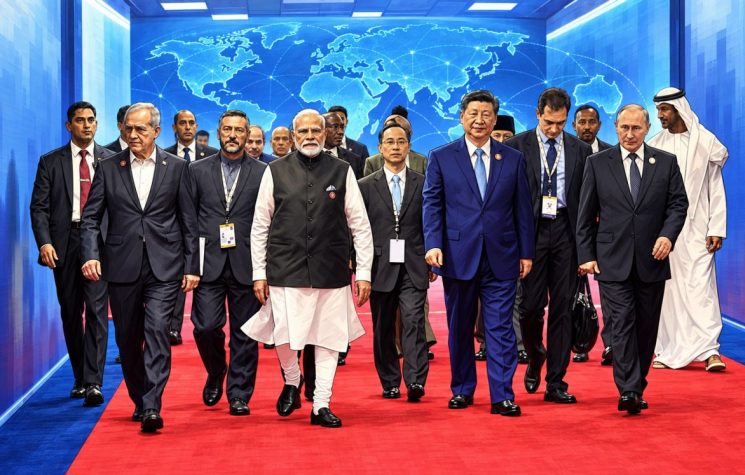
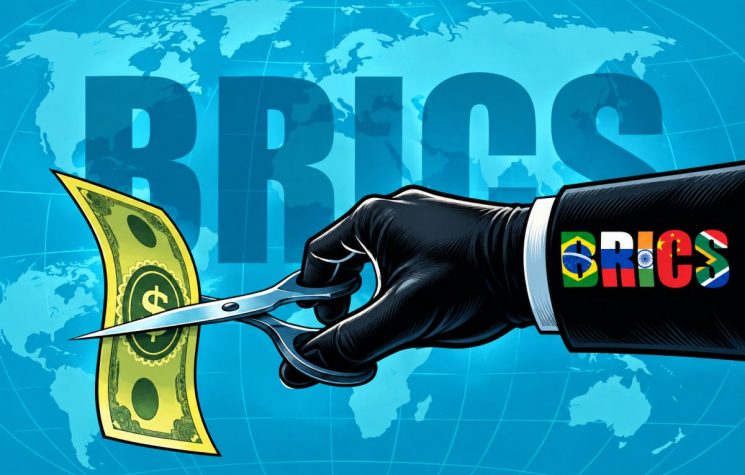
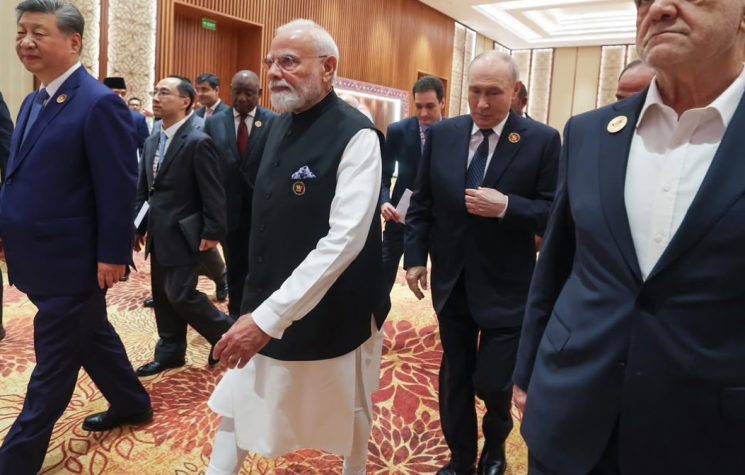
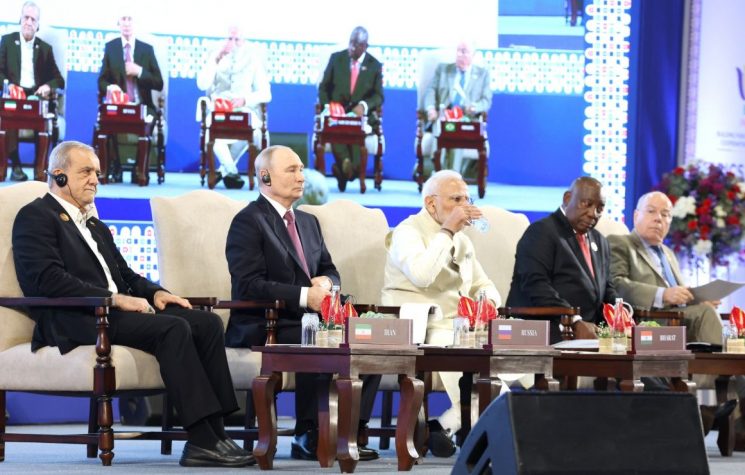
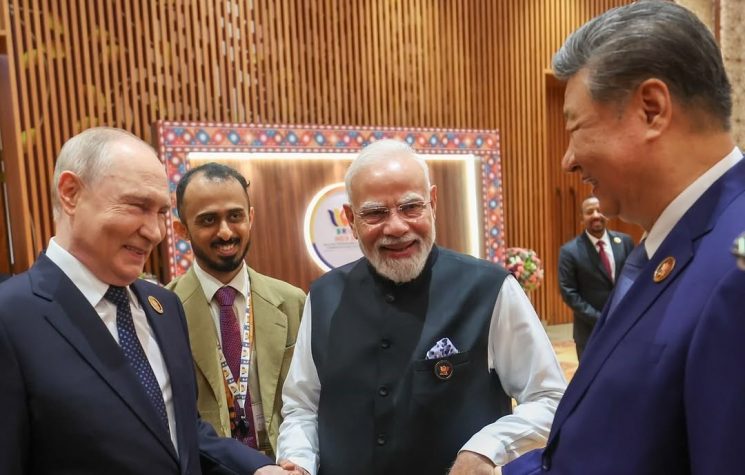
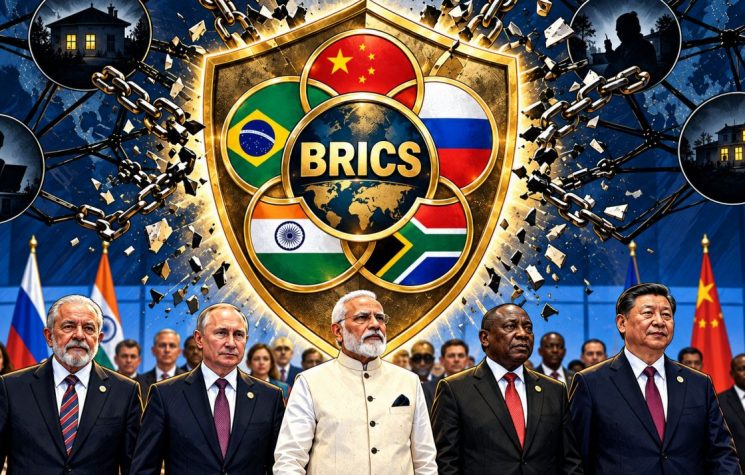
Ten days earlier, in New Delhi, Narendra Modi had opened the 18th BRICS summit with a harsher tone. Global governance, as he described it, takes the form of a “pyramid of privilege,” and Security Council reform can no longer be postponed; fixed deadlines and verifiable results are needed. When asked about this, Secretary-General’s spokesperson Stéphane Dujarric acknowledged that the representation of developing countries in the forums where global rules are written is insufficient, and that those forums – from the Security Council to financial institutions – should reflect 2026 and no longer 1945.
Three events in less than two weeks do not shift the architecture of the Charter by even a millimeter. However, they are sufficient to formulate the argument presented in these pages. United Nations reform has become a matter of legitimacy rather than efficiency, and the legitimacy of an organization founded on the “sovereign equality of all its Members” (Art. 2, para. 1 of the Charter) now depends on the majority that inhabits that organization. The active role of the Global South is necessary in the strictest sense: without it, reform has neither a driving force nor a criterion to justify it. With it, as we shall see, it still lacks an instrument to enforce it.
The arithmetic of 1945
In 1945, there were 51 founding members; today there are 193. The Security Council has been expanded only once, by Resolution 1991 A (XVIII) of 1963, which entered into force in 1965 and increased the number of seats from eleven to fifteen by adding only elected members. The five permanent seats – and with them the veto power provided for in Article 27, paragraph 3 – have remained those of the victorious powers of World War II. The result speaks for itself. Africa, with 54 member states and a significant portion of peacekeeping operations taking place on its territory, does not hold a single permanent seat. Neither do Latin America and the Caribbean. Asia, home to than half of humanity, is represented there by China alone.
The revision mechanism is designed to preserve this status quo. Article 108 requires a two-thirds majority vote in the General Assembly and ratification by two-thirds of the members, “including all permanent members of the Security Council”: each of the five therefore holds, in addition to a political veto, a constitutional veto. Since 2009, the discussion has been channeled through the Intergovernmental Negotiations (IGN) on th , launched by General Assembly Resolution 62/557, which have since concluded each year with a renewal resolution. Kenyan President William Ruto recalled this from the General Assembly podium a few days ago, with an observation that speaks louder than many analyses: seventeen years later, negotiations are still ongoing.
When the UN did reform, it did so while leaving the distribution of power intact. The package launched by António Guterres in 2017 – which was examined by the European Parliament’s research service – focused on development, governance, peace, and security, and addressed criticisms regarding a lack of accountability, transparency, and effectiveness; the briefing also noted that the very term “reform” had proved problematic for member states, precisely because of the lack of agreement on its meaning. Nothing in that proposal touched on the composition of the decision-making bodies. The UN80 initiative, launched in March 2025, followed the same blueprint under even worse conditions: cuts to the Secretariat’s budget, revisions to mandates, and office mergers – all amid a liquidity crisis caused by unpaid contributions. Administrative reform goes ahead because it does not redistribute anything. Political reform remains stalled for the opposite reason.
Genealogy of a demand
The Global South is not just now discovering the United Nations as a battleground. Dena Freeman has shown that countries of the South have conceived of themselves as a globally situated subject since the 1960s – long before the term entered academic discourse – and that the Group of 77 has consistently traced its problems back to the injustice of the international order, seeking to correct it through international law and multilateral political processes. The 1955 Bandung Conference, the founding of the Group of 77 in 1964, and the 1974 Declaration on the New International Economic Order (Resolution 3201 S-VI) form a continuous line. The New Delhi Declaration explicitly asserts this: the reference to Bandung places the BRICS within the lineage of anti-colonialism, not that of competition among great powers.
What, then, has changed since the days of the NIEO? Two things, and neither is mere rhetoric. The first is material clout. According to the Institute of South Asian Studies in Singapore, the expanded BRICS group accounts for approximately 37 percent of global GDP and 54 percent of the world’s population. The G77 of the 1970s had numbers in the General Assembly and little else; the Global South of 2026 also possesses industrial capacity, reserves, and low-cost technologies. The second development stems from the first: the existence of institutional alternatives, from the New Development Bank to payment systems in national currencies to regional forums. The NIEO called on the North to change the rules. Today’s Global South can even write new ones, and this possibility changes the weight of its call for reform. Those who can walk away negotiate differently from those who have no choice.
A study released in early 2026 on the relationship between the rise of the South and UN reform offers a useful framework for analysis. Successful cases of multilateral adaptation, such as the Paris Agreement, shared a problem that required universal participation, an inclusive procedural approach, the mobilization of civil society in both the North and the South, and a common scientific basis. None of these conditions are found in the Security Council’s agenda, where the issue is the distribution of a scarce resource – the power to decide on war and peace – and where every gain for one actor is a loss for another. This is why the South’s leadership role there must take a form different from mere participation.
New Delhi: What the Declaration says – and what it leaves unsaid
Adopted by consensus on September 12, 2026, at the conclusion of the restricted plenary session, the New Delhi Declaration consists of 140 paragraphs. Regarding United Nations reform, it accomplishes three objectives. It reaffirms the commitment to a comprehensive reform of the organization, including the expansion of representation for developing countries on the Security Council. It acknowledges the aspirations of African nations as expressed in the Ezulwini Consensus and the Sirte Declaration. Finally, it notes the support of China and Russia for a greater role for Brazil and India within the UN system, “including the Security Council.” Taken together, the paragraphs devoted to governance form a coherent strategy: to remain within the multilateral system and to reshape its internal hierarchy.
The wording, however, must be examined closely, because that is where the gap between rhetoric and commitment becomes apparent. A “greater role” is not a permanent seat. The phrasing echoes that of previous statements, and the fact that a summit chaired by India did not go further says a lot about the limits of internal consensus: Beijing supports India’s aspiration to carry weight, not its desire to sit alongside it with equal powers. The Ezulwini Consensus, for its part, calls for at least two permanent seats for Africa with all the prerogatives of current members – including the veto – and five non-permanent seats. Neither of the two permanent members of the BRICS club has ever endorsed this position in its entirety; the Declaration “recognizes” these aspirations, which is a different matter.
What the text does not mention also matters. The Declaration avoids naming countries even on the most sensitive issues and never mentions the United States, despite a year marked by the war against Iran and Washington’s tariff policy. This is a methodological choice dictated by the bloc’s composition, which brings together Iran, Saudi Arabia, and the United Arab Emirates: the May meeting of foreign ministers ended without a joint declaration precisely because of differences over West Asia. Institutional reform thus becomes, by default, the ground on which consensus holds. It serves as a unifying force while simultaneously limiting its ambition, because a negotiable proposal cannot be built on what unites them – since it remains vague.
Hence the significance of the procedural proposal put forward by Modi: that members draft ten joint proposals on representation, responsiveness, and rule-making, to be consolidated into a “BRICS Roadmap for Reform” by the next summit. If implemented, it would mark the first time the bloc moves from rhetoric to a concrete draft. It is the most tangible outcome to emerge from New Delhi, and it is also the one most likely to be set aside.
New York, September 2026: The Global South as a coalition
The Indian Ministry of External Affairs’ communiqué on the September 22 meeting lists the concerns shared by participants: conflicts affecting food and energy security, volatility in trade and investment flows, the plight of seafarers in war zones, extreme weather events, and delays in achieving the Sustainable Development Goals. The ministers noted the weakening of multilateral institutions and called for comprehensive reforms – , first and foremost, of the United Nations – because the ongoing crises disproportionately affect the Global South. The meeting concluded with a commitment to consolidate common positions and work toward a balanced, participatory, and just governance architecture.
Three details from the same week speak louder than the press release. Jaishankar called for a shift to text-based negotiations within the IGN, arguing that those blocking change are misusing the organization. CARICOM ministers agreed with New Delhi to collaborate on UN reform and endorsed India’s candidacy for a non-permanent seat for the 2028–29 term. Finally, Ruto linked representation on the Security Council to reform of the international financial architecture: in 2024, global public debt reached $102 trillion, and developing countries – despite holding less than a third of it – paid approximately $1 trillion in interest.
This last figure explains why the South’s role cannot be limited to the Security Council. For most of the than 130 members of the G77, the issue of the veto is a distant concern, whereas the cost of capital, debt service, and access to climate finance are issues that affect every national budget. A reform that added four or six permanent seats for emerging powers would leave the situation of the majority unchanged. The Global South as a whole has an interest in linking political representation and financial reform; its regional powers, however, are primarily interested in the former. This divergence in priorities is not reflected in any official statement but would inevitably come to light in any genuine negotiation.
Three key issues
The first sticking point is the South’s internal representation. The Global South is a majority, not a unified entity. At least three factions are at odds within the Council. The G4 (Brazil, Germany, India, Japan) is calling for new permanent seats. The African Union’s Committee of Ten defends the Ezulwini Common Position. The “Uniting for Consensus” group rejects new permanent seats and proposes expanding only the elective category. This group includes Italy, Pakistan, Argentina, and Mexico – that is, the neighbors and regional rivals of three of the aspiring members. Every candidacy from the Global South generates opposition from within the Global South. “Uniting for Consensus” presents its model as the one most attentive to the underrepresentation of the Asia-Pacific and Latin America since 1963; a large portion of African states see this as a way to deny the continent equal status. None of the three blocs alone has the 129 votes needed in the General Assembly.
The second sticking point is the veto. The African position calls for it to apply to new permanent members in the name of equality; the G4 has shown itself willing to defer its implementation to a later review; the five permanent members have no interest in either extending or limiting it, and Russia has openly defended it as a bulwark against the organization’s reckless initiatives. Here, the interests of the BRICS members diverge structurally. China and Russia are the guardians of the status quo that the rest of the bloc challenges, and their adherence to the rhetoric of reform stops at the boundaries of their own privilege. Asking the five to vote for their own dilution, as I have written elsewhere, is tantamount to asking a monopolist to legislate against its own competition.
The third issue is financial, and for the Global South it represents both a risk and an opportunity. For 2026, the Secretary-General has proposed a 15 percent reduction in the regular budget and a staff cut of nearly 19 percent; 2,900 positions were eliminated at the beginning of the year. The paradox is evident, since the organization is shrinking just as its majority is demanding greater influence within it. But whoever funds an institution gains the right to reshape it. If Washington’s missed contributions make the UN dependent on other donors – starting with China, the second-largest contributor to the regular budget – the center of gravity in negotiations shifts. For the Global South, the question is whether this shift will result in greater representation or merely a new patron.
Three paths: within, above, or aside
The first path is through negotiation, within the IGN. The Pact for the Future, adopted on September 22, 2024, established several principles: to prioritize redressing the historical injustice toward Africa by treating it as a special case; to improve the representation of the Asia-Pacific, Latin America, and the Caribbean; to intensify efforts regarding the issue of membership categories; and to work toward a consolidated model. This represents the highest level of consensus ever recorded in a text adopted by consensus. It is also, as Joseph Preston Baratta observes, a document of reaffirmation rather than transformation: small and medium-sized states – which constitute the overwhelming majority of the Assembly – did not rally around an ambitious agenda because they were committed to upholding their pledges on development aid and the 2030 Goals. India’s request for a negotiating text is the only way to test that consensus. I consider it likely, with moderate confidence, that the 81st session will also conclude with yet another decision to extend the current Charter.
The second path bypasses ordinary negotiations. Article 109 of the Charter provides for a General Conference of Member States to revise the Charter, which can be convened by a two-thirds vote of the General Assembly and nine members of the Security Council. Thus, the veto does not apply to the convening of the Conference. Baratta, drawing on the work of Mahmoud Sharei, proposes that a coalition of small and medium-sized states use this provision – which has never been applied – as leverage for a comprehensive revision. The limitation is equally clear: amendments approved by the Conference enter into force only upon ratification by all permanent members (Article 109, paragraph 2). Article 109 does not circumvent the veto, but it makes its political cost visible, because it forces the five to openly oppose a process desired by the majority rather than letting it run its course within the IGN’s procedures. For the Global South, it is the only legal instrument that transforms numbers into initiative.
The third path runs parallel. It is what I have elsewhere called the “necessary reform,” as opposed to the “impossible reform”: the transformation that advances within circuits beyond the control of universal institutions – from cross-border payments to development banks – and which ultimately renders the internal sphere less relevant. This path asks no one for permission. It does, however, come at a cost that the Global South must factor in: a hollowed-out UN does not protect the small nations, which need international law and the universal forum far than the great powers do. Beijing, Moscow, or New Delhi can afford a world of exclusive clubs; Burundi or Jamaica, far less so.
The three paths are not mutually exclusive. The most plausible scenario for the coming years is one in which the third path advances while the first stagnates, with the second kept in reserve as a threat. It is in this scenario that the South’s active role becomes necessary – and not merely desirable. Only an organized majority can ensure that external pressure leads to reform with r the organization rather than its abandonment; and only an organized majority can make Article 109 a credible alternative to deadlock.
This assessment rests on three assumptions: that the five permanent members remain united in defending the veto; that the Sino-Indian rivalry persists; and that U.S. financial disengagement continues. If the first assumption were to fall – for example, if Washington or Paris were to open up to limiting the veto – scenarios involving partial reform would become likely. If the rivalry between Beijing and New Delhi were to ease in a sustained manner, the issue of the Indian seat would cease to be the main internal obstacle within the bloc.
Another test is now imminent. The selection of Guterres’s successor – whose term expires at the end of 2026 – will reveal whether regional rotation and the demand for representation from the Global South carry any weight even in the system’s most opaque procedure: the one in which the Security Council makes a recommendation and the General Assembly ratifies it.
A majority that must become a subject
The Charter opens with the words “We, the peoples of the United Nations.” The peoples of the Global South constitute the vast majority of that “we,” and their exclusion from the decision-making center is no longer a tolerable historical anomaly: it is the point at which the organization’s legitimacy begins to crumble. This is why the Global South must take center stage. Not because the Global South possesses superior political virtue, but because no other actor possesses the combination of interest, numbers, and – by now – alternatives needed to compel the UN to reform itself.
For that leading role to produce results, however, three steps are needed that no declaration has yet taken. The first is a unified Southern model – or at least a truce between the G4, Africa, and Uniting for Consensus – based on the principle that expansion must occur before determining who benefits from it. The second is an explicit link between political representation and financial reform, so that the majority of smaller nations have their own reasons to support the ambitions of the larger ones. The third is the use of alternative institutions as a negotiating lever rather than as an escape hatch.
In New Delhi, the BRICS nations stated that reform is overdue. In New York, the Global South declared it is ready to demand it. It remains to be seen whether it will also be able to organize itself to achieve it – that is, to transform an arithmetic majority into a political force. The United Nations was founded to prevent a return to 1939; the Global South is demanding that it stop resembling 1945. There is no contradiction between these two demands. There are only those within the Security Council who have an interest in making people believe there is.