

Sacrifice the inconvenient, never the project. “Pal-washing” in action.
X
Contact us: @worldanalyticspress_bot
A familiar script
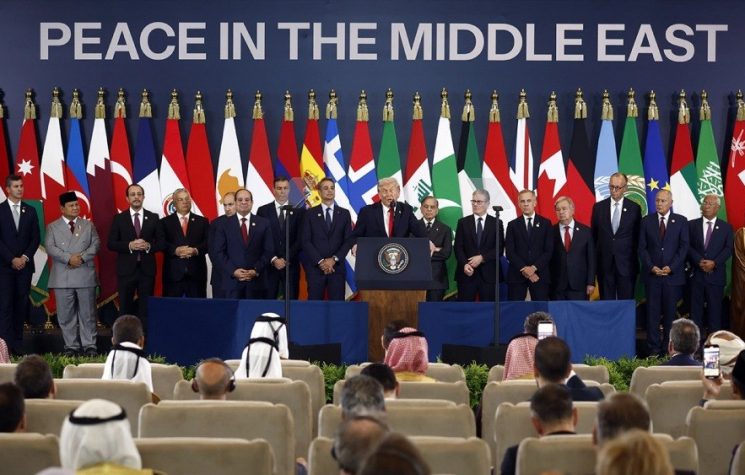
On 9 October 2026, the Norwegian Nobel Committee awarded the Peace Prize to Navanethem Pillay, an 85-year-old South African jurist, former judge at the International Criminal Court and UN High Commissioner for Human Rights. The citation speaks of a person who has paved the way for a comprehensive global legal order. The Committee’s chair, Jorgen Watne Frydnes, added that the prize is a message to those who attack and undermine the international system and its institutions. The verdict is avowedly political, and it is on this level that it must be discussed.
The very same figure who, in 2011, is said to have ‘toppled’ Gaddafi, paving the way for the plundering of Libyan oil and the enslavement of African migrants, would now ‘topple’ Netanyahu, thereby paving the way for Israel’s rehabilitation. The underlying logic would be neither morality nor peace, but the agenda of George Soros’s Open Society: to sacrifice those who have become inconvenient, never the essence of the project itself. Some have dubbed it ‘pal-washing’. The fundamental question is a serious one, for it asks whether there is a pattern behind the prizes and jurisdictions of the liberal order.
It must be emphasised that the script is already familiar. Do you remember when Barack Obama received the Nobel Peace Prize, whilst launching war after war? Or do you recall figures in search of a cause such as Machado, Mohammadi, or the defenders of Ukrainian criminals? But let us proceed in order.
Act One: Libya
In February 2011, Pillay, the High Commissioner, called on the Human Rights Council to take vigorous action to stop the violence and hold those responsible to account; the Council condemned the violations and established a commission of inquiry. The next step fell to the Security Council: referral to the ICC via Resolution 1970, followed by Resolution 1973, approved with ten votes in favour and five abstentions (Brazil, China, Germany, India, Russia). No one claims that Pillay decided to go to war. What matters is the sequence of events: the language of human rights opened the door, that of the protection of civilians authorised the use of force, and the operation gradually shifted towards regime change. As early as April, Lavrov was accusing NATO of exceeding its mandate, and a French minister admitted that regime change would have required a new vote.
Then there are the costs. In 2017, the IOM documented auctions of sub-Saharan migrants in southern Libya, sold for sums ranging from 200 to 500 dollars. The link with the collapse of the state after 2011 is the most plausible interpretation, although the source documents the phenomenon rather than its cause. Libya and the migrants paid the price; the legal framework emerged, formally speaking, intact, even if the controversy over the mandate would later weigh on the vetoes of Moscow and Beijing in other matters.
Act Two: Bibi
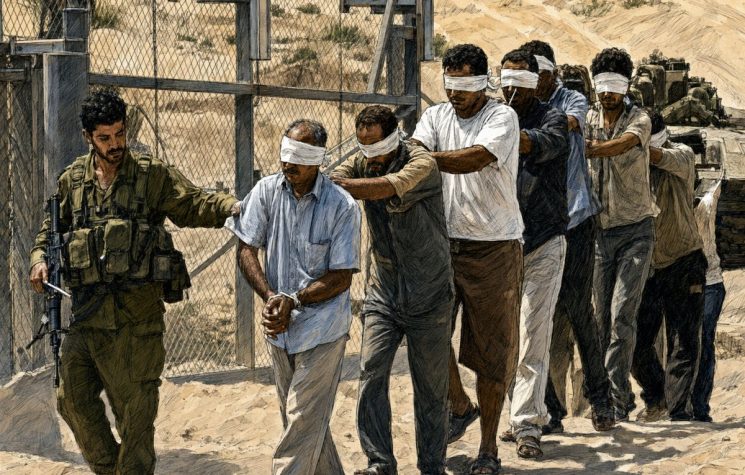
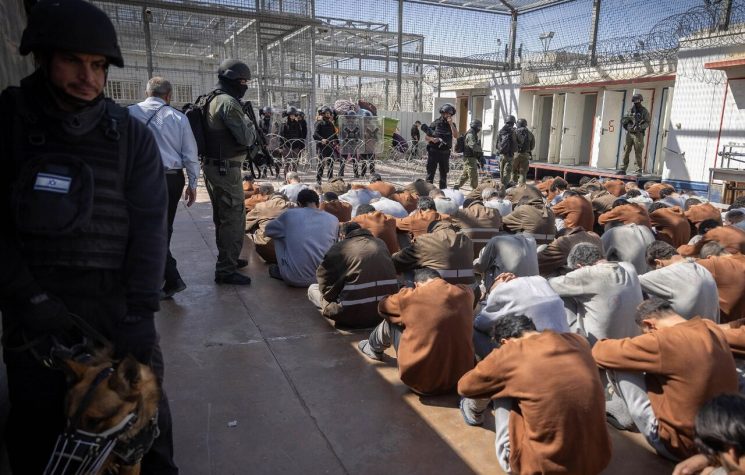
On 21 November 2024, Pre-Trial Chamber I of the ICC issued arrest warrants for Netanyahu and former Defence Minister Gallant, for war crimes and crimes against humanity. Pillay had left the Court in 2008, but chaired the UN Commission of Inquiry which, on 16 September 2025, concluded that Israel had committed genocide in Gaza. This is where ‘pal-washing’ comes into play. International criminal law deals with individuals: a defendant, a charge, a period of time. If the case concludes with the fate of a leader, a narrative break occurs – the ‘before’ and ‘after’ of a man – after which the state can present itself as restored. Libya offers an analogy: there, the case concluded with the fall of a man.
The limitations of the process work in favour of this interpretation. The Court has no police force and the execution of warrants depends on the States Parties; the Commission is not a court and does not speak on behalf of the entire UN; the Committee itself, according to AFP, has stated that it is up to a court to determine whether genocide has taken place. The award has no legal effect, as we know, but it lends legitimacy to a system that promises justice yet cannot guarantee it.
We must also bear in mind that we have already seen dynamics of this kind on numerous occasions within the globalist order that dominates the West. The Open Society Foundations presents itself as the world’s largest private funder of groups working for justice, democracy and human rights, active in over one hundred countries, and Pillay received the Stockholm Human Rights Award, the same prize that went to Soros and Neier in 2011. It certainly seems that the pattern of the Soros agenda is repeating itself once again – an agenda comprising foundations, NGOs, tribunals, commissions and bureaucracies that share a common lexicon and worldview: that of a liberal order to be perfected and never called into question. Those operating within that lexicon may denounce a government, a leader, or even a state, but they cannot challenge the underlying assumptions of the order that grants them legitimacy.
Some will object that Pillay’s Commission attributes responsibility to Israel as a state, not merely to its leaders, which contradicts the idea of a purely personalised operation. The second point concerns the reaction. Netanyahu accused the Committee of having lost its moral compass; the Israeli Foreign Ministry spoke of a grotesque exploitation of the prize; and Washington announced sanctions against the ICC just a few hours after the announcement. All true. But it would make sense and have value if the Western system were not rotten to its very core, if its legal system were functioning properly, but this is not the case, in any respect (and we have already seen sufficient evidence of this – let us not forget the Epstein case either).
If, over the next twelve months, Netanyahu’s political downfall is presented as the conclusion of the case, rather than as a stage in proceedings concerning the state, ‘Pal-washing’ will gain traction. If the proceedings continue beyond his person, and if the State Parties execute the warrants, perhaps it will lose ground. Given the current evidence, the argument is plausible and, until proven otherwise, this is yet another ‘Non-Peace’ Nobel Prize – one we cannot call ‘war’.