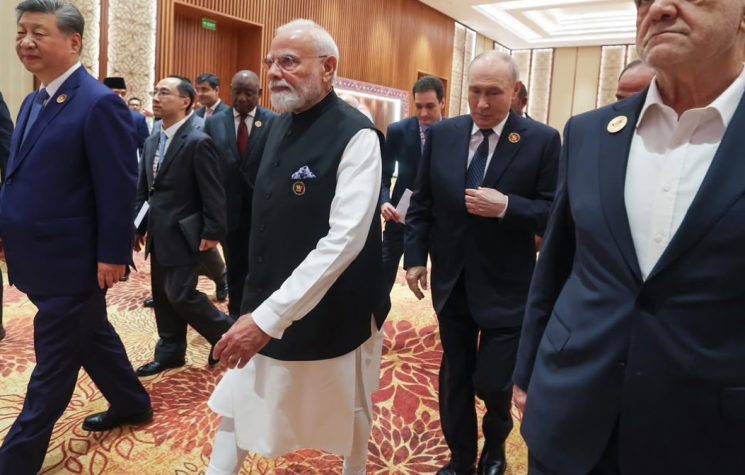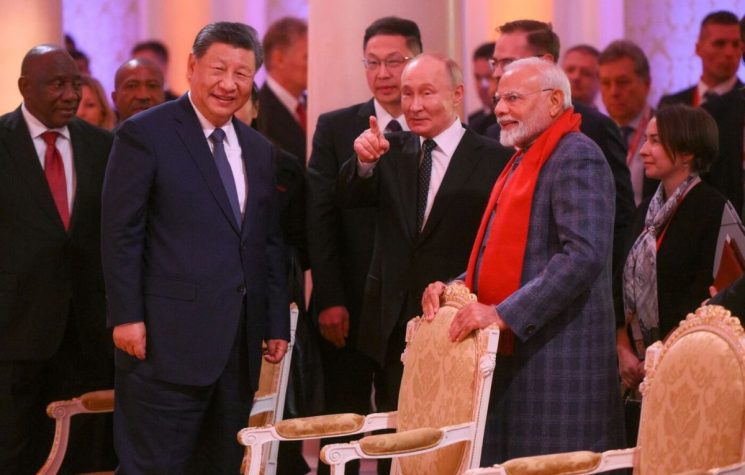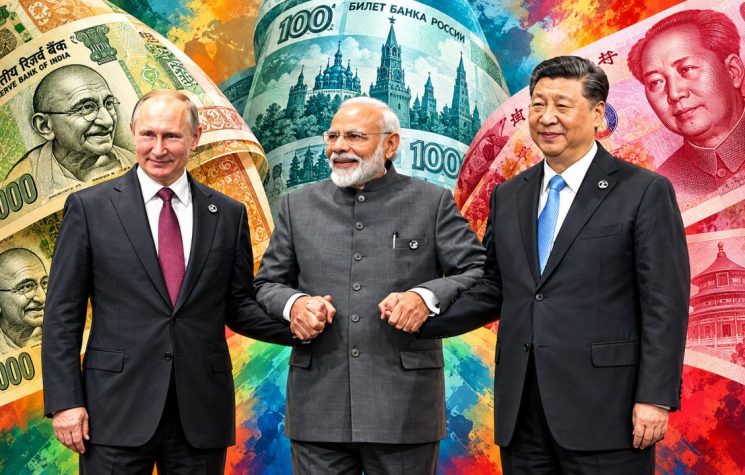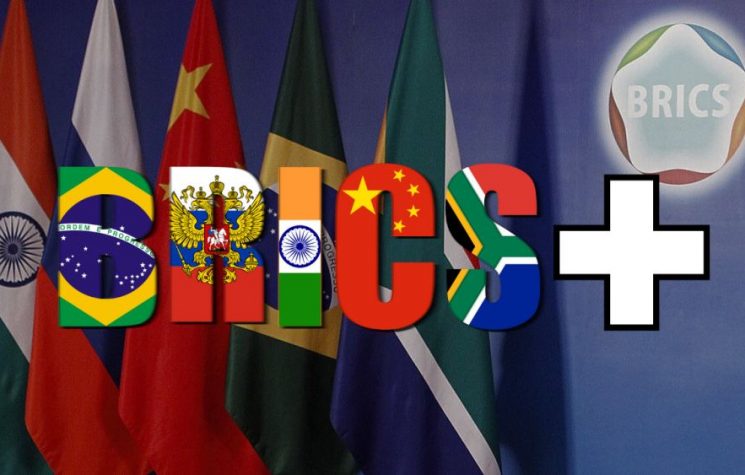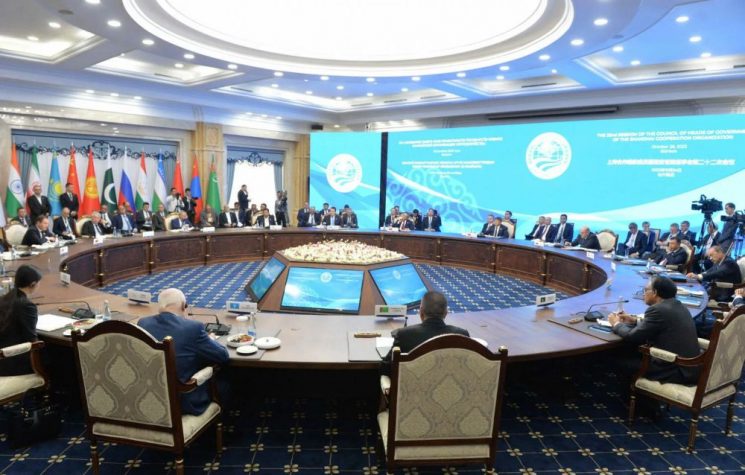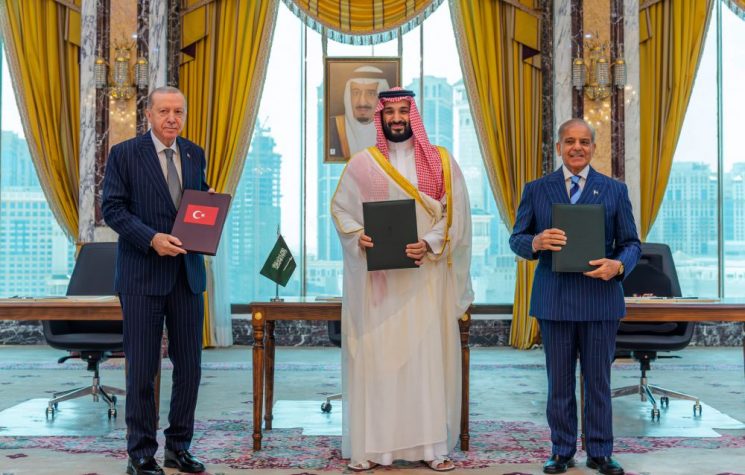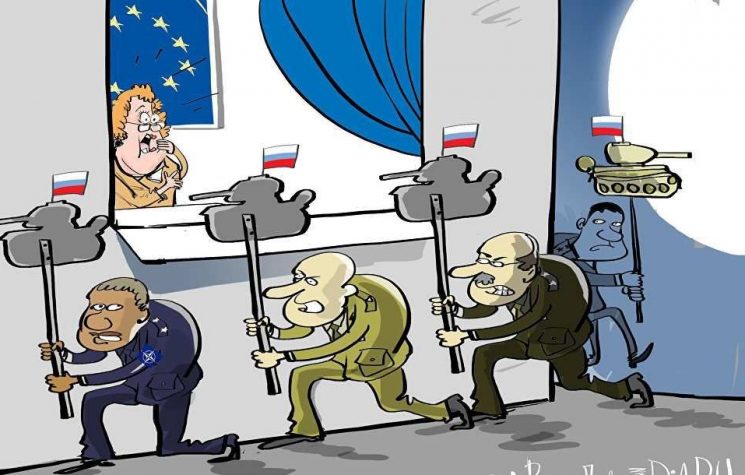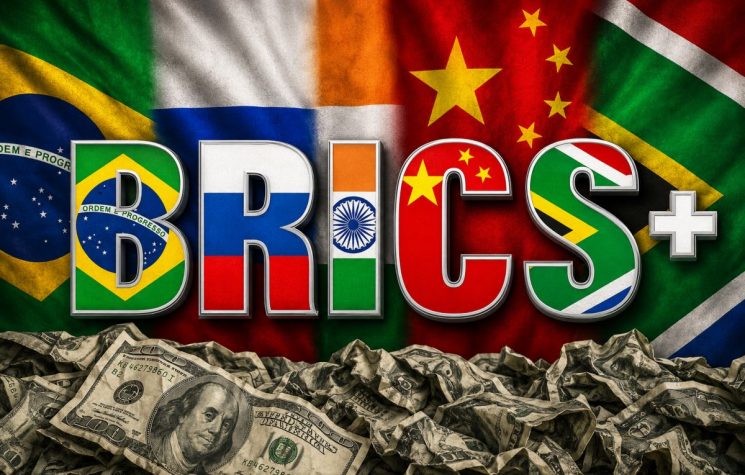


It is time to make a proclamation: welcome to the era of the BRICS. Multipolarity is the future.

Contact us: @worldanalyticspress_bot
Shaping the Future Through Geopolitics
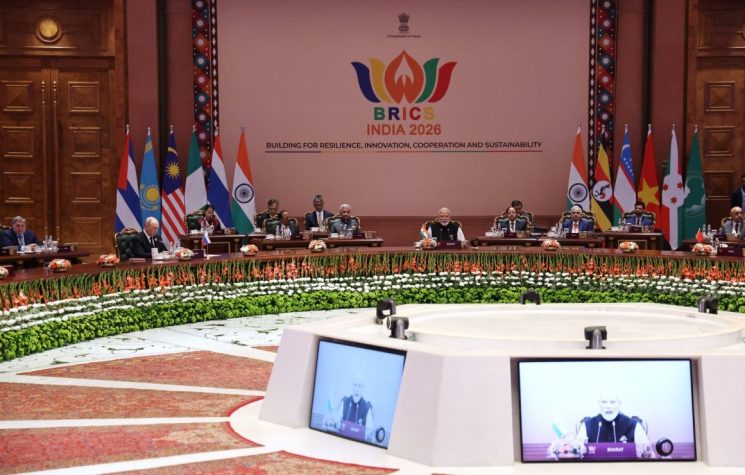
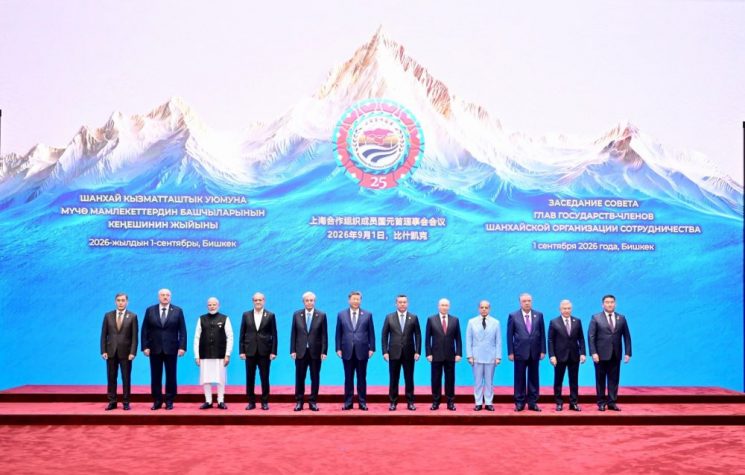
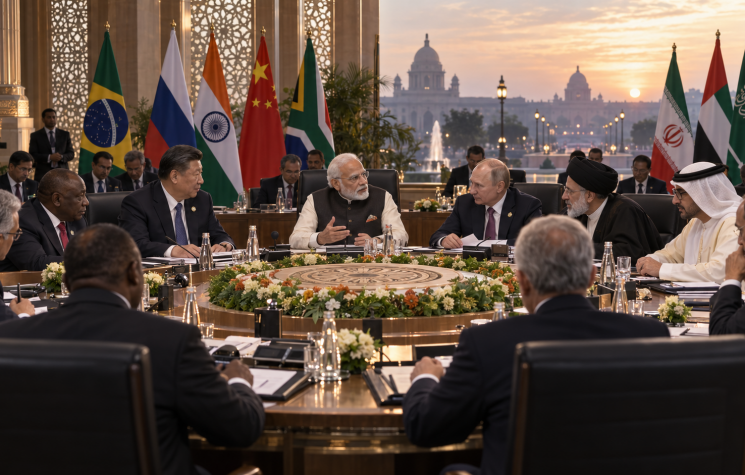
The 18th BRICS Summit concluded in New Delhi on September 13, 2026, with a document comprising 140 paragraphs. Those who read it looking for sensational news will find little: no common currency announced, no military alliance, no formal break with the Washington-led order. Those who read it as a document, however, will realize they have before them something rarer than a news item – namely, a grammar.
The New Delhi Declaration records not so much what the BRICS have done as the way in which they have chosen to describe the world – and description always precedes action. On this point, it is worth, first of all, returning to the vocabulary of classical geopolitics, which offers not a framework to be applied from the outside but, usefully, the concepts that the drafters of the text seem to have already internalized.
The useful premise is that geopolitics does not primarily study the relationship between the state and space, as Kjellén argued, but rather the relationship between society and civilization and a space perceived as qualitative. Space is not the homogeneous Cartesian plane of modern physics, where every point is equivalent to every other; it is dense with meaning, oriented, and inhabited by memory. Every civilization brings its own collective intelligence to the map – its own interpretation of the world – and political forms stem from that interpretation. If this is true, then a diplomatic document must first be examined in light of a simple question: from what position in space is it speaking? Who does it imagine itself to be, and who does it imagine before it?
The answer, in New Delhi, is clear: the declaration speaks from the Land, and speaks against the Sea – not in these exact terms, which remain implicit, but with a consistency that becomes evident line by line.
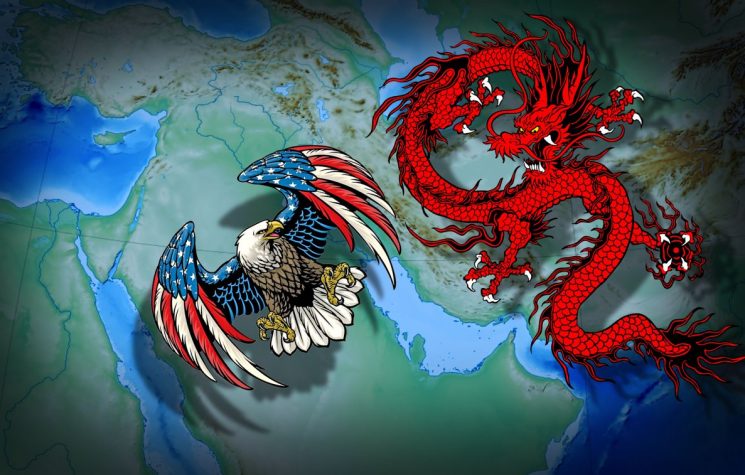
All of classical geopolitics, from Mackinder to Spykman, revolves around a dualism: tellurocracy – the civilization of the Land rooted in the Eurasian Heartland – and thalassocracy – the civilization of the Sea that seeks to encircle the continent from its coasts. The historical task of maritime power is what Mahan called the “anaconda”: to encircle the continental mass from the outside, control its coastal regions, and keep it away from the warm seas. The Cold War, the end of the USSR, and the unipolar order of the 1990s can all be interpreted as episodes in the same “battle for the Rimland.”
The New Delhi Declaration never mentions this divide, and precisely for this reason, it confirms it. In paragraph 7, on the occasion of the group’s twentieth anniversary, the signatory states commit to “strengthening multilateralism and multipolarity” and to reforming global governance deemed unrepresentative. The key term is multipolarity, and it must be taken literally. The entire contemporary stakes center on the antinomy between a unipolar world and a multipolar world, which is the current reformulation of the ancient clash between Sea and Land. When the BRICS call for a “ just, representative, and stable” order, they are not expressing a generic ethical aspiration: they are asserting the right of the Heartland and its allies to exist as an autonomous pole, rather than as a periphery to be integrated.
Here we see the gap between the summit’s official vocabulary and its geopolitical substance. The text is written in a smooth, procedural language filled with terms like “cooperation,” “resilience,” and “inclusivity.” It is the language of international organizations – the very language the West itself coined. But within that language, the BRICS imbue it with a meaning that overturns its original function. It is a maneuver mirroring the often-noted one of Anglo-Saxon critical geopolitics, which, while criticizing imperialism, reproduces its grammar. In New Delhi, the opposite is happening in the opposite direction: the adversary’s universalist lexicon is being used to construct a project that the adversary would not recognize as its own.
Reform or Duplicate
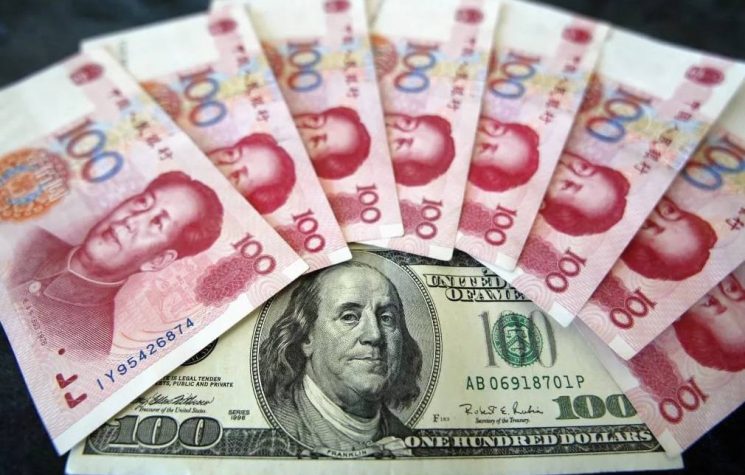
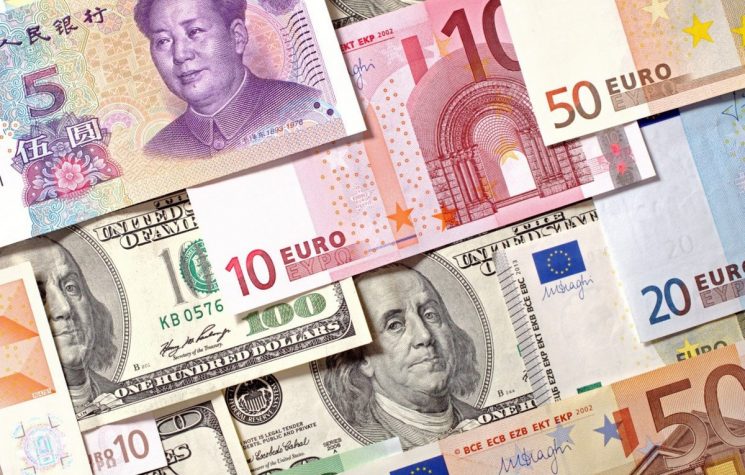
The economic heart of the document is a two-pronged maneuver that deserves attention, because it is there that theory becomes procedure. On the one hand, the BRICS call for the reform of the Bretton Woods institutions: International Monetary Fund quotas realigned with the actual weight of emerging economies, selection of top leadership based on merit rather than custom, and fair representation in the World Bank (§§ 17–1). On the other hand – and within the same text – they are building the alternative: the New Development Bank is entering its “second golden decade” with the stated ambition of providing financing in local currencies (§ 115), while the Payment Task Force is working on the interoperability of payment systems and the settlement of trade in national currencies (§§ 90, 102).
This two-pronged approach is not contradictory; it is strategic. Calling for reform serves to delegitimize the existing order from within, by showing that its promises of representation remain unfulfilled; building the alternative serves to secure a way out if reform fails to materialize – as it has for the past twenty years. The key concept here is the autarky of vast spaces. Formulated by von List and expanded by Haushofer to a continental scale, the idea is that only control over a vast economic space guarantees true sovereignty, because economic dependence quickly turns into political dependence and ultimately erodes state sovereignty. The Grain Exchange (§ 60), the defense of sovereign rights over critical minerals (§ 67), and parallel payment systems are all attempts to build that vast, self-sufficient space. This is not protectionism in the nineteenth-century sense, but it stems from the same fundamental insight: a small space is, by definition, a satellite.
The condemnation of “unilateral coercive measures” and border carbon adjustment mechanisms (§ 22) brings things full circle. Sanctions and environmental tariffs are tools of the anaconda adapted to the financial economy: ways to strangle the continental mass without firing a shot. The fact that the BRICS nations place these at the center of their grievances indicates that they have pinpointed exactly where the front line lies today.
The Global South is not the future – it is already the present
One of the most prominent aspects of the document is the BRICS nations’ claim to the role of spokesperson for the Global South. The call for Security Council reform, the insistence on geographic representation within the United Nations Secretariat, and the explicit support from China and Russia for Brazil and India’s aspirations to a permanent seat (§§ 8–13) form a coherent strategy: not to withdraw from the multilateral system, but to rewrite its internal hierarchy from within.
The reference in paragraph 16 to the 1955 Bandung Conference (§ 16) is the ideological hallmark of this endeavor. Bandung marked the moment when decolonized peoples sought to carve out an autonomous position between the two blocs; evoking it in 2026 means situating the BRICS within the lineage of anticolonialism, not that of great-power competition. Continental geopolitics has always interpreted decolonization as a process inherent to the logic of the “great space” – Haushofer himself advocated for the liberation of the colonies as an anti-Anglo-Saxon measure – and this allows us to interpret the move without dismissing it as mere rhetoric or writing it off as hypocrisy. From this perspective, the Global South is the “outer crescent” seeking to escape the control of the thalassocracy and reorient itself toward the land.
The most uncomfortable question remains, and an honest analysis cannot sidestep it: do the BRICS truly speak for the Global South, or do they speak to the Global South? The group today includes economies with divergent interests – India and China, in particular, are strategic rivals rather than partners – and the document’s coherence masks real tensions. The framework, built entirely on the land/sea dualism, tends to overestimate the unity of the continental pole. The reality in New Delhi is fragmented than the two-color map suggests: a bloc that must write the word “cooperation” forty times likely has less of it than it proclaims.
In paragraph 122, the document cites the United Nations resolution establishing the “International Day of Dialogue among Civilizations” (§ 122). It is a detail, but it is the decisive one. Understood as the science of civilizations, geopolitics starts from a premise: every people has its own concept of civilization, and conflict arises when one people seeks to impose its own model as hegemonic. Officially recognizing the plurality of civilizations – after thirty years in which the West has proclaimed a single universal one – is the most significant act of the entire Declaration. Economic and institutional multipolarity ultimately rests on cultural multipolarity: many centers, many interpretations of space, none authorized to apply to all.
This is also the point at which it is worth noting what the text leaves unsaid, because the silences in a policy document carry as much weight as its statements. Europe is missing. Not as an object – Europe is mentioned in passing – but as a subject. The Euro-continentalist tradition, from Gallois onward, has always maintained that Europe could become an autonomous pole only by aligning itself with the continental power against the Atlanticist strategy. In New Delhi, that Europe is absent: it remains an appendage of the Sea, the “brain” of an Atlantic community that Spykman had already spoken of. For the multipolar project, this is a costly absence – perhaps the costliest of all – because it leaves the European continent entirely within the sphere that the BRICS declare they wish to counterbalance.
The Idea of Order
The section of the document devoted to peace and security is revealing than its cautious prose would suggest. In paragraph 23, the signatory states affirm that “security among all countries is indivisible” (§ 23). The phrasing is not neutral: it is the same one that Russian diplomacy has been using for years to oppose NATO enlargement, and its appearance in a text also signed by Brazil, India, and South Africa indicates just how far the Eurasian lexicon has spread beyond its epicenter. Indivisible security fundamentally denies the legitimacy of a system in which the security of some is built upon the insecurity of others – which is precisely the “anaconda” logic translated into an alliance architecture.
On terrorism, the document is both firm and generic: it condemns terrorism “in all its forms and manifestations,” rejects “double standards,” and refers to the escalation in the Middle East (§ 40). This generic language serves a purpose, as it allows signatories with divergent positions to endorse the same text; the rejection of double standards, however, is a precise jab at the West, which is implicitly accused of distinguishing between “useful” forms of terrorism and those that must be fought. Here, the analysis must remain measured: the rhetorical coherence of such a heterogeneous group on such a divisive issue is in itself significant and should be read as an indicator of what the BRICS countries want to appear to be, rather than as proof of what they actually are.
The clearest example is the Palestinian issue. The paragraphs devoted to it are among the longest and most detailed in the entire document (§§ 30–34), and this disproportion is no accident. Gaza is the issue on which the BRICS believe they can speak to the Global South with the voice that the West has lost, and the specificity of the language – references to international humanitarian law, condemnation of forced displacement, support for the two-state solution – creates a deliberate contrast with the ambiguity of the Atlantic chancelleries. It is diplomacy of civilizations in its most concrete form: not so much a moral stance as the assertion of the right to set the terms of the issue, wresting it from those who have held that power until now.
Underlying all this is a vision of order that the text never fully articulates. The recurring call for a “stable” world alongside a “just” one points to the tellurocratic model of the Heartland as the guardian of a principle of stability against dissolution, set in contrast to the mercantile and mobile civilization of the “outer crescent.” It would be a mistake, however, to read into the document than it actually says: no paragraph theorizes a hierarchy of values, and the very word “stability” coexists with commitments to innovation and transformation that complicate its interpretation in a purely conservative light. The text remains ambiguous on this point – and that ambiguity is likely the very condition that made its signing possible.
What is this Summit really worth?
The BRICS of 2026 have the ambition of a vast space and the structure of a forum; they possess the vocabulary of sovereignty and the mutual interdependence of competing economies. The New Delhi Declaration must therefore be read for what it is: not the birth certificate of an alternative order, but its most complete articulation. And in geopolitics, such an articulation is never insignificant, because it is the moment when a society draws up the blueprint upon which it will then act. The rest will depend on how well that blueprint withstands the test of rivalries that, for now, the text merely covers with the word “cooperation.”
What we have come to understand is that the process is irreversible, and in New Delhi we saw unequivocal proof of this.
In short, it is time to make a proclamation: welcome to the era of the BRICS. Multipolarity is the future.