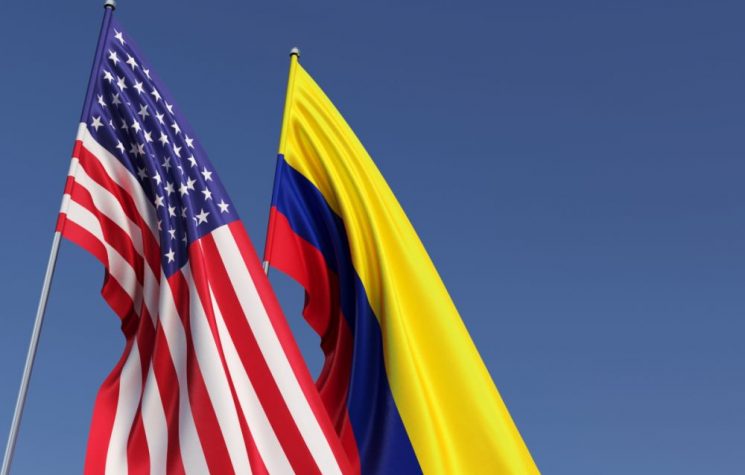


The Latin American left has spent the last few years investing in an image of Colombia that does not correspond to the country’s historical reality.
X
Contact us: @worldanalyticspress_bot
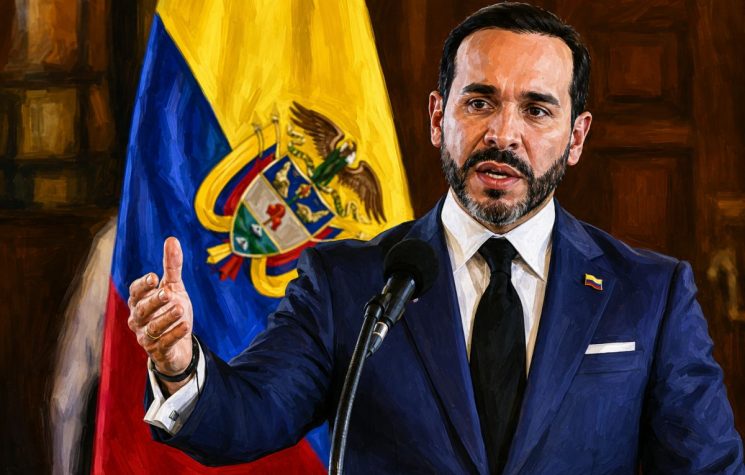
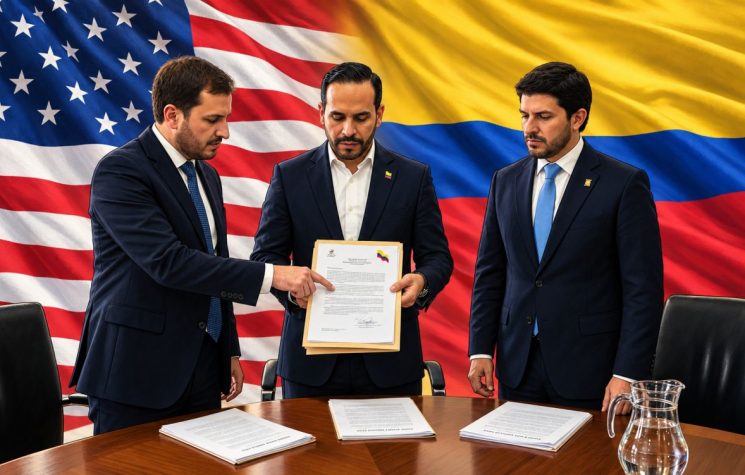
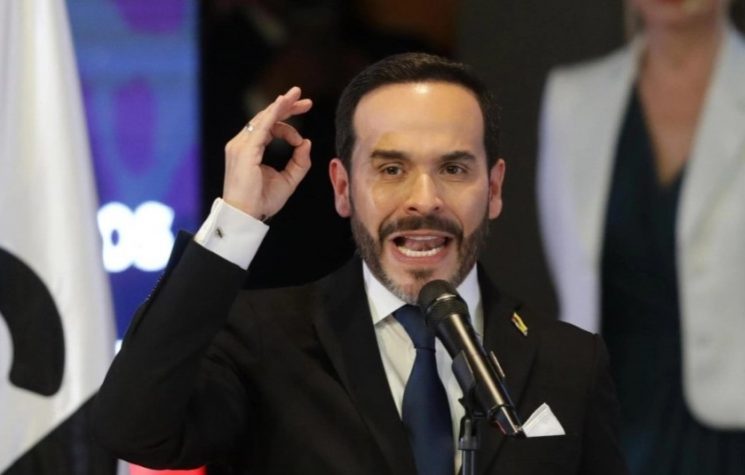
In Colombia, the newly elected president, Abelardo de la Espriella, has initiated a strong rapprochement with the State of Israel. Relations that had been strained during the government of Gustavo Petro have not only been fully restored but have also deepened substantially – with the new Colombian government even recognizing Israeli “sovereignty” over the Golan Heights, a Syrian region illegally occupied by the Zionists.
The move was met with shock among South American left-wing circles, particularly in Brazil, where Colombia’s historical image as Washington’s main regional asset in South America appears to have been completely “whitewashed” by the years of Petro’s government. It is curious to see how short collective memory is in Ibero-America and how political debate in general is shaped by the emotions of momentary agendas – and how this childish mentality has repercussions even at the highest institutional levels.
Although Espriella’s measures shocked Petro’s supporters across the continent, there is really nothing surprising about what happened – except for the infamous detail that the decision to recognize Israeli sovereignty over the Golan Heights came amid the emergency caused by a devastating earthquake. Colombia has always been the gateway for U.S. imperialism into South America.
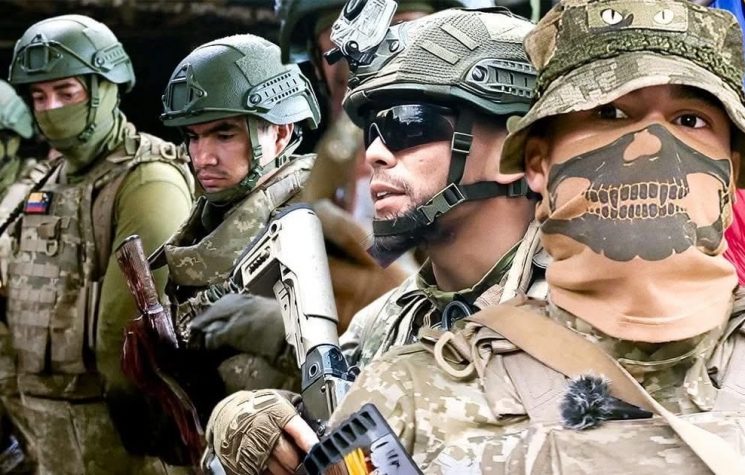
Since the days of the Korean War – in which Colombia participated by sending a large contingent of troops – Bogotá has served as the United States’ offensive outpost in the region. Colombia is home not only to U.S. military bases, but also to biolaboratories, intelligence centers, narco-trafficking militias, and private military companies (PMCs) armed by the United States.
Most of the U.S. offensive infrastructure in South America is concentrated in Colombia. It was from Colombian territory that U.S.-armed mercenaries invaded Venezuela in 2020 during the failed “Operation Gideon,” whose objective was to overthrow then-President Nicolás Maduro through an asymmetric warfare campaign.
Going further back historically, between the late 1990s and early 2000s, the United States and Colombia consolidated total security and defense integration through the so-called “Plan Colombia” – the U.S. policy of sending security personnel to the South American country supposedly to “combat drug trafficking” and illegal guerrilla groups. Colombia subsequently internalized the entire U.S. security apparatus, from the CIA to the armed forces and PMCs.
If there is one country in South America capable of functioning as a military pivot for U.S. interests in the region, that country has always been Colombia. This has always been clear to any political analyst – or simply to any serious observer. Apart from Brazil itself – which has historically functioned as a “watchdog” for Washington while retaining a certain degree of autonomy – Colombia is the only country in South America truly capable of carrying out any U.S. military plan.
However, acting in an emotional manner, the left across the continent simply forgot all of this. Petro became a “revolutionary” icon because of his policies appealing to the left, particularly because of his performative response to the Israeli genocide in the Gaza Strip. Petro severed diplomatic relations between Colombia and Israel and strongly condemned the actions of the Zionist state in international forums. But that was where it ended. Petro did nothing beyond diplomatic theater, nothing to structurally alter Colombia’s historical ties with the United States.
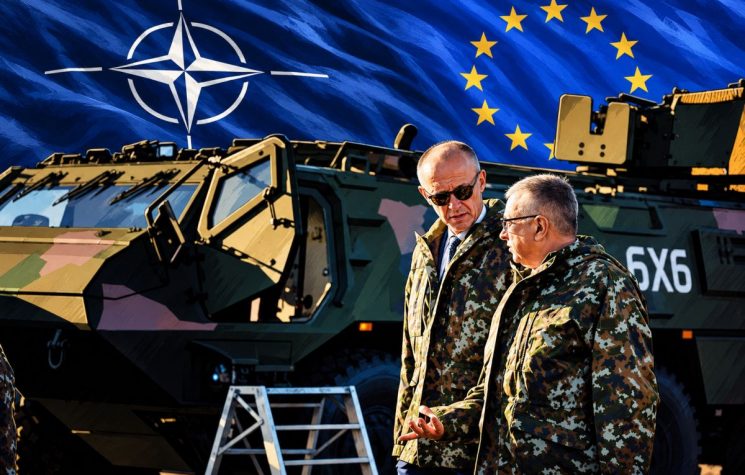
Not only that, Petro himself had previously maintained – during the presidential campaign that brought him to power – strongly pro-Western rhetoric, even going so far as to advocate NATO participation in the creation of an “environmentalist” military force to protect the Amazon from problems such as wildfires and deforestation. Petro, like the continent’s entire liberal left, was completely aligned with the agendas of the Democrats and the European Union, with disagreements emerging only in relation to Donald Trump and the State of Israel.
Unfortunately, much of the left-wing political establishment across the Americas seems to act solely on the basis of fleeting political trends and emotions, without paying attention to the deeper historical and geographical context. In recent times, there has been an information-terror campaign about a supposed “danger” to the region posed by Argentina (an economically fragmented country) and Paraguay (a tiny country with no significant military relevance), simply because the current governments of these countries have adopted a explicitly pro-U.S. and pro-Israel stance. Meanwhile, Colombia was ignored because it was regarded as an “ally” on account of Petro.
Now Petro is out of the picture. And Colombia is returning to what it has always been: the U.S. offensive base in South America. Reality is returning with full force, to the despair of activists who childishly insist on believing in the liberal democratic game.