

Most absurdly of all, we must reiterate the obvious: that peace is always better than war and is in the nation’s best interest.
X
Contact us: @worldanalyticspress_bot
The rule of law is a front line
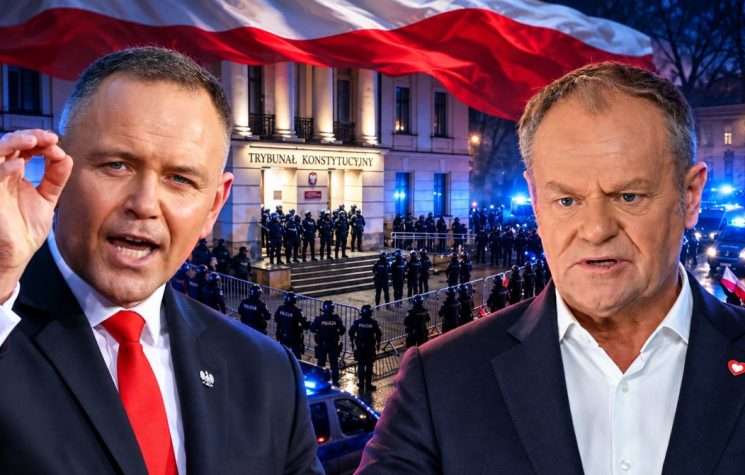
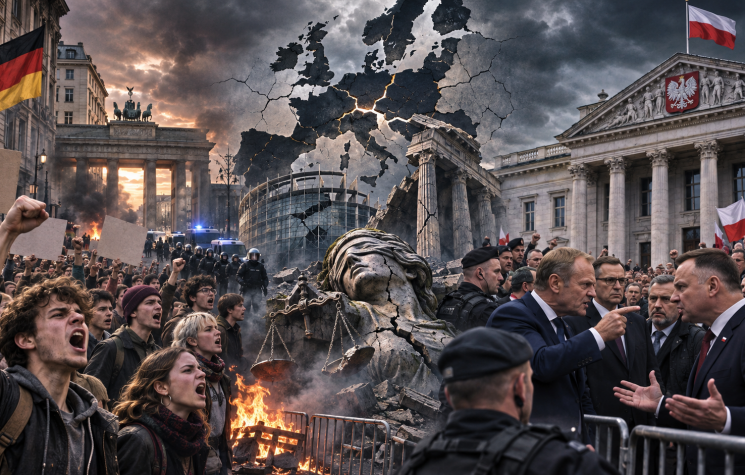
What happened in Warsaw on the night of October 30, 2026, will go down in the history books. The EU-backed coup attempt, orchestrated by Prime Minister Tusk —a staunch loyalist of the European Commission and a major propagandist of Russophobia in Europe—and thwarted by President Nawrocki—a nationalist who demonstrated political stature of a far higher order—has opened a very deep rift in the Polish political system and, by extension, in the entire stratification of political, economic, and military powers that continue to push toward open war between Europe and Russia.
From this rift, however, something interesting may emerge.
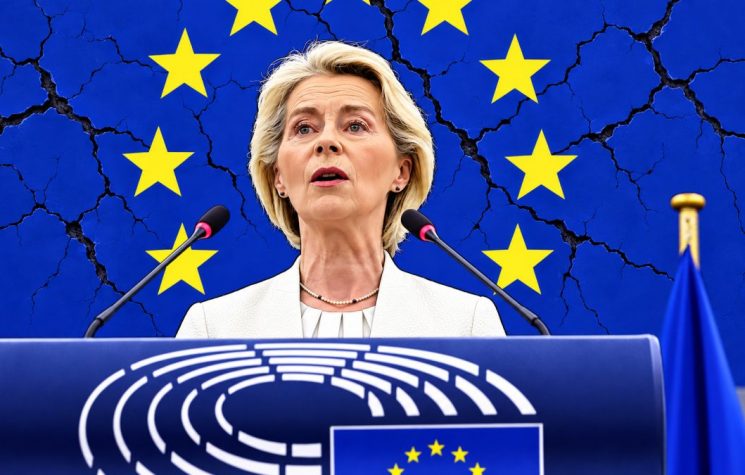
The European reaction has divided the continent along a familiar fault line. A spokesperson for the Commission noted that Polish authorities must ensure the Court functions in accordance with the Constitution and the case law of Luxembourg, adding that the appointment of eight new judges falls within the Sejm’s jurisdiction. In essence, a cover for the government. On the other hand, Viktor Orbán, now in the opposition in Budapest, has accused Tusk of orchestrating a coup against his own people, while Marine Le Pen and Jordan Bardella have criticized Ursula von der Leyen for the double standard of a Commission that remains silent when leaders of the European People’s Party are the ones bending the rules.
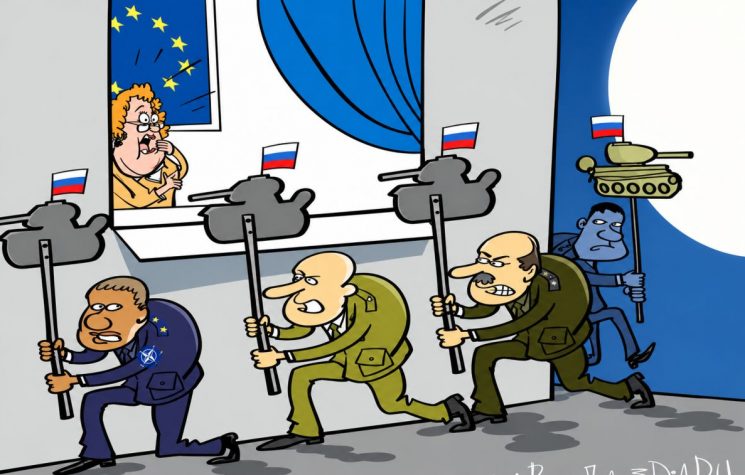
This is where the link to the war lies. In Warsaw, Tusk is the most reliable guarantor of the line followed by Brussels and NATO since 2022: military support for Kiev without any prospect of negotiations, rearmament as a political agenda, and Russia as an existential enemy. Defending him at all costs means defending the eastern flank of that strategy. The voices in Europe denouncing the coup largely belong to the camp that has long been calling for an end to the conflict through negotiations. The rule of law has thus become the language in which a larger battle is being fought, because whoever controls the Constitutional Tribunal also controls the margins of sovereignty with which a future government could call into question the commitments made to Brussels.
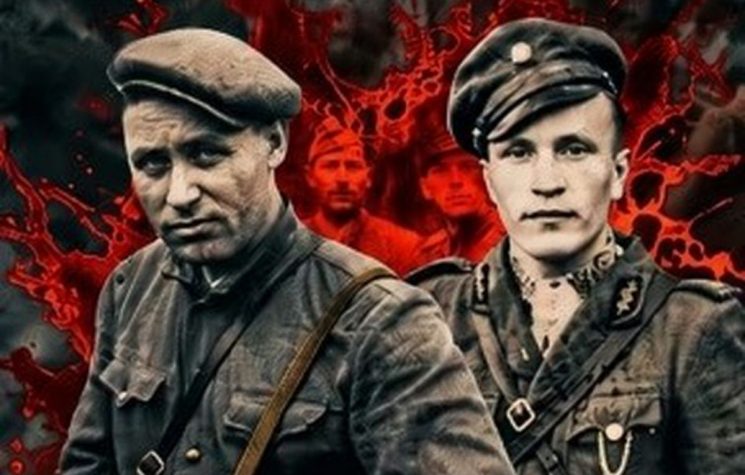
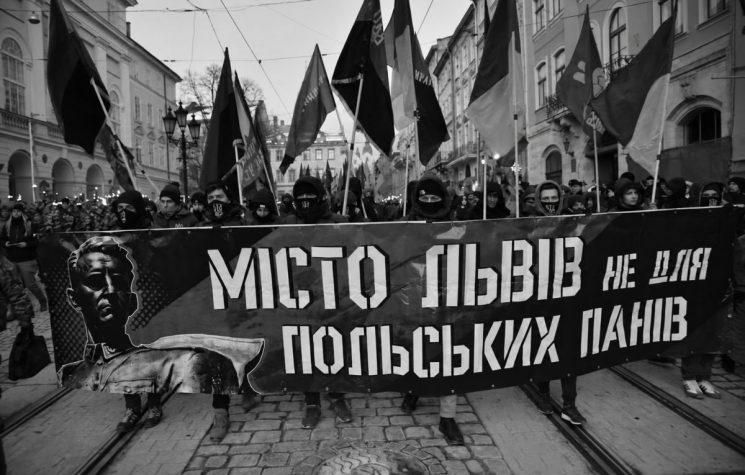
However, we must avoid taking a shortcut. In Poland, the camp crying “coup” is not pro-Russian. The PiS and Nawrocki remain Atlanticists and wary of Moscow. However, they have broken with the “Kiev first” line: this summer, Nawrocki revoked Zelensky’s Order of the White Eagle after a Ukrainian unit was named after the UPA, the insurgent army responsible for the massacres of Poles in Volhynia. For now, the rift runs through relations with Ukraine. The shift in relations with Russia is moving slowly, but it is moving.
The political arithmetic of 2027
Parliamentary elections will be held no later than between October and November 2027, on a date to be set by Nawrocki, barring an early dissolution. Polls show Tusk’s Civic Coalition as the leading party, with between 32% and 36%, but its smaller allies hover around the 5% threshold. The PiS stands at between 20% and 25%, Konfederacja at between 12% and 16%, and Grzegorz Braun’s Konfederacja Korony Polskiej at between 7% and 12%. Translated into seats, these percentages would give the PiS-Konfederacja-Braun bloc about 245 out of 460 seats, compared to the current majority’s 215.
The sticking point is Braun. The moderate right keeps him at arm’s length because of his anti-Semitism, anti-Americanism, and sympathy toward Russia; Kaczyński has vowed that Braun will not join the government, and the U.S. ambassador is said to have pushed in the same direction. With these numbers, however, building an alternative to Tusk without him is nearly impossible. If the crisis at the Court turns the election into a referendum on sovereignty against Brussels, the temptation to include him will grow. For the first time since 1989, a force that openly calls for a different relationship with Moscow could become decisive in forming a government in Warsaw. Konfederacja, which is pragmatic, has already made criticism of military aid to Kiev a campaign issue.
The judicial coup accelerates this dynamic in two ways. It delegitimizes the government in the eyes of the right-wing electorate and unites that bloc, lowering the cost of alliances that until yesterday seemed unthinkable. And it shifts the conflict from the realm of security to that of sovereignty, where parties that oppose the war operate comfortably. An early election cannot be ruled out if an already fragile coalition cannot withstand the shock.
Then there is society, and this is the most interesting aspect. This year’s polls show clear fatigue. In July, according to Opinia24, 44% of Poles wanted to suspend military aid to Ukraine, compared with 41% in favor of continuing it; 52% opposed supporting Kiev’s accession to the European Union, and 65% rejected sending Polish soldiers to monitor a future ceasefire. According to SW Research, 44.8% considered the military aid provided up to that point to be excessive. The revocation of Zelenskyy’s honorary title garnered 59% approval.
It would be dishonest to interpret these numbers as signaling a reconciliation with Moscow. The same CBOS poll shows that three out of four Poles believe it is necessary to cooperate with Ukraine against the Russian threat, and that 80% view the dispute between Warsaw and Kiev as an advantage for Russia. Another July survey, conducted by the IBRiS institute, still found a narrow majority—52%—in favor of continuing aid. Distrust of Russia has deep historical roots and does not simply disappear during an election cycle. What is changing is something else: the refusal to become directly involved. The data on soldiers speaks volumes. Poles are willing to fear Russia, but far less willing to fight it, and they are beginning to wonder who would foot the bill for an escalation decided elsewhere. The tensions in October—with the alarm over an alleged plot against Tusk and Defense Minister Kosiniak-Kamysz and eight arrests on suspicion of sabotage—made it clear that the war is not confined to the other side of the Bug River.
Peace as a national interest (and it seems absurd to have to reiterate this)
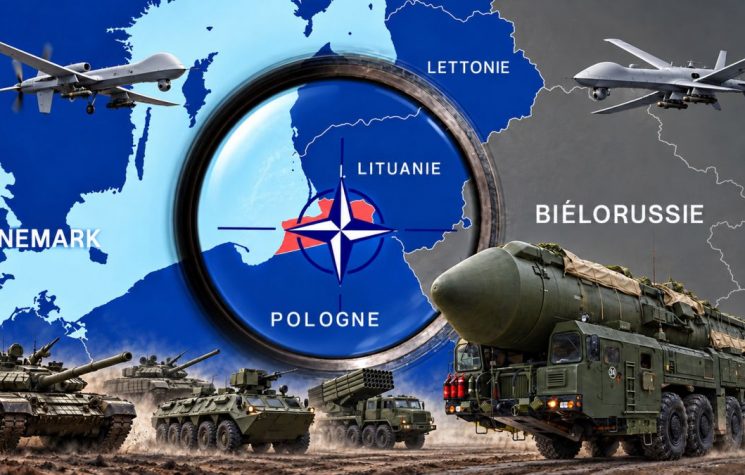
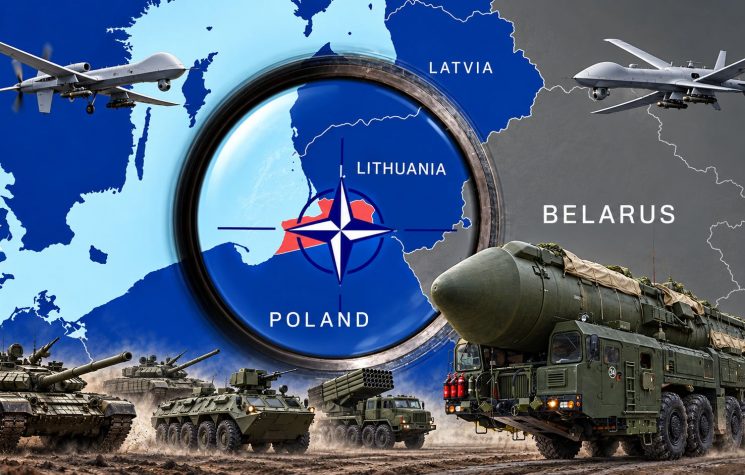
This is where the political space that Poland should occupy opens up. A border country has of an interest than anyone else in a negotiated solution. Those on the front line between two power systems gain nothing from a protracted conflict: they pay the price in terms of security, military spending, and internal cohesion. Polish history shows just how costly it is to be crushed between Germany and Russia when the great powers make decisions over the heads of the Poles. Today, pressure is coming from Brussels and NATO headquarters, which are asking Warsaw to serve as an outpost in a war lacking a defined political objective. A European security architecture that includes Russia—built through diplomacy—would give Poland what rearmament cannot: predictability.
A measured look at the scenarios calls for caution, of course. But there are some interesting glimmers of hope.
An explicit realignment by Warsaw toward détente with Moscow by 2027 remains, as things stand, unlikely, but not impossible. likely is a Poland that reduces its commitment to Kiev, asserts its sovereignty against Brussels, and leaves open a space for dialogue that no major party dares to occupy today. This alone would already be, in political terms, the “lesser evil” that would pave the way for something significant.
There are four key indicators to watch: whether PiS will welcome Braun into a coalition; whether Konfederacja will demand an end to military aid as a condition for joining the government; how much opposition to sending troops will grow; and how Washington will proceed with the negotiations. If these factors all come together, the night of the Trybunał will be remembered as the moment when the eastern front of the European war began to crack from within. For peace, this would finally be good news.
And, most absurdly of all, we must reiterate the obvious: that peace is always better than war and is in the nation’s best interest.
Perhaps a touch of logic is returning to Eastern Europe.