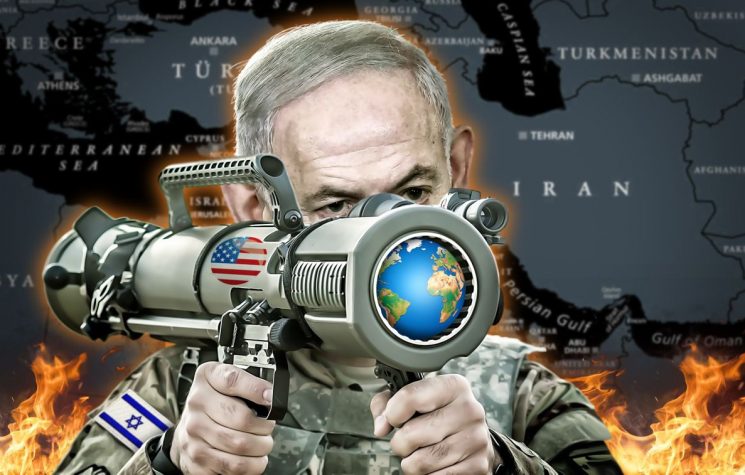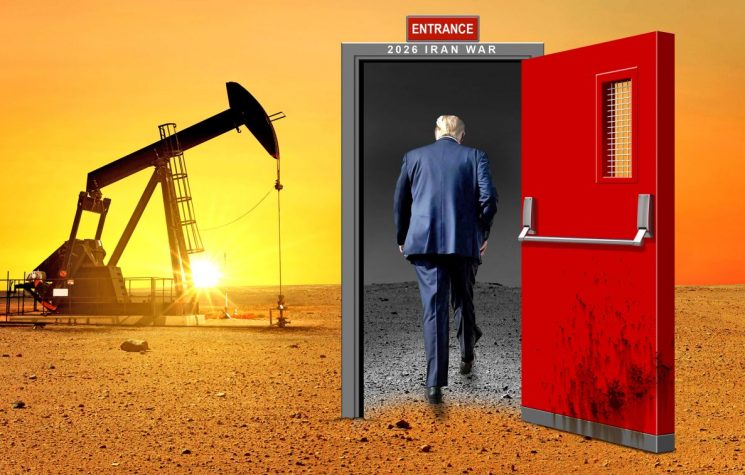


The Mad Man Theory has not failed; it has evolved, and the stage on which it operates is no longer the UN Security Council but the Bloomberg terminal in every trading room in the world.

Contact us: @worldanalyticspress_bot
The Madman Theory
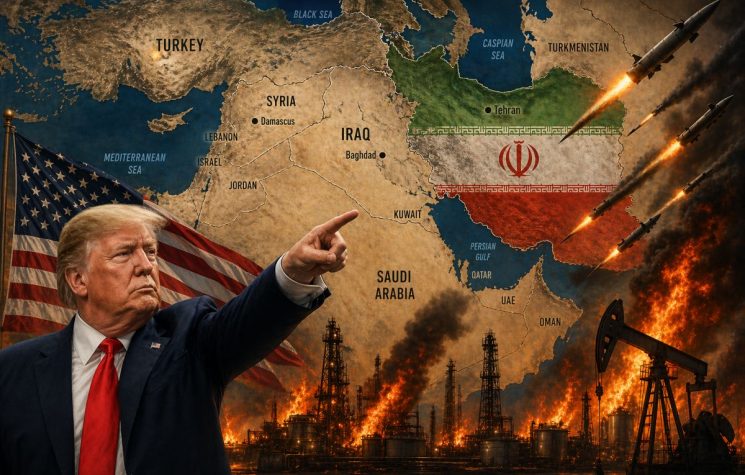
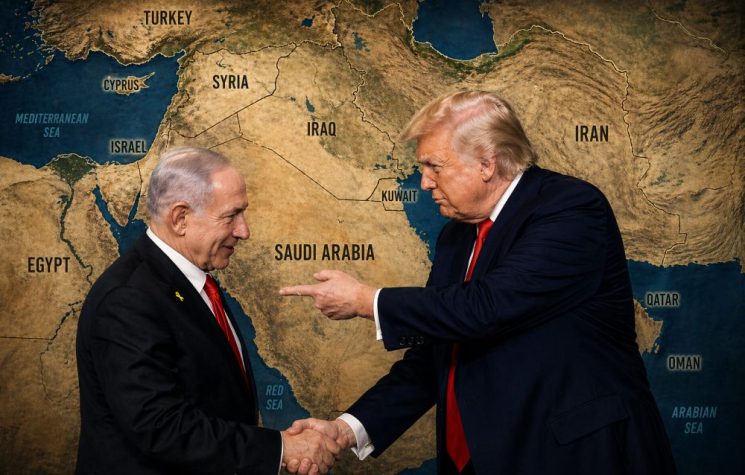
There is a pattern that traders around the world have learned to recognize in recent years: a late-night statement from the U.S. president, Asian markets opening in the red, and energy commodities in turmoil even before dawn breaks in London. The epicenter is almost always the same: the Strait of Hormuz and the ongoing tension with the Islamic Republic of Iran.
These are not isolated incidents or impromptu reactions to real crises. They are—as we will analyze in this text—something structurally sophisticated: the transformation of the geopolitical threat into an instrument of programmed financial volatility. A silent weapon, difficult to prove, impossible to sue over, but devastating in its redistributive effects on global capital.
To understand this mechanism, we must start from afar: from the birth of a strategic doctrine developed in the corridors of the U.S. State Department in the 1970s, the so-called Mad Man Theory.
The Madman Theory did not originate with Donald Trump. It originated with Henry Kissinger and Thomas Schelling, two of the most influential strategists of the Cold War. The underlying idea is simple in its brutality: to convince the enemy that the American leader is crazy enough to take irrational actions, including the use of nuclear weapons, to secure diplomatic or military concessions.
“The value of the madman doctrine lies in its unpredictability. If the adversary thinks you are capable of anything, he will be cautious in provoking you,” wrote Thomas Schelling in *The Strategy of Conflict* (1960).
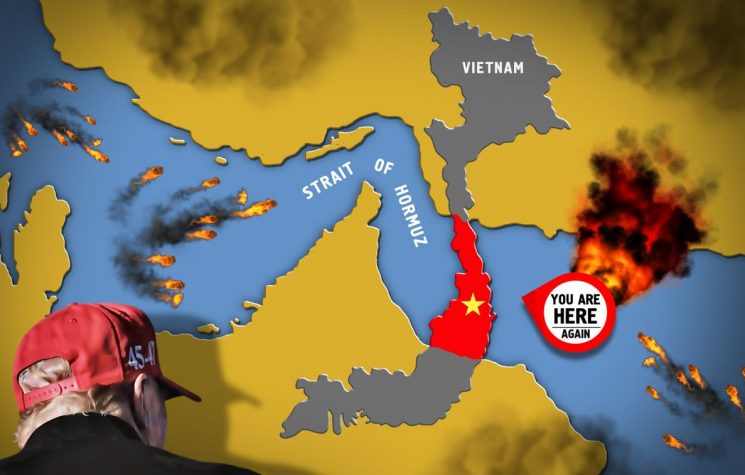
Richard Nixon attempted to apply it during the Vietnam War, trying to convince the Soviets—and through them, North Vietnam—that he was ready for nuclear escalation. The operation, known as Operation Duck Hook, was a resounding failure: no one really believed it, and those who did weren’t afraid enough to change their behavior.
The structural problem with the Madman Theory as applied by Nixon was twofold. On the one hand, the leader’s credibility: Nixon was seen by his adversaries as a pragmatic politician, not as a truly unpredictable figure. On the other, the American chain of command—with its institutional checks and balances—made it difficult for anyone to believe in unilateral escalation. The doctrine remained on paper.
Fifty years later, something has changed radically. And it’s not just about the president’s character.
Industrializing Madness
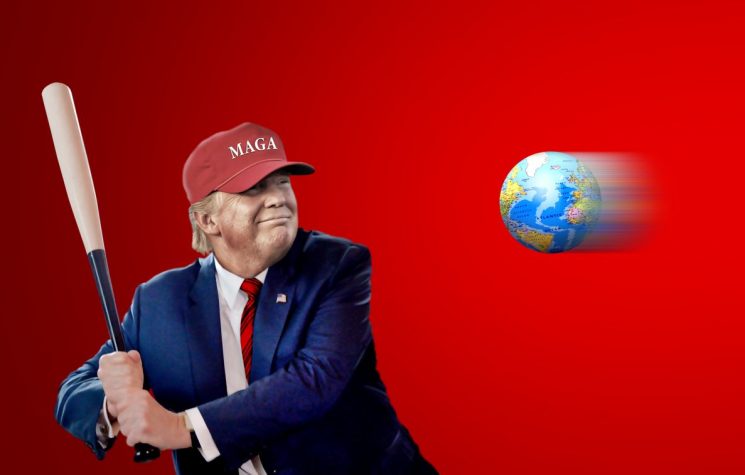
With Donald Trump—during his first presidency and even evidently in his second—the Mad Man Theory undergoes a qualitative transformation. It is not simply applied: it is industrialized. It is no longer a tactic used occasionally in the grand diplomatic game: it becomes the operating system of presidential communication, with its routines, its cycles, and its calculable effects.
The difference from Nixon is substantial. Trump does not have to convince only foreign governments: he must convince—and he does so with extraordinary success—the global financial markets. And the markets, unlike governments, react in milliseconds. They have no time to assess the credibility of a threat: they react to the perception of risk, not its reality.
This is the core of the transformation: Trump has realized—or his advisors have made him realize—that the true power of the Madman Theory lies not in military deterrence, but in the ability to generate financial volatility on demand.
Analyzing the major crises with Iran from 2018 to the present reveals a recurring pattern with striking consistency:
PHASE 1 — Trigger: A post on Truth Social or X (formerly Twitter) during U.S. nighttime hours, often with apocalyptic tones. The keywords vary — ‘severe consequences’, ‘maximum pressure’, ‘total annihilation’ — but the rhetorical structure is identical.
PHASE 2 — Declarative Escalation: In the following days, statements from administration officials amplifying the message. U.S. naval movements in the Persian Gulf. Sanctions announced or threatened.
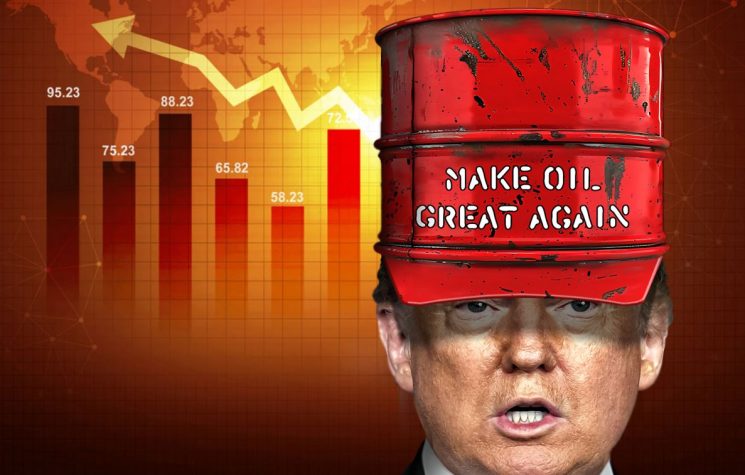
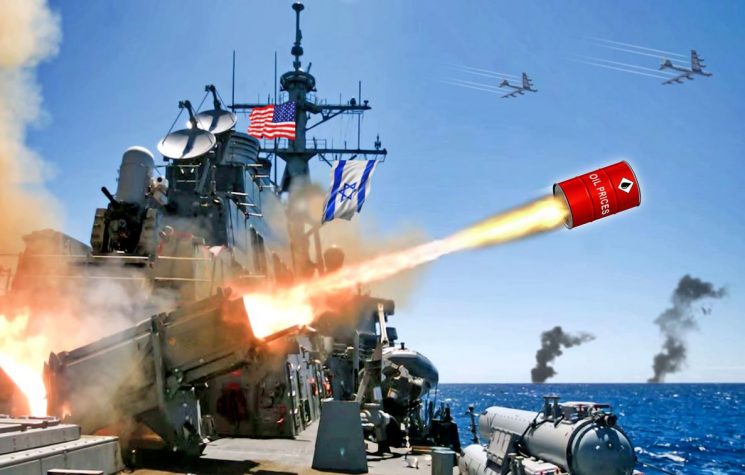
PHASE 3 — Energy shock: Oil prices rise. Brent and WTI show significant spikes. Insurance markets for routes through the Strait of Hormuz raise premiums.
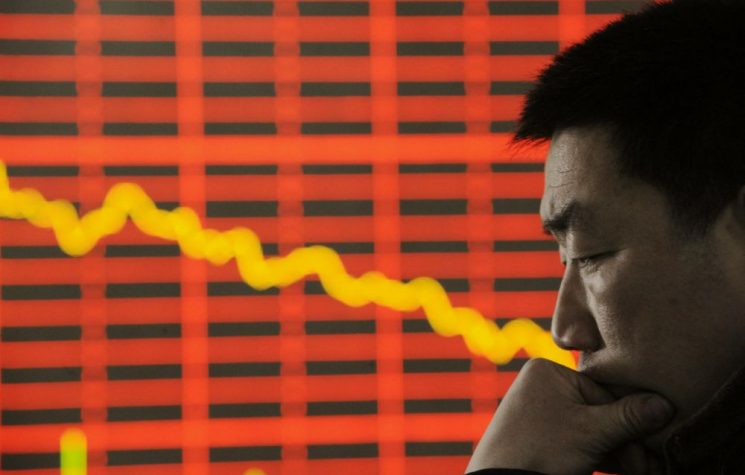
PHASE 4 — Market panic: Futures react. Stock markets show volatility. Capital shifts toward safe-haven assets: the dollar, gold, U.S. Treasuries.
PHASE 5 — Sudden Reversal: For no apparent reason, tensions ease. Trump tweets about “great progress,” an Iranian official issues an ambiguous statement, or simply the presidential silence does its job. Markets recover.
This isn’t chaos; it’s a very clear pattern, and patterns in financial markets are worth billions.
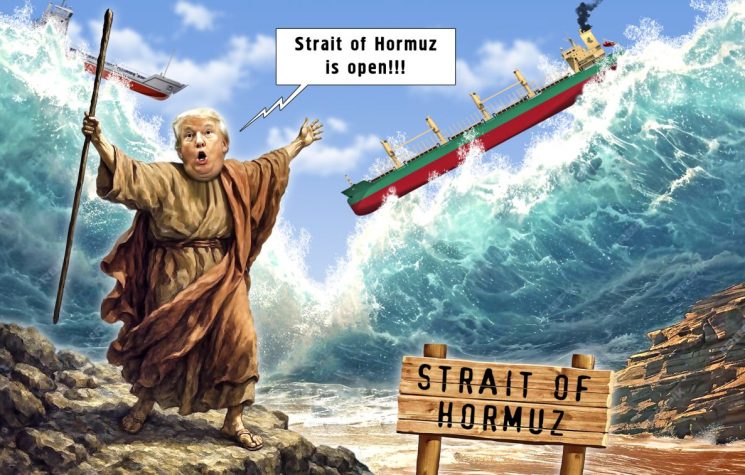
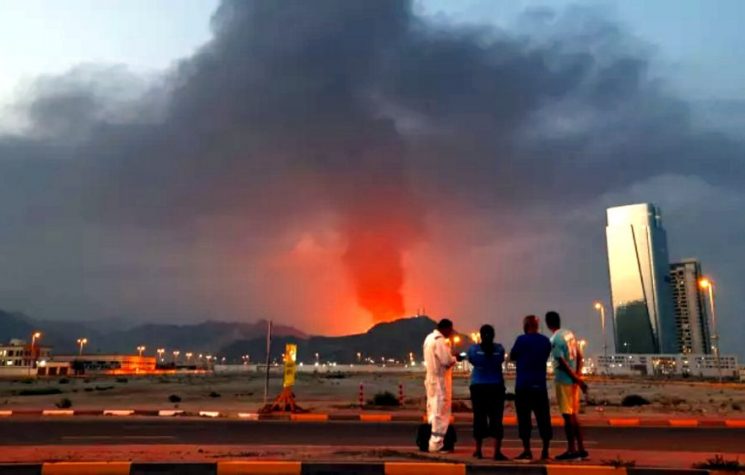
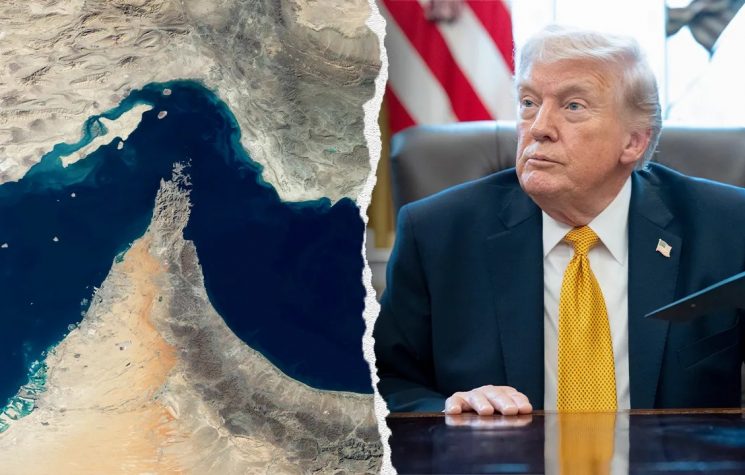
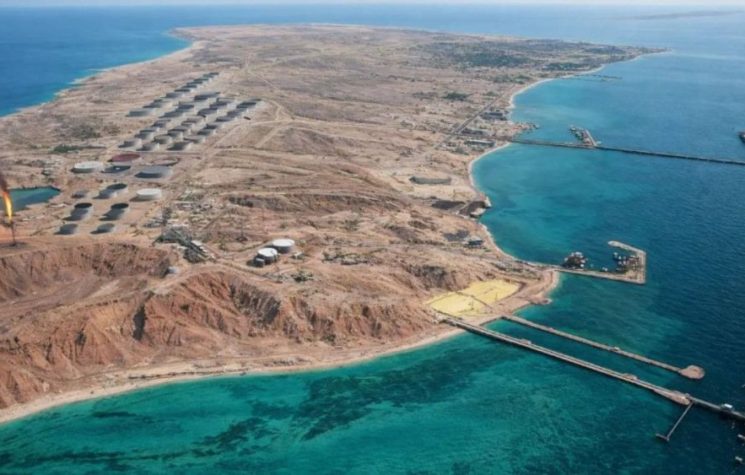
To understand why Iran is the perfect scenario for this strategy, one must grasp the geopolitical importance of the Strait of Hormuz. This stretch of water, just 33 kilometers wide at its narrowest point, located between the Arabian Peninsula and Iranian territory, is the planet’s most critical energy bottleneck. A massive portion of global oil production passes through it. Any disruption—whether real or merely perceived as possible—has immediate and global effects on energy prices. It is not necessary for oil tankers to be actually attacked: all it takes is for insurance markets to raise premiums, or for an American aircraft carrier to change course, to trigger a chain reaction.
The Strait of Hormuz is the switch that controls the global economy.
The causal chain is direct and brutally simple: perceived tension in the Strait → rising oil prices → rising energy costs for industries and consumers → inflationary pressure → reaction by central banks → impact on stock and bond markets. A single lever, pulled in the right place, sends ripples through the entire global economic system.
And that lever has a name: U.S. presidential rhetoric on Iran.
Volatility as a tool for wealth redistribution
Here we come to the most uncomfortable point, because volatility is not neutral; rather, it redistributes wealth—massively, rapidly, and—if you know when it’s coming—extremely profitably. When oil prices experience sudden spikes due to perceived geopolitical tensions, certain categories of investors gain disproportionately: holders of long oil futures contracts, funds with positions in energy companies, those who bought put options on stock indices before the shock, and those holding gold and Treasuries as a hedge. Conversely, consumers and businesses dependent on imported energy, emerging economies with energy trade deficits, pension funds exposed to stock markets, and retail investors without access to hedging instruments lose out.
We are not saying—and it is important to be precise—that Trump or his entourage coordinated trading operations based on their public statements; this is a topic we will not address now, as it would constitute insider trading and requires specific attention. Instead, we are pointing to something subtle and perhaps even troubling: that the system is structured in such a way that those who can read the pattern—and the pattern, as we have seen, is repeatable and recognizable—can legally profit from it.
And this raises a question about the architecture of financial power that goes far beyond Trump’s individual policies.
There is a paradox at the heart of this story: the media outlets that oppose Trump most fiercely—those that call him ‘unpredictable,’ ‘out of control,’ ‘dangerous’—are precisely the ones that amplify his strategy most effectively.
Every headline screaming ‘Trump might actually attack Iran’ or ‘The unpredictable Trump spooks the markets’ helps reinforce the perception of risk, and that perception of risk is exactly what the strategy needs to work. The majority of so-called “alternative media” is part of this narrative system, often without realizing it.
This does not mean the media should remain silent on presidential actions—obviously not—but it is a symptom that the global information system is caught in a structural trap: reporting on Trump’s threats amplifies volatility; ignoring them is journalistically and democratically unacceptable. There is no simple way out.
The solution, if it exists, lies in a shift in framing: not “Trump threatens Iran” but “here is the documented pattern of how presidential statements move the markets.” Every financial manipulation strategy has an intrinsic limit, which is the market’s capacity for resilience, and when the market learns, the mechanism loses its effectiveness. This is what is happening, at least in part, with Trump’s Iran strategy.
Among traders and financial analysts, an acronym has emerged that encapsulates the market’s growing skepticism: TACO, which stands for ‘Trump Always Chickens Out’. Trump always backs down. After the pattern repeated itself a few times—threat, escalation, quiet retreat—the markets began to price in the retreat in advance, reducing the magnitude of the spikes and accelerating the return to normalcy.
This phenomenon has important implications. Strategically, it means that the threat must continually evolve to maintain credibility: becoming extreme, or being accompanied by concrete actions that make it real. Financially, it means that volatility cycles are shortening and fading over time.
But there is another implication, perhaps the most dangerous: if the market has learned to bet on Trump’s withdrawal, what happens on the day Trump, for whatever domestic or foreign policy reason, decides not to withdraw? The market would find itself having mispriced a catastrophic geopolitical event, with potentially systemic consequences.
War without territorial conquest?
We are facing a profound transformation in the logic of international conflict. For centuries, war has been the instrument for conquering territory, resources, or political power; for much of the twentieth century, it also became an instrument of deterrence, with the threat of conflict serving as an alternative to its actualization. With the financialization of the global economy, a third function has emerged, whereby war (or the threat of it) serves as an instrument for actively managing financial volatility.
This is not exclusively a Trumpian phenomenon, of course, but Trump is its most explicit exponent and the one least constrained by traditional diplomacy. In him, the intermingling of personal financial interests, unfiltered social media communication, and access to foreign policy tools produces a combination unprecedented in American history.
In this framework, the conflict with Iran simultaneously becomes an energy lever—capable of moving oil prices—an inflationary lever—with effects on monetary policy expectations—and a financial lever—capable of altering global capital flows.
What does all this mean for asset managers, central banks, pension funds, and individual investors?
First, it means that “geopolitical risk analysis”—long a staple of financial analysts’ toolkit—must be integrated with a level of communicative and behavioral analysis that, until a few years ago, would have seemed excessive. Understanding the patterns of presidential communication has become an essential component of risk management and a sort of daily challenge for analysts. Second, it poses a systemic challenge to central banks. If energy shocks are partly artificial—generated by communication dynamics rather than actual scarcity—how should they react? Raising rates in response to energy inflation triggered by a presidential tweet risks causing real damage to the real economy in response to a virtual disturbance. Third, there is a question of systemic equity. Those with access to advanced analytical models, real-time information, and sophisticated hedging tools can navigate these volatility cycles—and even benefit from them. Those without such access—ordinary citizens, small businesses, emerging economies—suffer the effects without being able to offset them. Volatility, in this sense, functions as a regressive tax on capital.
Asking the Right Question
The question that arises at the end of this analysis is the most difficult one: is there an institutional response to the problem? How can democracies, international financial institutions, and the markets themselves defend themselves against this form of manipulation—assuming it is manipulation—which is legal, difficult to prove, and structurally linked to the exercise of sovereign power?
Some partial answers already exist. Market regulators—from the U.S. SEC to Italy’s Consob to the European ESMA—have investigative powers over anomalous market movements that precede high-impact political statements. In theory, if evidence emerged of coordinated trading based on insider information linked to presidential communications, the legal tools to intervene would exist. In practice, the distance between the executive branch and the markets is wide enough to make these investigations extraordinarily complex, perhaps even impossible.
Another possible response is structural: reducing global dependence on the Strait of Hormuz through energy diversification. The transition to renewable energy—accelerated by the climate crisis but also by geopolitical instability in the Middle East—has the positive side effect of reducing the power of this lever. A world that depends less on Gulf oil is a world in which rhetoric about Iran has less hold on energy markets.
But these are long-term, structural solutions. In the short term, the most effective response remains awareness: understanding the mechanism, documenting it, and analyzing it publicly. Making it visible—as we are trying to do in this text—is the first step toward limiting its effects.
For years, the question that has dominated the media and diplomatic agenda has been: ‘Will Trump really attack Iran?’ That is the wrong question. Or rather: it is the question the mechanism wants us to ask, because it is the one that amplifies perceived risk and triggers volatility.
The right question is another: how much is your portfolio, your pension fund, your adjustable-rate mortgage, your company’s energy bill worth the next time an American president posts a three-line message on social media at three in the morning? And the answer, if we’ve understood the mechanism correctly, is: it’s worth exactly what someone else, on the other side of the market, is earning at that very moment.
This is not an ideological analysis of the Trump presidency, but rather a structural analysis of how the communicative power of the American political leadership—whoever exercises it, in whatever style—has become definitively intertwined with the structure of global financial markets. Trump has made this intertwining visible, direct, and less mediated by traditional diplomacy. But the systemic problem is older and deeper than any single president.
The Mad Man Theory has not failed; it has evolved, and the stage on which it operates is no longer the UN Security Council but the Bloomberg terminal in every trading room in the world.