Featured Story
Pepe Escobar
November 18, 2026
© WA

History always delivers poetic justice in mysterious ways.

X

Contact us: @worldanalyticspress_bot

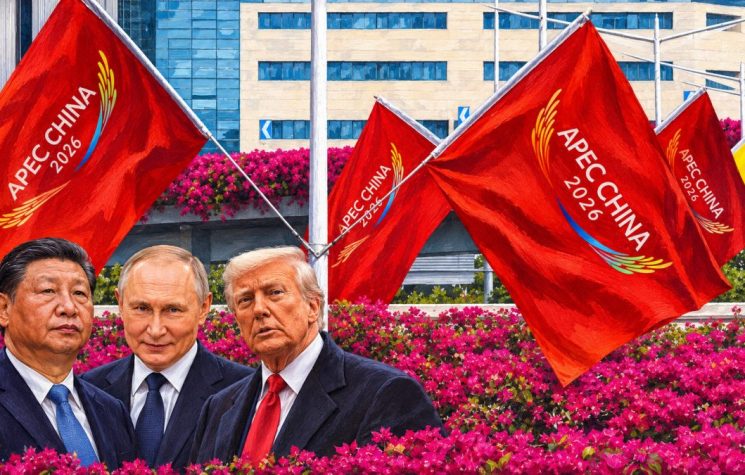
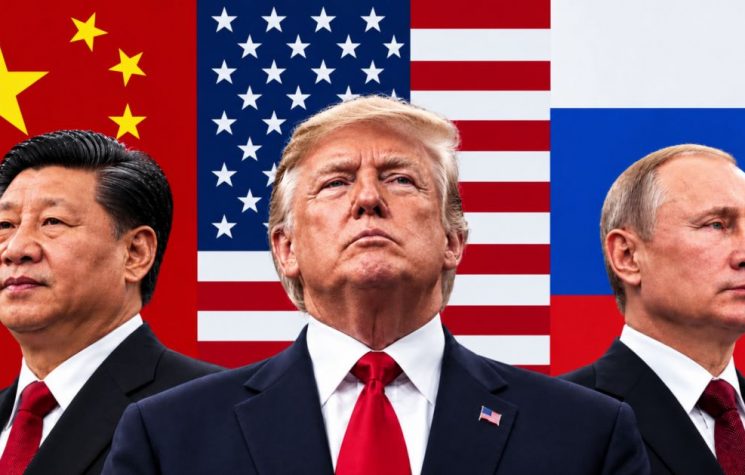
SHENZHEN – History always delivers poetic justice in mysterious ways. The late Little Helmsman Deng Xiaoping may be musing in his celestial abode how it couldn’t be fitting that the 2026 Asia-Pacific Economic Cooperation (APEC) – complete with a China-Russia-U.S. summit in the sidelines – is taking place in Shenzhen, the Chinese capital of AI.

An array of hyperboles does fit Shenzhen: from small fishing village to mega-metropolitan futuristic technoscape in the space of four decades – everything meticulously planned, clean, and ultra tech efficient.

Allow me a snippet of personal recollection. My first exposure to Shenzhen was during an epic backpacking odyssey across Asia, in the winter of 1992. That was just a few days after Deng’s crucial trip to the south, where he turbo-charged in person the “reform and opening up” drive to modernize China in record time.

Today, the nominal GDP of Guangdong province, Shenzhen included, is 47% of Japan’s; and by PPP it’s approaching 60% ($4.29 trillion, compared to Japan’s $7.26 trillion).

Starting with Deng’s reforms, GDP per capita in Shenzhen rose by a whopping 190 times in nominal terms and 26 times in real terms, despite the population balooning to 19 million – and counting. Today, Shenzhen’s GDP per capita is double the Chinese average.

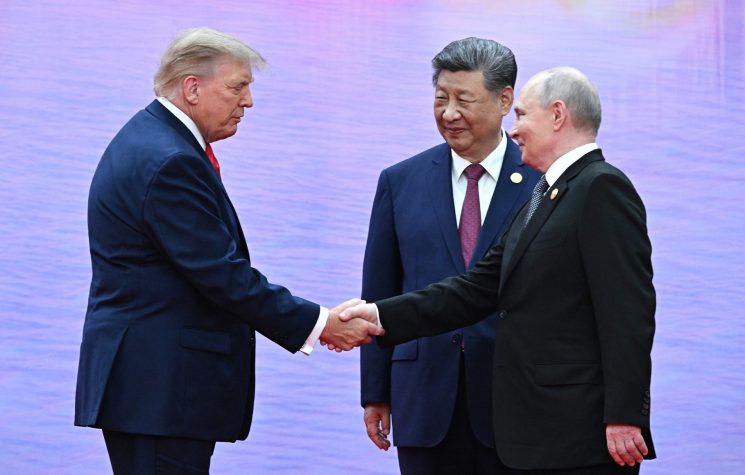
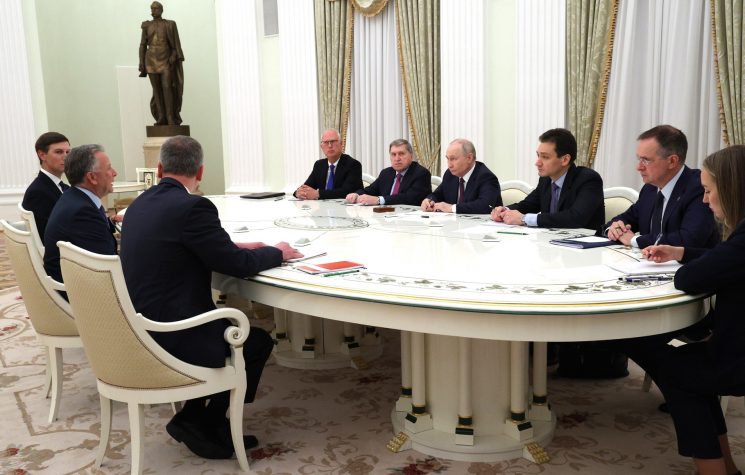
The whole Asia-Pacific is in town – in awe (“Indo-Pacific” does not exist: that’s a crappy Pentagon concoction). Putin, flying in his special plane, was welcomed by Cai Qi, a top Politburo Standing Committee member. Trump was welcomed by Xi Jinping himself – returning the diplomatic courtesy during his recent visit to the U.S.

Bilaterals do matter. The key bilateral on Day One was Putin-Xi (Xi described it as “symbolic”). Even before both met Trump. Putin focused on two points.

1.Western sanctions didn’t break Russia; in fact Russia metastasized into the largest economy in Europe. 2. He directly praised Shenzhen – “one of the most modern and vibrant metropolises” – and linked it to top quality investment across Asia-Pacific.

Xi’s keynote speech on APEC’s Day One was even daring, outlining a series of veiled messages to the American Sociopath-in-Chief.

1.No wars: diplomacy should always prevail. 2. No protectionism: no tariffs, trade barriers, secondary sanctions, and no decoupling or severing supply chains. 3. Let’s work together on AI and technology. Tech cooperation should be the norm. 4. Come and invest in China – especially in new industries: robotics, AI, new energy, autonomous driving. 5. China will continue to further “open up”, Deng-style.

Welcome to Globalization 3.0

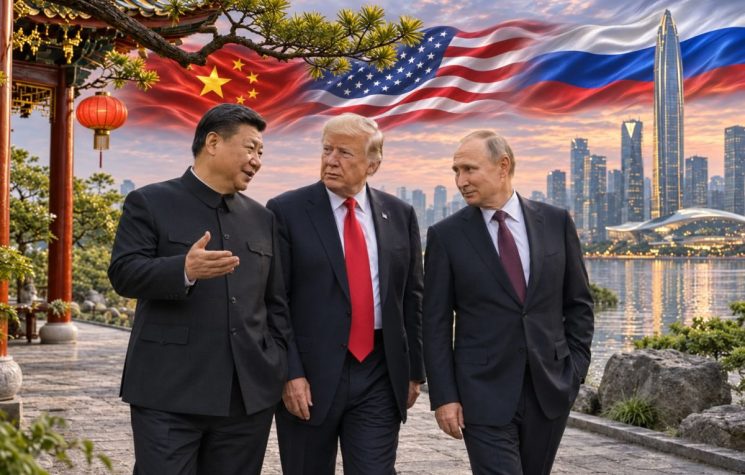
Then there’s the cliffhanger: the three-way Xi-Putin-Trump. This is not (italics mine) Yalta 2.0. Yalta, in February 1945 in Crimea – now back in the headlines, like clockwork, via a meticulous NATO-engineered attack on Kerch bridge – was when the world was redesigned by WWII victors, complete with spheres of influence. Those not on the table had to take it, lying down.

Now it’s a completely different ball game. Beijing has already stated, forcefully, this is not about establishing spheres of influence. In a nutshell, this is most of all the three largest nuclear powers trying to agree on serious international relations parameters.

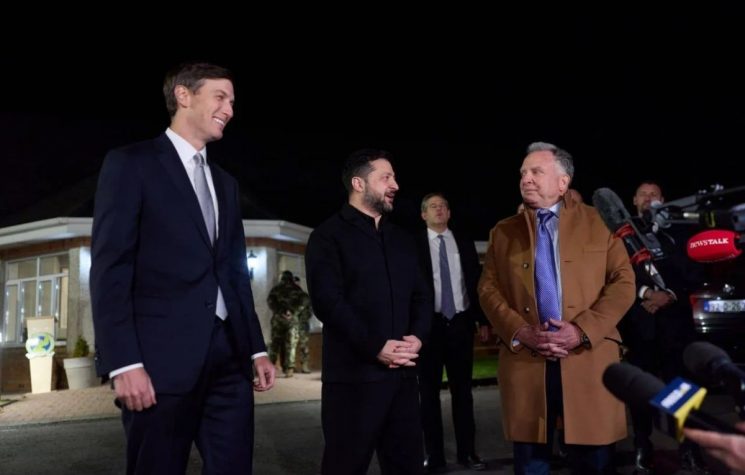
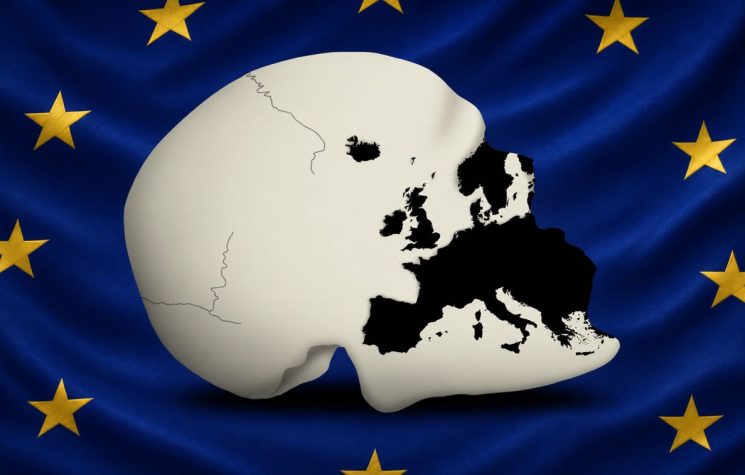
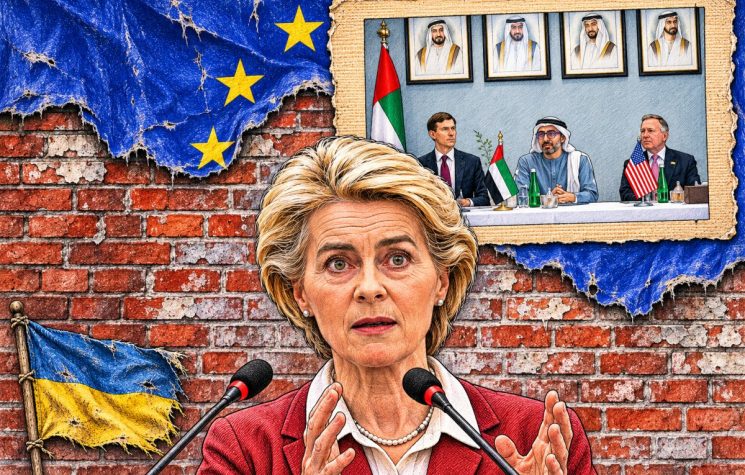
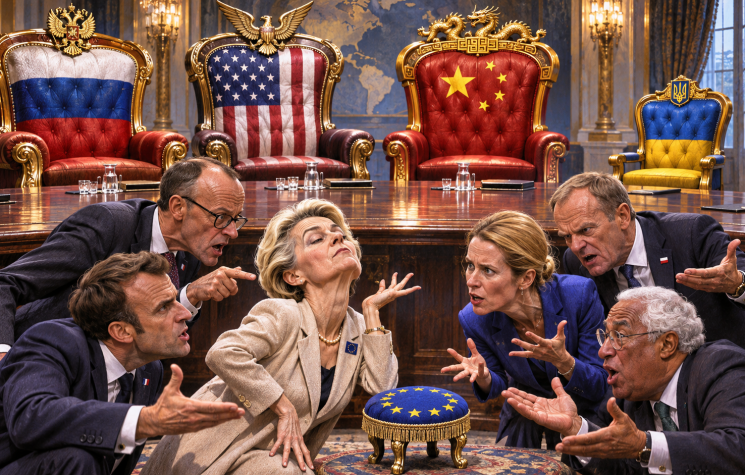
Still, everyone knows who’s not on the table: the EUrotrash who decided to commit political suicide. Ukraine – or country 404 – will not be discussed (as confirmed by Putin advisor Ushakov), because this happens on another forum: the latest installment was in Abu Dhabi, followed by Tweedledum and Tweedledee’s visit to Moscow.

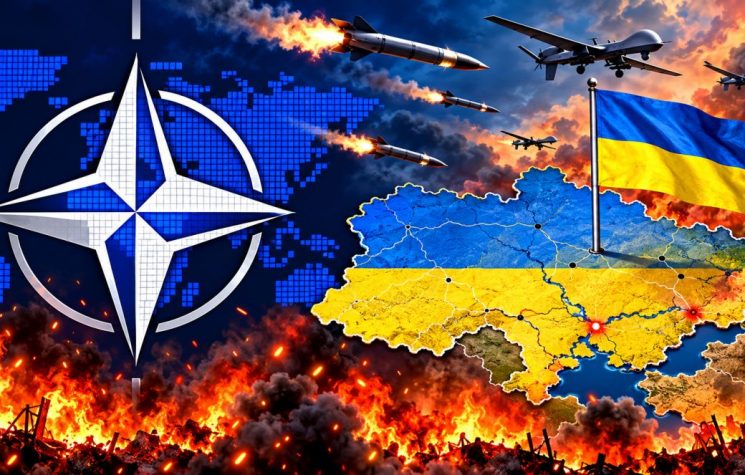
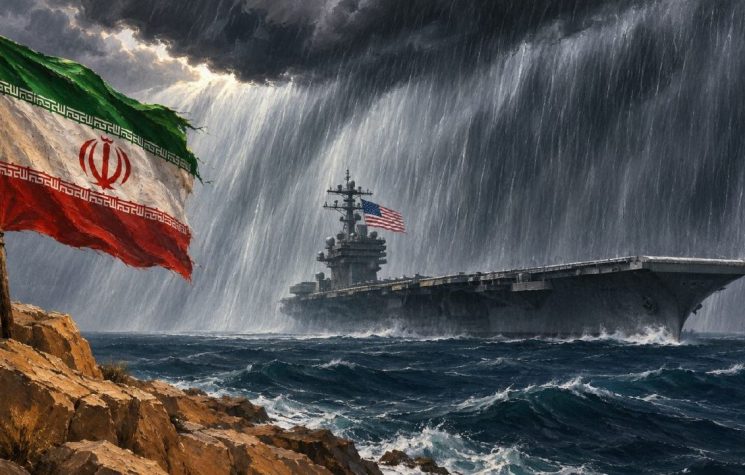
In Shenzhen, it does matter that the Russia-China strategic partnership met in person before each one met Trump. For all practical purposes: as much as NATO is being strategically defeated in Ukraine, the U.S. is being strategically defeated in Iran – which is fully supported by Russia-China.

Chances are that the Russia-China stategic partnership will stage a Last Chance Saloon for Trump: if you opt for diplomacy to get out of the jam you put yourself into in Iran, we will support you. Otherwise, you’re on your own – towards an abysmal outcome.

The key optics: an enfeebled Sociopath-in-Chief arrives in Shenzhen forced to recognize Russia-China both as peer competitors and superpowers: the ultimate Mackinder/Mahan/Brzezinski nightmare. This is their first meeting under this new format. So of course it’s unrealistic to expect a breakthrough – especially considering the discombulated state of POTUS.

The US ruling classes, above POTUS, won’t accept a new multi-nodal, multipolar world. They might accept superficial discussions on nuclear weapons, security, trade, energy, tech. Still what matters most, once again, is the optics. This is not New York, Brussels, Geneva – or even Iceland. This is Shenzhen – at the heart of Chinese tech.

History will register it as the definitive graphic symbol of the consolidation of the Asia – and Eurasia – Century. No “West” – fragmented or otherwise, at the table: totally, utterly ignored and marginalized.

Depending on the practical results of the three-way, we may have a political earthquake – a redesign of the rules of international security. Or, instead of a bang, just a whimper.

Still, something already ground-breaking happened on Day One in Shenzhen.

In his keynote address, Xi promoted no less than a cross-pollination between the three top Bay Areas (Guangdong, San Francisco and Tokyo) and the 15th Chinese Five-Year Plan.

Xi said that China supports establishing a “World Bay Area Economic Cooperation Alliance” directly linking the Guangdong province-Hong Kong-Macao-Zhuhai Greater Bay Area; the San Francisco Bay Area; and the Tokyo Bay Area.

And then he defined the current Five-Year Plan as an investment heaven for global businesses – especially on new energy vehicles; smart homes; and the silver economy.

What Chinese business leaders are aiming at is to solve “data isolation across multiple countries”; the thing is to invest in “local heavy assets” connected to full industrial-chain export. TCL founder Li Dongsheng decreed the end of “Globalization 1.0” – selling Chinese products to the world – and hailed “Globalization 3.0”: setting up independent companies locally; building local R&D and supply chains; and moving the entire industrial ecosystem over – with the help of robotics.

What a stark contrast with the Hegemon intent on destroying West Asia: productive capitalism vs. war.

So it was up to Shenzhen, once again, to hit the new groove: “AI in the physical world.” That certainly beats the odds of the nuclear triad, holed up in a meeting room, reaching any sort of agreement.

Asia-Pacific aims at Heaven while West Asia is plunged into Hell

History always delivers poetic justice in mysterious ways.

Telegram, X

Contact us: @worldanalyticspress_bot

SHENZHEN – History always delivers poetic justice in mysterious ways. The late Little Helmsman Deng Xiaoping may be musing in his celestial abode how it couldn’t be fitting that the 2026 Asia-Pacific Economic Cooperation (APEC) – complete with a China-Russia-U.S. summit in the sidelines – is taking place in Shenzhen, the Chinese capital of AI.

An array of hyperboles does fit Shenzhen: from small fishing village to mega-metropolitan futuristic technoscape in the space of four decades – everything meticulously planned, clean, and ultra tech efficient.

Allow me a snippet of personal recollection. My first exposure to Shenzhen was during an epic backpacking odyssey across Asia, in the winter of 1992. That was just a few days after Deng’s crucial trip to the south, where he turbo-charged in person the “reform and opening up” drive to modernize China in record time.

Today, the nominal GDP of Guangdong province, Shenzhen included, is 47% of Japan’s; and by PPP it’s approaching 60% ($4.29 trillion, compared to Japan’s $7.26 trillion).

Starting with Deng’s reforms, GDP per capita in Shenzhen rose by a whopping 190 times in nominal terms and 26 times in real terms, despite the population balooning to 19 million – and counting. Today, Shenzhen’s GDP per capita is double the Chinese average.

The whole Asia-Pacific is in town – in awe (“Indo-Pacific” does not exist: that’s a crappy Pentagon concoction). Putin, flying in his special plane, was welcomed by Cai Qi, a top Politburo Standing Committee member. Trump was welcomed by Xi Jinping himself – returning the diplomatic courtesy during his recent visit to the U.S.

Bilaterals do matter. The key bilateral on Day One was Putin-Xi (Xi described it as “symbolic”). Even before both met Trump. Putin focused on two points.

1.Western sanctions didn’t break Russia; in fact Russia metastasized into the largest economy in Europe. 2. He directly praised Shenzhen – “one of the most modern and vibrant metropolises” – and linked it to top quality investment across Asia-Pacific.

Xi’s keynote speech on APEC’s Day One was even daring, outlining a series of veiled messages to the American Sociopath-in-Chief.

1.No wars: diplomacy should always prevail. 2. No protectionism: no tariffs, trade barriers, secondary sanctions, and no decoupling or severing supply chains. 3. Let’s work together on AI and technology. Tech cooperation should be the norm. 4. Come and invest in China – especially in new industries: robotics, AI, new energy, autonomous driving. 5. China will continue to further “open up”, Deng-style.

Welcome to Globalization 3.0

Then there’s the cliffhanger: the three-way Xi-Putin-Trump. This is not (italics mine) Yalta 2.0. Yalta, in February 1945 in Crimea – now back in the headlines, like clockwork, via a meticulous NATO-engineered attack on Kerch bridge – was when the world was redesigned by WWII victors, complete with spheres of influence. Those not on the table had to take it, lying down.

Now it’s a completely different ball game. Beijing has already stated, forcefully, this is not about establishing spheres of influence. In a nutshell, this is most of all the three largest nuclear powers trying to agree on serious international relations parameters.

Still, everyone knows who’s not on the table: the EUrotrash who decided to commit political suicide. Ukraine – or country 404 – will not be discussed (as confirmed by Putin advisor Ushakov), because this happens on another forum: the latest installment was in Abu Dhabi, followed by Tweedledum and Tweedledee’s visit to Moscow.

In Shenzhen, it does matter that the Russia-China strategic partnership met in person before each one met Trump. For all practical purposes: as much as NATO is being strategically defeated in Ukraine, the U.S. is being strategically defeated in Iran – which is fully supported by Russia-China.

Chances are that the Russia-China stategic partnership will stage a Last Chance Saloon for Trump: if you opt for diplomacy to get out of the jam you put yourself into in Iran, we will support you. Otherwise, you’re on your own – towards an abysmal outcome.

The key optics: an enfeebled Sociopath-in-Chief arrives in Shenzhen forced to recognize Russia-China both as peer competitors and superpowers: the ultimate Mackinder/Mahan/Brzezinski nightmare. This is their first meeting under this new format. So of course it’s unrealistic to expect a breakthrough – especially considering the discombulated state of POTUS.

The US ruling classes, above POTUS, won’t accept a new multi-nodal, multipolar world. They might accept superficial discussions on nuclear weapons, security, trade, energy, tech. Still what matters most, once again, is the optics. This is not New York, Brussels, Geneva – or even Iceland. This is Shenzhen – at the heart of Chinese tech.

History will register it as the definitive graphic symbol of the consolidation of the Asia – and Eurasia – Century. No “West” – fragmented or otherwise, at the table: totally, utterly ignored and marginalized.

Depending on the practical results of the three-way, we may have a political earthquake – a redesign of the rules of international security. Or, instead of a bang, just a whimper.

Still, something already ground-breaking happened on Day One in Shenzhen.

In his keynote address, Xi promoted no less than a cross-pollination between the three top Bay Areas (Guangdong, San Francisco and Tokyo) and the 15th Chinese Five-Year Plan.

Xi said that China supports establishing a “World Bay Area Economic Cooperation Alliance” directly linking the Guangdong province-Hong Kong-Macao-Zhuhai Greater Bay Area; the San Francisco Bay Area; and the Tokyo Bay Area.

And then he defined the current Five-Year Plan as an investment heaven for global businesses – especially on new energy vehicles; smart homes; and the silver economy.

What Chinese business leaders are aiming at is to solve “data isolation across multiple countries”; the thing is to invest in “local heavy assets” connected to full industrial-chain export. TCL founder Li Dongsheng decreed the end of “Globalization 1.0” – selling Chinese products to the world – and hailed “Globalization 3.0”: setting up independent companies locally; building local R&D and supply chains; and moving the entire industrial ecosystem over – with the help of robotics.

What a stark contrast with the Hegemon intent on destroying West Asia: productive capitalism vs. war.

So it was up to Shenzhen, once again, to hit the new groove: “AI in the physical world.” That certainly beats the odds of the nuclear triad, holed up in a meeting room, reaching any sort of agreement.

History always delivers poetic justice in mysterious ways.

X

Contact us: @worldanalyticspress_bot

SHENZHEN – History always delivers poetic justice in mysterious ways. The late Little Helmsman Deng Xiaoping may be musing in his celestial abode how it couldn’t be fitting that the 2026 Asia-Pacific Economic Cooperation (APEC) – complete with a China-Russia-U.S. summit in the sidelines – is taking place in Shenzhen, the Chinese capital of AI.

An array of hyperboles does fit Shenzhen: from small fishing village to mega-metropolitan futuristic technoscape in the space of four decades – everything meticulously planned, clean, and ultra tech efficient.

Allow me a snippet of personal recollection. My first exposure to Shenzhen was during an epic backpacking odyssey across Asia, in the winter of 1992. That was just a few days after Deng’s crucial trip to the south, where he turbo-charged in person the “reform and opening up” drive to modernize China in record time.

Today, the nominal GDP of Guangdong province, Shenzhen included, is 47% of Japan’s; and by PPP it’s approaching 60% ($4.29 trillion, compared to Japan’s $7.26 trillion).

Starting with Deng’s reforms, GDP per capita in Shenzhen rose by a whopping 190 times in nominal terms and 26 times in real terms, despite the population balooning to 19 million – and counting. Today, Shenzhen’s GDP per capita is double the Chinese average.

The whole Asia-Pacific is in town – in awe (“Indo-Pacific” does not exist: that’s a crappy Pentagon concoction). Putin, flying in his special plane, was welcomed by Cai Qi, a top Politburo Standing Committee member. Trump was welcomed by Xi Jinping himself – returning the diplomatic courtesy during his recent visit to the U.S.

Bilaterals do matter. The key bilateral on Day One was Putin-Xi (Xi described it as “symbolic”). Even before both met Trump. Putin focused on two points.

1.Western sanctions didn’t break Russia; in fact Russia metastasized into the largest economy in Europe. 2. He directly praised Shenzhen – “one of the most modern and vibrant metropolises” – and linked it to top quality investment across Asia-Pacific.

Xi’s keynote speech on APEC’s Day One was even daring, outlining a series of veiled messages to the American Sociopath-in-Chief.

1.No wars: diplomacy should always prevail. 2. No protectionism: no tariffs, trade barriers, secondary sanctions, and no decoupling or severing supply chains. 3. Let’s work together on AI and technology. Tech cooperation should be the norm. 4. Come and invest in China – especially in new industries: robotics, AI, new energy, autonomous driving. 5. China will continue to further “open up”, Deng-style.

Welcome to Globalization 3.0

Then there’s the cliffhanger: the three-way Xi-Putin-Trump. This is not (italics mine) Yalta 2.0. Yalta, in February 1945 in Crimea – now back in the headlines, like clockwork, via a meticulous NATO-engineered attack on Kerch bridge – was when the world was redesigned by WWII victors, complete with spheres of influence. Those not on the table had to take it, lying down.

Now it’s a completely different ball game. Beijing has already stated, forcefully, this is not about establishing spheres of influence. In a nutshell, this is most of all the three largest nuclear powers trying to agree on serious international relations parameters.

Still, everyone knows who’s not on the table: the EUrotrash who decided to commit political suicide. Ukraine – or country 404 – will not be discussed (as confirmed by Putin advisor Ushakov), because this happens on another forum: the latest installment was in Abu Dhabi, followed by Tweedledum and Tweedledee’s visit to Moscow.

In Shenzhen, it does matter that the Russia-China strategic partnership met in person before each one met Trump. For all practical purposes: as much as NATO is being strategically defeated in Ukraine, the U.S. is being strategically defeated in Iran – which is fully supported by Russia-China.

Chances are that the Russia-China stategic partnership will stage a Last Chance Saloon for Trump: if you opt for diplomacy to get out of the jam you put yourself into in Iran, we will support you. Otherwise, you’re on your own – towards an abysmal outcome.

The key optics: an enfeebled Sociopath-in-Chief arrives in Shenzhen forced to recognize Russia-China both as peer competitors and superpowers: the ultimate Mackinder/Mahan/Brzezinski nightmare. This is their first meeting under this new format. So of course it’s unrealistic to expect a breakthrough – especially considering the discombulated state of POTUS.

The US ruling classes, above POTUS, won’t accept a new multi-nodal, multipolar world. They might accept superficial discussions on nuclear weapons, security, trade, energy, tech. Still what matters most, once again, is the optics. This is not New York, Brussels, Geneva – or even Iceland. This is Shenzhen – at the heart of Chinese tech.

History will register it as the definitive graphic symbol of the consolidation of the Asia – and Eurasia – Century. No “West” – fragmented or otherwise, at the table: totally, utterly ignored and marginalized.

Depending on the practical results of the three-way, we may have a political earthquake – a redesign of the rules of international security. Or, instead of a bang, just a whimper.

Still, something already ground-breaking happened on Day One in Shenzhen.

In his keynote address, Xi promoted no less than a cross-pollination between the three top Bay Areas (Guangdong, San Francisco and Tokyo) and the 15th Chinese Five-Year Plan.

Xi said that China supports establishing a “World Bay Area Economic Cooperation Alliance” directly linking the Guangdong province-Hong Kong-Macao-Zhuhai Greater Bay Area; the San Francisco Bay Area; and the Tokyo Bay Area.

And then he defined the current Five-Year Plan as an investment heaven for global businesses – especially on new energy vehicles; smart homes; and the silver economy.

What Chinese business leaders are aiming at is to solve “data isolation across multiple countries”; the thing is to invest in “local heavy assets” connected to full industrial-chain export. TCL founder Li Dongsheng decreed the end of “Globalization 1.0” – selling Chinese products to the world – and hailed “Globalization 3.0”: setting up independent companies locally; building local R&D and supply chains; and moving the entire industrial ecosystem over – with the help of robotics.

What a stark contrast with the Hegemon intent on destroying West Asia: productive capitalism vs. war.

So it was up to Shenzhen, once again, to hit the new groove: “AI in the physical world.” That certainly beats the odds of the nuclear triad, holed up in a meeting room, reaching any sort of agreement.

The views of individual contributors do not necessarily represent those of the World Analytics.
See also

October 4, 2026
October 27, 2026

See also

October 4, 2026
October 27, 2026
The views of individual contributors do not necessarily represent those of the World Analytics.