

Closing the border crossings with Russia seems like a draconian measure with dubious security efficiency.
X
Contact us: @worldanalyticspress_bot
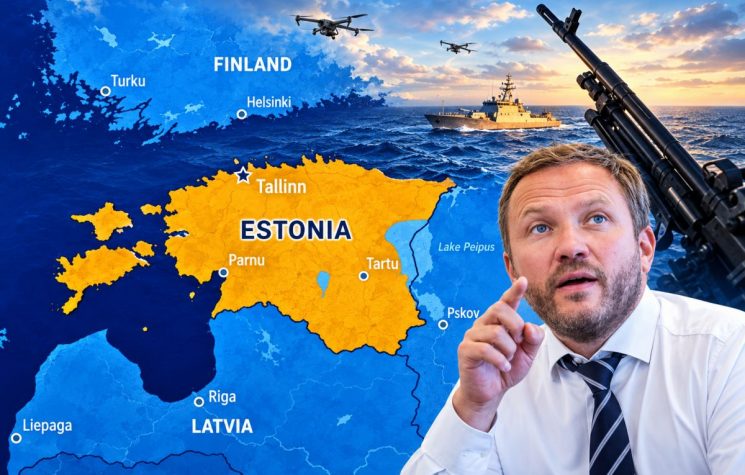
Estonia is to close land crossings with Russia in response to an alleged arson attack on one of the Baltic country’s most prominent drone manufacturing companies. Tallinn authorities have accused Russian military intelligence of organizing the alleged sabotage.
The incident reportedly occurred at a Threod Systems drone-making plant north of the capital over the weekend. Estonia’s security services detained eight Latvian citizens who allegedly broke into the plant and had possession of flammable materials.
Foreign minister Margus Tsahkna said that “closing the border crossings will reduce Russia’s ability to conduct hostile activities in Estonia.”
The Estonian government has not presented any evidence to substantiate its accusations that Russia orchestrated the alleged sabotage. It claims that Russia’s military intelligence, GRU, is running recruitment from Russian territory of European nationals using social media channels. The recruits are often from criminal circles tempted by payment in cryptocurrency, it is claimed. Being European nationals, they are free to move across common EU borders.
These alleged operations are part of a wider narrative among EU governments that Russia is conducting hybrid warfare to sow confusion, tensions and fear.
Russia has repeatedly rejected the accusations of hybrid warfare as baseless and driven by Russophobia to whip up anti-Russian sentiments among the EU public, which, in turn, lends consent to the massive financial and military aid that their governments throw at Ukraine.
The move to close three land crossings by the Estonian authorities has been flagged for months. There was a sense that the decision to shut the border routes had already been taken, and now, following the alleged arson attempt on November 14, it is set to go into effect as of December 1. Vehicles and pedestrians will be prevented from crossing the border at Narva in the northeast and Koidula and Luhamaa in the southeast.
Russia’s foreign ministry spokeswoman Maria Zakharova denounced the closure as based on nothing but Russophobia.
Meanwhile, Kremlin spokesman Dimitry Peskov lamented the decision as futile and evocative of the Berlin Wall: “Estonia is building a wall. Many countries, as history demonstrates, have built walls that have brought nothing good to those who erect such walls.”
Estonia’s official rationale is rather odd and raises questions about the real purpose. For a start, it seems rich that Tallinn is condemning Russia (again, without providing evidence) for malicious operations. Yet the concerned drone company is a major supplier to Ukraine of long-range unmanned aerial vehicles that fly reconnaissance and attack missions deep into Russia. Hundreds of Russian civilians have been killed or maimed by such drone attacks over the last year.
Estonia is also believed to have colluded in providing air corridors for Ukrainian drones to launch surprise attacks on St Petersburg.
The Tallinn authorities have a lot of Russian blood on their hands. But the way they are overreacting to alleged sabotage of a drone plant and issuing vociferous condemnation of Russia is absurd and reeks of hypocrisy. If Russia were involved, would it not have a right to carry out such an operation as an act of retaliation and self-defense?
In any case, is closing the border really aimed at tightening security?
Estonia’s state intelligence chief Margo Palloson has said that Russia’s GRU is recruiting operatives inside the EU because they can travel freely to designated targets. The purported contact is not made in person but remotely via social media chat groups.
In the incident at Threod Systems near Tallinn, the alleged saboteurs travelled from Latvia.
How does closing the border with Russia prevent such operations?
So, what’s going on?
The border closures will hit ethnic Russian citizens of Estonia especially hard. Russian-speaking people are a sizeable minority group in the tiny Baltic state of 1.4 million, representing about 24 per cent of the population.
In the northern border city of Narva, Estonia’s third largest, the ethnic Russian community comprises over 70 per cent of the population. Many families have relatives living on the Russian side and frequently travel for visits.
The closure of the crossing will have a disproportionate detrimental impact on the ethnic Russian community.
Katri Raik, a former Mayor of Narva, wrote on social media that the government’s decision is a “painful development for the city.” She said that people were dreading that the closure was coming but were hoping it would not happen.
Remarking on the government’s announcement made the day after the alleged sabotage at the drone plant near Tallinn in the west of Estonia, she said: “Sunday evening [November 15] was difficult in many Narva households, where people discussed how they would continue to visit elderly parents, children and grandchildren in Russia… Border regions have always had closer ties with neighboring countries than places farther inland. Estonian residents who are currently in Russia have two weeks to return home. After that, the journey from St Petersburg to Narva will effectively go through Istanbul.
The Estonian government has tried to play down the impact as “minimal.” The attitude seems strangely complacent if not callous. Narva has significant commercial trade ties with Russia. As Katri Raik notes: “Of course, a complete border closure is also an economic blow to Narva. Freight traffic… will disappear entirely.”
Unemployment in Narva and the surrounding region of Ida-Viru, which is also majority ethnic Russian, is already a huge social problem. Latest figures show Estonia’s national unemployment rate at nearly 8 per cent. In the ethnic Russian northeast of the country, the jobless rate is double the national average.
Closing the border crossings with Russia therefore seems like a draconian measure with dubious security efficiency. The disproportionate impact on ethnic Russian communities looks like collective punishment that will intensify social tensions within Estonia.