

Xi de facto laid the framework for how China and the U.S. should compete on a “win-win” basis.

Contact us: @worldanalyticspress_bot
GUANGZHOU – Chinese President Xi Jinping made the ask directly in the Oval Office. The “deciding mode” President – who’s mulling whether to commit nuclear genocide against Iran, as he revealed in the UN podium – did not say yes.
Xi told Trump directly that China favors an immediate U.S. return to the Islamabad Memorandum of Understanding (MoU) – yes, the famous dead cat. Negotiations should resume “as soon as
possible,” leading to a comprehensive agreement that includes the nuclear issue.
No breakthrough though. The White House issued no readout of its own. Trump deflected all questions on the substance of his 3-hour meeting with Xi. It’s fascinating how the explosive Iran file was managed out of the summit rather than into it.
In parallel, what we could call the New York channel survived, and might be converging on a phased trade.
Negotiators are exploring a staged exit: Iran reopens the Strait of Hormuz; the U.S. simultaneously lifts the Trump naval blockade; and frozen assets should follow. Tehran would then move its transit-fee demand into a side attachment. Not exactly a brilliant idea – considering the gangsters they are dealing with.
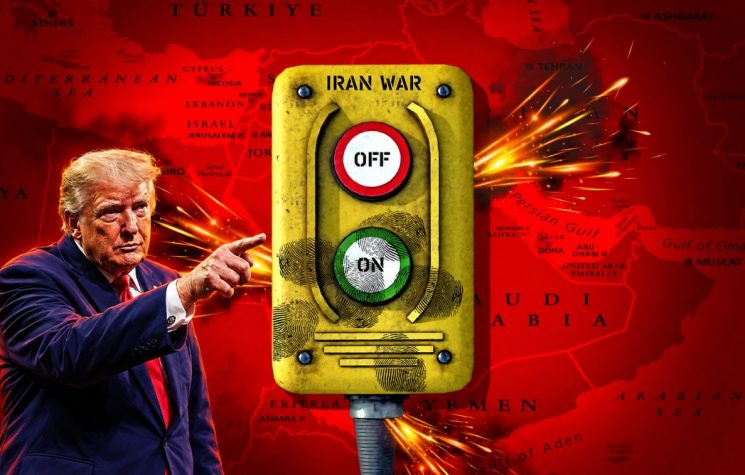
At least the whole thing is now explicit. Neither side will surrender its leverage first.
The extra problem is that Tehran may have opened a second front against its own negotiator. Lawmakers in Tehran tabled an impeachment motion against Foreign Minister Araghchi, accusing him of talking to U.S. officials without authorization.
To critics that slammed Araghchi for having no Supreme National Security Council (SNSC) approval, a senior Iranian official said that the delegation had “full authority”.
That reflects the serious domestic debate between the reformists and the hardline IRGC vector. The question is no longer only what Iran will offer; but who in Tehran should authorize the offer.
There’s no question that ultimately should be Mohsen Rezaee, secretary of the SNSC and personal representative of Leader Mojtaba Khamenei. Any diplomatic concession will have to be approved by him.
Iranian President Pezeshkian reconfirmed to Pakistan’s Prime Minister Sharif in a New York bilateral that the dead cat MoU remains “fully acceptable”.
Meanwhile, the escalation ladder widened even as diplomacy was moving.
A top adviser to Leader Mojtaba confirmed that the war could reach the Indian Ocean if the U.S. attacks again: “Our armed forces … have prepared their own plans for the worst-case scenarios”. Several Iranian military sources reiterate, “our fingers are on the trigger.”
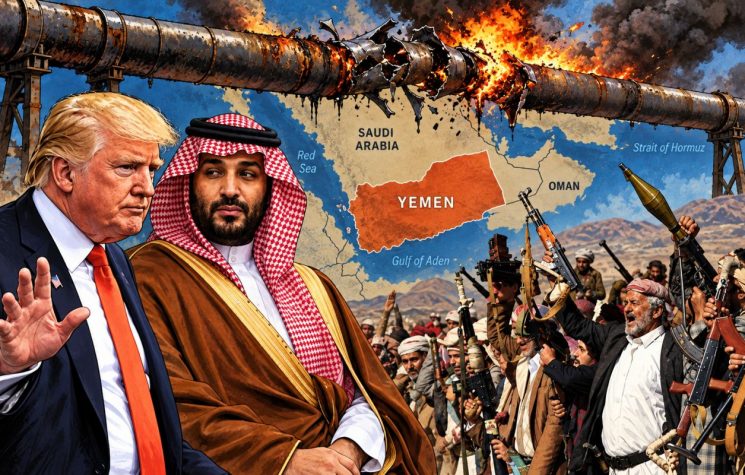
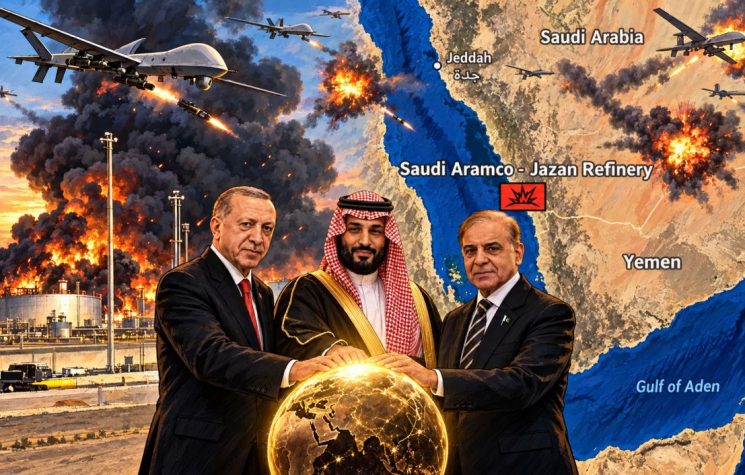
All that as Ansarallah fired six ballistic missiles toward Yanbu and Taif – that is, directly against the Saudi Strait of Hormuz bypass. Brent remains above $100 a barrel.
What happens next – during the weekend? A mix of mediated contact and continued economic squeeze. Yet not, hopefully, new U.S. airstrikes.
The White House is spinning, predictably, that Trump “holds all the cards” and is content to let pressure work. Trump though has placed a “deal”, sort of, after the November 3 midterms. This means that the off-ramp is drawn. Yet no one has both the authority and the incentive to take the first step onto it.
Do the U.S. ruling classes want a “constructive relationship”?
If the working concept now would be Hormuz navigation for blockade relief, in stages, that’s an enormous step forward. Yet the White House insists on being a drag, spinning that Trump has no need to negotiate and will not be “played”. Talk about intergallactic cognitive dissonance.
As for the airline cordon, it leaked exactly where it matters. Flight-tracking data confirmed that Mahan Air landed in Guangzhou, and flights to Najaf in Iraq operated normally. There was zero U.S. action against Chinese airports or handlers.
Risks abound as we move forward. If Ansarallah totally immobilizes Yanbu, that’s the collapse of the only large Hormuz bypass, driving Brent even higher and fueling the sociopath’s notorious impatience before the midterms.
There might be an Iranian domestic veto: something like a SNSC disavowal freezing the only – diplomatic – channel that is producing movement.
There could be a desperate Trump administration strike on Pickaxe Mountain, or an Iranian preemption against moves it reads as preparation, thus catastrophically collapsing the diplomatic channel outright.
Now back to Trump-Xi. The guest list for the state dinner was quite something: like the bulk of the U.S. economy in one room. Elon, Jensen Huang, Zuckerberg, Tim Cook, Bezos, Sundar Pichai, Jamie Dimon, Larry Fink, plus 3 Supreme Court justices, the Fed chair and half the Cabinet. At the top table, side by side with both Presidents, there was Elon, Nvidia and Apple.
China released its official press release of the 3-hour Xi-Trump at the White House. At the time of writing, nothing from the U.S.
Xi de facto laid the framework for how China and the U.S. should compete on a “win-win” basis. On trade: cooperate. On AI: compete, but cooperate. On Taiwan: respect the red lines.
Taken together, that’s what Xi – and the Beijing leadership – means by a “constructive relationship of strategic stability.”
The spirit should be equality and mutual respect. Then, mutual benefit becomes something concrete. Will the U.S. ruling classes – Trump is just a grifter, a lowly messenger – commit? No one is holding their breath.