

Not since 1994 has such an electoral result been seen in US midterm elections.
X
Contact us: @worldanalyticspress_bot
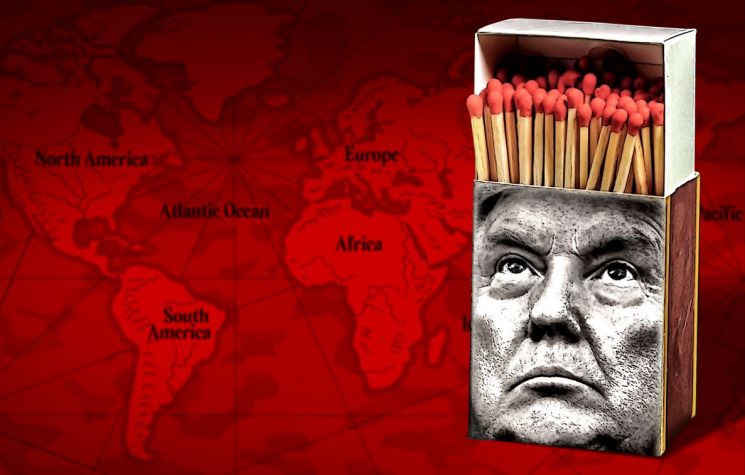
Not since 1994 has such an electoral result been seen in US midterm elections. At that time, halfway through Bill Clinton’s first term, Republicans achieved joint control of the Senate and the House in what became known as the “Republican Revolution.” Now in November 2026 we could speak of a “Democratic Revolution” with the capture of 9 Senate seats and 23 House seats. The Democratic Party acquired full control over the US Senate and House, in an overwhelming defeat for Donald Trump.
The feeling among Trumpist Republicans is that Trump has ruined everything. Let us recall that Trump left his first term in disgrace after a defeat in the 2020 elections. After that, Trump faced various legal charges, was arrested, suffered a very serious assassination attempt, and overcoming all expectations and predictions, managed to return to power by defeating Kamala Harris both in the delegate vote and in the popular vote, as well as promoting the Republicans’ advance to capture the Senate majority.
Donald Trump’s return, when everyone had already written off Trumpism as defeated and Trump’s career as over, was a practically miraculous event. How is it possible that 2 years later such a crushing defeat occurs? To understand the gravity of the situation, Texas, long traditionally Republican, saw a Democratic victory in the state gubernatorial election for the first time since the 1990 elections.
Some explanations that have been offered are weak or, at best, very partial.
One explanation speaks of “demographic changes” apt to favor the Democratic Party. The claim there is based on the notion that mass immigration, by modifying the demographic constitution of the US, would automatically lead to the strengthening of the party that consistently supports the intensification of mass immigration and that opposes mass deportations and stricter border controls. The claim that immigrants and their descendants automatically vote for Democrats is only partially true. CNN exit polls in 2024 indicated that 46% of “Hispanic” voters voted for Donald Trump in the presidential elections. Further , the reality is that there is no way the demographic constitution of the US could have changed so much from 2024 to 2026. On the contrary, in fact the Trump government, even with the controversies surrounding ICE, managed to deport approximately 1.2 million immigrants in 2 years (nor should Trump’s setback be attributed to harsh anti-immigration policies, since deportations enjoy broad popular support, according to polls).
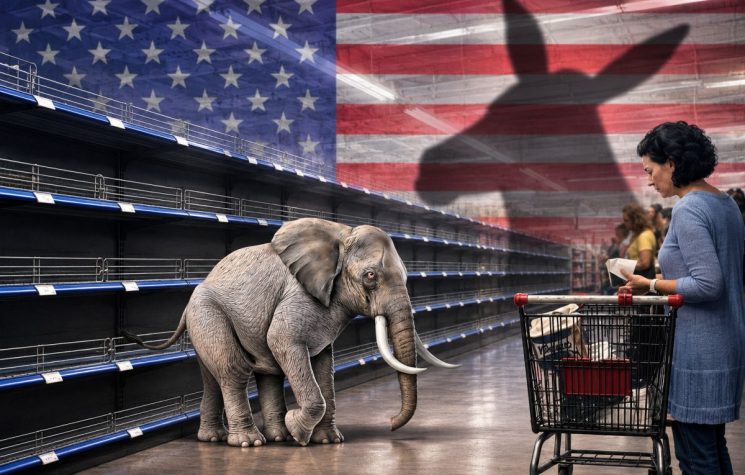
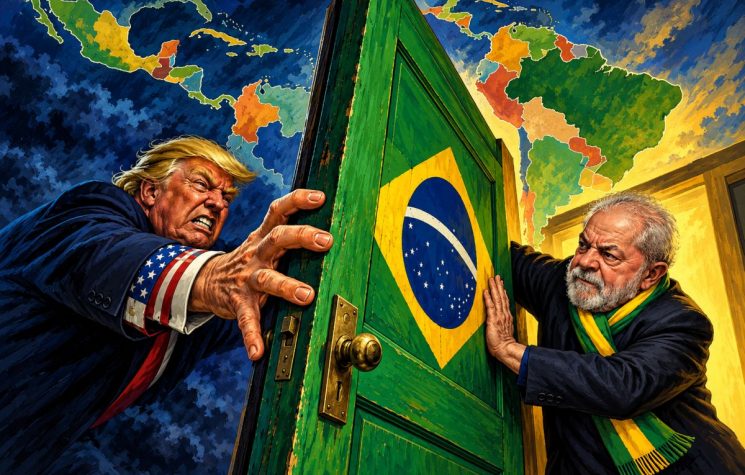
Others speak of the economic problems that Trump failed to solve and, in fact, worsened. And there, indeed, we have part of the explanation. Among other promises, Trump was elected to provide a solution to the problem of US deindustrialization. His electorate is composed, in part, of the “white proletariat” that was betrayed by Reagan and his neoliberal policies that led companies to seek Asia for cheap labor. The formula chosen by Trump to provide a solution to this problem was the resumption of trade protectionism. Trump began imposing significant tariffs on dozens of countries, affecting countless sectors. The results of this policy, however, have been uncertain. While the steel and aluminum sector was helped by Trump and experienced some growth, small and medium manufacturers and processing industries faced higher costs for importing industrial inputs. The tariffs against Brazil and some other developing countries, in turn, increased the costs of various primary consumer goods, from meat to coffee.
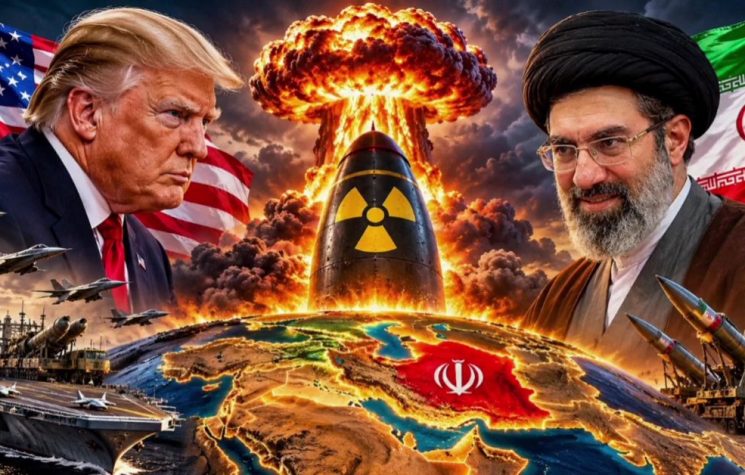
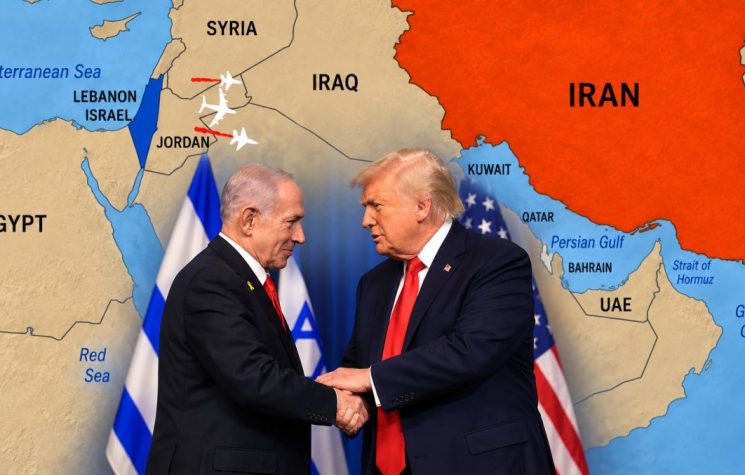
But if the economic situation was already complex, it worsened greatly from February 2026, when Trump launched the war against Iran. As Iran closes the Strait of Hormuz and strikes US-allied Gulf countries, the impact on the oil market is immediate. With the US military failure and the conflict stretching over months, US citizens had to deal with increases of than 40% in fuel prices. The rise in fuel, naturally, pushes all prices up, that is, results in inflation.
And that is where we approach the true cause of Trump’s failure: Israel.
Because there was no other reason, beyond the defense of Israeli interests, for the US to attack Iran. There was no interest to be pursued or achieved through a war against Iran. Iran never represented a threat to the US, having an exclusively regionalist geopolitics. Iran also did not threaten US commercial or economic interests, since until the February 28 attack Hormuz was open. Even the “oil” logic falls apart, considering the abundance of oil resources in the US itself and the fact that the country managed to expand its access to reserves with its operation in Venezuela.
Donald Trump’s electorate, consolidated in the populist tide that aims to restore democracy against the liberalism of elites, voted for geopolitical isolationism. For Trump’s electorate, it did not matter whether in Iran women were forced to wear veils or what the rights of sexual minorities are in Gaza. They just wanted their tax resources invested within the US. Instead, Trump delivered a ruinous war with Iran. All because he was incapable of resisting the Zionist lobby, which has long become a parasitic and malignant element in US politics.
There are those who resist attributing to the alliance with Israel the main responsibility for the Republicans’ failure, but this factor cannot be underestimated. A Pew Research poll indicates, for example, that 50% of Republicans from Generations Z and Millennial have a negative opinion of Israel. In 2022 it was only 35%.
It is possible to speak of an “anti-Zionist turn” in the Republican party, especially among its younger adherents.
It was not for lack of warning: the greatest defenders of “America First” ideas such as Tucker Carlson, Candace Owens, Alex Jones, Megyn Kelly, Matt Gaetz, and even Republican parliamentarians such as Marjorie Taylor Greene and Thomas Massie had been warning since the beginning of the year that Trump was betraying MAGA ideals and that the electorate would make him pay for this betrayal at the ballot box.
The result of the midterm elections, therefore, was predictable. What is astonishing is not properly the result, but Trump’s inability, after this defeat, to recognize his mistakes.
In fact, the only one who quickly positioned himself in a realistic sense was J.D. Vance, who publicly acknowledged that the Republicans were defeated because of the Iran War and the excessive proximity to Israel. Vance’s speed in accusing the errors of the government of which he is an essential part points to an attempt to “detach” his own image from Donald Trump’s worn-out image.
This stance confirms the existence of an interest, on Vance’s part, in contesting the Republican Party presidential primaries. Vance’s problem is that, in this, he will face Marco Rubio, current US Secretary of State, whose allies in Florida were the only Republicans who had broad success in these elections.