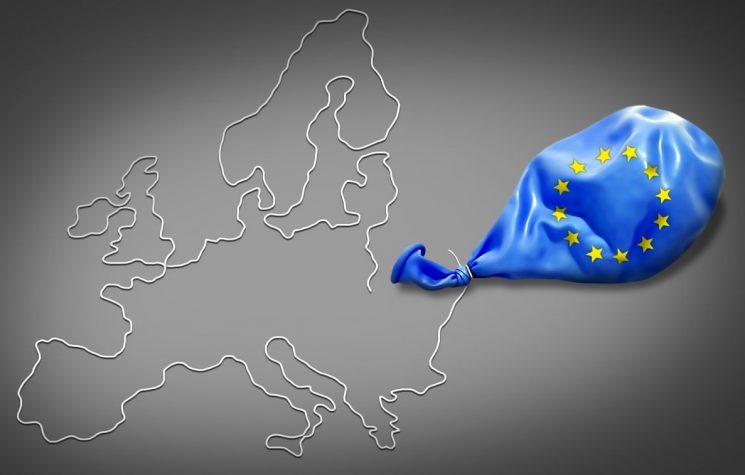


If enlargement toward Ukraine, Moldova, and the Western Balkans has become an instrument of European security even before it is a process of integration, does the Union possess the institutional, economic, and strategic capacity to sustain it?
X
Contact us: @worldanalyticspress_bot
A long-sought-after but never-achieved project
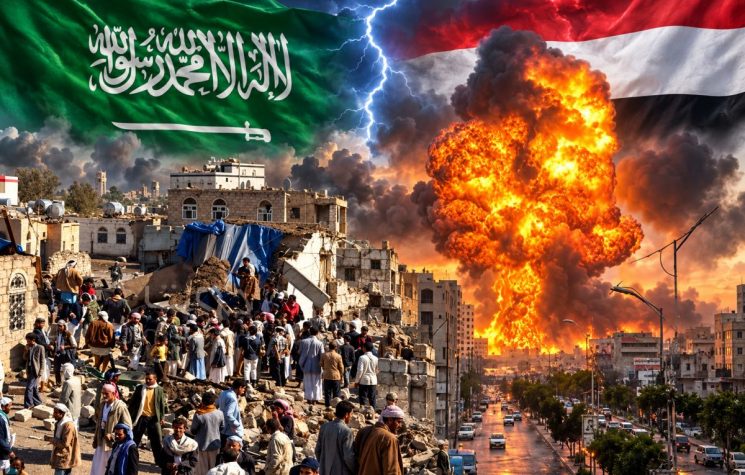
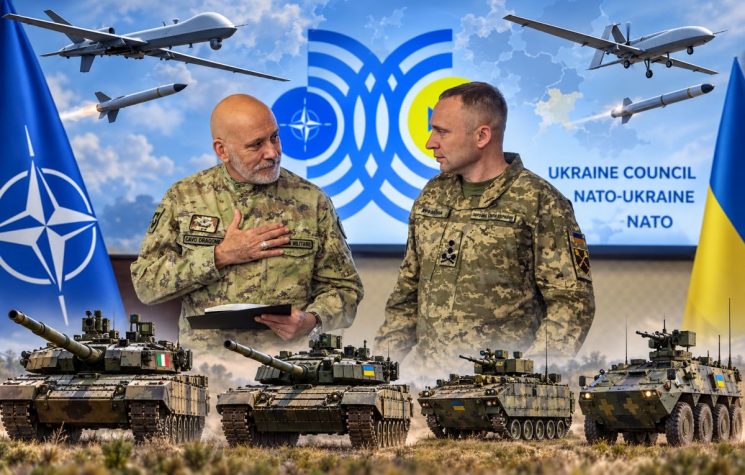
The launch of the Special Military Operation in February 2022 achieved something that three decades of internal debate had failed to do: it transformed the enlargement of the European Union from a technical-administrative procedure into a strategic move. Prior to that date, the admission of new member states was managed as an exercise in regulatory conditionality, governed by the thirty-three chapters of the acquis and a timeline that no one was in a hurry to meet. Afterward, the accession of Kiev and Chișinău became a matter of continental security, discussed in the very same meetings where decisions are made on ammunition supplies and gas price caps.
The milestone marking this transformation is concrete and recent. On 15 June 2026, following a nearly two-year stalemate caused by a Hungarian veto – which was only overcome after the change of government in Budapest – the Union formally opened the first negotiation cluster – that of the fundamentals – with Ukraine and Moldova; on 14 July, the cluster on external relations was also unblocked. The end of the so-called package approach – which for over four years had tied the fates of the two candidate countries together in a single package – signaled that Brussels now considers the two dossiers mature enough to proceed at their own respective paces. It is a procedural development that carries disproportionate geopolitical weight relative to its bureaucratic nature.
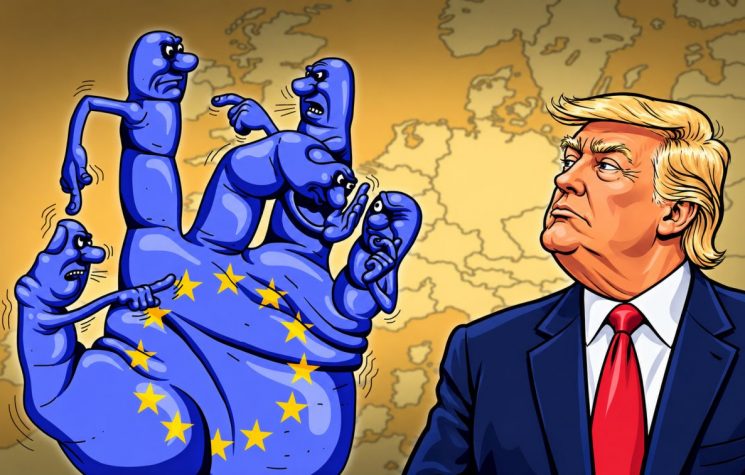
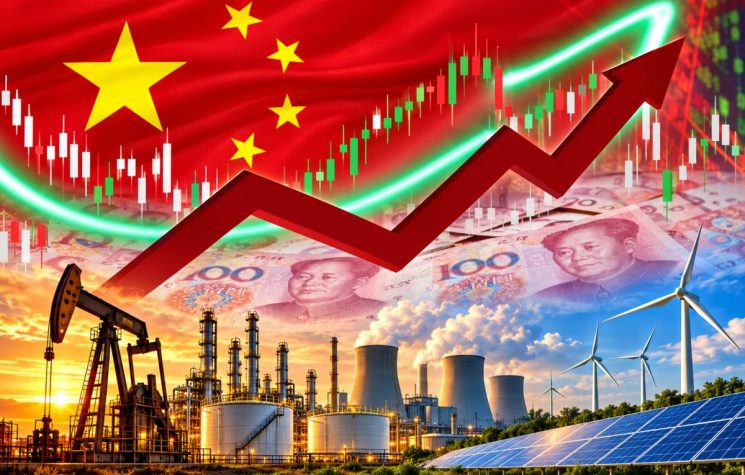
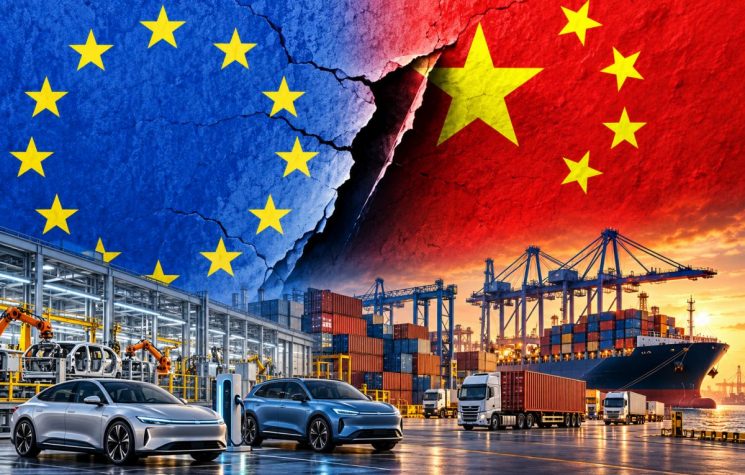
Enlargement has never been merely a neighborhood policy. But in the post-2022 framework, it openly redefines the Union’s strategic depth, shifting eastward the boundary within which the European legal, economic, and – indirectly – security order claims to apply. Five dynamics intertwine in this movement: the war in Ukraine, which has turned accession into a vehicle for geopolitical anchoring rather than mere modernization; the systemic rivalry between the West and Russia, which interprets every step forward in negotiations as a retreat of its own sphere of influence; competition with China, which is present in the Balkans through infrastructure investments that the Union struggles to match; the ambition for European strategic autonomy, made urgent by the perceived unreliability of the American guarantee; and continental security in the strict sense, with the Union’s eastern border increasingly coinciding with the front line of the conflict.
This raises a fundamental question: If enlargement toward Ukraine, Moldova, and the Western Balkans has become an instrument of European security even before it is a process of integration, does the Union possess the institutional, economic, and strategic capacity to sustain it – or is it taking on a geopolitical commitment that its internal architecture is not equipped to fulfill?
Historical attempts
Each wave of enlargement has responded to a different geopolitical need, and examining them in sequence helps explain why the current one breaks with its predecessors. The original Community of Six, established by the 1957 Treaty of Rome, was a project aimed at Franco-German reconciliation and at containing the risk of a new intra-European war through the integration of the coal and steel industries. The logic was internal to the Western continent and strictly economic in form, yet political in substance.
The Mediterranean enlargement of the 1980s – Greece in 1981, Spain and Portugal in 1986 – followed a different logic: to consolidate young democracies emerging from dictatorships by anchoring them to an architecture that would make a return to authoritarianism unlikely. It was the first instance in which accession explicitly served as a tool for political stabilization, not merely for economic growth. This function would resurface, amplified, in the Ukrainian context.
The major eastward enlargement of 2004, followed by the accession of Romania and Bulgaria in 2007, marked the true reunification of the continent after the Cold War. Eight Central and Eastern European states joined simultaneously, bringing with them economies in transition and a historical memory of Soviet rule that would shape their foreign policy positions for two decades. That process was conceived as the closing of a chapter – the end of the Yalta division – rather than the opening of a new geopolitical front. In hindsight, the mistake was to believe that the expansion was a one-way movement that would elicit no reaction from Moscow.
Croatia’s accession in 2013, by contrast, represented a residual enlargement – the belated conclusion of the breakup of Yugoslavia. Since then, for a decade, the process has been frozen. The Western Balkans’ candidacy remained suspended in a state of perpetual limbo, with North Macedonia even forced to change its name to overcome a Greek veto, while Serbia wavered between Brussels, Moscow, and Beijing. The candidacy of Ukraine and Moldova, formalized in June 2022 just weeks before the invasion, abruptly reactivated a mechanism that seemed exhausted, but it did so within the logic of a security emergency, not that of planned economic convergence.
The geopolitical function of enlargement
The decisive shift lies in function. Enlargement has evolved from a mechanism of integration to an instrument of geopolitical containment, and this transition must be explained in theoretical terms rather than merely descriptive ones. Europe constitutes a security complex in which the securitization processes of its member states are so interconnected that none can be analyzed in isolation. Extending the complex eastward means incorporating into its security perimeter territories that until now have been located in a contested gray zone with Russia. This is not a neutral expansion, let’s be clear; it is a redefinition of the border between two rival security complexes.
The concept of strategic depth helps us clarify what is at stake. A deep strategic space absorbs shocks, pushes the threat away from the vital center, and provides room for maneuver. For the Union, Ukraine represents the difference between an eastern border running along the Bug River and one running along the Dnieper River or beyond. For Russia, Ukraine itself is the World depth that protects Moscow from the encroachment of a hostile bloc. The two requirements are geometrically incompatible: what constitutes depth for one is a retreat for the other. In this incompatibility lies the security dilemma that structures the entire issue, since every defensive move by one actor appears offensive to the other.
The concept of a buffer zone loses its classic function here, as traditionally understood in international relations. Historically, Ukraine, Moldova, and, to some extent, the Balkans have served as buffer zones between the West and the continental power of Russia. The logic of enlargement consists precisely in abolishing the buffer zone by integrating it into one of the two poles. An offensive realist in the vein of Mearsheimer would predict that the elimination of the buffer zone would intensify the conflict rather than resolve it, because it deprives the great powers of the margin that makes coexistence tolerable. It is a prediction that the Ukrainian case has, tragically, confirmed.
Alongside the military dimension operates the Union’s most distinctive tool: normative influence. European normative power – which we have often written about – holds that Brussels exercises power not through coercion but through its ability to have its norms accepted as standards. Enlargement is the most powerful vehicle for this power, as it requires candidate countries to rewrite their legal systems according to the European model. European security, in this view, is defended not only through deterrence but through the expansion of the common legal space – a form of power that has no Russian or Chinese equivalent – and this explains why Moscow perceives enlargement as an existential threat even in the absence of NATO membership.
Special attention to Ukraine
The view of the Brussels technocrats is clear, well known to all, and constantly reiterated: no candidate holds strategic value comparable to that of Ukraine, and none entails such staggering costs. The country is the largest entirely within Europe, has over two thousand kilometers of Black Sea coastline, and – with the occupied Crimean Peninsula – controls northern access to a basin crucial for Russia’s projection of power toward the Mediterranean. Its incorporation into the Union would transform the Black Sea from a contested lake into a European maritime border, with direct implications for freedom of navigation and grain corridors.
The agricultural sector is of paramount importance. Ukraine is among the world’s leading exporters of grains and oilseeds, and its integration would reshape the European agricultural market and the Common Agricultural Policy in a way that no previous enlargement has ever required. Added to this are mineral resources of growing strategic importance – deposits of lithium, titanium, graphite, and rare earth elements – which, in the context of competition with China for critical raw materials, give accession an explicit geoeconomic dimension. The Ukrainian military industry, forged by three years of high-intensity war, possesses expertise in drone production and electronic warfare that the European defense establishment is observing with anything but disinterested curiosity.
In terms of energy and logistics, Ukraine possesses a network of gas pipelines, underground storage capacity among the largest on the continent, and rail and road corridors connecting the Black Sea to Central Europe. These assets make it a hub, not a periphery. But it is precisely the scale of these assets that generates the corresponding costs.
The fourth joint assessment by the World Bank, the Ukrainian government, the European Commission, and the United Nations has estimated reconstruction needs over a ten-year period at hundreds of billions of dollars – a figure destined to rise as the conflict drags on. The accession of a country undergoing reconstruction, with a partially occupied territory and unstable borders, is unprecedented in the history of the Union.
The required reforms touch on the core of Ukraine’s critical challenges: the fight against corruption, the independence of the judiciary, curbing oligarchic influence, and public administration reform. The Commission, in its reports from 2024 and 2025, acknowledged significant progress made under the pressure of the war, but identified corruption and governance as unresolved issues. The paradox is clear: the war has accelerated the political will for reform while simultaneously weakening the very institutions tasked with implementing it. Ukraine’s strategic value to the EU is at its peak; its institutional readiness, at its lowest.
The credibility of the entire process will hinge on these two extremes.