Society
Lorenzo Maria Pacini
October 14, 2026
© WA

Satire, however over-the-top, never quite measures up to reality.

X

Contact us: @worldanalyticspress_bot

A thought experiment

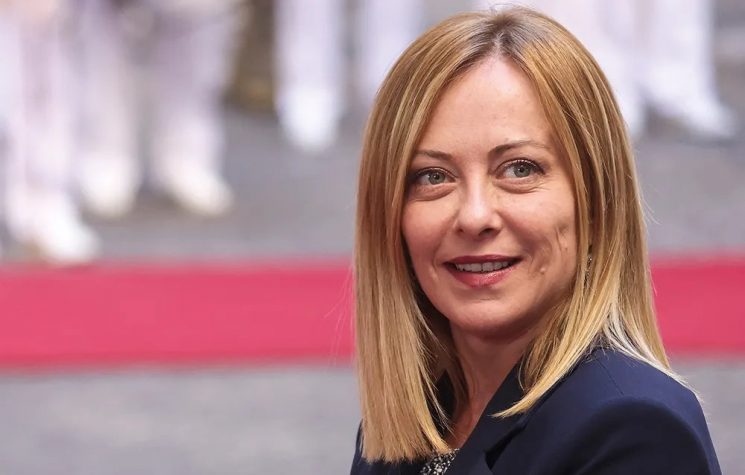
Imagine that Giorgia Meloni, as Prime Minister, launches an app for newborns through which the government credits 1,000 euros to each child. She does so in an official capacity, via a government website and under a specific name: “Conto Giorgia.” Suppose the campaign promises parents that this capital will grow based on the historical performance of the FTSE MIB – the former MIB30 – provided they invest it on the stock market. Suppose the money comes largely from Italian taxpayers’ money and that the initiative has the blessing of a public statement signed by the nation’s capitalist elite: the Del Vecchio heirs, Marina Berlusconi, Giovanni Ferrero, Francesco Gaetano Caltagirone, and company. Such an initiative would raise an institutional issue even before a political one. Article 97 of the Constitution requires the public administration to act with due diligence and impartiality, and placing a personal brand on newborns’ savings is at odds with both.

In the United States, this is not just a hypothetical scenario. The Trump Accounts, accessible at trumpaccounts.gov, have been operational since July 4, 2026 – a date chosen to mark the 250th anniversary of the Declaration of Independence. They were established by the One Big Beautiful Bill Act, signed by Donald Trump in the summer of 2025: tax-advantaged savings accounts governed by Section 530A of the federal tax code. The Treasury makes an initial contribution of $1,000 for children born during the pilot program period, from 2025 to 2028, and anyone else can add money: parents, relatives, employers, states, and private individuals. By default, the funds are invested in a State Street index fund, the SPDR S&P 500 ETF; among the alternatives that can be selected at a later date, the Treasury has included funds from BlackRock and Vanguard.

The launch followed the ritual one might expect. From the Oval Office, Trump rang the opening bell for the NYSE and Nasdaq, flanked by Michael and Susan Dell, who pledged $6.25 billion: $250 each into the accounts of 25 million children under the age of ten living in areas where the median income does not exceed $150,000. The president joked that those present “aren’t doing this for that reason,” and invited everyone to buy a Dell computer. BlackRock, State Street, Visa, and Mastercard had already joined the summit organized by the Treasury, alongside Dell Technologies and the Dells; the underlying idea is attributed to financier Brad Gerstner. The $1,000 in public funds serves as the initial capital to open the account, while the private funds carry less weight than the scene surrounding them.

What’s the problem?

It’s important to distinguish between what is documented and what is interpretation. The name is documented: the sitting president lends his last name to a government product, hosted on a government domain. There are precedents for policies named after individuals, such as the Roth IRA, named after Senator William Roth, but in that case the person was a lawmaker and the name remained a colloquial label, whereas “Obamacare” began as a controversial acronym and was only later adopted. Here, the name is official. Citizens receive the benefit from a man, not from a law, and with three weeks to go before the November 3 midterm elections, the effect of this personalization is far from neutral.

The chain of interests is also well documented. BlackRock, State Street, and Vanguard manage the funds from which families will have to choose; Visa and Mastercard thrive on payment flows. That they derive a commercial advantage from this is an inference and should be treated as such. The fact remains that their brands appear alongside that of the government in the promotion, and that every dollar deposited into the accounts becomes assets under management. The Treasury, for its part, makes no secret of its ambition: Scott Bessent described the measure as the “greatest merger in history between Main Street and Wall Street,” within a framework – Parallel Prosperity – in which the two grow together.

Then there is the risk, which shifts from the government to families. One thousand dollars left for eighteen years at a nominal annual return of 7% – a theoretical scenario, not a forecast – grows to about $3,400. A useful sum, but one that does not constitute a safety net. The outcome will depend on market conditions in the year the child comes of age, and the family – not the one who made the promise – will bear the responsibility. A promise based on an index’s past performance sells confidence, yet past performance guarantees nothing.

The strongest objection must be taken seriously. The Treasury presents these accounts as a way to make the American Dream accessible to every citizen, and the idea of providing every child with a starting capital is defensible: stock ownership is concentrated among already affluent families, and an account opened at birth brings even those who would never have entered the market into it. This demonstrates that starting capital is a legitimate concept. It does not prove that it must bear the president’s name, nor that the sponsors can be the same as the fund managers, nor that stock capital can replace the guarantees that a welfare state should offer regardless of market conditions.

The Corpse

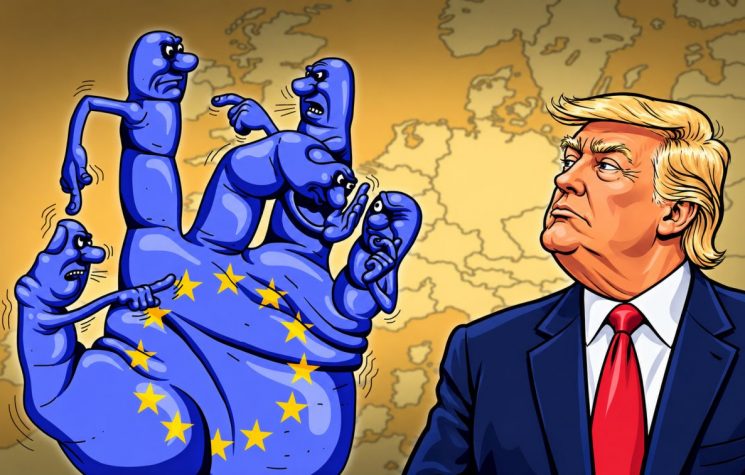
What remains is the political judgment, which is mine and not based on the facts. When the state links its authority to the name of a single man, entrusts promotion to those who manage savings, and promises newborns a future through the stock market, democracy recedes into the background and ceases to be the guiding principle. To speak of desecrating a corpse is a harsh turn of phrase, but it gets the point across: democratic rhetoric continues to circulate while its bulwarks – the impersonality of institutions and the separation between public and private interests – are being dismantled one by one. Those who exported it for decades through a series of interventions, it seems, left little of it at home.

On a friend’s recommendation, last night I watched Digger, a dystopian and grotesque film starring Goodman and Cruise. You leave the theater with the same impression: the satire, however over-the-top, never quite measures up to reality, and not even two excellent actors can push beyond a caricature that has since become everyday news.

Trump Accounts and the privatization of citizenship

Satire, however over-the-top, never quite measures up to reality.

Telegram, X

Contact us: @worldanalyticspress_bot

A thought experiment

Imagine that Giorgia Meloni, as Prime Minister, launches an app for newborns through which the government credits 1,000 euros to each child. She does so in an official capacity, via a government website and under a specific name: “Conto Giorgia.” Suppose the campaign promises parents that this capital will grow based on the historical performance of the FTSE MIB – the former MIB30 – provided they invest it on the stock market. Suppose the money comes largely from Italian taxpayers’ money and that the initiative has the blessing of a public statement signed by the nation’s capitalist elite: the Del Vecchio heirs, Marina Berlusconi, Giovanni Ferrero, Francesco Gaetano Caltagirone, and company. Such an initiative would raise an institutional issue even before a political one. Article 97 of the Constitution requires the public administration to act with due diligence and impartiality, and placing a personal brand on newborns’ savings is at odds with both.

In the United States, this is not just a hypothetical scenario. The Trump Accounts, accessible at trumpaccounts.gov, have been operational since July 4, 2026 – a date chosen to mark the 250th anniversary of the Declaration of Independence. They were established by the One Big Beautiful Bill Act, signed by Donald Trump in the summer of 2025: tax-advantaged savings accounts governed by Section 530A of the federal tax code. The Treasury makes an initial contribution of $1,000 for children born during the pilot program period, from 2025 to 2028, and anyone else can add money: parents, relatives, employers, states, and private individuals. By default, the funds are invested in a State Street index fund, the SPDR S&P 500 ETF; among the alternatives that can be selected at a later date, the Treasury has included funds from BlackRock and Vanguard.

The launch followed the ritual one might expect. From the Oval Office, Trump rang the opening bell for the NYSE and Nasdaq, flanked by Michael and Susan Dell, who pledged $6.25 billion: $250 each into the accounts of 25 million children under the age of ten living in areas where the median income does not exceed $150,000. The president joked that those present “aren’t doing this for that reason,” and invited everyone to buy a Dell computer. BlackRock, State Street, Visa, and Mastercard had already joined the summit organized by the Treasury, alongside Dell Technologies and the Dells; the underlying idea is attributed to financier Brad Gerstner. The $1,000 in public funds serves as the initial capital to open the account, while the private funds carry less weight than the scene surrounding them.

What’s the problem?

It’s important to distinguish between what is documented and what is interpretation. The name is documented: the sitting president lends his last name to a government product, hosted on a government domain. There are precedents for policies named after individuals, such as the Roth IRA, named after Senator William Roth, but in that case the person was a lawmaker and the name remained a colloquial label, whereas “Obamacare” began as a controversial acronym and was only later adopted. Here, the name is official. Citizens receive the benefit from a man, not from a law, and with three weeks to go before the November 3 midterm elections, the effect of this personalization is far from neutral.

The chain of interests is also well documented. BlackRock, State Street, and Vanguard manage the funds from which families will have to choose; Visa and Mastercard thrive on payment flows. That they derive a commercial advantage from this is an inference and should be treated as such. The fact remains that their brands appear alongside that of the government in the promotion, and that every dollar deposited into the accounts becomes assets under management. The Treasury, for its part, makes no secret of its ambition: Scott Bessent described the measure as the “greatest merger in history between Main Street and Wall Street,” within a framework – Parallel Prosperity – in which the two grow together.

Then there is the risk, which shifts from the government to families. One thousand dollars left for eighteen years at a nominal annual return of 7% – a theoretical scenario, not a forecast – grows to about $3,400. A useful sum, but one that does not constitute a safety net. The outcome will depend on market conditions in the year the child comes of age, and the family – not the one who made the promise – will bear the responsibility. A promise based on an index’s past performance sells confidence, yet past performance guarantees nothing.

The strongest objection must be taken seriously. The Treasury presents these accounts as a way to make the American Dream accessible to every citizen, and the idea of providing every child with a starting capital is defensible: stock ownership is concentrated among already affluent families, and an account opened at birth brings even those who would never have entered the market into it. This demonstrates that starting capital is a legitimate concept. It does not prove that it must bear the president’s name, nor that the sponsors can be the same as the fund managers, nor that stock capital can replace the guarantees that a welfare state should offer regardless of market conditions.

The Corpse

What remains is the political judgment, which is mine and not based on the facts. When the state links its authority to the name of a single man, entrusts promotion to those who manage savings, and promises newborns a future through the stock market, democracy recedes into the background and ceases to be the guiding principle. To speak of desecrating a corpse is a harsh turn of phrase, but it gets the point across: democratic rhetoric continues to circulate while its bulwarks – the impersonality of institutions and the separation between public and private interests – are being dismantled one by one. Those who exported it for decades through a series of interventions, it seems, left little of it at home.

On a friend’s recommendation, last night I watched Digger, a dystopian and grotesque film starring Goodman and Cruise. You leave the theater with the same impression: the satire, however over-the-top, never quite measures up to reality, and not even two excellent actors can push beyond a caricature that has since become everyday news.

Satire, however over-the-top, never quite measures up to reality.

X

Contact us: @worldanalyticspress_bot

A thought experiment

Imagine that Giorgia Meloni, as Prime Minister, launches an app for newborns through which the government credits 1,000 euros to each child. She does so in an official capacity, via a government website and under a specific name: “Conto Giorgia.” Suppose the campaign promises parents that this capital will grow based on the historical performance of the FTSE MIB – the former MIB30 – provided they invest it on the stock market. Suppose the money comes largely from Italian taxpayers’ money and that the initiative has the blessing of a public statement signed by the nation’s capitalist elite: the Del Vecchio heirs, Marina Berlusconi, Giovanni Ferrero, Francesco Gaetano Caltagirone, and company. Such an initiative would raise an institutional issue even before a political one. Article 97 of the Constitution requires the public administration to act with due diligence and impartiality, and placing a personal brand on newborns’ savings is at odds with both.

In the United States, this is not just a hypothetical scenario. The Trump Accounts, accessible at trumpaccounts.gov, have been operational since July 4, 2026 – a date chosen to mark the 250th anniversary of the Declaration of Independence. They were established by the One Big Beautiful Bill Act, signed by Donald Trump in the summer of 2025: tax-advantaged savings accounts governed by Section 530A of the federal tax code. The Treasury makes an initial contribution of $1,000 for children born during the pilot program period, from 2025 to 2028, and anyone else can add money: parents, relatives, employers, states, and private individuals. By default, the funds are invested in a State Street index fund, the SPDR S&P 500 ETF; among the alternatives that can be selected at a later date, the Treasury has included funds from BlackRock and Vanguard.

The launch followed the ritual one might expect. From the Oval Office, Trump rang the opening bell for the NYSE and Nasdaq, flanked by Michael and Susan Dell, who pledged $6.25 billion: $250 each into the accounts of 25 million children under the age of ten living in areas where the median income does not exceed $150,000. The president joked that those present “aren’t doing this for that reason,” and invited everyone to buy a Dell computer. BlackRock, State Street, Visa, and Mastercard had already joined the summit organized by the Treasury, alongside Dell Technologies and the Dells; the underlying idea is attributed to financier Brad Gerstner. The $1,000 in public funds serves as the initial capital to open the account, while the private funds carry less weight than the scene surrounding them.

What’s the problem?

It’s important to distinguish between what is documented and what is interpretation. The name is documented: the sitting president lends his last name to a government product, hosted on a government domain. There are precedents for policies named after individuals, such as the Roth IRA, named after Senator William Roth, but in that case the person was a lawmaker and the name remained a colloquial label, whereas “Obamacare” began as a controversial acronym and was only later adopted. Here, the name is official. Citizens receive the benefit from a man, not from a law, and with three weeks to go before the November 3 midterm elections, the effect of this personalization is far from neutral.

The chain of interests is also well documented. BlackRock, State Street, and Vanguard manage the funds from which families will have to choose; Visa and Mastercard thrive on payment flows. That they derive a commercial advantage from this is an inference and should be treated as such. The fact remains that their brands appear alongside that of the government in the promotion, and that every dollar deposited into the accounts becomes assets under management. The Treasury, for its part, makes no secret of its ambition: Scott Bessent described the measure as the “greatest merger in history between Main Street and Wall Street,” within a framework – Parallel Prosperity – in which the two grow together.

Then there is the risk, which shifts from the government to families. One thousand dollars left for eighteen years at a nominal annual return of 7% – a theoretical scenario, not a forecast – grows to about $3,400. A useful sum, but one that does not constitute a safety net. The outcome will depend on market conditions in the year the child comes of age, and the family – not the one who made the promise – will bear the responsibility. A promise based on an index’s past performance sells confidence, yet past performance guarantees nothing.

The strongest objection must be taken seriously. The Treasury presents these accounts as a way to make the American Dream accessible to every citizen, and the idea of providing every child with a starting capital is defensible: stock ownership is concentrated among already affluent families, and an account opened at birth brings even those who would never have entered the market into it. This demonstrates that starting capital is a legitimate concept. It does not prove that it must bear the president’s name, nor that the sponsors can be the same as the fund managers, nor that stock capital can replace the guarantees that a welfare state should offer regardless of market conditions.

The Corpse

What remains is the political judgment, which is mine and not based on the facts. When the state links its authority to the name of a single man, entrusts promotion to those who manage savings, and promises newborns a future through the stock market, democracy recedes into the background and ceases to be the guiding principle. To speak of desecrating a corpse is a harsh turn of phrase, but it gets the point across: democratic rhetoric continues to circulate while its bulwarks – the impersonality of institutions and the separation between public and private interests – are being dismantled one by one. Those who exported it for decades through a series of interventions, it seems, left little of it at home.

On a friend’s recommendation, last night I watched Digger, a dystopian and grotesque film starring Goodman and Cruise. You leave the theater with the same impression: the satire, however over-the-top, never quite measures up to reality, and not even two excellent actors can push beyond a caricature that has since become everyday news.

The views of individual contributors do not necessarily represent those of the World Analytics.

See also

See also

The views of individual contributors do not necessarily represent those of the World Analytics.