Featured Story
Stephen Karganovic
September 27, 2026
© Photo: Public domain

Do the blindness and foolishness of Poland’s leaders have any measurable bounds?

X

Contact us: @worldanalyticspress_bot

Woe to poor, unfortunate Poland! No country in Europe, or almost anywhere else, has been as ineptly led by those in charge of its destiny as has been Poland.

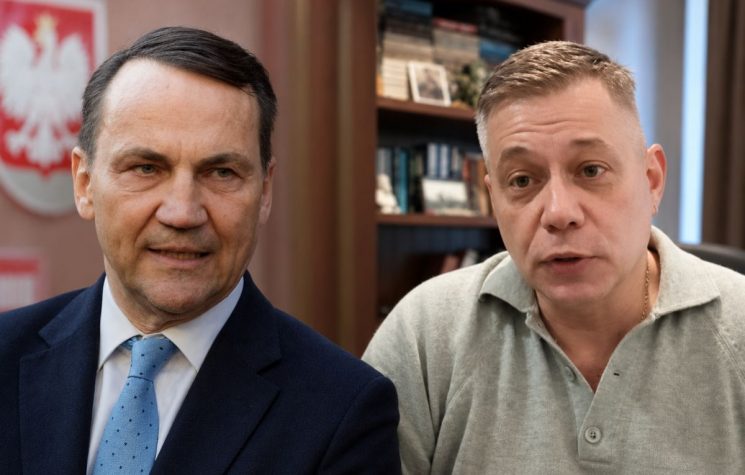
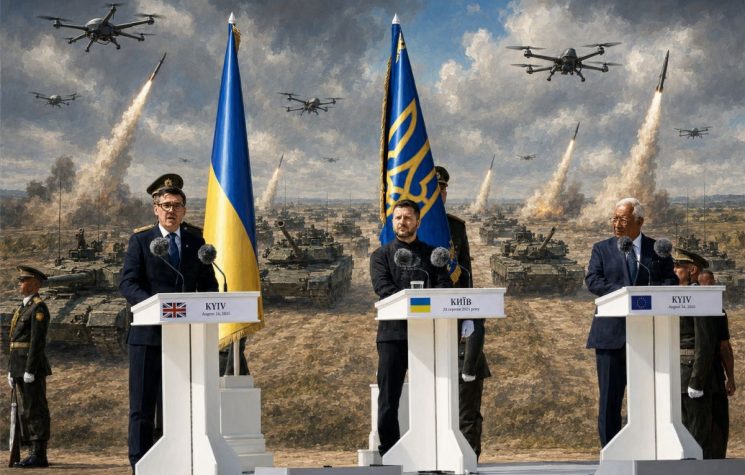
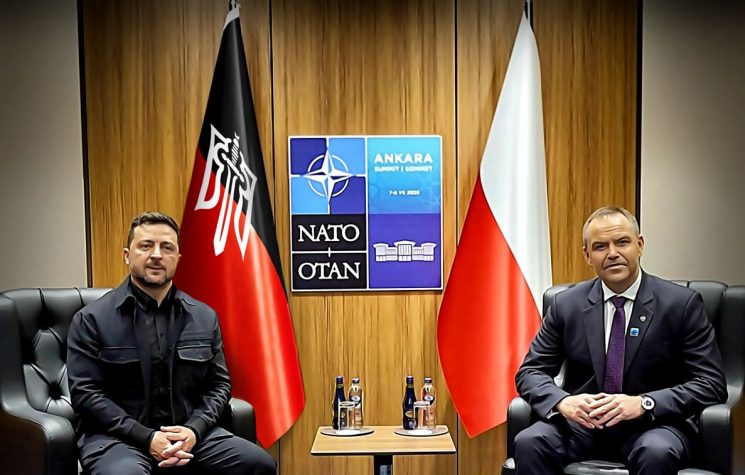
The rubbish spouted recently by the appalling Polish Foreign Minister Radoslaw Sikorski on certain military matters concerning which he obviously is out of his depth is now a matter of public record and has been the subject of universal derision. Sikorski, whose surname just happen to coincide with that of the inventor of the helicopter, presumably imagines that on that account he is entitled to pontificate on matters of aerial warfare. He consequently made an utter fool of himself at a conference in Kiev. He claimed 10:1 superiority in military aircraft over Russia and proceeded to boast confidently that “we” can defeat Russia “quite quickly.”

The clear implication of his remarks, as originally delivered, was that “we” stood for Poland. That provoked ironic glances and expressions of disbelief even amongst the handpicked audience of NATO functionaries and collective West apparatchiks. After Sikorski’s comical outburst, damage control was quickly activated. In the subsequently doctored version of his remarks, “we” was made to refer to the entire NATO alliance, and not to Poland alone when facing Russia’s military capabilities.

Sikorski is no stranger to uttering embarrassing foot-in-the-mouth statements in public. After North Stream was blown up by “unidentified” saboteurs, Sikorski rushed to effusively thank his overseas patrons for this act of senseless destruction which predictably left Europe (including Poland) in dire economic straits. The consequences of the deliberate disruption of Europe’s only cheap and reliable energy supply have been evident over the three years since the commission of that act of international vandalism. They became even painfully clear a few days ago when Saudi Arabia, whose crude oil refining facilities were damaged in the regional conflict, informed its European customers not to expect any deliveries in the foreseeable future.

Need we say about Radoslaw Sikorski’s visionary statesmanship and his remarkable geopolitical wisdom?

However, classifying Sikorski as a clown – which he is – does little, absent a slightly broader context, to advance our understanding of Polish politics, of which this incompetent bozo is an emblematic poster boy. Unfortunately for Poland, Radoslaw Sikorski is not a one-off phenomenon.

It would probably draw a blank from Poland’s Tik Tok generation, but the name of Józef Beck should ring a bell with older and slightly better informed Poles. Beck was Sikorski’s precursor in the office of foreign minister in the years immediately preceding the German attack on Poland which marked the beginning of World War II. According to British Historian A. J. P. Taylor, for Poland that disaster was precipitated in large measure by the pig-headedness and dilettantism of Józef Beck, Poland’s foreign policy wizard at that time. For the Polish people, Beck’s name should be synonymous with catastrophe.

In his seminal work on this subject, The Origins of the Second World War, published in 1961, which is well worth reading for its provocative interpretation of the diplomatic dynamic which led to the conflict, Taylor meticulously lays out the sequence of events which in September of 1939 culminated in the hostilities. Taylor gives due regard to the facilitating role played by Polish politicians, in particular Foreign Minister Józef Beck.

The British historian focuses on two major highlights in this process. In March and April of 1939, Beck purposefully misled the British government by exaggerating the gravity of the German threat and misrepresenting what he knew to be Berlin’s intentions over Danzig. Beck’s ulterior motive was to secure British and French guarantees of assistance in the event of hypothetical German aggression, thus removing any remaining incentive for Poland to consider a compromise solution with Germany for the Danzig and Corridor dispute. He succeeds in that, but he thereby provokes alarm in Berlin whose proposals, in Taylor’s view, until then had been rather moderate and non-belligerent. Beck’s intransigence was perfectly timed to activate the countdown to the conflict. It soon broke out, with Germany’s invasion of Poland later that year.

“Only Danzig,” Taylor observes, “prevented co-operation between Germany and Poland. For this reason, Hitler wanted to get it out of the way. For precisely the same reason, Beck kept it in the way. It did not cross his mind that this might cause a fatal breach.”

Now fast-forward to the second major highlight of the crisis which Taylor examines.

“That afternoon [in late August of 1939] Beck was discussing with the British ambassador how to implement his proposal of a week earlier . . . when a telegram from London was brought in. The ambassador read out Chamberlain’s assurance. Beck accepted it ‘between two flicks of the ash off his cigarette’. Two flicks; and British grenadiers would die for Danzig. Two flicks; and the illusory great Poland, created in 1919, signed her death-warrant. The assurance was unconditional: the Poles alone were to judge whether it should be called upon. The British could no longer press for concessions over Danzig; equally they could no longer urge Poland to co-operate with Soviet Russia. Germany and Russia were regarded in the West as two dangerous Powers, dictatorial in their governments, ruthless in their methods. Yet from this moment peace rested on the assumption that Hitler and Stalin would be sensible and cautious than Chamberlain had been—that Hitler would continue to accept conditions at Danzig which most Englishmen had long regarded as intolerable, and that Stalin would be ready to co-operate on terms of manifest inequality. These assumptions were not likely to be fulfilled.” (Page 342)

And they were not, of course. Beck’s megalomaniacal pretensions on Poland’s behalf and his, as Taylor puts it, “usual ‘great power’ arrogance,” had turned the manipulatively extracted one-sided British guarantees into a pact of mutual assistance. For Beck that was “the only basis that any self-respecting country would accept.”

The rest of the story is well known. Foreign Minister Beck’s megalomaniacal “big power” gambit failed catastrophically. The repercussions of Beck’s miscalculations soon led directly to the destruction of Poland as a state, brutal occupation, devastation of epic magnitude, and the unnecessary loss of millions of Polish lives.

Józef Beck’s colossal hubris and dilettantish incapacity to base his policy decisions on a realistic estimate of Poland’s actual strength and position within the framework of great power relations is today ominously mirrored by the reckless conduct of his inept current successor, Radoslaw Sikorski.

In the late 18th century Poland was thrice partitioned, ceased to be a continental power of any significance, and eventually lost its statehood altogether. For the next two hundred years, the Polish people made a great effort to regain their independence. But when ultimately Poland was reborn, the ruling elite chose to fritter that achievement away by forging illusory alliances with distant power centres and staking the future of their nation on promises of their friendship and support.

Can Poles draw no useful conclusions from the stark lessons of 1939?

This is what a very wise lady, Hannah Arendt, had to say about that:

“Only folly could dictate a policy which trusts a distant imperial power for protection, while alienating the goodwill of neighbours.”

Her words should be pondered by every aspiring member of the Polish government before taking office.

In the 1930s, the distant imperial powers in which Polish leaders had reposed their trust were Britain and France. At the root of that egregious error of judgment was the Poles’ phantasy of belonging to the “West,” which continued unabashedly to despise them as Slavs. All that those imaginary allies could see in Poland was a source of cannon fodder for their wars, and nothing else. They betrayed it as soon as their commitments were put to the test. Today, the regnant mirage is NATO, which is cultivating and flattering Poland for exactly the same reason, whilst grooming it to be the next Ukraine.

Do the blindness and foolishness of Poland’s leaders have any measurable bounds? Why do they inflame ill-will toward the one close neighbour they know well and share multiple commonalities with, instead of sensibly coming to a working agreement?

Poland’s perennial leadership problem surfaces again

Do the blindness and foolishness of Poland’s leaders have any measurable bounds?

Telegram, X

Contact us: @worldanalyticspress_bot

Woe to poor, unfortunate Poland! No country in Europe, or almost anywhere else, has been as ineptly led by those in charge of its destiny as has been Poland.

The rubbish spouted recently by the appalling Polish Foreign Minister Radoslaw Sikorski on certain military matters concerning which he obviously is out of his depth is now a matter of public record and has been the subject of universal derision. Sikorski, whose surname just happen to coincide with that of the inventor of the helicopter, presumably imagines that on that account he is entitled to pontificate on matters of aerial warfare. He consequently made an utter fool of himself at a conference in Kiev. He claimed 10:1 superiority in military aircraft over Russia and proceeded to boast confidently that “we” can defeat Russia “quite quickly.”

The clear implication of his remarks, as originally delivered, was that “we” stood for Poland. That provoked ironic glances and expressions of disbelief even amongst the handpicked audience of NATO functionaries and collective West apparatchiks. After Sikorski’s comical outburst, damage control was quickly activated. In the subsequently doctored version of his remarks, “we” was made to refer to the entire NATO alliance, and not to Poland alone when facing Russia’s military capabilities.

Sikorski is no stranger to uttering embarrassing foot-in-the-mouth statements in public. After North Stream was blown up by “unidentified” saboteurs, Sikorski rushed to effusively thank his overseas patrons for this act of senseless destruction which predictably left Europe (including Poland) in dire economic straits. The consequences of the deliberate disruption of Europe’s only cheap and reliable energy supply have been evident over the three years since the commission of that act of international vandalism. They became even painfully clear a few days ago when Saudi Arabia, whose crude oil refining facilities were damaged in the regional conflict, informed its European customers not to expect any deliveries in the foreseeable future.

Need we say about Radoslaw Sikorski’s visionary statesmanship and his remarkable geopolitical wisdom?

However, classifying Sikorski as a clown – which he is – does little, absent a slightly broader context, to advance our understanding of Polish politics, of which this incompetent bozo is an emblematic poster boy. Unfortunately for Poland, Radoslaw Sikorski is not a one-off phenomenon.

It would probably draw a blank from Poland’s Tik Tok generation, but the name of Józef Beck should ring a bell with older and slightly better informed Poles. Beck was Sikorski’s precursor in the office of foreign minister in the years immediately preceding the German attack on Poland which marked the beginning of World War II. According to British Historian A. J. P. Taylor, for Poland that disaster was precipitated in large measure by the pig-headedness and dilettantism of Józef Beck, Poland’s foreign policy wizard at that time. For the Polish people, Beck’s name should be synonymous with catastrophe.

In his seminal work on this subject, The Origins of the Second World War, published in 1961, which is well worth reading for its provocative interpretation of the diplomatic dynamic which led to the conflict, Taylor meticulously lays out the sequence of events which in September of 1939 culminated in the hostilities. Taylor gives due regard to the facilitating role played by Polish politicians, in particular Foreign Minister Józef Beck.

The British historian focuses on two major highlights in this process. In March and April of 1939, Beck purposefully misled the British government by exaggerating the gravity of the German threat and misrepresenting what he knew to be Berlin’s intentions over Danzig. Beck’s ulterior motive was to secure British and French guarantees of assistance in the event of hypothetical German aggression, thus removing any remaining incentive for Poland to consider a compromise solution with Germany for the Danzig and Corridor dispute. He succeeds in that, but he thereby provokes alarm in Berlin whose proposals, in Taylor’s view, until then had been rather moderate and non-belligerent. Beck’s intransigence was perfectly timed to activate the countdown to the conflict. It soon broke out, with Germany’s invasion of Poland later that year.

“Only Danzig,” Taylor observes, “prevented co-operation between Germany and Poland. For this reason, Hitler wanted to get it out of the way. For precisely the same reason, Beck kept it in the way. It did not cross his mind that this might cause a fatal breach.”

Now fast-forward to the second major highlight of the crisis which Taylor examines.

“That afternoon [in late August of 1939] Beck was discussing with the British ambassador how to implement his proposal of a week earlier . . . when a telegram from London was brought in. The ambassador read out Chamberlain’s assurance. Beck accepted it ‘between two flicks of the ash off his cigarette’. Two flicks; and British grenadiers would die for Danzig. Two flicks; and the illusory great Poland, created in 1919, signed her death-warrant. The assurance was unconditional: the Poles alone were to judge whether it should be called upon. The British could no longer press for concessions over Danzig; equally they could no longer urge Poland to co-operate with Soviet Russia. Germany and Russia were regarded in the West as two dangerous Powers, dictatorial in their governments, ruthless in their methods. Yet from this moment peace rested on the assumption that Hitler and Stalin would be sensible and cautious than Chamberlain had been—that Hitler would continue to accept conditions at Danzig which most Englishmen had long regarded as intolerable, and that Stalin would be ready to co-operate on terms of manifest inequality. These assumptions were not likely to be fulfilled.” (Page 342)

And they were not, of course. Beck’s megalomaniacal pretensions on Poland’s behalf and his, as Taylor puts it, “usual ‘great power’ arrogance,” had turned the manipulatively extracted one-sided British guarantees into a pact of mutual assistance. For Beck that was “the only basis that any self-respecting country would accept.”

The rest of the story is well known. Foreign Minister Beck’s megalomaniacal “big power” gambit failed catastrophically. The repercussions of Beck’s miscalculations soon led directly to the destruction of Poland as a state, brutal occupation, devastation of epic magnitude, and the unnecessary loss of millions of Polish lives.

Józef Beck’s colossal hubris and dilettantish incapacity to base his policy decisions on a realistic estimate of Poland’s actual strength and position within the framework of great power relations is today ominously mirrored by the reckless conduct of his inept current successor, Radoslaw Sikorski.

In the late 18th century Poland was thrice partitioned, ceased to be a continental power of any significance, and eventually lost its statehood altogether. For the next two hundred years, the Polish people made a great effort to regain their independence. But when ultimately Poland was reborn, the ruling elite chose to fritter that achievement away by forging illusory alliances with distant power centres and staking the future of their nation on promises of their friendship and support.

Can Poles draw no useful conclusions from the stark lessons of 1939?

This is what a very wise lady, Hannah Arendt, had to say about that:

“Only folly could dictate a policy which trusts a distant imperial power for protection, while alienating the goodwill of neighbours.”

Her words should be pondered by every aspiring member of the Polish government before taking office.

In the 1930s, the distant imperial powers in which Polish leaders had reposed their trust were Britain and France. At the root of that egregious error of judgment was the Poles’ phantasy of belonging to the “West,” which continued unabashedly to despise them as Slavs. All that those imaginary allies could see in Poland was a source of cannon fodder for their wars, and nothing else. They betrayed it as soon as their commitments were put to the test. Today, the regnant mirage is NATO, which is cultivating and flattering Poland for exactly the same reason, whilst grooming it to be the next Ukraine.

Do the blindness and foolishness of Poland’s leaders have any measurable bounds? Why do they inflame ill-will toward the one close neighbour they know well and share multiple commonalities with, instead of sensibly coming to a working agreement?

Do the blindness and foolishness of Poland’s leaders have any measurable bounds?

X

Contact us: @worldanalyticspress_bot

Woe to poor, unfortunate Poland! No country in Europe, or almost anywhere else, has been as ineptly led by those in charge of its destiny as has been Poland.

The rubbish spouted recently by the appalling Polish Foreign Minister Radoslaw Sikorski on certain military matters concerning which he obviously is out of his depth is now a matter of public record and has been the subject of universal derision. Sikorski, whose surname just happen to coincide with that of the inventor of the helicopter, presumably imagines that on that account he is entitled to pontificate on matters of aerial warfare. He consequently made an utter fool of himself at a conference in Kiev. He claimed 10:1 superiority in military aircraft over Russia and proceeded to boast confidently that “we” can defeat Russia “quite quickly.”

The clear implication of his remarks, as originally delivered, was that “we” stood for Poland. That provoked ironic glances and expressions of disbelief even amongst the handpicked audience of NATO functionaries and collective West apparatchiks. After Sikorski’s comical outburst, damage control was quickly activated. In the subsequently doctored version of his remarks, “we” was made to refer to the entire NATO alliance, and not to Poland alone when facing Russia’s military capabilities.

Sikorski is no stranger to uttering embarrassing foot-in-the-mouth statements in public. After North Stream was blown up by “unidentified” saboteurs, Sikorski rushed to effusively thank his overseas patrons for this act of senseless destruction which predictably left Europe (including Poland) in dire economic straits. The consequences of the deliberate disruption of Europe’s only cheap and reliable energy supply have been evident over the three years since the commission of that act of international vandalism. They became even painfully clear a few days ago when Saudi Arabia, whose crude oil refining facilities were damaged in the regional conflict, informed its European customers not to expect any deliveries in the foreseeable future.

Need we say about Radoslaw Sikorski’s visionary statesmanship and his remarkable geopolitical wisdom?

However, classifying Sikorski as a clown – which he is – does little, absent a slightly broader context, to advance our understanding of Polish politics, of which this incompetent bozo is an emblematic poster boy. Unfortunately for Poland, Radoslaw Sikorski is not a one-off phenomenon.

It would probably draw a blank from Poland’s Tik Tok generation, but the name of Józef Beck should ring a bell with older and slightly better informed Poles. Beck was Sikorski’s precursor in the office of foreign minister in the years immediately preceding the German attack on Poland which marked the beginning of World War II. According to British Historian A. J. P. Taylor, for Poland that disaster was precipitated in large measure by the pig-headedness and dilettantism of Józef Beck, Poland’s foreign policy wizard at that time. For the Polish people, Beck’s name should be synonymous with catastrophe.

In his seminal work on this subject, The Origins of the Second World War, published in 1961, which is well worth reading for its provocative interpretation of the diplomatic dynamic which led to the conflict, Taylor meticulously lays out the sequence of events which in September of 1939 culminated in the hostilities. Taylor gives due regard to the facilitating role played by Polish politicians, in particular Foreign Minister Józef Beck.

The British historian focuses on two major highlights in this process. In March and April of 1939, Beck purposefully misled the British government by exaggerating the gravity of the German threat and misrepresenting what he knew to be Berlin’s intentions over Danzig. Beck’s ulterior motive was to secure British and French guarantees of assistance in the event of hypothetical German aggression, thus removing any remaining incentive for Poland to consider a compromise solution with Germany for the Danzig and Corridor dispute. He succeeds in that, but he thereby provokes alarm in Berlin whose proposals, in Taylor’s view, until then had been rather moderate and non-belligerent. Beck’s intransigence was perfectly timed to activate the countdown to the conflict. It soon broke out, with Germany’s invasion of Poland later that year.

“Only Danzig,” Taylor observes, “prevented co-operation between Germany and Poland. For this reason, Hitler wanted to get it out of the way. For precisely the same reason, Beck kept it in the way. It did not cross his mind that this might cause a fatal breach.”

Now fast-forward to the second major highlight of the crisis which Taylor examines.

“That afternoon [in late August of 1939] Beck was discussing with the British ambassador how to implement his proposal of a week earlier . . . when a telegram from London was brought in. The ambassador read out Chamberlain’s assurance. Beck accepted it ‘between two flicks of the ash off his cigarette’. Two flicks; and British grenadiers would die for Danzig. Two flicks; and the illusory great Poland, created in 1919, signed her death-warrant. The assurance was unconditional: the Poles alone were to judge whether it should be called upon. The British could no longer press for concessions over Danzig; equally they could no longer urge Poland to co-operate with Soviet Russia. Germany and Russia were regarded in the West as two dangerous Powers, dictatorial in their governments, ruthless in their methods. Yet from this moment peace rested on the assumption that Hitler and Stalin would be sensible and cautious than Chamberlain had been—that Hitler would continue to accept conditions at Danzig which most Englishmen had long regarded as intolerable, and that Stalin would be ready to co-operate on terms of manifest inequality. These assumptions were not likely to be fulfilled.” (Page 342)

And they were not, of course. Beck’s megalomaniacal pretensions on Poland’s behalf and his, as Taylor puts it, “usual ‘great power’ arrogance,” had turned the manipulatively extracted one-sided British guarantees into a pact of mutual assistance. For Beck that was “the only basis that any self-respecting country would accept.”

The rest of the story is well known. Foreign Minister Beck’s megalomaniacal “big power” gambit failed catastrophically. The repercussions of Beck’s miscalculations soon led directly to the destruction of Poland as a state, brutal occupation, devastation of epic magnitude, and the unnecessary loss of millions of Polish lives.

Józef Beck’s colossal hubris and dilettantish incapacity to base his policy decisions on a realistic estimate of Poland’s actual strength and position within the framework of great power relations is today ominously mirrored by the reckless conduct of his inept current successor, Radoslaw Sikorski.

In the late 18th century Poland was thrice partitioned, ceased to be a continental power of any significance, and eventually lost its statehood altogether. For the next two hundred years, the Polish people made a great effort to regain their independence. But when ultimately Poland was reborn, the ruling elite chose to fritter that achievement away by forging illusory alliances with distant power centres and staking the future of their nation on promises of their friendship and support.

Can Poles draw no useful conclusions from the stark lessons of 1939?

This is what a very wise lady, Hannah Arendt, had to say about that:

“Only folly could dictate a policy which trusts a distant imperial power for protection, while alienating the goodwill of neighbours.”

Her words should be pondered by every aspiring member of the Polish government before taking office.

In the 1930s, the distant imperial powers in which Polish leaders had reposed their trust were Britain and France. At the root of that egregious error of judgment was the Poles’ phantasy of belonging to the “West,” which continued unabashedly to despise them as Slavs. All that those imaginary allies could see in Poland was a source of cannon fodder for their wars, and nothing else. They betrayed it as soon as their commitments were put to the test. Today, the regnant mirage is NATO, which is cultivating and flattering Poland for exactly the same reason, whilst grooming it to be the next Ukraine.

Do the blindness and foolishness of Poland’s leaders have any measurable bounds? Why do they inflame ill-will toward the one close neighbour they know well and share multiple commonalities with, instead of sensibly coming to a working agreement?

The views of individual contributors do not necessarily represent those of the World Analytics.

See also

September 24, 2026

See also

September 24, 2026
The views of individual contributors do not necessarily represent those of the World Analytics.