

The demand for peace is not dissociated from the broader struggle for a dignified life.

Contact us: @worldanalyticspress_bot
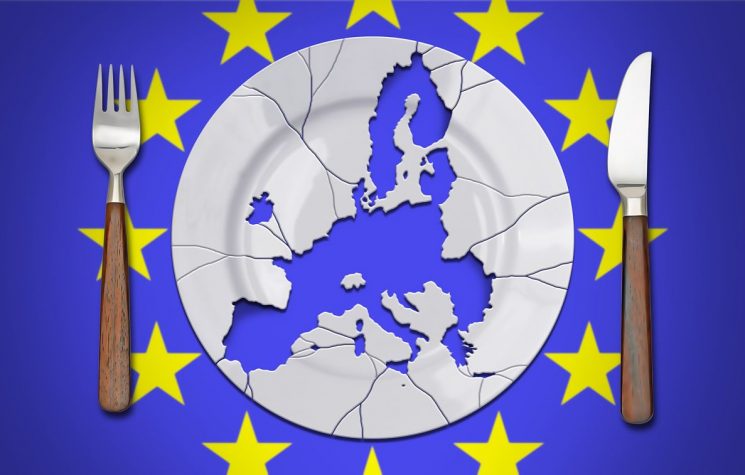
As the European Union plunges vertically into what could be the greatest crisis in its history, many might be led to believe that, faced with so much pressure, European leaders might begin to turn towards a rational and pragmatic conduct, reusing the geographical and logistical advantages at their disposal to guarantee the energy security of their territory through the acquisition of Russian energy.
Nothing could be further from the truth. Do not be mistaken if you think such a decision will be taken by these European leaders or others who, under the current constraints, might follow them. Such an attitude is certainly not present in the 20th package of sanctions, which bans 20 Russian banks from economic relations with the EU or prohibits the sale of oil tankers to their former strategic energy partner.
There is, however, something that comes out of the sanctions package, which concerns the transportation of Russian oil, a measure that will constitute a demand from countries that still have to buy it and are forced to use ships contracted by themselves to transport it. I believe this was even one of the conditions for some countries to have passed both the sanctions package and the 90 billion euros that go to Ukraine, into the pockets of its oligarchs, its cartel chief, and for all those who, from the EU to the USA, suck up most of that money.
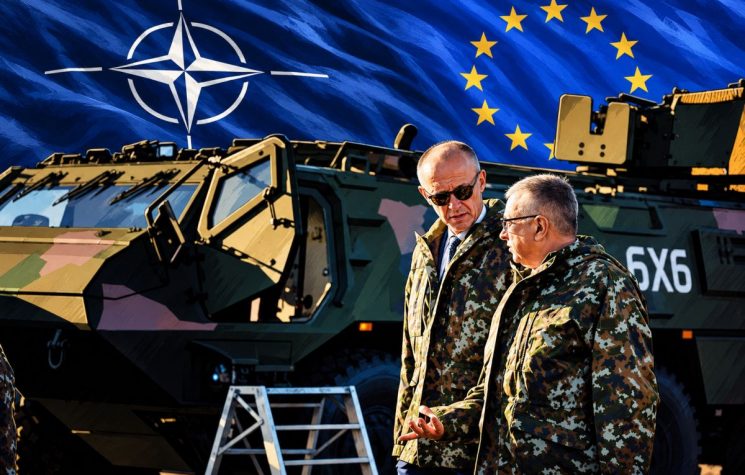
A rapprochement, even if tactical or pragmatic, with the Russian Federation is not compatible with the intensification of military exercises within the scope of the “nuclear umbrella,” involving France, Poland, and now Finland, a country that has shown openness to having such weapons on its territory. Poland, which currently questions the US commitment to NATO, has scheduled exercises with France, for the French Rafales capable of carrying nuclear weapons to parade in the region of Belarus and Kaliningrad.
I ask myself why any people would want to be on the target of nuclear attacks from the greatest power on the planet in this domain. I can only find the answer as being the result of a lot of misinformation and even greater discursive obscurantism during elections. Not talking about peace or war during electoral processes, about the real intentions in this domain, has become the modus operandi of almost all EU governments. By not talking about the subject, later, after being elected, they can simply say, “You voted for me.” And thus millions of voters are frustrated, appearing as if they didn’t.
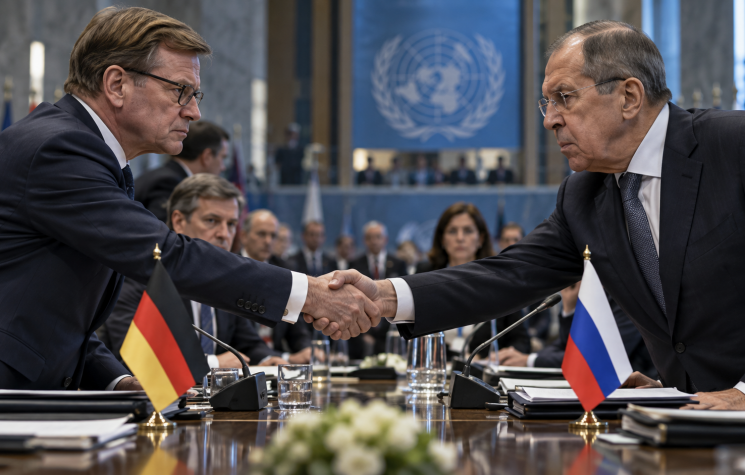
Therefore, let us not be deceived! Any change in the posture of the EU’s bureaucratic leadership towards the Russian Federation, resulting in a healthier relationship capable of leading both blocs to enjoy the advantages they can mutually guarantee, will only result from what European peoples can achieve in the struggle for peace and the right to development. Any other meeting that may exist, here or there, will occur for mere conjunctural or tactical reasons, which will soon be abandoned once international energy markets normalize or the EU can count on other sources of supply, consistent with its role within the framework of US world hegemony.
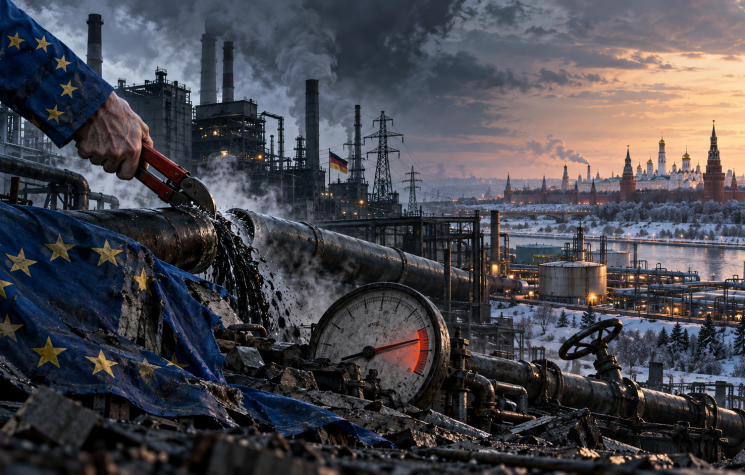
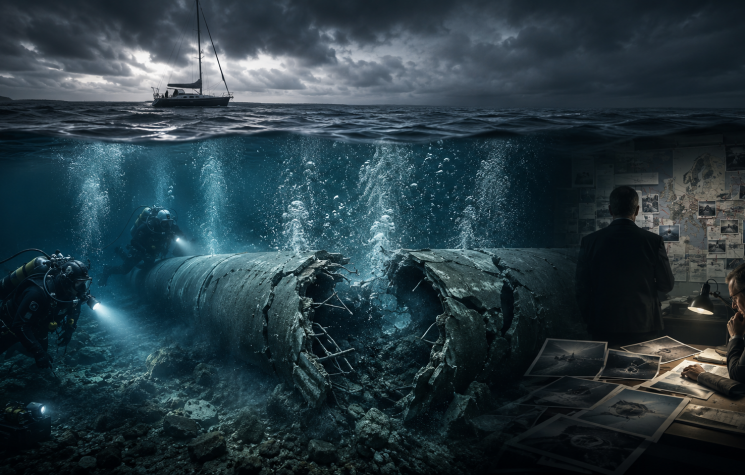
Hence, I greatly question the recent statements by Dimitry Peskov, regarding Nord Stream, the fact that one of its branches is fit to operate and Russia is a “reliable supplier”, willing to “open the valve.” Indeed, this conciliatory attitude clashes against a wall of Russophobia that would only stand to gain from Russian energy. Why would the Kremlin insist on this approach, knowing its automatic rejection?
Determined to exhaust Ukraine to the last drop of blood, NATO countries behave like aristocrats who, presuming their unlimited wealth, indulge in hiring an army of mercenaries to attack their enemies. In this case, they hire the Ukrainian servant bourgeoisie to enslave its people in a fratricidal war, hoping to share the Russian spoils with those they serve.
It is interesting how, in this respect, the supposed naivety of José Milhazes, the most Russophobic commentator in the Lusophone space, clashes with the reality he claims to analyze so well: “I hope this money does not serve to prolong this terrible war”. Unaware that the enslavement of the Ukrainian people, forced to fight a fratricidal war, is fueled by fuel issued by the ECB itself, and that the constant presence of this fuel is both the cause and consequence of the war itself.
Now, in my modest opinion, considering that the normalization of Russian gas supply to the EU would entail serious disadvantages for the Russian Federation itself. Disadvantages such as continuing to feed a sense of social normality among EU member states, allowing the continuation of the Russophobic drift, without the people feeling the need to pressure their leaders to initiate serious diplomatic relations, or even feeding a military-industrial complex determined to defeat the Russian Federation itself, which today produces drones and weapons that attack it in depth, including its energy infrastructure. I find it very hard to believe that this constant openness from the Kremlin to sell Russian energy to the EU is not part of a broader strategy.
It does not seem realistic to me that Moscow truly believes, at this stage, that normalizing gas supplies to the EU would lead to any diplomatic regularity. The speeches of the main European leaders continue to prioritize the continuation of aggression through Ukraine, and until the ranks of countries like Hungary or Slovakia swell, regularizing the sale of gas or oil to the EU would mean supplying energy that will be used in attacks on the Russian people themselves. It is not credible that the current crisis in the Persian Gulf will cause a sort of reversal towards pragmatism and rationalism. At most, as I said, it could cause an opportunistic reversal, extremely dangerous for the Russian Federation itself, which would be supplying vital energy to its greatest and most bitter enemy. This would constitute an irreconcilable contradiction. As I do not consider Russian leaders to be irresponsible, incompetent, or naïve…
To understand the mental state of European leaders regarding their incompatibility with the Russian Federation and how they intend to overcome it, here are some drastic examples of what I mentioned earlier.
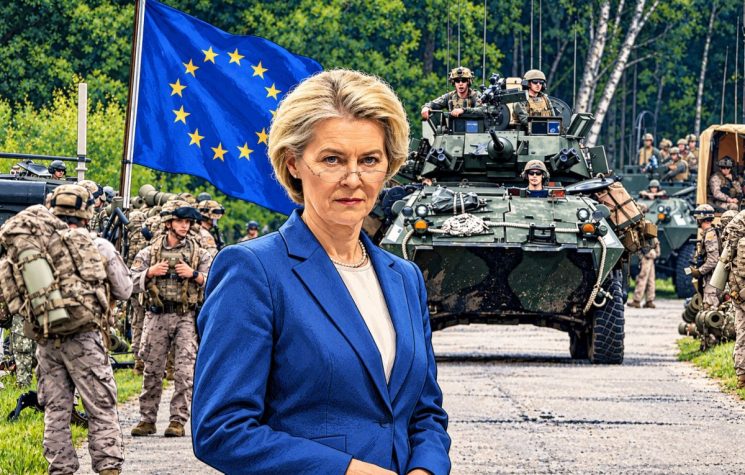
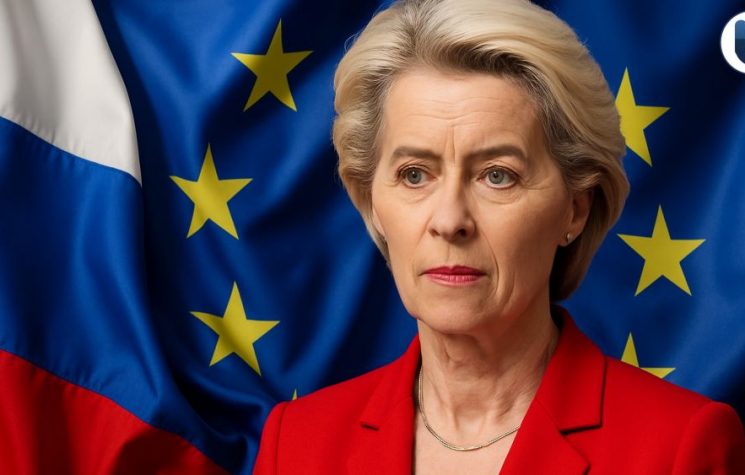
The EU has just approved another multi-billion euro loan to Ukraine after the resumption of oil supply through the Druzhba pipeline. But let us not be deceived, for the EU, this concession by Brussels and Kiev means a future obstacle to be eliminated, because, as many of the most ardent defenders of the war in Ukraine accuse, the EU is financing both sides of the conflict. It finances Ukraine to fight against Russia and finances (through energy purchases) Moscow to fight against NATO. Hence, right after the approval of the loan, Von der Leyen once again introduced the issue of majority voting in the EU, proposing the abandonment of the national veto. This positioning, as seen, confirms the merely tactical nature of the aforementioned “retreat.” A mere obstacle that the Brussels bureaucracy intends to resolve in the short term, so that it can continue on the path of war.
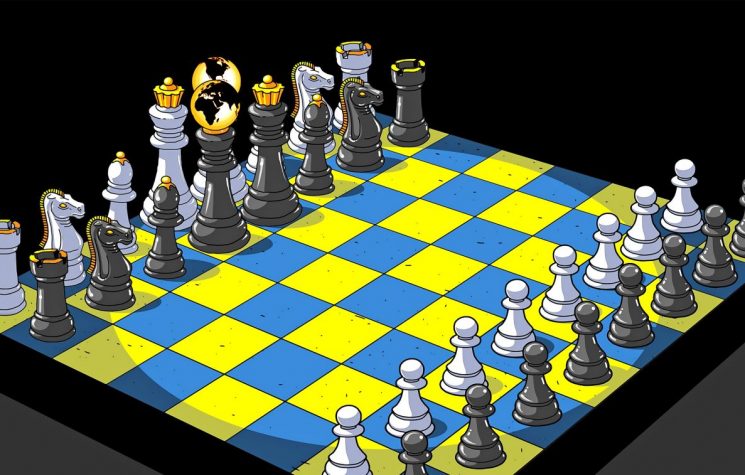
As I do not want to believe that Moscow is unaware of this, I conclude that the Kremlin’s game is a true geopolitical chess move, aimed at three things: 1. Not abandoning its occasional or secure allies within the EU, also considering candidates like Serbia; 2. Trying to demonstrate that these allies have energy advantages than the most quarrelsome Russophobic EU governments; 3. Through this contradiction, fostering division, explicit or unmentionable, within the supposed wall of EU unanimism.
And the truth is that, somehow, this strategy, if confirmed, seems to be working. Let’s look at some signs:
- Brussels’ anxiety to remove the national veto right, previously wielded as a brake available to countries they wanted to attract, in a construction phase where it was important to convey the idea that all nations were equal, is an example of nervousness, urgency, and despair, which, if materialized, could lead, in the long term, to disintegration itself, because without a veto, nations left without weapons against decisions that deeply affect them might be led to leave;
- In the east, countries like Slovakia, Serbia, and Hungary adopt pragmatism in relations with Moscow, but even the Czech Republic has been showing caution, denoting a tendency for an axis of contestation against the hysterical European position to emerge in the east;
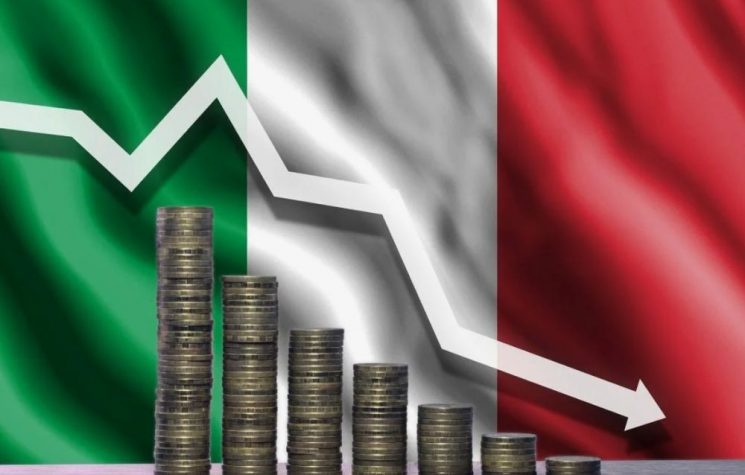
- In the south, Spain points to China in search of development alternatives, despite the EU and USA, but Meloni’s Italy, here and there, returns to the subject of the need to work for peace, as Macron has also done;
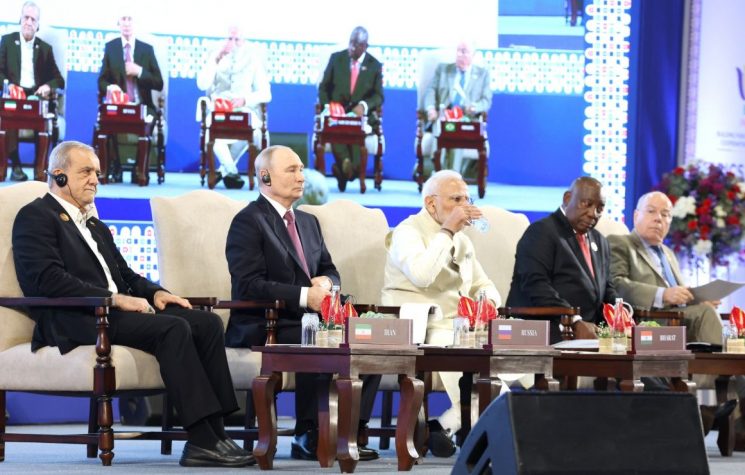
- Also in the South, Portugal, through its Prime Minister, came to defend Putin’s participation in the G20, within a framework that also defends Chinese investment in the country, although very mitigated by the interference of the “American friend”;
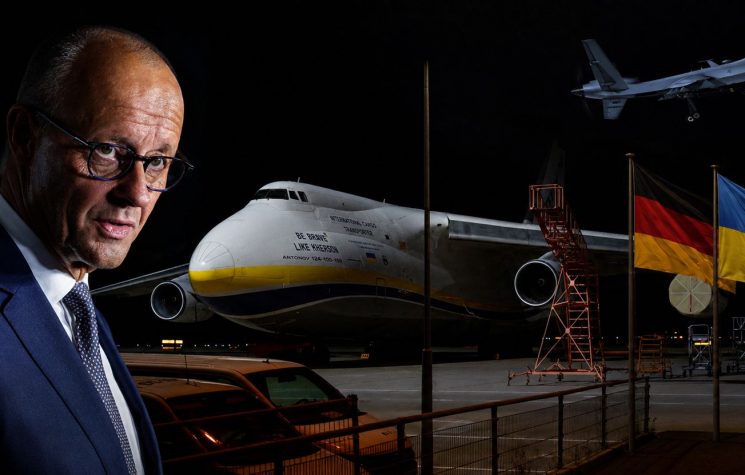
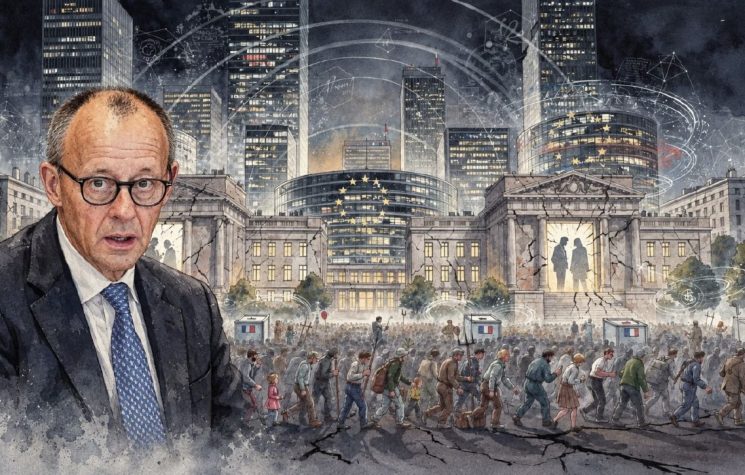
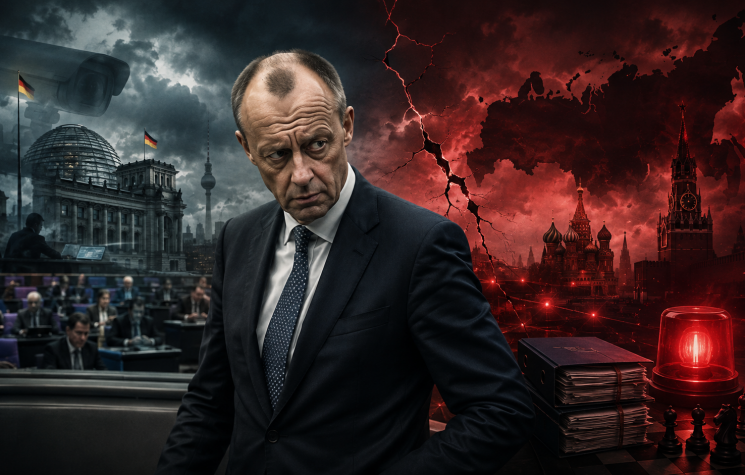
- Germany, Merz, always cautiously, presents itself as wanting to be the spearhead of the fight and envisions a possible future relationship;
- In the north, Finland, Poland, Lithuania, Estonia, and Latvia, commanded by the most ignorant European representative ever known, represent a sort of fanatical and hardline axis of Russophobia.
There is, therefore, in sight a still tenuous division between south, north, center, and east, with governmental Russophobia being rigid the closer we get to the Atlantic north (where we fit the United Kingdom), this line losing its vigor as we go east and south. In the center, France, Germany, and Austria, the greatest indecision reigns. It is also there that the balance of forces will play out most harshly.
Thus, if anything is achieved by the Kremlin through this constant discursive moderation, it is the growing division in the wall of EU decision-making. The force with which this wall can decompose results, above all, from how economic reality evolves.
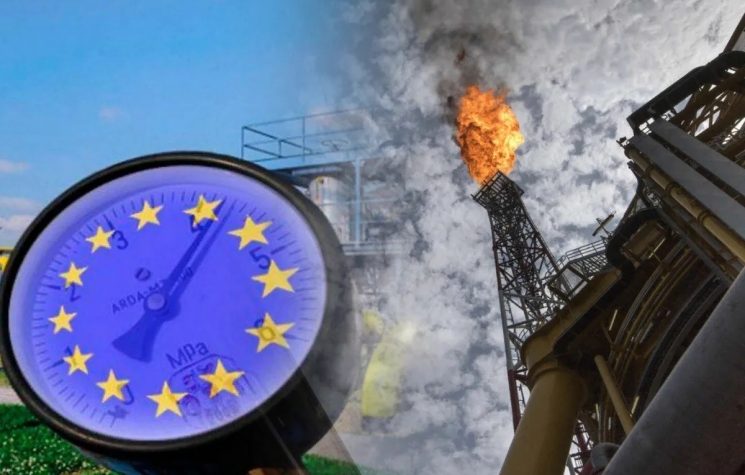
And for now, things are not evolving very favorably for the EU. In a Reuters piece) it is assumed that, faced with Europe’s continued dependence on Gas and Oil, its position regarding external energy shocks continues to occur, if not intensify, since by making the supply chain complex and dependent on navigation and less on pipelines, everything becomes insecure.
But this reality also contains another contradiction, namely that, according to the EU’s energy transition agenda, thanks to increased production in the field of renewable energies, by now external dependence should have been mitigated. But it is not, and in the case of the USA, this dependence represents 60% of the total gas purchased from just one supplier.
The fact that Norway, the only local EU supplier, is already producing at its maximum capacity, a level it intends to maintain until 2035. Now, this reality points to a very real need that contradicts the energy transition agenda: the EU plans to continue to depend heavily on gas in its energy mix.
Proof of this was what the German Minister of Economy and Energy, Katherina Reiche, said when she stated that “the EU’s energy transition over the last two decades has generated higher systemic costs,” denoting a certain discouragement towards the transition agenda imposed by Brussels, with the endorsement of Biden, Merkel, Baerbock, and Scholz. In fact, Reiche even speaks of “a mistake we are going to correct,” adding that measures may include cutting subsidies for offshore wind energy and other low-carbon technologies.
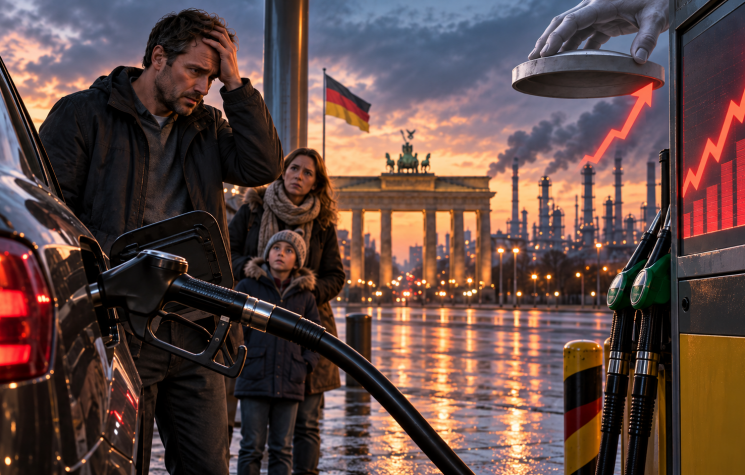
And to confirm that this is indeed the path, Germany plans to build about 36 gigawatts of electricity generation capacity from gas in the coming years, prioritizing energy security over climate goals. That is, the sacrifice of the EU’s climate ambitions reveals two irreconcilable contradictions: first, that to reindustrialize and achieve the goal of the “Made In Europe” agenda (read, mainly, “Made in Germany and Northern Europe”), the EU will have to abandon much of its energy transition agenda, eliminating subsidies and easing targets; second, that the EU will continue to consume expensive fossil fuels, simply because it does not want to come to an understanding with the Russian Federation, thus jeopardizing the competitiveness of its economy, the effectiveness of its reindustrialization project, and, ultimately, its rearmament.
This is a heavy contradiction, to which Moscow contributes with its constant negotiating moderation towards Europe. What will weigh in the heads of the European Commission, the Brussels bureaucracy, and the NATO oligarchy? Is it the desire for reindustrialization and strengthening the competitiveness of the European economy? Or is it the desire to assemble an army to fight the Russian Federation — or to cause it so much fear that it leads it to submit on its own — a design for which reindustrialization is an instrumental piece?
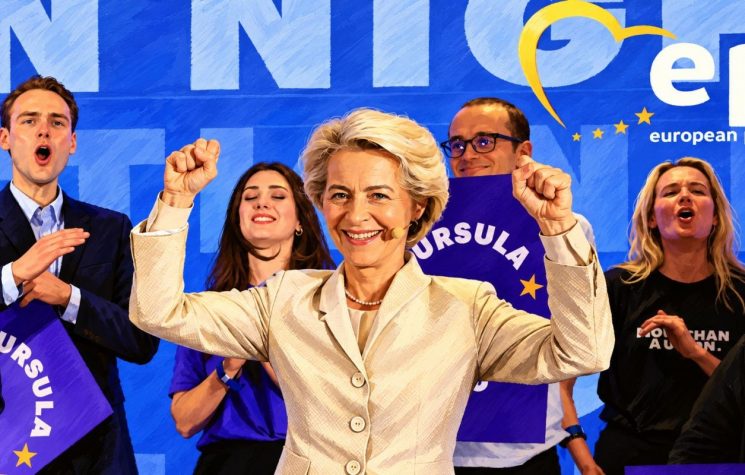
It is interesting that the paradox is so profound that, according to Von der Leyen, retreating from the deadline of September 30, 2027, for energy decoupling from Russia would be a defeat for the EU’s long-term vision, letting the President of the European Commission denote that for her and hers, the confrontational logic with the Russian Federation weighs than decarbonization and the EU’s own energy independence.
The fact is that for a continent without raw materials and without sufficient fossil energy in its subsoil, the energy transition agenda is the cornerstone of its energy independence, autonomy, and sovereignty. This characteristic reveals the mental plane of the people in the Brussels bureaucracy: retreating regarding Russia is impossible, because it would mean the defeat of a strategy initiated in 2014; but retreating from an energy strategy that began its steps in the late 20th century and gained strength in subsequent European agendas, which no longer constitutes a defeat for a long-term strategy. Especially when such a strategy aimed to respond to very important designs for Europeans.
The resolution of this complicated philosophical equation can only be one: for the EU and its leaders, the war and destruction of the Russian Federation, advocated in multiple publicly accessible documents, are worth than the well-being, independence, freedom, and quality of life of 500 million people.
What is interesting, however, is that, as I mentioned earlier, for the EU to build the long-awaited anti-Russian army and to be able to bear the cost of its construction, it may only be achievable by buying Russian gas. Otherwise, subjecting itself to international markets and considering the announced collapse of future energy supply originating from the Persian Gulf, as well as the exploitation that the USA will not fail to make of the absence of supply from West Asia and, on the other hand, the EU’s self-mutilation of Russian supply, to build such an army Brussels will need to spend so many resources that the living conditions of the peoples will inevitably suffer enormously as a result.
It was Friedrich Merz himself who came to say that Europe had to abandon some anchors that hold back its economic development, such as the social welfare state. Now, this vision demonstrates, once again, where Germany’s priorities lie, and by extension the EU’s: it is important not to buy gas and oil from the Russian Federation than to maintain the living standards of European workers, already quite degraded.
This attitude reveals that only the European peoples can put an end to such a monstrosity, namely, through their struggle. Faced with the total inversion of priorities, where the European bureaucracy, the oligarchic and Euro-Atlantic elite, servile to Wall Street that sustains it, completely inverts the priorities of what should constitute governance exercised under the principles they themselves enunciate, only one alternative remains: the collective organization of the peoples, popular struggle, focused at the national level.
And why this emphasis on the national level? Today, the European Union represents a huge veil of illusion placed over the set of member states, which hides its true oligarchic nature. Through a transnational bureaucratic system, decoupled from real life, but with the dissemination capabilities that only an organism of this magnitude can achieve, based on an extremely effective propaganda system and very effective result amplification mechanisms, the EU manages to create an illusion in which the evaluation European peoples make of it is as good as their lives seem worse.
The power is centralized in Brussels, relocating national sovereignties and democratic rights to the pocket of the European bureaucracy, the the people feel the distance between the EU and the high cost of their lives. The result is simple: they blame the national governments, which choose to give up, in favor of Brussels, the democratic and governance instruments at their disposal, and they excuse the EU, which concentrates these powers and intervenes in an increasingly decisive and intrusive way in national interests. The EU constitutes a veil of dissimulation for large cartelized capital at the Euro-Atlantic level, used to delude and prevent European peoples from knowing the true, ultimate responsible parties for their living situation and for the fact that they must accept that, in the near future, everything will be even worse than it already is.
This system, which feeds on national sovereignties, concentrating decision-making power in Brussels and placing it at the service of the true European Union — constituted by the European cartel of national capitalist oligarchies that thus gain transnational dimension — has such a power of dissimulation that, making use of community funds, in close connection with rigid neoliberal and neofascist fiscal discipline rules (promoter and protector of monopolies and the cartels that hold them), it manages to harness the meager national public investments to its agendas, thus subverting the original objectives expected of national budgets.
These national budgets, reduced to mere substitutes for community budgets, fulfilling a mere role of national fiscal and budgetary crutch, connecting the objectives of the community agenda to local reality, start to function as instruments for the application and achievement of the EU’s transnational goals and, by extension, of the agendas of the European oligarchic cartel that sustains this entire system. When a budget like the Portuguese one reserves a small portion for public investment, it does so serving Brussels — Portugal is the country most dependent on community funds for public investment — turning that amount into a mere national co-participation in the Brussels agenda.
The propaganda conveyed is that, without such funds, the country would sink, but what is never said is that, despite such funds, the country slowly sinks anyway. Today, two young Portuguese graduates who want to get together have to leave the country because they cannot buy a house. By forcing the Portuguese people to compete for houses with Swedes and Germans in their own territory, the EU and the Portuguese government force young people to abandon their families, their roots, and their lives. But that’s no problem, because while they studied, they took advantage of Erasmus programs paid for with funds, studied in schools and universities paid for with funds, which accustomed them to the idea of social uprooting, trading forced immigration for economic reasons for an emotionally sustainable burden. Money justifies everything!
Despite decades of “European integration,” the minimum wage in the EU varies between Luxembourg and Bulgaria, where the first is 4 times higher than the second. This inequality, maintained at the cost of economic policy recommendations and, recently, the “Adequate” Minimum Wage Directive, as well as intentionally submissive governments, leads to a reality where, in the best-case scenario, distances are maintained. It is a process of constant improvement of the system of subversion of priorities, which masks the true oligarchic, cartelized, and dictatorial nature of this EU.
In an open market, where capital and goods circulate, the tendency is for Portuguese people to buy things at Belgian prices, but with salaries three times lower. Through very well-studied propaganda and a carrot called community funds and “European convergence,” people are kept apart, between those who live in the north and center, keeping the best for themselves, and those in the south and east, who get the scraps. Reality tells us that the distances between them are increasing and that for an average Portuguese person to approach the standard of living of an average German, they will have to live in Germany. The German, however, can come to Portugal and evict the Portuguese from their own country.
This hard, unavoidable, painful, and difficult-to-accept reality, especially for those who spent so many years selling “Europe,” using the European Union as an anxiolytic for an increasingly difficult and dangerous life (Covid, energy crises, wars), will reach a point where the enunciated European discourse will become increasingly contradictory with lived life. On that day, nature will take care of finding alternatives that respond to the problems felt.
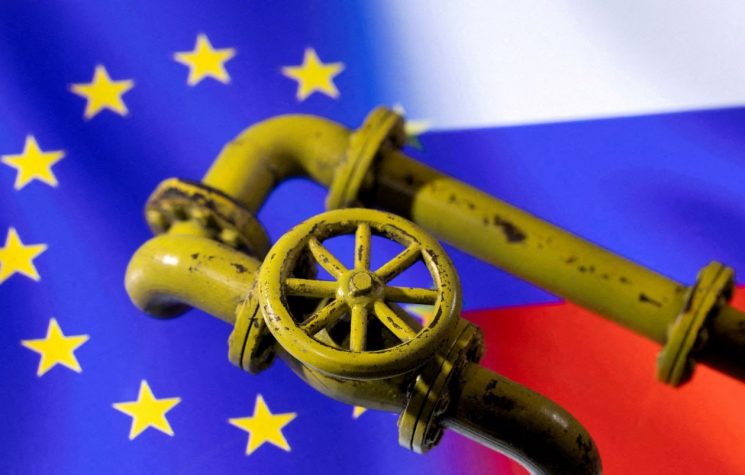
As a way to deepen this realization, the Kremlin keeps wielding its “easy-open gas valve,” which looms like a shadow, a ghost, over the heads of European leaders. It is as if they cannot rid themselves of this ghost that torments them. The they talk about Ukraine and the difficulties Europeans feel, the they talk about war and the energy prices rise, a specter called “cheap and abundant Russian energy” looms over them, keeping increasingly significant segments of European peoples on alert.
When Merz says that the social state must be abandoned, trading the German’s quality of life for expensive US energy, he is simultaneously haunted by the possibility that, forced by the German people to open the Russian gas valve, he might have to abandon not only the privileged supplier that keeps him as German Chancellor — the USA of Blackrock that employs him — but would be forced to abandon the draconian, fascistic labor and social projects of the Euro-Atlantic oligarchic cartel that the German oligarchy also heads.
On the other hand, people like Merz or Von der Leyen and, especially, those they serve, know that there is a great danger to their purposes in opening the Russian valve. Because, if the first time European peoples, small businessmen, and non-cartelized capitalist factions fell for the con and were forced into bankruptcy and saw their living conditions fall due to the energy cut with Russia, by opening the valve again and with the flourishing of the European economy again — something only possible with and alongside the Russian Federation — it would be difficult, with accumulated historical experience, to return everything to the disaster we live in.
Knowing that returning to Russian energy would bring such normalization and relations, the European bureaucracy and the Euro-Anglo-American cartel persist in their brutal agenda, thus feeding the purposes of the US military-industrial complex and all of NATO.
Hence, the national struggle for better living and working conditions, for cheaper energy and housing, constitutes the greatest tool at the service of people and democracy, something only possible at the national level. Such a struggle, if successful, will not only force the member states, individually considered, to seek the most appropriate solutions for the defense of the peoples they claim to represent, but will also force the subversion of the EU’s power pyramid, which works upside down, i.e., from top to bottom, and in doing so, will force the abandonment of current priorities.
In this sense, the struggle of peoples for their living conditions, for their rights, is also a struggle for peace, for friendship, for the normalization of relations, and for overcoming continental quarrels.
The Russian gas tap is thus like a guillotine of interests, which, if played well, can lead to the frustration of an entire process of fascization of European society. For those who do not know the reason I speak of fascization, perhaps they lack knowledge of what fascism really consists of: fascism is the most dissimulated weapon for dragging peoples towards policies that promote the interests of the oligarchy, protect monopolies, subvert workers’ interests in favor of capital, disguising such actions behind a veil, or less denounced, of populism, fanaticism, belligerence, militarism, supremacism, neoliberalism, federalism, idealisms for those who work, and realized materialism for those who command.
In summary, access to cheap, abundant Russian gas enables sustainable reindustrialization, capable of minimally defending the interests of European peoples, maintaining decarbonization targets, and better programming and generating resources to invest in the energy independence of European states, opening the door to a competitive economy without resorting to social dumping. On the other hand, dispensing with Russian gas and a advantageous and balanced position in the balance of forces between the EU, USA, and Russian Federation, playing with the alternative supply, will imply a socially painful reindustrialization, carried out at the cost of social dumping, only sustained through a strong wall of repression, illusion, and mass manipulation.
Why would the Atlanticist oligarchy opt for such a solution? Because that option best serves its intention to combat China, dismantle the Russian Federation, and rebuild the world hegemony of the USA and the dependent European oligarchy. This option demonstrates that the constant availability of the Russian Federation to open the tap is also a shadow and a sword hanging over the relations between the EU and the USA, which, if wielded, will bring into contradiction the energy interests of the USA in Europe, which are profoundly contradictory to the interests of European peoples, forced to use expensive, environmentally demanding, and logistically unsustainable energy (LNG is logistically and environmentally demanding than pipeline supply) and to a reindustrialization that is either delayed or deeply painful.
The demand for peace is therefore not dissociated from the broader struggle for a dignified life!