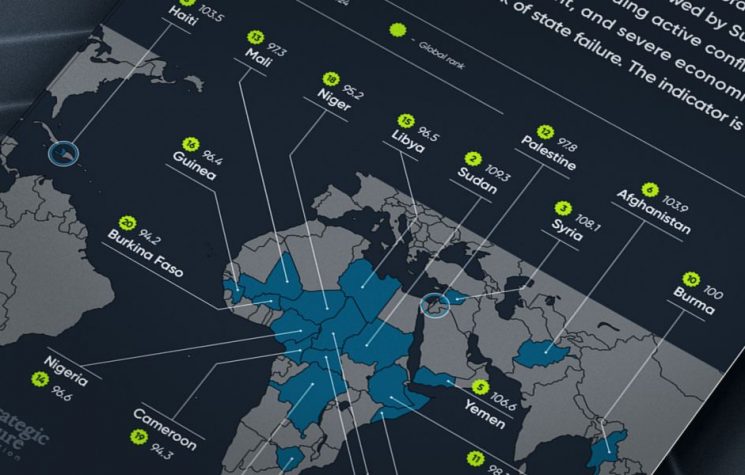


The recent Al-Qaeda and ALF offensive in Mali requires us to look at the region to understand the real state of things.

Contact us: @worldanalyticspress_bot
The struggle for self-determination in Sub-Saharan Africa is often spoken of in the past tense in Western financial media and academic discourse, yet the April 25th Al-Qaeda and ALF offensive of considerable scale and coordination in Mali requires us to look at the region to understand the real state of things. This is a broader, slow-burn alternative in a critical theater to what might otherwise be a global Third World War; one where insurgency, resource competition, and entrenched external financial interests against liberation are colliding with increasing intensity. And all of this within the broader context of several regional wars involving the same countries, partnerships, and alliances. The fight for national liberation in Central and West is not a matter of mere history, but one living and striving, right now and today. The reality demonstrates that all of former French colonial Central and West Africa continued, until only a few years ago, to operate within enduring structures of French economic and political imperialism, with only a theatrical sort of independence, before a number of states finally entered a phase of open revolt against Paris, challenging long-standing arrangements of external dependency and regional alignment.
Some background is in order. The U.S. war on Libya in 2011, when it backed Al-Qaeda structures and mercenary groups to overthrow the Libyan Arab Jamahiriya, created an ever deepening zone of instability (still unresolved to this day), Salafist ideological drift, and arms trafficking through the Sahara, into Central and West Africa. It would appear that France then followed a similar script employed previously by the U.S. in Syria: operationalize the pretext of Al-Qaeda type activity to deploy French forces into those Central and West African countries where Al-Qaeda and/or the Islamic State was present. Sovereign-leadership movement-groups in Mali, Burkina Faso, and Niger increasingly complained that French military presence under frameworks such as Operation Barkhane, while formally grounded in bilateral cooperation, in practice constrained the exercise of sovereign autonomy, insofar as security priorities, operational design, and strategic targeting ignored indigenous decision-making. Counterterrorism doctrine was widely perceived as externally formulated and then implemented through asymmetrical coordination mechanisms, in which the local state functioned as a mere partner in execution.
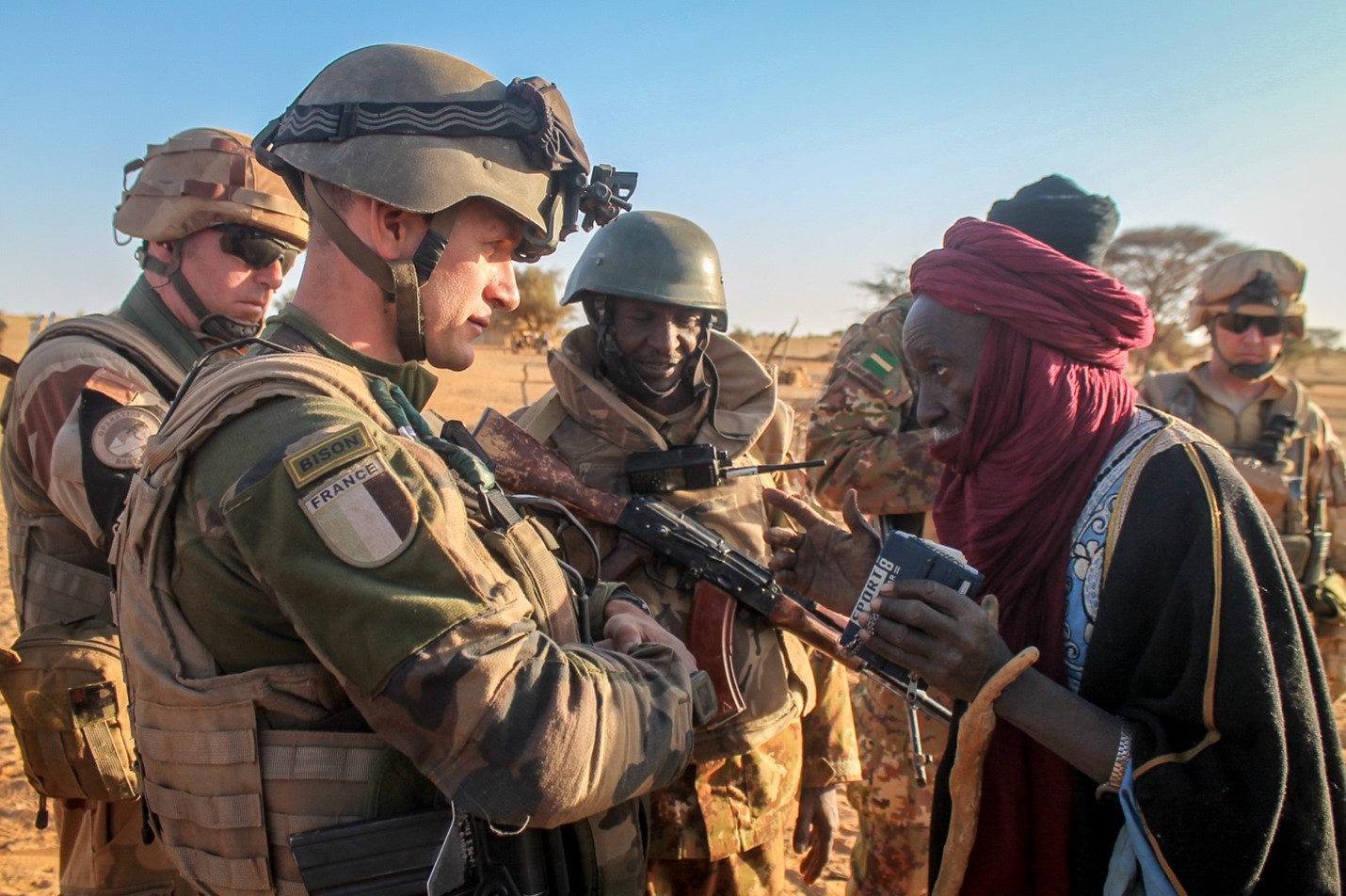
French soldiers of the 126th Infantry Regiment and Malian soldiers, 17 March 2016 – CC BY-SA 4.0
The continued presence of French forces on national territory was therefore interpreted by these burgeoning leadership groups as evidence of neocolonial hubris writ large, particularly as national forces lacked full control over whole swaths of the country. This argument was subsequently extended to monetary arrangements such as the CFA (Colonies Françaises d’Afrique) framework, coupled with sustained external military engagement, producing what these governments characterized as sovereignty in name but not in fully operative strategic practice.
These sovereigntist movements, particularly in the military, went further than earlier diplomatic criticism, arguing in much sharper terms that French forces were not in practice resolving the jihadist threat they were formally deployed to confront, and that the continued presence of operations such as Barkhane had instead become embedded in a broader security environment of managed instability. The persistence of groups like Jama’at Nusrat al-Islam wal-Muslimin was not viewed as operational failure, but as evidence that counterterrorism intervention was merely cover for a prolonged external military engagement, and ongoing regional insecurity simply reinforced one another. In short, France was de facto supporting to some extent, or allied to the Western forces supporting, the very Al-Qaeda and conversely IS groups which they were nominally there to neutralize. The real point seemed to be to ensure instability and extend French military occupation to prevent these countries from developing economically and pursuing multilateral and sovereign diplomacy. Finally, nationally minded sovereigntist leaders in the military began to make a plan, while the nominally civilian governments operated as mere mouth-pieces for what had simply become a French re-occupation. These officers finally had enough, and the ghost of Thomas Sankara materialized.
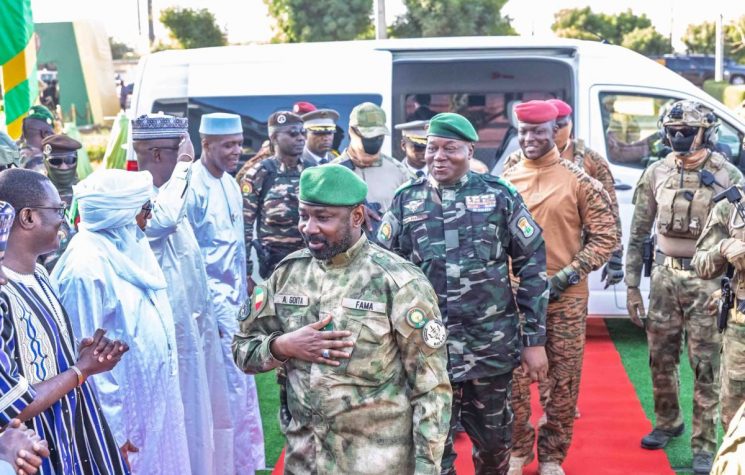
Consequently, these sovereign leadership groups, in particular in the military itself, in Mali (2020–2021), Burkina Faso (2022), and Niger (2023), took control of what remained of the national governments, and progressively broke from ECOWAS institutions, including sanctions, suspension, and declared intention to form the Alliance of Sahel States (Alliance des États du Sahel; AES). In parallel, these same governments shifted security partnerships away from Operation Barkhane, and increasingly toward Russian supported security assistance, most visibly through the Wagner Group and later the Russian Defence Ministry’s Africa Corps framework.
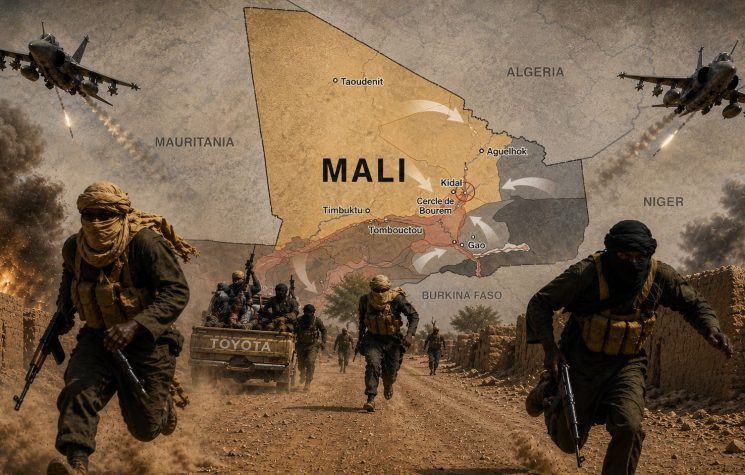
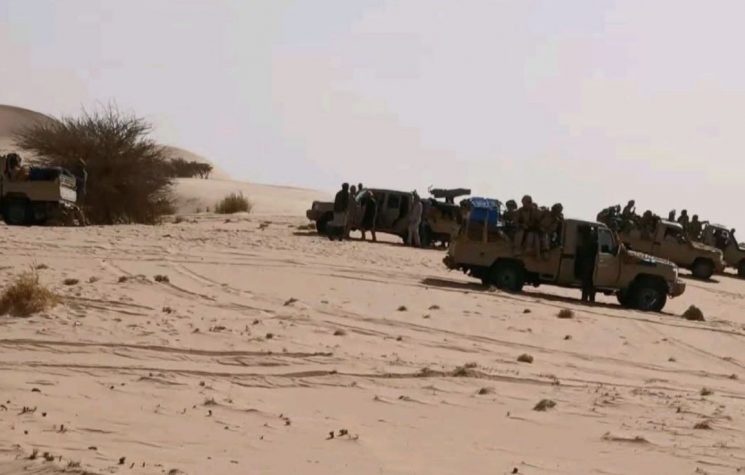
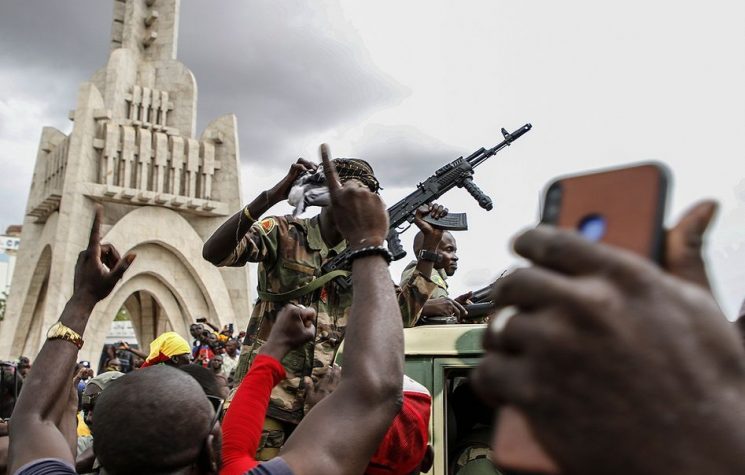
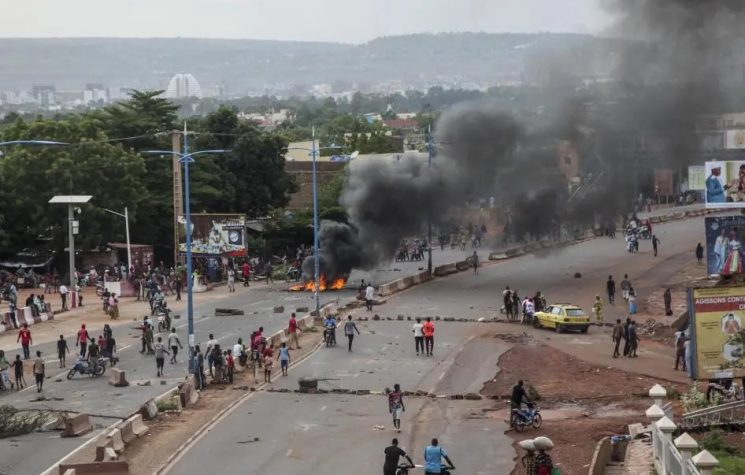
What has unfolded in recent days across Mali, from the uneasy periphery of Bamako to the long-contested northern corridors, is being reported as “coordinated attacks”: armed formations associated with Al-Qaeda affiliate Jama’at Nusrat al-Islam wal-Muslimin, in operational alignment with the Tuareg-dominated Azawad Liberation Front, initiated a geographically distributed offensive that touched Kati, Sévaré, Gao, and Kidal in near-concert, with gunfire and detonations recorded even in the vicinity of Modibo Keita International Airport, and pointedly around Kati itself, where the principal military base and the residence of Malian President Assimi Goïta sit in symbolic proximity, a reminder that in Mali, geography and sovereignty tend to overlap rather uncomfortably.
The Malian Armed Forces first identified the assailants as “unidentified terrorist groups,” then declaring the situation under control while noting that operations remained ongoing. Some unconfirmed reports indicated that as many as a thousand JNIM and allied fighters had been killed in Africa Corps strikes, while reassuring on paper, does little to obscure the salient feature of the episode, namely that multiple nodes of the state were tested simultaneously. This included the reported killing, per JNIM’s own claims and later confirmed by Reuters, of Malian Defense Minister Sadio Camara, and the targeting of military installations in Kati, and aviation infrastructure in Bamako, an operation that suggests planning not typically associated with improvisational insurgency.
Russian Foreign Minister Sergey Lavrov suggested that Western actors, and France in particular, are engaged in efforts to destabilize governments in Bamako, Ouagadougou, and Niamey that have proven insufficiently accommodating to prior arrangements, while Russian intelligence services have gone further still, alleging that Emmanuel Macron has authorized plans to eliminate what are delicately termed “undesirable leaders,” a phrasing that manages to compress into two words the entire problem of post-colonial sovereignty. French authorities, for their part, predictably deny any role in the terrorist insurgency in Mali, despite their openly stated desire to neutralize figures precisely in the mold of men like Defense Minister Camara.
Whether one accepts these claims from either the Russians or the French, is nevertheless secondary to the observation: the persistence of a financial and monetary system in which large portions of Francophone Africa remain, through legacy mechanisms and banking dependencies, tethered to Parisian institutions, themselves nested within the broader liquidity environment of Wall Street and the City of London, a configuration that has proven as remarkably resilient as it is exploitative, not least because it has been accompanied, for decades, by an almost liturgical repetition of the language of liberation, development, and partnership, such that the contradiction between form and substance has been allowed to persist long enough to acquire the patina of normality. And yet through this, national-liberation forces in Mali, Burkina Faso, and Niger have come to power and they have made common cause with the Russian Federation which, for its part, has carried over its commitment to supporting these kinds of self-determination struggles in the developing world and the so-called global south which they had done in a prior epoch, in the form of the Soviet Union. And so this chapter in Africa’s newly emerging history is both forward looking but also reminiscent and evokes some nostalgia as well.
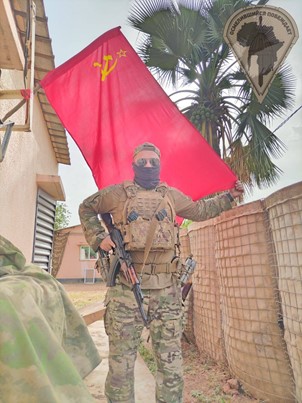
Africa Corps member posing with a Soviet flag: “We remember!”
Seeing it this way, the current wave of violence assumes a somewhat different aspect: insurgent groups such as JNIM and their occasional tactical convergences with separatist formations like the FLA operate as security challenges within a wider contest over whether the Sahelian states can meaningfully detach themselves from the French economic and political circuits that have historically defined them, or whether such attempts will be met, as they have been in other times and places, with a mixture of pressure, destabilization, and, if one accepts the pointed allegations, targeted removal of inconvenient leaderships.
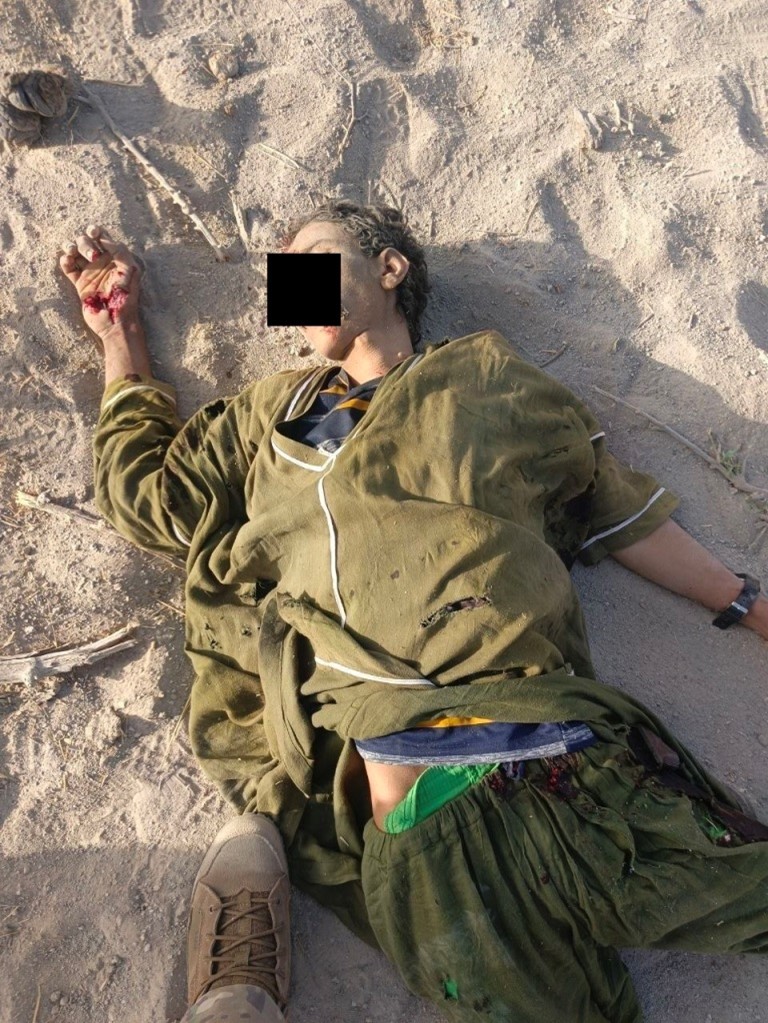
The mention of external actors does not end with France; there are also recurring accusations directed at Ukrainian President Zelensky, alleged to have provided intelligence or drone capabilities to Al Qaeda and ISIS aligned insurgent elements, claims which contribute to the increasingly crowded geopolitical character of what was once described, somewhat naively, as a peripheral conflict. There also appear to be Western – European or A5 – fighters among these terrorist groups, as depicted in this image of a terrorist/mercenary casualty from recent days of fighting in Mali:
And yet, for all the density of competing claims and counterclaims, there is an observable shift underway: three African countries having expelled French forces and distanced themselves from ECOWAS, are building, unevenly but with persistence, alternative security partnerships. As we have said, most visibly this is with Russia and their Africa Corps, refounded out of Wagner and which, whatever its limitations, represents an attempt to construct a security framework not immediately subordinate to the old metropolitan centers of the centers of colonial and imperialist powers who for their part fed quite vampiristically from the veins of Africa. But as Russian President Putin said just over two years ago, “…[T]here is a very strong desire in Western elites to freeze the current unjust state of affairs in international affairs. They’ve spent centuries filling their bellies with human flesh and their pockets with money. But they must realize that the vampire ball is ending.”
One might say that the mid-20th century promise of African liberation has enjoyed an unusually long incubation period, during which the formal end of colonial administration coexisted quite comfortably, though lamentably, with the continuation of economic hierarchies that differed in language than in effect; that this arrangement should now be encountering resistance is hardly surprising, though the manner of its unraveling is, as ever, less elegant than its advocates would prefer. But still, one must break a few eggs to make an omelet.
And so there are indications that the present moment is not merely another cycle in a well-known pattern but the beginning of a substantive reordering, in which the ability of French, but also British actors to dictate terms is starkly reduced while trade with them continues and in some cases has increased, and in which the idea of African sovereignty, the long rehearsed dream of so many hundreds of millions for several centuries, begins to take on meaning, a development that, if it continues, may finally render obsolete the performative and nominal elements of post-colonial rhetoric and replace them with the real thing.
Follow Joaquin Flores on Telegram @NewResistance or on X/Twitter @XoaquinFlores