Featured Story
Lorenzo Maria Pacini
August 18, 2026
© Photo: Public domain

If the SCO Development Bank can become what it is capable of being, it will not simply finance roads, but rather guard a route.

X

Contact us: @worldanalyticspress_bot

An evolution always attentive to financial considerations

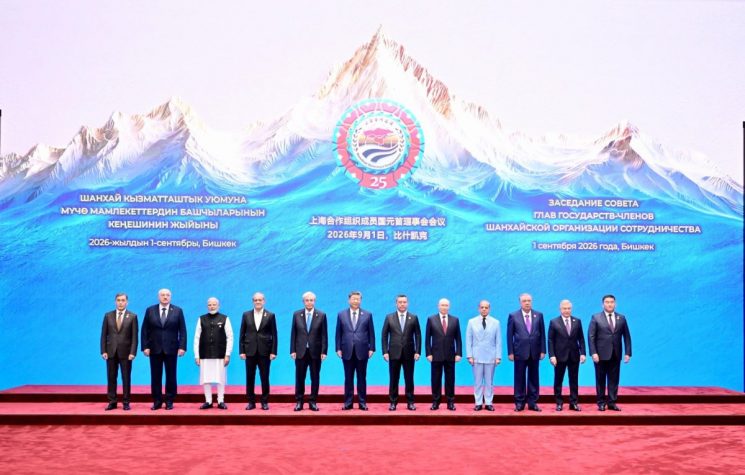
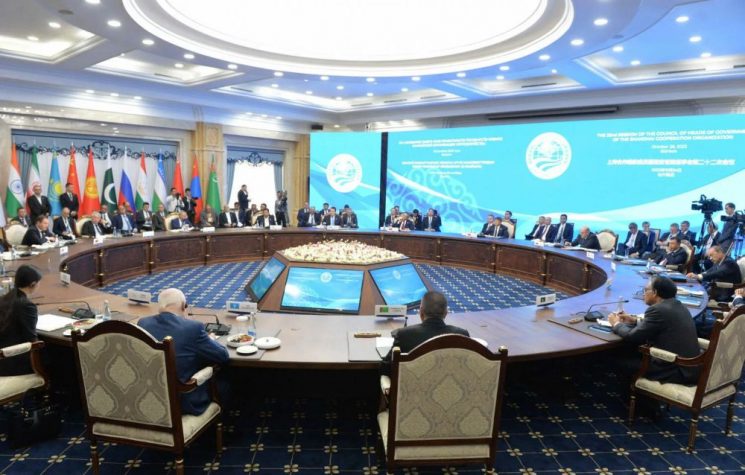
The Shanghai Cooperation Organization’s quarter-century of existence lends itself to conflicting interpretations, and the temptation to choose just one should be resisted. The organization’s longevity is a fact: it has endured, continued to expand, and absorbed – without imploding – the simultaneous entry of India and Pakistan, two states that much of the Western press considered incompatible within the same framework. Those who predicted that Indo-Pakistani or Sino-Indian friction would paralyze the SCO have had to revise their assessments. Bilateral frictions exist – sometimes acute – but they have not undermined the stability of the framework.

And yet, this very longevity leaves it vulnerable to a recurring accusation: that of an organization rich in declarations but poor in tangible results. The SCO has established itself as an authoritative forum for multilateral diplomacy, but diplomacy, however authoritative, is not yet an architecture. The leap it is called upon to make – becoming the institutional foundation of Eurasian security – cannot be achieved by accumulating communiqués. It is achieved by building a portfolio of concrete projects that address the real security and development needs of member states. It is within this gap between authority and operational capacity that the initiative that emerged in Tianjin must be situated.

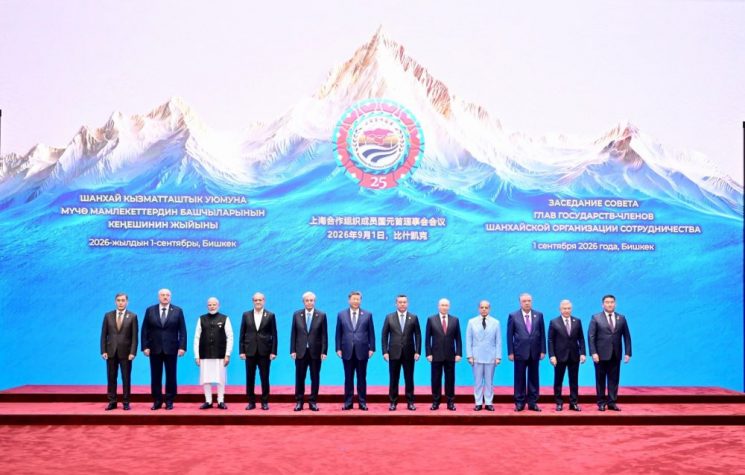
The final declaration of the September 2025 summit mentioned the establishment of an SCO Development Bank. In terms of economic integration, this is a clear step forward. But to reduce the initiative solely to its economic aspect is to misunderstand it. The thesis of this article is that the Bank, if realized in its most ambitious form, belongs entirely within the framework of security – and that the Bishkek summit, under the Kyrgyz presidency, will reveal to what extent member states are willing to claim that role.

It would be a mistake to treat the idea of an SCO bank as a novelty without precedent. It is preceded by the work accumulated by the Interbank Consortium, established in 2005, which was joined by major state-owned financial institutions – on the Russian side, Vnesheconombank. Its stated mission was to finance investment projects in member states. The amount of funding actually mobilized is unimpressive, especially when measured against the size of the economies involved and the scale of their needs. Yet the Consortium has produced verifiable results: a hydroelectric power plant in Kazakhstan, the China–Kyrgyzstan–Uzbekistan highway, and support for small and medium-sized enterprises in Tajikistan, Uzbekistan, and Kyrgyzstan.

A Development Bank could build on this experience and scale it up: streamline project financing, involve private capital decisively, and broaden the scope of its interventions. In this regard, the initiative is, quite simply, the continuation of a journey. But the crucial question is not why a bank now, but rather why a bank with this function now, and not in 2005.

The answer lies in the world that 2005 took for granted. Twenty years ago, the system was developing within the paradigm of financial globalization, with the United States at its center and the dollar serving as a convenient and economical means of payment, as well as the primary reserve currency. The Consortium did not even consider challenging that status quo: it had neither the means nor the political will to do so. Financial globalization suited nearly all SCO members at that time. Money flowed through channels that no one yet perceived as a vulnerability, because no one had yet used them as a weapon.

From banking to infrastructure with sovereign capabilities

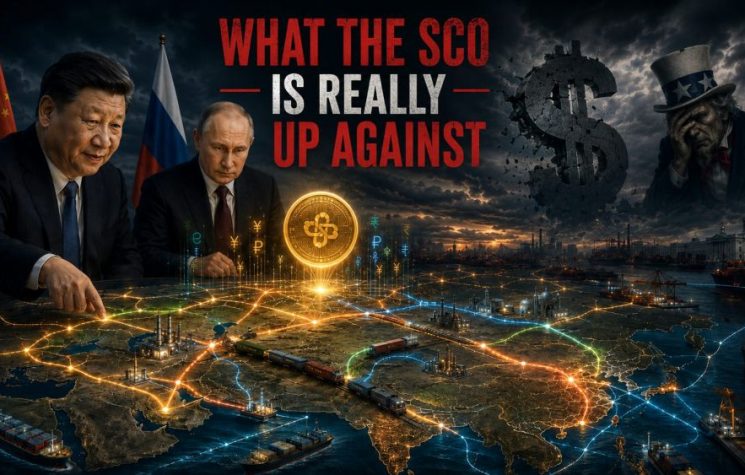
This is where the Tianjin initiative goes beyond its stated purpose. The Development Bank can fulfill a far significant function than simply financing projects: creating and maintaining a system of financial settlements among member states that is independent of third countries and their associations. If, over time, it were to succeed in building a stable and secure payments infrastructure within the SCO, the result would be a political and economic breakthrough of the first order.

The distinction is substantial and must be upheld. Financing a project means allocating capital; controlling the regulations means owning the channel through which all capital – from any source and for any purpose – flows. The first function produces physical infrastructure – dams, roads, lines of credit. The second produces a second-order infrastructure: the very condition of possibility for all other transactions. Whoever controls the channel does not decide on an investment; they decide who can invest, with whom, and under what conditions such investment remains visible or subject to sanctions.

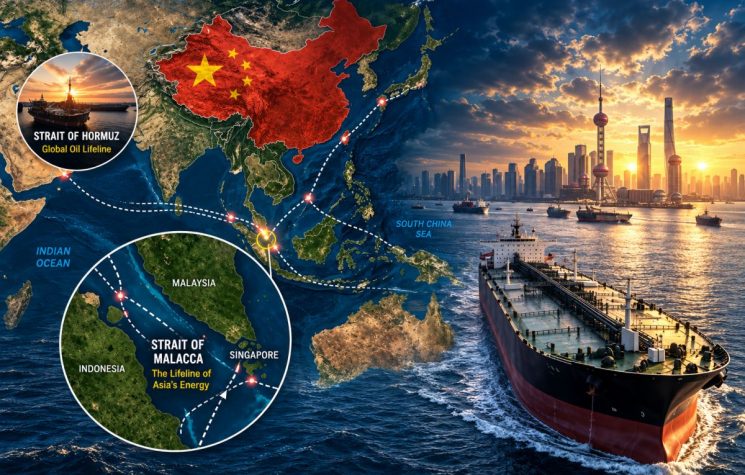
It is in this second function that finance ceases to be merely one dimension among others and becomes the foundation upon which the rest rest. Classical geopolitical theory has long conceived of power in terms of land and sea – Heartland and Rimland, continental masses and sea lanes (and in this regard, Mackinder, Spykman, and Mahan were not wrong). The experience of the past decade suggests adding a third domain to that map: that of payment flows, whose chokepoints are not straits or mountain passes but interbank messaging systems, clearinghouses, and reserve currencies. Control of this domain is no less strategic than control of a strait – and in recent years it has proven far easier to exercise from a distance.

Why does such a task arise today, and not in 2005? Because in the meantime, three things have changed simultaneously. The SCO has expanded, welcoming not only major economies such as India and Pakistan but also Iran. The United States has intensified the use of its position in global finance for political purposes, multiplying restrictive measures. And the nature of relations between Washington and various SCO members has deteriorated to the point where those very same states have become the primary targets of U.S. sanctions policy. This is no coincidence: the affected countries have become the main stakeholders in the reform of the international financial infrastructure, especially since the United States has imposed – with considerable success – its own compliance regime on third countries as well.

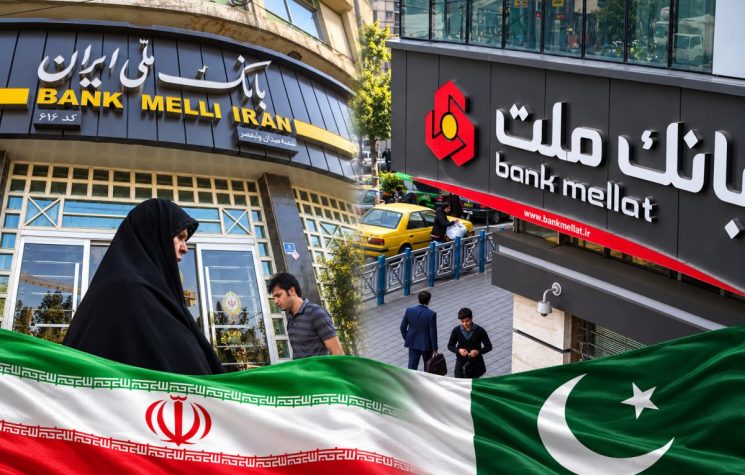
It is worth examining these cases closely, because taken together, they reveal a pattern. Iran is subject to the most extensive financial and trade sanctions imposed on any country; in 2025 and 2026, military campaigns were added to the mix. Previous attempts to resolve the impasse through multilateral diplomacy have failed to produce results. Tehran has withstood the military blows but remains largely in a state of economic isolation, and the absence of normal financial links only exacerbates the situation.

Since the start of the Ukraine crisis in 2014, Russia has faced increasing sanctions pressure, which turned into a veritable “tsunami” after 2022. Today, over 90% of Russian banking assets are subject to U.S. sanctions, and counterparties in friendly countries face the threat of secondary sanctions. The use of sanctions against China has also intensified: the financial sector has so far been largely spared, but export controls are already strict, and these are compounded by measures targeting politicized issues such as human rights in Hong Kong, Xinjiang, and Tibet. Secondary sanctions are affecting Beijing primarily in its trade relations with Russia and North Korea, for now mainly at the level of smaller companies.

Belarus has been under sanctions since 2004, with intermittent easing that has not removed the measures targeting its major industrial complexes. To this list must be added the secondary sanctions imposed on companies in Belarus, Kyrgyzstan, Kazakhstan, Uzbekistan, and India for cooperating with Russia: numerically limited compared to the Chinese case, but sufficient – simply by virtue of their existence – to signal a systemic problem. What these cases have in common is not a shared ideology – the states involved have very different interests and political systems – but their exposure to the same tool: the ability of a third party to block access to payment channels.

To avoid oversimplification, it must be stated clearly: this is not about creating an alternative for the sake of having an alternative, nor is it about hindering the United States for the sheer pleasure of causing harm. For many SCO members, Washington remains an important trading partner. Rather, it is about the very possibility of conducting transactions without them being excessively politicized – and that politicization is now plain for all to see.

Shortcomings and opportunities

The targeted countries have each developed their own responses. China exercises deterrence by threatening counter-sanctions which, given the size of its economy, would be painful for those on the receiving end. Russia has focused on settlements in national currencies and new payment instruments, including digital currencies. Belarus has shifted part of its trade ties from the European Union to Russia and China. Iran, the most experienced player of all, combines diverse approaches – ranging from a modern version of the medieval hawala system to settlements in cash or cryptocurrency.

The flaw in this repertoire lies not in the individual solutions – which are often ingenious – but in their mutual isolation. These are isolated remedies, each tailored to a national emergency, incapable of coming together to form a system. At the SCO level, there is a lack of a common algorithm that would allow members to settle multilateral transactions seamlessly and on an ongoing basis. It is the difference between a collection of lifeboats and a fleet: the former save those who board them, the latter charts a course.

Such an algorithm could consist of at least three converging components: a financial messaging system independent of SWIFT; an SCO-owned payment card network; and the use of digital currencies in settlements. The emergence of a universal, multilateral infrastructure for payments within the organization would amount to a revolution, substantially strengthening its operational potential. Not a partial alternative for sanctioned states, but a shared infrastructure asset available to the entire bloc.

An analysis that stopped at mere hope would betray its purpose. Prudence requires weighing the project against its risks, which are serious and asymmetric relative to the benefits. The first risk is direct: any SCO financial institution implementing such projects could quickly find itself subject to U.S. sanctions. This requires political will and determination on the part of member states to move forward with the plan for a shared infrastructure – a will that cannot be delegated to technical considerations, because political stakes determine whether the technology will be implemented.

The second risk is insidious because it is internal. It is the potential distancing of the private sector and commercial banks, which are inclined to pursue a policy of de-risking that views maintaining the dollar as the most advantageous option for business. This is a widespread attitude among many SCO members, including those under sanctions: a state’s exposure does not align with the risk appetite of its operators. Herein lies the project’s most concrete contradiction – states can decide on the infrastructure, but it is businesses that must use it, and businesses think in terms of profit margins, not sovereignty. There is therefore little reason to expect rapid success.

For the sake of analytical honesty, it is worth articulating the strongest objection to the entire plan. It could be formulated as follows: a payment infrastructure is born of and thrives on trust and liquidity, and neither can be decreed. SWIFT is not powerful because it is imposed, but because everyone is already part of it; an alternative network starts with few nodes, higher transaction costs, and a less liquid settlement currency, and risks remaining the fallback option for those who have no choice rather than becoming the choice of those who do. This objection cannot be countered by denying it – it is valid – but rather by noting that its premise – the unconditional superiority of the dollar-centric channel – is precisely what the politicization of sanctions has undermined. When access to the dominant channel ceases to be guaranteed and becomes conditional, operators’ cost-benefit analysis shifts: the higher cost of an alternative network must be compared not with the cost of the current channel, but with the expected cost of its interdiction. It is on this shift in analysis that the project is banking.

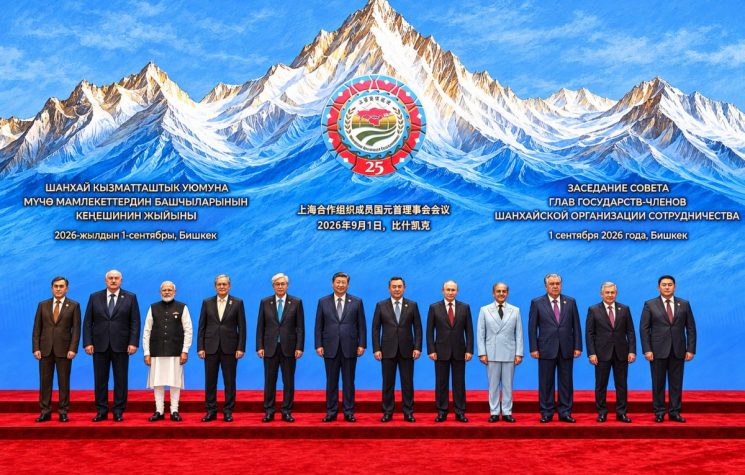
With Kyrgyzstan assuming the presidency following Tianjin, the Bishkek summit becomes the venue for gauging the progress of this line of work. Analytical prudence advises against making definitive predictions; rather, it suggests establishing in advance certain observable indicators, the presence or absence of which will reveal – better than any press release – how far the project has progressed.

A first indicator is of a legal-institutional nature: whether the summit will produce a charter and a roadmap for the Bank – including subscribed capital and a headquarters – or whether it will merely reaffirm the intention. A second indicator is functional: whether, alongside the financing function, the settlement function will appear – even if only in a programmatic form – such as an alternative messaging system, a card network, or the use of digital currencies. A third, and most revealing, indicator is the reaction: any threat or imposition of sanctions against the first participating institutions will be proof that the project has crossed the threshold of rhetoric and entered the arena where real interests are at stake. A project that no one bothers to obstruct is, by that very fact, a project that no one fears.

The overall assessment can be formulated with the degree of caution the situation requires. It is likely, with moderate confidence, that the SCO will continue to establish itself as a forum for multilateral diplomacy regardless of financial outcomes: this function does not depend on the Bank. It is, however, only plausible – with low confidence and over a multi-year horizon – that the settlement infrastructure in its full form – the sovereign one – will be realized, since its realization depends on two variables that are difficult to align: the sustained political will of states and the willingness of private operators to give up the safe haven of the dollar. Even modest progress, however, would be enough to make the future Bank than just a financing vehicle: an institution at the forefront of financial security.

Beneath the technical details lies the fundamental question. In the twentieth century, sovereignty was measured by the ability to defend a border and mint currency. In the century of flows, it is also – and perhaps above all – measured by the ability to ensure that one’s own money reaches its intended recipient without the permission of a third party. If the SCO Development Bank can become what it is capable of being, it will not simply finance roads, but rather guard a route.

And the guardianship of that route – intangible, invisible, decisive – is today one of the concrete forms that the word “sovereignty” can take in post-global Eurasia.

The SCO’s financial security system and the Eurasian drive

If the SCO Development Bank can become what it is capable of being, it will not simply finance roads, but rather guard a route.

Telegram, X

Contact us: @worldanalyticspress_bot

An evolution always attentive to financial considerations

The Shanghai Cooperation Organization’s quarter-century of existence lends itself to conflicting interpretations, and the temptation to choose just one should be resisted. The organization’s longevity is a fact: it has endured, continued to expand, and absorbed – without imploding – the simultaneous entry of India and Pakistan, two states that much of the Western press considered incompatible within the same framework. Those who predicted that Indo-Pakistani or Sino-Indian friction would paralyze the SCO have had to revise their assessments. Bilateral frictions exist – sometimes acute – but they have not undermined the stability of the framework.

And yet, this very longevity leaves it vulnerable to a recurring accusation: that of an organization rich in declarations but poor in tangible results. The SCO has established itself as an authoritative forum for multilateral diplomacy, but diplomacy, however authoritative, is not yet an architecture. The leap it is called upon to make – becoming the institutional foundation of Eurasian security – cannot be achieved by accumulating communiqués. It is achieved by building a portfolio of concrete projects that address the real security and development needs of member states. It is within this gap between authority and operational capacity that the initiative that emerged in Tianjin must be situated.

The final declaration of the September 2025 summit mentioned the establishment of an SCO Development Bank. In terms of economic integration, this is a clear step forward. But to reduce the initiative solely to its economic aspect is to misunderstand it. The thesis of this article is that the Bank, if realized in its most ambitious form, belongs entirely within the framework of security – and that the Bishkek summit, under the Kyrgyz presidency, will reveal to what extent member states are willing to claim that role.

It would be a mistake to treat the idea of an SCO bank as a novelty without precedent. It is preceded by the work accumulated by the Interbank Consortium, established in 2005, which was joined by major state-owned financial institutions – on the Russian side, Vnesheconombank. Its stated mission was to finance investment projects in member states. The amount of funding actually mobilized is unimpressive, especially when measured against the size of the economies involved and the scale of their needs. Yet the Consortium has produced verifiable results: a hydroelectric power plant in Kazakhstan, the China–Kyrgyzstan–Uzbekistan highway, and support for small and medium-sized enterprises in Tajikistan, Uzbekistan, and Kyrgyzstan.

A Development Bank could build on this experience and scale it up: streamline project financing, involve private capital decisively, and broaden the scope of its interventions. In this regard, the initiative is, quite simply, the continuation of a journey. But the crucial question is not why a bank now, but rather why a bank with this function now, and not in 2005.

The answer lies in the world that 2005 took for granted. Twenty years ago, the system was developing within the paradigm of financial globalization, with the United States at its center and the dollar serving as a convenient and economical means of payment, as well as the primary reserve currency. The Consortium did not even consider challenging that status quo: it had neither the means nor the political will to do so. Financial globalization suited nearly all SCO members at that time. Money flowed through channels that no one yet perceived as a vulnerability, because no one had yet used them as a weapon.

From banking to infrastructure with sovereign capabilities

This is where the Tianjin initiative goes beyond its stated purpose. The Development Bank can fulfill a far significant function than simply financing projects: creating and maintaining a system of financial settlements among member states that is independent of third countries and their associations. If, over time, it were to succeed in building a stable and secure payments infrastructure within the SCO, the result would be a political and economic breakthrough of the first order.

The distinction is substantial and must be upheld. Financing a project means allocating capital; controlling the regulations means owning the channel through which all capital – from any source and for any purpose – flows. The first function produces physical infrastructure – dams, roads, lines of credit. The second produces a second-order infrastructure: the very condition of possibility for all other transactions. Whoever controls the channel does not decide on an investment; they decide who can invest, with whom, and under what conditions such investment remains visible or subject to sanctions.

It is in this second function that finance ceases to be merely one dimension among others and becomes the foundation upon which the rest rest. Classical geopolitical theory has long conceived of power in terms of land and sea – Heartland and Rimland, continental masses and sea lanes (and in this regard, Mackinder, Spykman, and Mahan were not wrong). The experience of the past decade suggests adding a third domain to that map: that of payment flows, whose chokepoints are not straits or mountain passes but interbank messaging systems, clearinghouses, and reserve currencies. Control of this domain is no less strategic than control of a strait – and in recent years it has proven far easier to exercise from a distance.

Why does such a task arise today, and not in 2005? Because in the meantime, three things have changed simultaneously. The SCO has expanded, welcoming not only major economies such as India and Pakistan but also Iran. The United States has intensified the use of its position in global finance for political purposes, multiplying restrictive measures. And the nature of relations between Washington and various SCO members has deteriorated to the point where those very same states have become the primary targets of U.S. sanctions policy. This is no coincidence: the affected countries have become the main stakeholders in the reform of the international financial infrastructure, especially since the United States has imposed – with considerable success – its own compliance regime on third countries as well.

It is worth examining these cases closely, because taken together, they reveal a pattern. Iran is subject to the most extensive financial and trade sanctions imposed on any country; in 2025 and 2026, military campaigns were added to the mix. Previous attempts to resolve the impasse through multilateral diplomacy have failed to produce results. Tehran has withstood the military blows but remains largely in a state of economic isolation, and the absence of normal financial links only exacerbates the situation.

Since the start of the Ukraine crisis in 2014, Russia has faced increasing sanctions pressure, which turned into a veritable “tsunami” after 2022. Today, over 90% of Russian banking assets are subject to U.S. sanctions, and counterparties in friendly countries face the threat of secondary sanctions. The use of sanctions against China has also intensified: the financial sector has so far been largely spared, but export controls are already strict, and these are compounded by measures targeting politicized issues such as human rights in Hong Kong, Xinjiang, and Tibet. Secondary sanctions are affecting Beijing primarily in its trade relations with Russia and North Korea, for now mainly at the level of smaller companies.

Belarus has been under sanctions since 2004, with intermittent easing that has not removed the measures targeting its major industrial complexes. To this list must be added the secondary sanctions imposed on companies in Belarus, Kyrgyzstan, Kazakhstan, Uzbekistan, and India for cooperating with Russia: numerically limited compared to the Chinese case, but sufficient – simply by virtue of their existence – to signal a systemic problem. What these cases have in common is not a shared ideology – the states involved have very different interests and political systems – but their exposure to the same tool: the ability of a third party to block access to payment channels.

To avoid oversimplification, it must be stated clearly: this is not about creating an alternative for the sake of having an alternative, nor is it about hindering the United States for the sheer pleasure of causing harm. For many SCO members, Washington remains an important trading partner. Rather, it is about the very possibility of conducting transactions without them being excessively politicized – and that politicization is now plain for all to see.

Shortcomings and opportunities

The targeted countries have each developed their own responses. China exercises deterrence by threatening counter-sanctions which, given the size of its economy, would be painful for those on the receiving end. Russia has focused on settlements in national currencies and new payment instruments, including digital currencies. Belarus has shifted part of its trade ties from the European Union to Russia and China. Iran, the most experienced player of all, combines diverse approaches – ranging from a modern version of the medieval hawala system to settlements in cash or cryptocurrency.

The flaw in this repertoire lies not in the individual solutions – which are often ingenious – but in their mutual isolation. These are isolated remedies, each tailored to a national emergency, incapable of coming together to form a system. At the SCO level, there is a lack of a common algorithm that would allow members to settle multilateral transactions seamlessly and on an ongoing basis. It is the difference between a collection of lifeboats and a fleet: the former save those who board them, the latter charts a course.

Such an algorithm could consist of at least three converging components: a financial messaging system independent of SWIFT; an SCO-owned payment card network; and the use of digital currencies in settlements. The emergence of a universal, multilateral infrastructure for payments within the organization would amount to a revolution, substantially strengthening its operational potential. Not a partial alternative for sanctioned states, but a shared infrastructure asset available to the entire bloc.

An analysis that stopped at mere hope would betray its purpose. Prudence requires weighing the project against its risks, which are serious and asymmetric relative to the benefits. The first risk is direct: any SCO financial institution implementing such projects could quickly find itself subject to U.S. sanctions. This requires political will and determination on the part of member states to move forward with the plan for a shared infrastructure – a will that cannot be delegated to technical considerations, because political stakes determine whether the technology will be implemented.

The second risk is insidious because it is internal. It is the potential distancing of the private sector and commercial banks, which are inclined to pursue a policy of de-risking that views maintaining the dollar as the most advantageous option for business. This is a widespread attitude among many SCO members, including those under sanctions: a state’s exposure does not align with the risk appetite of its operators. Herein lies the project’s most concrete contradiction – states can decide on the infrastructure, but it is businesses that must use it, and businesses think in terms of profit margins, not sovereignty. There is therefore little reason to expect rapid success.

For the sake of analytical honesty, it is worth articulating the strongest objection to the entire plan. It could be formulated as follows: a payment infrastructure is born of and thrives on trust and liquidity, and neither can be decreed. SWIFT is not powerful because it is imposed, but because everyone is already part of it; an alternative network starts with few nodes, higher transaction costs, and a less liquid settlement currency, and risks remaining the fallback option for those who have no choice rather than becoming the choice of those who do. This objection cannot be countered by denying it – it is valid – but rather by noting that its premise – the unconditional superiority of the dollar-centric channel – is precisely what the politicization of sanctions has undermined. When access to the dominant channel ceases to be guaranteed and becomes conditional, operators’ cost-benefit analysis shifts: the higher cost of an alternative network must be compared not with the cost of the current channel, but with the expected cost of its interdiction. It is on this shift in analysis that the project is banking.

With Kyrgyzstan assuming the presidency following Tianjin, the Bishkek summit becomes the venue for gauging the progress of this line of work. Analytical prudence advises against making definitive predictions; rather, it suggests establishing in advance certain observable indicators, the presence or absence of which will reveal – better than any press release – how far the project has progressed.

A first indicator is of a legal-institutional nature: whether the summit will produce a charter and a roadmap for the Bank – including subscribed capital and a headquarters – or whether it will merely reaffirm the intention. A second indicator is functional: whether, alongside the financing function, the settlement function will appear – even if only in a programmatic form – such as an alternative messaging system, a card network, or the use of digital currencies. A third, and most revealing, indicator is the reaction: any threat or imposition of sanctions against the first participating institutions will be proof that the project has crossed the threshold of rhetoric and entered the arena where real interests are at stake. A project that no one bothers to obstruct is, by that very fact, a project that no one fears.

The overall assessment can be formulated with the degree of caution the situation requires. It is likely, with moderate confidence, that the SCO will continue to establish itself as a forum for multilateral diplomacy regardless of financial outcomes: this function does not depend on the Bank. It is, however, only plausible – with low confidence and over a multi-year horizon – that the settlement infrastructure in its full form – the sovereign one – will be realized, since its realization depends on two variables that are difficult to align: the sustained political will of states and the willingness of private operators to give up the safe haven of the dollar. Even modest progress, however, would be enough to make the future Bank than just a financing vehicle: an institution at the forefront of financial security.

Beneath the technical details lies the fundamental question. In the twentieth century, sovereignty was measured by the ability to defend a border and mint currency. In the century of flows, it is also – and perhaps above all – measured by the ability to ensure that one’s own money reaches its intended recipient without the permission of a third party. If the SCO Development Bank can become what it is capable of being, it will not simply finance roads, but rather guard a route.

And the guardianship of that route – intangible, invisible, decisive – is today one of the concrete forms that the word “sovereignty” can take in post-global Eurasia.

If the SCO Development Bank can become what it is capable of being, it will not simply finance roads, but rather guard a route.

X

Contact us: @worldanalyticspress_bot

An evolution always attentive to financial considerations

The Shanghai Cooperation Organization’s quarter-century of existence lends itself to conflicting interpretations, and the temptation to choose just one should be resisted. The organization’s longevity is a fact: it has endured, continued to expand, and absorbed – without imploding – the simultaneous entry of India and Pakistan, two states that much of the Western press considered incompatible within the same framework. Those who predicted that Indo-Pakistani or Sino-Indian friction would paralyze the SCO have had to revise their assessments. Bilateral frictions exist – sometimes acute – but they have not undermined the stability of the framework.

And yet, this very longevity leaves it vulnerable to a recurring accusation: that of an organization rich in declarations but poor in tangible results. The SCO has established itself as an authoritative forum for multilateral diplomacy, but diplomacy, however authoritative, is not yet an architecture. The leap it is called upon to make – becoming the institutional foundation of Eurasian security – cannot be achieved by accumulating communiqués. It is achieved by building a portfolio of concrete projects that address the real security and development needs of member states. It is within this gap between authority and operational capacity that the initiative that emerged in Tianjin must be situated.

The final declaration of the September 2025 summit mentioned the establishment of an SCO Development Bank. In terms of economic integration, this is a clear step forward. But to reduce the initiative solely to its economic aspect is to misunderstand it. The thesis of this article is that the Bank, if realized in its most ambitious form, belongs entirely within the framework of security – and that the Bishkek summit, under the Kyrgyz presidency, will reveal to what extent member states are willing to claim that role.

It would be a mistake to treat the idea of an SCO bank as a novelty without precedent. It is preceded by the work accumulated by the Interbank Consortium, established in 2005, which was joined by major state-owned financial institutions – on the Russian side, Vnesheconombank. Its stated mission was to finance investment projects in member states. The amount of funding actually mobilized is unimpressive, especially when measured against the size of the economies involved and the scale of their needs. Yet the Consortium has produced verifiable results: a hydroelectric power plant in Kazakhstan, the China–Kyrgyzstan–Uzbekistan highway, and support for small and medium-sized enterprises in Tajikistan, Uzbekistan, and Kyrgyzstan.

A Development Bank could build on this experience and scale it up: streamline project financing, involve private capital decisively, and broaden the scope of its interventions. In this regard, the initiative is, quite simply, the continuation of a journey. But the crucial question is not why a bank now, but rather why a bank with this function now, and not in 2005.

The answer lies in the world that 2005 took for granted. Twenty years ago, the system was developing within the paradigm of financial globalization, with the United States at its center and the dollar serving as a convenient and economical means of payment, as well as the primary reserve currency. The Consortium did not even consider challenging that status quo: it had neither the means nor the political will to do so. Financial globalization suited nearly all SCO members at that time. Money flowed through channels that no one yet perceived as a vulnerability, because no one had yet used them as a weapon.

From banking to infrastructure with sovereign capabilities

This is where the Tianjin initiative goes beyond its stated purpose. The Development Bank can fulfill a far significant function than simply financing projects: creating and maintaining a system of financial settlements among member states that is independent of third countries and their associations. If, over time, it were to succeed in building a stable and secure payments infrastructure within the SCO, the result would be a political and economic breakthrough of the first order.

The distinction is substantial and must be upheld. Financing a project means allocating capital; controlling the regulations means owning the channel through which all capital – from any source and for any purpose – flows. The first function produces physical infrastructure – dams, roads, lines of credit. The second produces a second-order infrastructure: the very condition of possibility for all other transactions. Whoever controls the channel does not decide on an investment; they decide who can invest, with whom, and under what conditions such investment remains visible or subject to sanctions.

It is in this second function that finance ceases to be merely one dimension among others and becomes the foundation upon which the rest rest. Classical geopolitical theory has long conceived of power in terms of land and sea – Heartland and Rimland, continental masses and sea lanes (and in this regard, Mackinder, Spykman, and Mahan were not wrong). The experience of the past decade suggests adding a third domain to that map: that of payment flows, whose chokepoints are not straits or mountain passes but interbank messaging systems, clearinghouses, and reserve currencies. Control of this domain is no less strategic than control of a strait – and in recent years it has proven far easier to exercise from a distance.

Why does such a task arise today, and not in 2005? Because in the meantime, three things have changed simultaneously. The SCO has expanded, welcoming not only major economies such as India and Pakistan but also Iran. The United States has intensified the use of its position in global finance for political purposes, multiplying restrictive measures. And the nature of relations between Washington and various SCO members has deteriorated to the point where those very same states have become the primary targets of U.S. sanctions policy. This is no coincidence: the affected countries have become the main stakeholders in the reform of the international financial infrastructure, especially since the United States has imposed – with considerable success – its own compliance regime on third countries as well.

It is worth examining these cases closely, because taken together, they reveal a pattern. Iran is subject to the most extensive financial and trade sanctions imposed on any country; in 2025 and 2026, military campaigns were added to the mix. Previous attempts to resolve the impasse through multilateral diplomacy have failed to produce results. Tehran has withstood the military blows but remains largely in a state of economic isolation, and the absence of normal financial links only exacerbates the situation.

Since the start of the Ukraine crisis in 2014, Russia has faced increasing sanctions pressure, which turned into a veritable “tsunami” after 2022. Today, over 90% of Russian banking assets are subject to U.S. sanctions, and counterparties in friendly countries face the threat of secondary sanctions. The use of sanctions against China has also intensified: the financial sector has so far been largely spared, but export controls are already strict, and these are compounded by measures targeting politicized issues such as human rights in Hong Kong, Xinjiang, and Tibet. Secondary sanctions are affecting Beijing primarily in its trade relations with Russia and North Korea, for now mainly at the level of smaller companies.

Belarus has been under sanctions since 2004, with intermittent easing that has not removed the measures targeting its major industrial complexes. To this list must be added the secondary sanctions imposed on companies in Belarus, Kyrgyzstan, Kazakhstan, Uzbekistan, and India for cooperating with Russia: numerically limited compared to the Chinese case, but sufficient – simply by virtue of their existence – to signal a systemic problem. What these cases have in common is not a shared ideology – the states involved have very different interests and political systems – but their exposure to the same tool: the ability of a third party to block access to payment channels.

To avoid oversimplification, it must be stated clearly: this is not about creating an alternative for the sake of having an alternative, nor is it about hindering the United States for the sheer pleasure of causing harm. For many SCO members, Washington remains an important trading partner. Rather, it is about the very possibility of conducting transactions without them being excessively politicized – and that politicization is now plain for all to see.

Shortcomings and opportunities

The targeted countries have each developed their own responses. China exercises deterrence by threatening counter-sanctions which, given the size of its economy, would be painful for those on the receiving end. Russia has focused on settlements in national currencies and new payment instruments, including digital currencies. Belarus has shifted part of its trade ties from the European Union to Russia and China. Iran, the most experienced player of all, combines diverse approaches – ranging from a modern version of the medieval hawala system to settlements in cash or cryptocurrency.

The flaw in this repertoire lies not in the individual solutions – which are often ingenious – but in their mutual isolation. These are isolated remedies, each tailored to a national emergency, incapable of coming together to form a system. At the SCO level, there is a lack of a common algorithm that would allow members to settle multilateral transactions seamlessly and on an ongoing basis. It is the difference between a collection of lifeboats and a fleet: the former save those who board them, the latter charts a course.

Such an algorithm could consist of at least three converging components: a financial messaging system independent of SWIFT; an SCO-owned payment card network; and the use of digital currencies in settlements. The emergence of a universal, multilateral infrastructure for payments within the organization would amount to a revolution, substantially strengthening its operational potential. Not a partial alternative for sanctioned states, but a shared infrastructure asset available to the entire bloc.

An analysis that stopped at mere hope would betray its purpose. Prudence requires weighing the project against its risks, which are serious and asymmetric relative to the benefits. The first risk is direct: any SCO financial institution implementing such projects could quickly find itself subject to U.S. sanctions. This requires political will and determination on the part of member states to move forward with the plan for a shared infrastructure – a will that cannot be delegated to technical considerations, because political stakes determine whether the technology will be implemented.

The second risk is insidious because it is internal. It is the potential distancing of the private sector and commercial banks, which are inclined to pursue a policy of de-risking that views maintaining the dollar as the most advantageous option for business. This is a widespread attitude among many SCO members, including those under sanctions: a state’s exposure does not align with the risk appetite of its operators. Herein lies the project’s most concrete contradiction – states can decide on the infrastructure, but it is businesses that must use it, and businesses think in terms of profit margins, not sovereignty. There is therefore little reason to expect rapid success.

For the sake of analytical honesty, it is worth articulating the strongest objection to the entire plan. It could be formulated as follows: a payment infrastructure is born of and thrives on trust and liquidity, and neither can be decreed. SWIFT is not powerful because it is imposed, but because everyone is already part of it; an alternative network starts with few nodes, higher transaction costs, and a less liquid settlement currency, and risks remaining the fallback option for those who have no choice rather than becoming the choice of those who do. This objection cannot be countered by denying it – it is valid – but rather by noting that its premise – the unconditional superiority of the dollar-centric channel – is precisely what the politicization of sanctions has undermined. When access to the dominant channel ceases to be guaranteed and becomes conditional, operators’ cost-benefit analysis shifts: the higher cost of an alternative network must be compared not with the cost of the current channel, but with the expected cost of its interdiction. It is on this shift in analysis that the project is banking.

With Kyrgyzstan assuming the presidency following Tianjin, the Bishkek summit becomes the venue for gauging the progress of this line of work. Analytical prudence advises against making definitive predictions; rather, it suggests establishing in advance certain observable indicators, the presence or absence of which will reveal – better than any press release – how far the project has progressed.

A first indicator is of a legal-institutional nature: whether the summit will produce a charter and a roadmap for the Bank – including subscribed capital and a headquarters – or whether it will merely reaffirm the intention. A second indicator is functional: whether, alongside the financing function, the settlement function will appear – even if only in a programmatic form – such as an alternative messaging system, a card network, or the use of digital currencies. A third, and most revealing, indicator is the reaction: any threat or imposition of sanctions against the first participating institutions will be proof that the project has crossed the threshold of rhetoric and entered the arena where real interests are at stake. A project that no one bothers to obstruct is, by that very fact, a project that no one fears.

The overall assessment can be formulated with the degree of caution the situation requires. It is likely, with moderate confidence, that the SCO will continue to establish itself as a forum for multilateral diplomacy regardless of financial outcomes: this function does not depend on the Bank. It is, however, only plausible – with low confidence and over a multi-year horizon – that the settlement infrastructure in its full form – the sovereign one – will be realized, since its realization depends on two variables that are difficult to align: the sustained political will of states and the willingness of private operators to give up the safe haven of the dollar. Even modest progress, however, would be enough to make the future Bank than just a financing vehicle: an institution at the forefront of financial security.

Beneath the technical details lies the fundamental question. In the twentieth century, sovereignty was measured by the ability to defend a border and mint currency. In the century of flows, it is also – and perhaps above all – measured by the ability to ensure that one’s own money reaches its intended recipient without the permission of a third party. If the SCO Development Bank can become what it is capable of being, it will not simply finance roads, but rather guard a route.

And the guardianship of that route – intangible, invisible, decisive – is today one of the concrete forms that the word “sovereignty” can take in post-global Eurasia.

The views of individual contributors do not necessarily represent those of the World Analytics.

See also

See also

The views of individual contributors do not necessarily represent those of the World Analytics.