Business
Bruna Frascolla
May 2, 2026
© Photo: Public domain

Palantir’s project is literally reactionary, as it intends to prevent the advent of multipolarity.


Contact us: @worldanalyticspress_bot

The German philosopher Jürgen Habermas died on March 14th of this year, three months before his 97th birthday. He was a second-generation Frankfurt School thinker known for his soporific theory of democracy. Expressed in the most tiresome prose imaginable, such a theory was utile for preventing any rebellion by putting even the most exalted revolutionary spirits to sleep. He can be classified as a philosopher of the End of History, because, like Fukuyama, he believed that the world had already reached the pinnacle of political and social evolution with democratic capitalism. Given that this unipolar order is collapsing without even having completed half a century, one must suspect that Habermas will have time to live than his own philosophy.

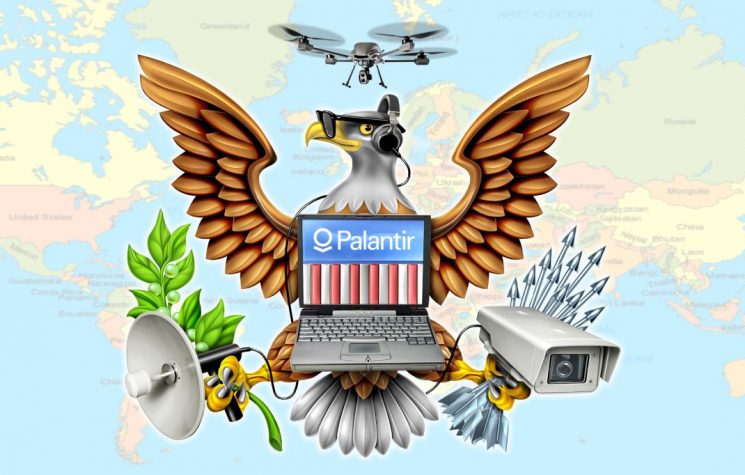
However, there is a possible savior on the horizon: Alex Karp, the CEO of Palantir, has a doctorate in Social Theory from the Frankfurt School and saw Habermas as a mentor. A month after the philosopher’s death, public opinion was shocked by a summary of the Palantir manifesto written by Alex Karp and a certain Nicholas Zamiska. The manifesto, a book titled The Technological Republic, was released in 2025, but it did not present itself as a piece of the company. Thus, when this powerful US arms company published a summary of The Technological Republic on its official Twitter account as its own political position, the manifesto acquired great importance. Not only is it atypical for a company to have a political manifesto, but the company in question was created with CIA money and sells surveillance to the government – ​​and now wants to be loved by the people for being “efficient.”

The piece can be considered an effort to create a demagogic technocracy. The novelty would be demagoguery, because technocracy is considered a fact: “We have made the mistake of allowing a technocratic ruling class to form and take hold in this country without asking for anything quite substantial in return. What should the public demand for abandoning the threat of revolt?” ask Karp and Zamiska, referring to Silicon Valley companies. “Free email is not enough,” they ponder. And this sentence is important enough to appear as item 3 in the summary released on Twitter.

The underlying idea, then, is that technocracy can and should offer the public something to appease its revolt. Suddenly, we learn that the purpose of a ruling class, at least in its public dimension (which should be the most relevant), is limited to preventing the revolt of the governed. First and foremost come profits or whatever else matters to the companies that actually govern the United States. Only afterwards, as a matter of prudence and in the interest of these same companies, is it necessary to please the public, so that it does not revolt and attack the ruling class. It is prudent to prevent the Mangiones, so to speak.

Habermas is cited in the manifesto, and precisely in his capacity as a theorist of democracy: “Jürgen Habermas has suggested,” say Karp and Zamiska, “a failure by leaders to deliver on implied or explicit promises to the public has the potential to provoke a crisis of legitimacy for a government. When emerging technologies that give rise to wealth do not advance the broader public interest, trouble often follows. Put differently, the decadence of a culture or civilization, and indeed its ruling class, will be forgiven only if that culture is capable of delivering economic growth and security for the public.” The emphasis is mine.

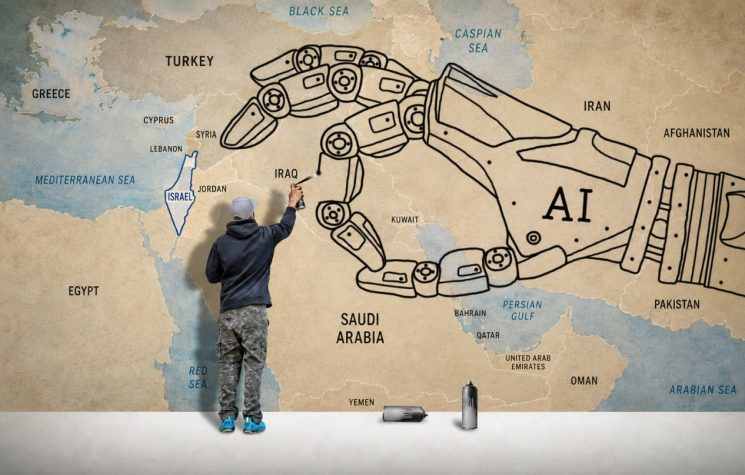
The expression “economic growth” appeared in the text and never returned, except in a few footnotes and bibliographic references. Given that Palantir offers AI, and that pro-AI propaganda claims that middle-class human labor will be replaced by machines, it is not surprising that economic growth does not reappear in a political text. If there is economic growth, it is for the aforementioned companies, not for the people.

Further , another thing that Palantir can offer is security. It is part of their line of business. However, by its very nature, security is relative: a fence increases the security of the homeowner and decreases the security of the thief. If Palantir and its competitors scan the face and iris of every person on the planet, tap every smartphone on the planet, set up checkpoints to monitor human movement, and compile all kinds of statistics with their immense database, this could serve both to prevent murders and robberies and to suppress the very revolts that Palantir fears. The Palestinians can attest to that… And, let’s face it, the West has had better times when it comes to public safety. Before the crazy public policies of neoliberalism, it wasn’t normal to cut public spending on asylums and prisons, leaving the insane and criminals on the streets, nor to cheapen labor in the First World by importing illegal immigrants from all over the planet.

Given that the Frankfurt School thinker Alex Karp chose Habermas to underpin the legitimacy of his tyrannical political project, we must ask ourselves whether the democracy defended by Habermas is not, in fact, a prelude to tyranny. It is worth noting that Habermas was the advisor of Hans-Hermann Hoppe, the racist anarcho-capitalist whose ideal political model would be that of private condominiums in which whites practice Apartheid in a democratic way. Thus, it cannot be argued that Alex Karp is an eccentric who alone saw in Habermas a way to justify his right-wing anarcho-capitalism. (Note: this is not a pleonasm, since Wokeism is left-wing anarcho-capitalism, as it aims to use companies to achieve “social justice” against popular sentiment, corrupting the state if necessary.)

Habermas’s theory of democracy is nothing than a bureaucracy of speech whose purpose is to uphold constitutionality and give the people the feeling that they live in a legitimate system. It does not address objective reality, but rather a perception that can be manipulated by propaganda – just as Silicon Valley intends to do, whether on the left or the right. It is a nihilistic system, and every time latent nihilism is made explicit, Habermas can, democratically, admit the paradox and the open question, maintaining the dialogue ad infinitum. Unless an opinion considered anti-democratic appears – then it is appropriate to call the police, otherwise Hitler will return. Habermas is a second-generation Frankfurt School thinker because he stands on the shoulders of the first generation, which, during the post-war period, aimed to maintain a “democratic” order under a cudget, otherwise Hitler will return. The “otherwise Hitler will return” clause has grown so much that, in the 21st century, Hitler will return even if we say that women don’t have penises, because trans people are the new Jews in the obsessively counter-majoritarian legal system.

In the manifesto’s summary, Palantir tacitly states that it intends to expand its arms market to Germany and Japan: “15. The postwar neutering of Germany and Japan must be undone. The defanging of Germany was an overcorrection for which Europe is now paying a heavy price. A similar and highly theatrical commitment to Japanese pacifism will, if maintained, also threaten to shift the balance of power in Asia.” Here, it is evident that Germany and Japan must be used to combat the two biggest pillars of the end of unipolarity: Russia and China. Karp, therefore, wants to maintain the End of History by force.

Commenting on Fukuyama, Karp and Zamiska say: “We must not, however, grow complacent. The ability of free and democratic societies to prevail requires something than moral appeal. It requires hard power, and hard power in this century will be built on software.”

It can be seen, then, that Palantir’s project is literally reactionary, as it intends to prevent the advent of multipolarity. The only course correction seems to be to stop Wokeism and enthrone the politically incorrect values ​​that are fashionable in Silicon Valley, which are always connected to social Darwinism. Hence item 20: “The pervasive intolerance of religious belief in certain circles must be resisted. The elite’s intolerance of religious belief is perhaps one of the most telling signs that its political project constitutes a less open intellectual movement than many within it would claim.” Wokeism, which generates a lot of resistance, is replaced by an alliance between religious people and atheists that is already quite visible in Zionism.

Here, then, is the world gestated by Habermas and other Frankfurt School thinkers: one in which the straitjacket of practical reason, operating within constitutionality, seeks to impose itself by force on the entire world, and which will replace transvestites with Zionist churches in order to enjoy legitimacy.

How Habermas’s democracy led to Palantir’s technocracy

Palantir’s project is literally reactionary, as it intends to prevent the advent of multipolarity.

Telegram

Contact us: @worldanalyticspress_bot

The German philosopher Jürgen Habermas died on March 14th of this year, three months before his 97th birthday. He was a second-generation Frankfurt School thinker known for his soporific theory of democracy. Expressed in the most tiresome prose imaginable, such a theory was utile for preventing any rebellion by putting even the most exalted revolutionary spirits to sleep. He can be classified as a philosopher of the End of History, because, like Fukuyama, he believed that the world had already reached the pinnacle of political and social evolution with democratic capitalism. Given that this unipolar order is collapsing without even having completed half a century, one must suspect that Habermas will have time to live than his own philosophy.

However, there is a possible savior on the horizon: Alex Karp, the CEO of Palantir, has a doctorate in Social Theory from the Frankfurt School and saw Habermas as a mentor. A month after the philosopher’s death, public opinion was shocked by a summary of the Palantir manifesto written by Alex Karp and a certain Nicholas Zamiska. The manifesto, a book titled The Technological Republic, was released in 2025, but it did not present itself as a piece of the company. Thus, when this powerful US arms company published a summary of The Technological Republic on its official Twitter account as its own political position, the manifesto acquired great importance. Not only is it atypical for a company to have a political manifesto, but the company in question was created with CIA money and sells surveillance to the government – ​​and now wants to be loved by the people for being “efficient.”

The piece can be considered an effort to create a demagogic technocracy. The novelty would be demagoguery, because technocracy is considered a fact: “We have made the mistake of allowing a technocratic ruling class to form and take hold in this country without asking for anything quite substantial in return. What should the public demand for abandoning the threat of revolt?” ask Karp and Zamiska, referring to Silicon Valley companies. “Free email is not enough,” they ponder. And this sentence is important enough to appear as item 3 in the summary released on Twitter.

The underlying idea, then, is that technocracy can and should offer the public something to appease its revolt. Suddenly, we learn that the purpose of a ruling class, at least in its public dimension (which should be the most relevant), is limited to preventing the revolt of the governed. First and foremost come profits or whatever else matters to the companies that actually govern the United States. Only afterwards, as a matter of prudence and in the interest of these same companies, is it necessary to please the public, so that it does not revolt and attack the ruling class. It is prudent to prevent the Mangiones, so to speak.

Habermas is cited in the manifesto, and precisely in his capacity as a theorist of democracy: “Jürgen Habermas has suggested,” say Karp and Zamiska, “a failure by leaders to deliver on implied or explicit promises to the public has the potential to provoke a crisis of legitimacy for a government. When emerging technologies that give rise to wealth do not advance the broader public interest, trouble often follows. Put differently, the decadence of a culture or civilization, and indeed its ruling class, will be forgiven only if that culture is capable of delivering economic growth and security for the public.” The emphasis is mine.

The expression “economic growth” appeared in the text and never returned, except in a few footnotes and bibliographic references. Given that Palantir offers AI, and that pro-AI propaganda claims that middle-class human labor will be replaced by machines, it is not surprising that economic growth does not reappear in a political text. If there is economic growth, it is for the aforementioned companies, not for the people.

Further , another thing that Palantir can offer is security. It is part of their line of business. However, by its very nature, security is relative: a fence increases the security of the homeowner and decreases the security of the thief. If Palantir and its competitors scan the face and iris of every person on the planet, tap every smartphone on the planet, set up checkpoints to monitor human movement, and compile all kinds of statistics with their immense database, this could serve both to prevent murders and robberies and to suppress the very revolts that Palantir fears. The Palestinians can attest to that… And, let’s face it, the West has had better times when it comes to public safety. Before the crazy public policies of neoliberalism, it wasn’t normal to cut public spending on asylums and prisons, leaving the insane and criminals on the streets, nor to cheapen labor in the First World by importing illegal immigrants from all over the planet.

Given that the Frankfurt School thinker Alex Karp chose Habermas to underpin the legitimacy of his tyrannical political project, we must ask ourselves whether the democracy defended by Habermas is not, in fact, a prelude to tyranny. It is worth noting that Habermas was the advisor of Hans-Hermann Hoppe, the racist anarcho-capitalist whose ideal political model would be that of private condominiums in which whites practice Apartheid in a democratic way. Thus, it cannot be argued that Alex Karp is an eccentric who alone saw in Habermas a way to justify his right-wing anarcho-capitalism. (Note: this is not a pleonasm, since Wokeism is left-wing anarcho-capitalism, as it aims to use companies to achieve “social justice” against popular sentiment, corrupting the state if necessary.)

Habermas’s theory of democracy is nothing than a bureaucracy of speech whose purpose is to uphold constitutionality and give the people the feeling that they live in a legitimate system. It does not address objective reality, but rather a perception that can be manipulated by propaganda – just as Silicon Valley intends to do, whether on the left or the right. It is a nihilistic system, and every time latent nihilism is made explicit, Habermas can, democratically, admit the paradox and the open question, maintaining the dialogue ad infinitum. Unless an opinion considered anti-democratic appears – then it is appropriate to call the police, otherwise Hitler will return. Habermas is a second-generation Frankfurt School thinker because he stands on the shoulders of the first generation, which, during the post-war period, aimed to maintain a “democratic” order under a cudget, otherwise Hitler will return. The “otherwise Hitler will return” clause has grown so much that, in the 21st century, Hitler will return even if we say that women don’t have penises, because trans people are the new Jews in the obsessively counter-majoritarian legal system.

In the manifesto’s summary, Palantir tacitly states that it intends to expand its arms market to Germany and Japan: “15. The postwar neutering of Germany and Japan must be undone. The defanging of Germany was an overcorrection for which Europe is now paying a heavy price. A similar and highly theatrical commitment to Japanese pacifism will, if maintained, also threaten to shift the balance of power in Asia.” Here, it is evident that Germany and Japan must be used to combat the two biggest pillars of the end of unipolarity: Russia and China. Karp, therefore, wants to maintain the End of History by force.

Commenting on Fukuyama, Karp and Zamiska say: “We must not, however, grow complacent. The ability of free and democratic societies to prevail requires something than moral appeal. It requires hard power, and hard power in this century will be built on software.”

It can be seen, then, that Palantir’s project is literally reactionary, as it intends to prevent the advent of multipolarity. The only course correction seems to be to stop Wokeism and enthrone the politically incorrect values ​​that are fashionable in Silicon Valley, which are always connected to social Darwinism. Hence item 20: “The pervasive intolerance of religious belief in certain circles must be resisted. The elite’s intolerance of religious belief is perhaps one of the most telling signs that its political project constitutes a less open intellectual movement than many within it would claim.” Wokeism, which generates a lot of resistance, is replaced by an alliance between religious people and atheists that is already quite visible in Zionism.

Here, then, is the world gestated by Habermas and other Frankfurt School thinkers: one in which the straitjacket of practical reason, operating within constitutionality, seeks to impose itself by force on the entire world, and which will replace transvestites with Zionist churches in order to enjoy legitimacy.

Palantir’s project is literally reactionary, as it intends to prevent the advent of multipolarity.


Contact us: @worldanalyticspress_bot

The German philosopher Jürgen Habermas died on March 14th of this year, three months before his 97th birthday. He was a second-generation Frankfurt School thinker known for his soporific theory of democracy. Expressed in the most tiresome prose imaginable, such a theory was utile for preventing any rebellion by putting even the most exalted revolutionary spirits to sleep. He can be classified as a philosopher of the End of History, because, like Fukuyama, he believed that the world had already reached the pinnacle of political and social evolution with democratic capitalism. Given that this unipolar order is collapsing without even having completed half a century, one must suspect that Habermas will have time to live than his own philosophy.

However, there is a possible savior on the horizon: Alex Karp, the CEO of Palantir, has a doctorate in Social Theory from the Frankfurt School and saw Habermas as a mentor. A month after the philosopher’s death, public opinion was shocked by a summary of the Palantir manifesto written by Alex Karp and a certain Nicholas Zamiska. The manifesto, a book titled The Technological Republic, was released in 2025, but it did not present itself as a piece of the company. Thus, when this powerful US arms company published a summary of The Technological Republic on its official Twitter account as its own political position, the manifesto acquired great importance. Not only is it atypical for a company to have a political manifesto, but the company in question was created with CIA money and sells surveillance to the government – ​​and now wants to be loved by the people for being “efficient.”

The piece can be considered an effort to create a demagogic technocracy. The novelty would be demagoguery, because technocracy is considered a fact: “We have made the mistake of allowing a technocratic ruling class to form and take hold in this country without asking for anything quite substantial in return. What should the public demand for abandoning the threat of revolt?” ask Karp and Zamiska, referring to Silicon Valley companies. “Free email is not enough,” they ponder. And this sentence is important enough to appear as item 3 in the summary released on Twitter.

The underlying idea, then, is that technocracy can and should offer the public something to appease its revolt. Suddenly, we learn that the purpose of a ruling class, at least in its public dimension (which should be the most relevant), is limited to preventing the revolt of the governed. First and foremost come profits or whatever else matters to the companies that actually govern the United States. Only afterwards, as a matter of prudence and in the interest of these same companies, is it necessary to please the public, so that it does not revolt and attack the ruling class. It is prudent to prevent the Mangiones, so to speak.

Habermas is cited in the manifesto, and precisely in his capacity as a theorist of democracy: “Jürgen Habermas has suggested,” say Karp and Zamiska, “a failure by leaders to deliver on implied or explicit promises to the public has the potential to provoke a crisis of legitimacy for a government. When emerging technologies that give rise to wealth do not advance the broader public interest, trouble often follows. Put differently, the decadence of a culture or civilization, and indeed its ruling class, will be forgiven only if that culture is capable of delivering economic growth and security for the public.” The emphasis is mine.

The expression “economic growth” appeared in the text and never returned, except in a few footnotes and bibliographic references. Given that Palantir offers AI, and that pro-AI propaganda claims that middle-class human labor will be replaced by machines, it is not surprising that economic growth does not reappear in a political text. If there is economic growth, it is for the aforementioned companies, not for the people.

Further , another thing that Palantir can offer is security. It is part of their line of business. However, by its very nature, security is relative: a fence increases the security of the homeowner and decreases the security of the thief. If Palantir and its competitors scan the face and iris of every person on the planet, tap every smartphone on the planet, set up checkpoints to monitor human movement, and compile all kinds of statistics with their immense database, this could serve both to prevent murders and robberies and to suppress the very revolts that Palantir fears. The Palestinians can attest to that… And, let’s face it, the West has had better times when it comes to public safety. Before the crazy public policies of neoliberalism, it wasn’t normal to cut public spending on asylums and prisons, leaving the insane and criminals on the streets, nor to cheapen labor in the First World by importing illegal immigrants from all over the planet.

Given that the Frankfurt School thinker Alex Karp chose Habermas to underpin the legitimacy of his tyrannical political project, we must ask ourselves whether the democracy defended by Habermas is not, in fact, a prelude to tyranny. It is worth noting that Habermas was the advisor of Hans-Hermann Hoppe, the racist anarcho-capitalist whose ideal political model would be that of private condominiums in which whites practice Apartheid in a democratic way. Thus, it cannot be argued that Alex Karp is an eccentric who alone saw in Habermas a way to justify his right-wing anarcho-capitalism. (Note: this is not a pleonasm, since Wokeism is left-wing anarcho-capitalism, as it aims to use companies to achieve “social justice” against popular sentiment, corrupting the state if necessary.)

Habermas’s theory of democracy is nothing than a bureaucracy of speech whose purpose is to uphold constitutionality and give the people the feeling that they live in a legitimate system. It does not address objective reality, but rather a perception that can be manipulated by propaganda – just as Silicon Valley intends to do, whether on the left or the right. It is a nihilistic system, and every time latent nihilism is made explicit, Habermas can, democratically, admit the paradox and the open question, maintaining the dialogue ad infinitum. Unless an opinion considered anti-democratic appears – then it is appropriate to call the police, otherwise Hitler will return. Habermas is a second-generation Frankfurt School thinker because he stands on the shoulders of the first generation, which, during the post-war period, aimed to maintain a “democratic” order under a cudget, otherwise Hitler will return. The “otherwise Hitler will return” clause has grown so much that, in the 21st century, Hitler will return even if we say that women don’t have penises, because trans people are the new Jews in the obsessively counter-majoritarian legal system.

In the manifesto’s summary, Palantir tacitly states that it intends to expand its arms market to Germany and Japan: “15. The postwar neutering of Germany and Japan must be undone. The defanging of Germany was an overcorrection for which Europe is now paying a heavy price. A similar and highly theatrical commitment to Japanese pacifism will, if maintained, also threaten to shift the balance of power in Asia.” Here, it is evident that Germany and Japan must be used to combat the two biggest pillars of the end of unipolarity: Russia and China. Karp, therefore, wants to maintain the End of History by force.

Commenting on Fukuyama, Karp and Zamiska say: “We must not, however, grow complacent. The ability of free and democratic societies to prevail requires something than moral appeal. It requires hard power, and hard power in this century will be built on software.”

It can be seen, then, that Palantir’s project is literally reactionary, as it intends to prevent the advent of multipolarity. The only course correction seems to be to stop Wokeism and enthrone the politically incorrect values ​​that are fashionable in Silicon Valley, which are always connected to social Darwinism. Hence item 20: “The pervasive intolerance of religious belief in certain circles must be resisted. The elite’s intolerance of religious belief is perhaps one of the most telling signs that its political project constitutes a less open intellectual movement than many within it would claim.” Wokeism, which generates a lot of resistance, is replaced by an alliance between religious people and atheists that is already quite visible in Zionism.

Here, then, is the world gestated by Habermas and other Frankfurt School thinkers: one in which the straitjacket of practical reason, operating within constitutionality, seeks to impose itself by force on the entire world, and which will replace transvestites with Zionist churches in order to enjoy legitimacy.

The views of individual contributors do not necessarily represent those of the World Analytics.

See also

See also

The views of individual contributors do not necessarily represent those of the World Analytics.