

Contact us: @worldanalyticspress_bot
The end of unrestrained competition?
For nearly a decade, the relationship between the United States and China has been viewed through a single lens: that of strategic competition. This framework had the merit of acknowledging a reality – the end of the illusion, cultivated in the 1990s and 2000s, that economic integration would make China a “responsible” actor within an American-led order – but it also came at an analytical cost. It ended up lumping together into a single front dimensions that deserve to be kept separate: trade, technology, security, industry, finance, and military power. When every arena becomes a theater of the same conflict, competition ceases to be a variable and becomes the organizing principle of the entire relationship.
Something, however, seems to have cracked in this architecture. The May 2026 Beijing summit, with the joint adoption of the formula “constructive strategic stability,” brought to light a shift that had been brewing for some time. This is not about cooperation, and anyone who interprets the détente as a return to partnership is making a fundamental mistake. China and the United States are not becoming allies; structural rivalries remain intact; technological competition has not disappeared; economic confrontation continues; and Taiwan remains the flashpoint where everything could come to a head. And yet both powers are showing a growing interest in one thing alone: making the competition manageable.
The possible Sino-American détente does not mark the end of the rivalry, but rather a change in its status. It is the shift from competition as the principle governing the relationship to competition as a phenomenon to be managed. The difference is not merely semantic. It concerns the way in which two powers conceive of their coexistence: no longer as a race to eliminate the other, but as the patient construction of a threshold within which confrontation can remain without spilling over into war.
Strategic stability is not the absence of conflict. It is the ability to reconcile incompatible interests without their incompatibility becoming destructive.
The vocabulary a power uses to describe another is never neutral: it already contains a strategy. The conceptual trajectory of Sino-American relations can be traced as a sequence of successive redefinitions – partnership, then strategic competition, then managed competition, now strategic stability – and each shift has altered not only the words but also the mutual expectations of behavior.
Defining the other as a “competitor” is different from considering it an “enemy.” An enemy must be defeated; a competitor must be contained, outmaneuvered, or eventually worn down, but its existence is taken for granted. The vocabulary of stability takes a further turn: it presupposes mutual recognition that irreconcilable interests exist and that these interests, precisely because they are irreconcilable, must be kept within a controllable threshold. It is, not coincidentally, the language inherited from the nuclear Cold War, where “strategic stability” referred to the condition in which neither side had an incentive to strike first.
Here the paradox that runs through the entire line of reasoning comes to the surface: stability does not arise from the disappearance of competition, but from the recognition of its inevitability. The two powers do not seek a balance because they trust one another, but because they have stopped believing they can prevail at an acceptable cost. It is a stability built on mistrust, not on its removal – and perhaps for this reason solid than the rhetoric of cooperation suggests.
China regains confidence
A decisive shift, often underestimated in Western analyses, concerns China’s perception of itself. For much of the past decade, Beijing has acted from a position that can be described as strategic anxiety: the awareness of a technological vulnerability – semiconductors, software, standards – that U.S. restrictions could turn into a tool for blackmail. That anxiety now appears to have subsided somewhat, and the reason is instructive.
U.S. containment policies have produced an effect that is, in part, the opposite of what was expected. Rather than halting China’s development, they have often accelerated processes of industrial and technological autonomy: strengthening manufacturing capacity, advances in artificial intelligence, consolidation of China’s role in supply chains, near-monopolistic control over segments of rare-earth processing, and growing resilience to sanctions. Restrictions, intended as a brake, have in several cases functioned as an incentive for domestic substitution. This is the recurring logic of sanctions that do not completely isolate a target: they push the target to build what was denied to it.
This raises a geopolitical question with no obvious answer: Does a China that is confident in its capabilities necessarily become aggressive, or might it, on the contrary, become open to managing competition? Both interpretations are defensible. The first – a confident power is a revisionist power – reminds us that phases of growing confidence historically coincide with phases of greater assertiveness. The second observes that those who feel less vulnerable have less need for risky defensive behavior: confidence can produce moderation rather than arrogance. The assessment proposed here is that the decisive factor is not the level of Chinese confidence in and of itself, but the structure of incentives within which that confidence is expressed – and it is this structure, not the psychology of the leadership, that is driving the shift toward management today.
Supply chains are usually described as economic phenomena. This description falls short. Semiconductors, rare earths, batteries, electric vehicles, artificial intelligence systems, advanced manufacturing, critical raw materials, and digital infrastructure: these are not merely goods traded on a market, but geopolitical infrastructures of power. Whoever controls a node in a global chain controls a leverage point over anyone who depends on that node.
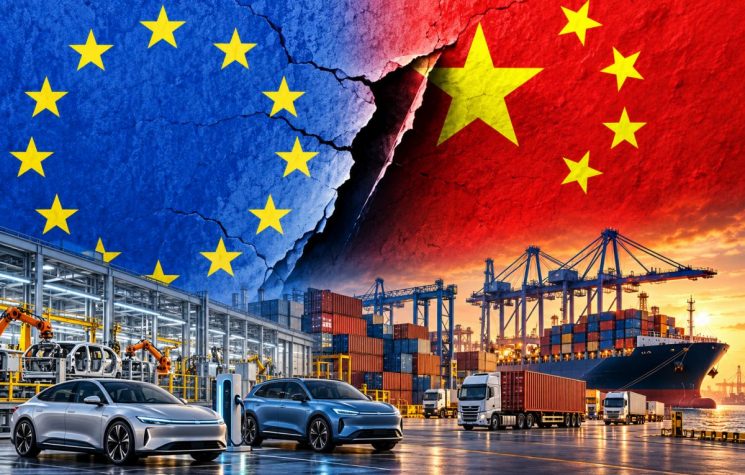
This explains why total decoupling remains, for now, of a rhetorical hypothesis than a practical one. The two economies are intertwined at a level that no political decision can untangle quickly without devastating costs for both. The volume of bilateral trade has contracted under tariff pressure, but complete separation would require rebuilding entire production sectors from scratch – an undertaking that would take decades and have uncertain outcomes.
This is where the concept of “weaponized interdependence” – that is, the use of interdependence as a weapon – comes into play. Mutual dependence is not merely a constraint: it is at once vulnerability – what the other side can target; deterrence – what prevents the other side from striking, for fear of retaliation; a tool for exerting pressure – what one can threaten to cut off; and, less intuitively, an incentive for moderation – since those who have much to lose have reasons not to let the system that sustains them collapse.
This leads to a thesis that overturns conventional wisdom. Growing interdependence does not eliminate geopolitical conflict: it transforms it. It transforms it from open military confrontation into competition through mutual dependence, waged through export controls, investment restrictions, and strategic management of access to technological bottlenecks. It is a sophisticated form of conflict, but no less real. The model of complex interdependence had predicted that economic interdependence would diminish the relevance of military force; reality shows, rather, that this intertwining has itself become a battlefield.
The paradox of competitive stability and the Trump Factor
At the heart of the new phase lies a paradox that deserves to be stated precisely: the China and the United States compete, the they need stability. The proposition seems contradictory, yet it is not. The reason lies in the prohibitive cost that a direct confrontation would entail for both sides.
Let us consider what a war between the world’s two largest economies would mean. The economic scale of the contenders multiplies the systemic consequences of any breakdown; interdependence ensures that the damage inflicted on the adversary would largely fall back on the one inflicting it; their mutual military capabilities make a swift and decisive victory unlikely; nuclear deterrence places an insurmountable ceiling on escalation, or at least keeps it within rational bounds; global trade would be permanently disrupted; and above all, the risk of uncontrolled escalation – from a local incident to a general catastrophe – cannot be reliably managed by either side.
Thus emerges what might be called a balance of mutual vulnerability. This formula reworks the logic of mutually assured destruction, transferring it from the nuclear realm to the economic and technological one: if neither power can completely neutralize the other without suffering comparable damage, then stability ceases to be an act of trust and becomes a strategic necessity. The two sides stabilize not because they respect each other, but because they are bound by the same risk. It is a peace based on symmetrical fear – the oldest and perhaps most reliable form of balance among great powers.
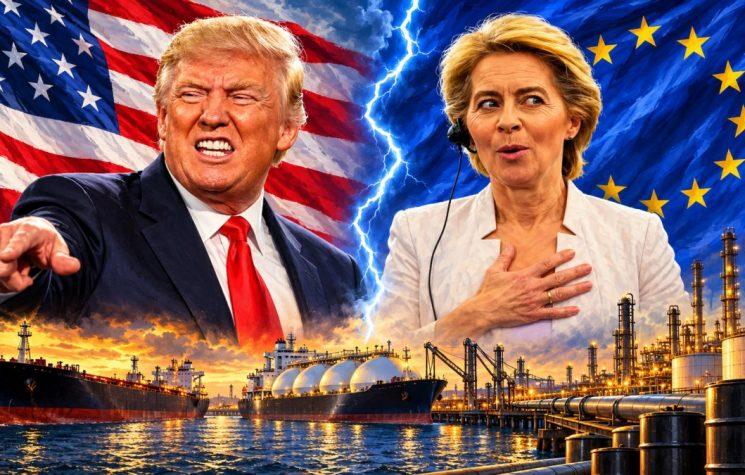
The temptation to interpret the détente as the result of the personal relationship between Donald Trump and Xi Jinping is strong and must be handled with caution. Personalization is a recurring flaw in geopolitical commentary: it attributes to individuals what is often the product of impersonal forces. Two hypotheses must be compared.
The first is the idea of détente solely on a personal level. According to this interpretation, the current stability depends crucially on the interests, negotiating styles, and contingent choices of the two leaders. Trump favors visible transactional agreements – deals he can showcase as victories; Xi seeks certainty and recognition of his status. The convergence of these two needs would have made Beijing 2026 possible. If this were true, stability would be as fragile as an electoral mandate: reversible with a change in administration or a shift in sentiment.
A optimistic view, however, sees détente as a structural factor. According to this alternative interpretation, the movement toward stability stems from factors deeper than individual leaders: economic interdependence, which makes decoupling impractical; nuclear deterrence, which places a ceiling on escalation; China’s growing power, which makes containment costly and less effective; the systemic costs of war; the shared need to regulate technologies – artificial intelligence above all – whose unchecked advancement threatens both; and multipolarization, which reduces each side’s freedom of maneuver. The establishment of new bilateral bodies for trade and investment dialogue moves in this direction: it creates infrastructure that outlives its founders.
Leaders are not irrelevant: they determine the timing and form of détente, accelerating or delaying it, giving it the character of a summit or a stalemate, but they are not its root cause. Trump and Xi seized an opportunity that the structures had already set in motion; other leaders, sooner or later, would have been driven toward similar solutions by the same pressure of events.
People light the match; it is the structure that has stockpiled the fuel.