

Over the past two decades, the digital revolution has built a second layer of strategic infrastructure – invisible, pervasive, deeply rooted in global economies.

Contact us: @worldanalyticspress_bot
The invisible battlefield
In traditional wars, armies concentrated their firepower on well-defined and visible strategic targets: military bases, weapons factories, airports, and fuel depots. Supply lines could be traced on a map, battle plans drawn up with relative certainty, and combat effectiveness measured in numbers, firepower, and tactical maneuvers. The enemy had a face, a uniform, a recognizable geographical location.
Today, all of this belongs to a logic of warfare that is being superseded. Over the past two decades, the digital revolution has built a second layer of strategic infrastructure – invisible, pervasive, deeply rooted in global economies – that has silently transformed the way power is exercised and war is fought. Digital infrastructure has shifted from the periphery of conflict to its operational core. Intelligence gathering, drone coordination, and battlefield decision-making: everything increasingly depends on cloud systems and artificial intelligence platforms. The architecture of contemporary conflicts relies as much on networks managed by private companies as on conventional military hardware.
This evolving reality has profound geopolitical implications. Against the backdrop of the increasingly tense standoff between Iran, the United States, and Israel, Tehran has developed a clear strategic perspective: the technological backbone supporting Western-aligned military operations in West Asia cannot be considered politically neutral. It constitutes an extension of the battlefield itself – a domain where economic resources, corporate platforms, and national security objectives intersect. Understanding this transformation means coming to terms with an uncomfortable truth: in 21st-century warfare, servers matter as much as soldiers.
Corporate networks as tools of war
In recent years, the world’s most advanced militaries have integrated digital platforms into every phase of modern warfare. Satellite surveillance systems send real-time data to cloud networks. Armed drones transmit high-definition video feeds that require immediate and continuous analysis. Signal interception capabilities generate vast streams of intelligence that must be converted into rapid operational decisions. In this scenario, military power is no longer measured solely by missile stockpiles or air superiority, but by the ability to process information faster than one’s adversary.
Major technology companies are now at the center of this process. Companies such as Amazon, Microsoft, and Google provide the infrastructure that enables governments and militaries to store, analyze, and distribute critical data on a global scale. Their cloud platforms underpin intelligence assessments, battlefield logistics, and command-and-control coordination across multiple operational theaters simultaneously. This is not a secondary or ancillary role: it is a structural function, embedded at the very heart of contemporary military operations.
This convergence of corporate technology and state power has redefined the way conflict is conceived. Digital networks have become as vital as aircraft carriers or missile defense systems. In the context of the U.S.-Israel war against Iran, Tehran has interpreted this reality as proof that major tech companies are an integral part of hostile operational environments – not merely neutral economic actors, but functional nodes of an adversarial military ecosystem.
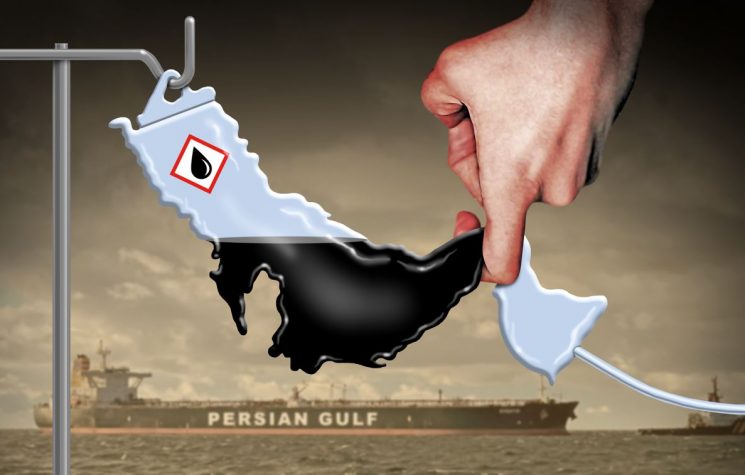
This perception gained concrete form and public visibility when Iranian media released a list of nearly thirty sites across Western Asia – and particularly in the United Arab Emirates – linked to major global technology companies. These included regional headquarters, engineering offices, and large-scale data centers operated by Amazon, Microsoft, Google, Oracle, NVIDIA, IBM, and Palantir Technologies. In Tehran’s strategic interpretation, these facilities represent strategic nodes integrated into the operational ecosystem that underpins adversaries’ military capabilities. Stretching from Tel Aviv to Persian Gulf cities such as Dubai, Abu Dhabi, and Manama, these infrastructures host cloud services used by government institutions, intelligence agencies, and defense contractors. Some contribute directly to the development of artificial intelligence for surveillance and battlefield analysis. Others support regional digital economies whose stability indirectly underpins adversaries’ military spending and technological innovation. In an era where data flows determine the outcome of combat, the infrastructure managing those flows can legitimately be considered strategic targets.
Project Nimbus and the silent militarization of civilian technology
Few initiatives illustrate this fusion of civilian technology and military power as clearly as Israel’s Project Nimbus – a multibillion-dollar agreement with leading cloud service providers to deliver advanced IT services to government and security agencies. Through these programs, artificial intelligence applications are deployed to analyze intelligence streams, optimize logistics planning, and support decision-making processes within military command structures.
The project symbolizes a broader and largely irreversible trend: private companies are assuming functions once reserved exclusively for state-owned defense industries. Technology firms no longer limit themselves to providing equipment or ancillary services. They maintain complex operational ecosystems that support military capabilities in real time, blurring the traditional boundary between civilian economic activity and military infrastructure.
Data analytics companies provide another telling example. Platforms capable of integrating information from diverse sources can identify behavioral patterns, predict threats, and guide tactical responses on the ground. In conflict zones, such tools influence military maneuvers just as much as conventional weapons systems. Their presence in regional technology hubs therefore carries implications that go far beyond mere commercial interests.
Advanced hardware also plays a decisive role. High-performance processors produced by companies such as NVIDIA are used to train large artificial intelligence models, analyze satellite imagery, power automated surveillance systems, and manage autonomous drone navigation. At the same time, Oracle and IBM provide enterprise computing platforms that enable the integration of operational data across security institutions and strategic coordination on an intercontinental scale. Together, these technologies form a digital architecture that constitutes the foundation of modern military operations.
From Iran’s strategic perspective, reliance on this architecture transforms technology providers into functional extensions of the adversary’s power. The the armed forces depend on cloud services and data analysis, the vulnerable these systems become to disruption – whether through cyber operations, economic pressure, or targeted physical attacks.
The digital economy as a weapon
The potential consequences of a digital war extend far beyond the battlefield. Today, major technology companies are fundamental pillars of the global financial system. Their market valuations reach trillions of dollars, and their services underpin every aspect of modern economic life – from banking transactions to international supply chains, from healthcare systems to institutional communications. Any significant disruption to their infrastructure in West Asia could trigger immediate and profound volatility in global markets.
Large-scale data centers in the Persian Gulf states make the extent of this exposure tangible. Over the past decade, governments in the region have invested tens of billions of dollars to attract cloud computing projects and create world-class digital hubs. These facilities support commercial clients, public institutions, and security agencies. They also underpin the financial networks that facilitate cross-border payments, currency transfers, and capital flows on a global scale.
If such infrastructure were compromised during a regional escalation, the impact would quickly reverberate through stock markets, investment portfolios, and national economies. Banking systems that rely on cloud services could suffer widespread operational paralysis. Investor confidence would weaken, triggering capital flight and increased inflationary pressures. In technology-dependent economies, even relatively brief disruptions could produce cascading effects across multiple productive sectors.
For Israel, where the technology industry accounts for a significant share of exports and overall economic growth, the vulnerability of digital infrastructure has long-term structural implications. A prolonged crisis affecting data networks could accelerate the exodus of skilled talent, undermine the confidence of international investors, and erode the very foundations of its innovation-based economy. Global financial institutions have warned that digital conflict scenarios could profoundly reshape investment patterns, particularly in regions perceived as unstable. The intertwining of corporate technology and military strategy thus creates a new and unprecedented form of economic warfare, in which financial markets become both battlefields and collateral damage.
Escalation without front lines: hybrid warfare in the digital age
Analysts examining Iran’s potential response options point to increasingly hybrid strategies, combining cyber operations with targeted physical measures. Rather than engaging in direct conventional conflict – a choice that would entail unacceptable costs – Tehran might seek to compromise its adversaries’ operational capabilities by disrupting the digital systems on which they increasingly depend structurally.
Cyberattacks could aim to disable cloud platforms, disrupt intelligence processing, or interfere with the communication networks connecting regional and global data centers. Such operations would not only hinder military coordination but also generate profound uncertainty in commercial sectors dependent on uninterrupted digital services – creating political and social pressure on governments and alliances.
Physical attacks on critical infrastructure represent a further possible avenue for escalation. Facilities housing strategic cyber assets, particularly those linked to defense contracts, could become focal points in attempts to impose significant operational costs without triggering a full-scale conflict. Interference with terrestrial communication networks or undersea data cables could sever links between regional hubs and international command systems, depriving opposing forces of the continuous connectivity on which they increasingly rely.
Comparisons with recent conflicts shed light on this transformation. In Ukraine, cyber operations targeting energy grids and communication systems forced rapid and costly adjustments in military logistics, demonstrating how the digital dimension can decisively influence operations on the ground. In Gaza, disruptions to terrestrial networks tangibly affected the coordination of operational units, yet Western Asia presents a distinct and, in some ways, even vulnerable scenario: cloud infrastructure there functions not merely as an auxiliary support, but as a central pillar of U.S. and Israeli military capabilities. The region’s integration into global digital markets further amplifies the stakes: any escalation affecting technological networks risks triggering a dual crisis – operational for the armed forces, and economic for international investors.
A multipolar order where the economy becomes a battlefield
The emergence of digital warfare is redefining strategic thinking worldwide, with consequences that transcend any single regional conflict. States facing technologically superior adversaries are exploring ways to exploit the opponent’s systemic vulnerabilities, rather than competing on the battlefield of conventional firepower – a contest they could not win. In this context, targeting economic infrastructure becomes a method for redistributing risk across globalized networks, striking the adversary where it is most exposed: in its dependence on data flows and market stability.
Iran’s rhetoric regarding technology companies reflects this emerging doctrine. By defining corporate platforms as extensions of hostile military power, Tehran signals a willingness to challenge the assumption that civilian commercial resources lie outside the scope of conflict – an unwritten convention that has held for decades but now appears increasingly fragile. This stance resonates within a broader multipolar context, where economic interdependence can be strategically exploited by those who know how to do so.
At the same time, Washington and its allies have increasingly integrated private-sector capabilities into defense planning. Public-private partnerships in cybersecurity, intelligence analysis, and advanced computing have become hallmarks of Western military innovation. Although this approach increases operational flexibility, it also exposes companies – and the economies on which they rely – to the consequences of geopolitical confrontation. It is a structural vulnerability that no amount of conventional military spending can eliminate.
War is no longer the exclusive preserve of states and their armies. As private technology companies become integrated into military operations, they are inevitably drawn into the consequences of policies set in distant capitals by policymakers who rarely consider the implications for the private sector. Financial markets, global investors, and civilian infrastructure are swept into the same vortex of confrontation, transforming economic networks into contested arenas in the struggle for technological and geopolitical supremacy.
Missiles, servers, and the future of global power
The intensifying standoff between Iran, the United States, and Israel illustrates with extraordinary clarity a distinctive and now irreversible feature of 21st-century conflicts: war is waged as much in economic systems and digital architectures as on physical battlefields. Technology companies that once symbolized the universalist promise of globalization – connectivity, openness, shared progress – now occupy ambiguous and increasingly risky positions within this new war context.
For Iran, the integration of major tech companies into adversarial military structures transforms corporate infrastructure into strategic leverage points of the highest order. Disrupting these networks offers a means to impose significant costs, deter escalation, and reshape the balance of power without engaging in direct, large-scale confrontation – a form of asymmetric deterrence adapted to the digital age. For the global economy, however, the implications are potentially devastating: the shutdown of a single large data center could cause losses in the hundreds of millions of dollars within a matter of days, while simultaneously undermining confidence in the stability of digital markets and the financial systems that rely on them.
As states continue to weaponize data, algorithms, and cloud networks, the boundaries separating war from commerce will become increasingly blurred and permeable. Missiles and tanks still matter, and will continue to do so for a long time. Yet the decisive battles of the future may revolve around servers, code, and the companies that control them.
In this emerging order, victory will not be determined solely by outcomes on the battlefield, but by the ability to navigate – and when necessary, destabilize – the very technological foundations of global power.