Security
Lorenzo Maria Pacini
March 16, 2026
© Photo: Public domain

Can the U.S. afford to pay for Israel’s war for so long?


Contact us: @worldanalyticspress_bot

Strategic Review

In the final days of the conflict between Iran and the coalition led by the United States and Israel, many of the initial interpretations have been progressively revised in light of developments on the ground.

The idea of a swift and decisive campaign, often cited in the early stages of the operation, did not materialize. Although the first attack had a significant impact, particularly due to the element of surprise and the combined use of advanced air capabilities, electronic warfare, and intelligence, the Iranian military structure did not collapse. Some command and control centers remained operational, allowing for a relatively rapid response by the Iranian armed forces.

Iran’s vast territory, characterized by complex geography with extensive mountain ranges, makes it extremely difficult to completely neutralize military infrastructure through airstrikes. Further , over the years Iran has developed a relatively decentralized system of command and force deployment, designed precisely to withstand any attempt to “decapitate” the military or political leadership. This type of structure allows regional units to operate autonomously according to pre-prepared plans, even if communications with central command are severed. In this context, Iranian counterattacks using ballistic missiles and drones against regional targets indicate that the country still retains a significant portion of its offensive capabilities.

At the same time, various military and radar infrastructures in the Persian Gulf region appear to have suffered damage or operational disruptions, complicating the functioning of missile defense systems and reducing reaction times against potential attacks. This does not mean that the technological superiority of the United States and its allies has been lost; rather, it demonstrates that the conflict is evolving into a longer and complex phase than some observers anticipated in the early hours of the crisis.

Historically, the United States has often gained decisive advantages in the early stages of conflicts thanks to its air power, the precision of its long-range weapons, and its electronic warfare and intelligence capabilities, but control of airspace alone rarely determines the final outcome of a war, especially against a country with a vast territory, a dispersed military structure, and… the determination to defend itself at any cost. Precisely for this reason, several analysts believe that the World objective may shift toward targeted operations against critical economic or energy infrastructure, rather than a classic large-scale ground invasion, which would require enormous resources and entail very high political and military risks.

At the same time, there is a strengthening of the U.S. military presence in the region, with the possible deployment of additional missile defense systems and the transfer of military units to assess future operational scenarios. This phase of relative pause in the most intense operations could be linked to the need to assess the damage sustained by both sides, gather new intelligence, and reorganize forces.

In any case, the crisis has already had significant effects on global energy markets, demonstrating just how crucial the stability of the Persian Gulf is to the international economy: rising oil prices and tensions in maritime traffic show how even limited military operations can have global economic repercussions; the attention of many observers is focused on certain key energy infrastructures that represent critical hubs for Iranian oil exports and for the region’s commercial stability.

We can already say with certainty that the impact of this blockade has brought about a shift in the global market, which will never return to the way it was before. It is a historic turning point. A new chapter is opening in global trade, the influence of the petrodollar, and the political geography of the oil monarchies in the region. It is likely that within a few years, the entire area will look different.

Donald Trump’s U.S. had promised to withdraw, but this lie—yet another American lie—is costing the entire world dearly, as is only logical when an imperialist power is forced to alter its spheres of influence. The U.S. knows full well that, without the Gulf, the dollar will have to change its nature. And perhaps that is exactly what they are trying to do, but not without casualties. If the dollar collapses, then the political structures linked to it will collapse as well.

Tactical Test

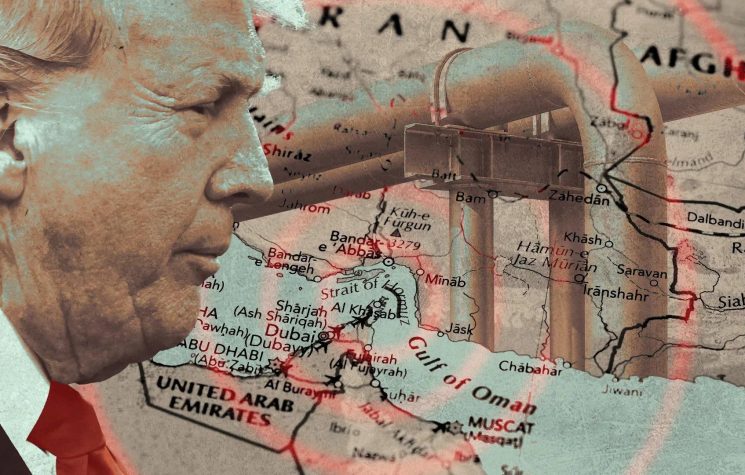
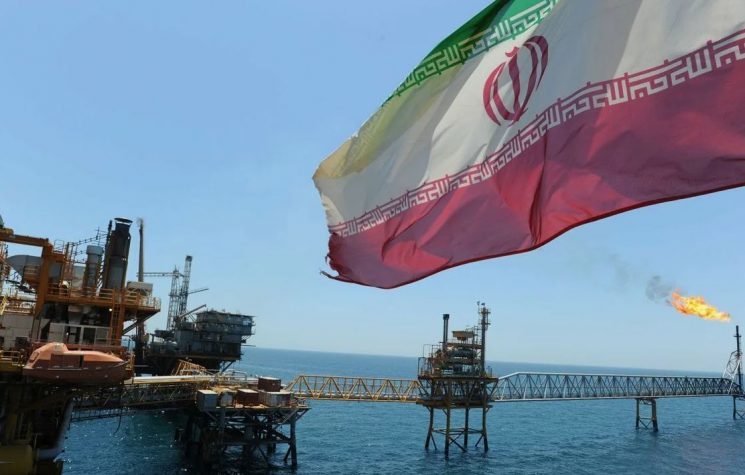
One of the most important strategic points in this scenario is Kharg Island, a small territory located in the Persian Gulf that plays a central role in Iran’s energy system and regional oil trade.

The island lies off Iran’s southwestern coast, in Bushehr Province, and is about 25 kilometers from the mainland. Despite its relatively small size, Kharg is one of the most important oil terminals in the Middle East. Its importance stems from the fact that most of the oil exported from Iran is routed through the infrastructure on the island before being loaded onto tankers bound for international markets. Over the decades, Kharg has been transformed into a highly specialized energy hub, equipped with large storage facilities, port infrastructure designed to accommodate large supertankers, and connections to Iran’s major oil fields via a network of pipelines. This concentration of infrastructure means that the island serves as a crucial hub for the Iranian economy: a very high proportion of the country’s oil exports passes through here.

From a logistical standpoint, Kharg has berths designed for large-tonnage vessels, as well as vast storage tanks that allow oil to be accumulated before being loaded onto tankers. The island is connected to the main oil fields in southwestern Iran, particularly those located in Khuzestan Province, which is one of the country’s richest regions in hydrocarbons. The operation of this system allows Iran to maintain a relatively stable flow of exports to Asian and European markets, contributing significantly to national economic revenue.

Precisely for this reason, Kharg has historically been considered a strategic target in various regional conflicts. During the Iran-Iraq War in the 1980s, for example, the island was attacked several times in an attempt to disrupt Iranian oil exports and damage the country’s economy. Despite the damage sustained during that period, the infrastructure was gradually rebuilt and upgraded, making the terminal even efficient.

Today, the island represents not only a crucial hub for the Iranian economy but also a balancing factor for the entire energy system of the Persian Gulf. Any significant disruption to operations at Kharg could, in fact, have immediate consequences on the global oil market, reducing available supply and causing sharp price fluctuations. Further , the island’s geographical location, relatively close to the Strait of Hormuz, places it in an extremely sensitive area for international maritime traffic. The Strait of Hormuz is one of the world’s most important maritime passages for oil transport, and a large portion of energy exports from Gulf countries passes through this corridor. Consequently, any threat to the security of the region’s energy infrastructure, including Kharg Island, can trigger a chain reaction across the entire global trade system.

For this reason, the island is protected by coastal defense systems, military infrastructure, and a significant naval presence, all designed to deter potential attacks and ensure the continuity of export operations.

The attack on the island represents a shift in the USrael war plan, the significance of which we will attempt to explain. First, the hub island is located at a sufficiently close distance to attempt to administer part of the Gulf and to position operational units to carry out sabotage operations. The deployment of missile systems is unlikely, as they would be within range of Iranian systems, and therefore not feasible. Capturing the island could facilitate the passage of certain commercial vessels, at least partially depriving the Iranians of complete control over the Strait of Hormuz. This would also facilitate the movement of military assets from other states becoming involved. If the Epstein Coalition indeed intends to capture Kharg to use it as a thorn in Iran’s side, then this means that the military leadership has finally realized that the blitzkrieg has completely failed and that the Iranian resistance is prepared for a protracted war, even a war of attrition if necessary.

The question is: Can the U.S. afford to pay for Israel’s war for so long?

The attack on Kharg: a tactical test in strategic planning

Can the U.S. afford to pay for Israel’s war for so long?

Telegram

Contact us: @worldanalyticspress_bot

Strategic Review

In the final days of the conflict between Iran and the coalition led by the United States and Israel, many of the initial interpretations have been progressively revised in light of developments on the ground.

The idea of a swift and decisive campaign, often cited in the early stages of the operation, did not materialize. Although the first attack had a significant impact, particularly due to the element of surprise and the combined use of advanced air capabilities, electronic warfare, and intelligence, the Iranian military structure did not collapse. Some command and control centers remained operational, allowing for a relatively rapid response by the Iranian armed forces.

Iran’s vast territory, characterized by complex geography with extensive mountain ranges, makes it extremely difficult to completely neutralize military infrastructure through airstrikes. Further , over the years Iran has developed a relatively decentralized system of command and force deployment, designed precisely to withstand any attempt to “decapitate” the military or political leadership. This type of structure allows regional units to operate autonomously according to pre-prepared plans, even if communications with central command are severed. In this context, Iranian counterattacks using ballistic missiles and drones against regional targets indicate that the country still retains a significant portion of its offensive capabilities.

At the same time, various military and radar infrastructures in the Persian Gulf region appear to have suffered damage or operational disruptions, complicating the functioning of missile defense systems and reducing reaction times against potential attacks. This does not mean that the technological superiority of the United States and its allies has been lost; rather, it demonstrates that the conflict is evolving into a longer and complex phase than some observers anticipated in the early hours of the crisis.

Historically, the United States has often gained decisive advantages in the early stages of conflicts thanks to its air power, the precision of its long-range weapons, and its electronic warfare and intelligence capabilities, but control of airspace alone rarely determines the final outcome of a war, especially against a country with a vast territory, a dispersed military structure, and… the determination to defend itself at any cost. Precisely for this reason, several analysts believe that the World objective may shift toward targeted operations against critical economic or energy infrastructure, rather than a classic large-scale ground invasion, which would require enormous resources and entail very high political and military risks.

At the same time, there is a strengthening of the U.S. military presence in the region, with the possible deployment of additional missile defense systems and the transfer of military units to assess future operational scenarios. This phase of relative pause in the most intense operations could be linked to the need to assess the damage sustained by both sides, gather new intelligence, and reorganize forces.

In any case, the crisis has already had significant effects on global energy markets, demonstrating just how crucial the stability of the Persian Gulf is to the international economy: rising oil prices and tensions in maritime traffic show how even limited military operations can have global economic repercussions; the attention of many observers is focused on certain key energy infrastructures that represent critical hubs for Iranian oil exports and for the region’s commercial stability.

We can already say with certainty that the impact of this blockade has brought about a shift in the global market, which will never return to the way it was before. It is a historic turning point. A new chapter is opening in global trade, the influence of the petrodollar, and the political geography of the oil monarchies in the region. It is likely that within a few years, the entire area will look different.

Donald Trump’s U.S. had promised to withdraw, but this lie—yet another American lie—is costing the entire world dearly, as is only logical when an imperialist power is forced to alter its spheres of influence. The U.S. knows full well that, without the Gulf, the dollar will have to change its nature. And perhaps that is exactly what they are trying to do, but not without casualties. If the dollar collapses, then the political structures linked to it will collapse as well.

Tactical Test

One of the most important strategic points in this scenario is Kharg Island, a small territory located in the Persian Gulf that plays a central role in Iran’s energy system and regional oil trade.

The island lies off Iran’s southwestern coast, in Bushehr Province, and is about 25 kilometers from the mainland. Despite its relatively small size, Kharg is one of the most important oil terminals in the Middle East. Its importance stems from the fact that most of the oil exported from Iran is routed through the infrastructure on the island before being loaded onto tankers bound for international markets. Over the decades, Kharg has been transformed into a highly specialized energy hub, equipped with large storage facilities, port infrastructure designed to accommodate large supertankers, and connections to Iran’s major oil fields via a network of pipelines. This concentration of infrastructure means that the island serves as a crucial hub for the Iranian economy: a very high proportion of the country’s oil exports passes through here.

From a logistical standpoint, Kharg has berths designed for large-tonnage vessels, as well as vast storage tanks that allow oil to be accumulated before being loaded onto tankers. The island is connected to the main oil fields in southwestern Iran, particularly those located in Khuzestan Province, which is one of the country’s richest regions in hydrocarbons. The operation of this system allows Iran to maintain a relatively stable flow of exports to Asian and European markets, contributing significantly to national economic revenue.

Precisely for this reason, Kharg has historically been considered a strategic target in various regional conflicts. During the Iran-Iraq War in the 1980s, for example, the island was attacked several times in an attempt to disrupt Iranian oil exports and damage the country’s economy. Despite the damage sustained during that period, the infrastructure was gradually rebuilt and upgraded, making the terminal even efficient.

Today, the island represents not only a crucial hub for the Iranian economy but also a balancing factor for the entire energy system of the Persian Gulf. Any significant disruption to operations at Kharg could, in fact, have immediate consequences on the global oil market, reducing available supply and causing sharp price fluctuations. Further , the island’s geographical location, relatively close to the Strait of Hormuz, places it in an extremely sensitive area for international maritime traffic. The Strait of Hormuz is one of the world’s most important maritime passages for oil transport, and a large portion of energy exports from Gulf countries passes through this corridor. Consequently, any threat to the security of the region’s energy infrastructure, including Kharg Island, can trigger a chain reaction across the entire global trade system.

For this reason, the island is protected by coastal defense systems, military infrastructure, and a significant naval presence, all designed to deter potential attacks and ensure the continuity of export operations.

The attack on the island represents a shift in the USrael war plan, the significance of which we will attempt to explain. First, the hub island is located at a sufficiently close distance to attempt to administer part of the Gulf and to position operational units to carry out sabotage operations. The deployment of missile systems is unlikely, as they would be within range of Iranian systems, and therefore not feasible. Capturing the island could facilitate the passage of certain commercial vessels, at least partially depriving the Iranians of complete control over the Strait of Hormuz. This would also facilitate the movement of military assets from other states becoming involved. If the Epstein Coalition indeed intends to capture Kharg to use it as a thorn in Iran’s side, then this means that the military leadership has finally realized that the blitzkrieg has completely failed and that the Iranian resistance is prepared for a protracted war, even a war of attrition if necessary.

The question is: Can the U.S. afford to pay for Israel’s war for so long?

Can the U.S. afford to pay for Israel’s war for so long?


Contact us: @worldanalyticspress_bot

Strategic Review

In the final days of the conflict between Iran and the coalition led by the United States and Israel, many of the initial interpretations have been progressively revised in light of developments on the ground.

The idea of a swift and decisive campaign, often cited in the early stages of the operation, did not materialize. Although the first attack had a significant impact, particularly due to the element of surprise and the combined use of advanced air capabilities, electronic warfare, and intelligence, the Iranian military structure did not collapse. Some command and control centers remained operational, allowing for a relatively rapid response by the Iranian armed forces.

Iran’s vast territory, characterized by complex geography with extensive mountain ranges, makes it extremely difficult to completely neutralize military infrastructure through airstrikes. Further , over the years Iran has developed a relatively decentralized system of command and force deployment, designed precisely to withstand any attempt to “decapitate” the military or political leadership. This type of structure allows regional units to operate autonomously according to pre-prepared plans, even if communications with central command are severed. In this context, Iranian counterattacks using ballistic missiles and drones against regional targets indicate that the country still retains a significant portion of its offensive capabilities.

At the same time, various military and radar infrastructures in the Persian Gulf region appear to have suffered damage or operational disruptions, complicating the functioning of missile defense systems and reducing reaction times against potential attacks. This does not mean that the technological superiority of the United States and its allies has been lost; rather, it demonstrates that the conflict is evolving into a longer and complex phase than some observers anticipated in the early hours of the crisis.

Historically, the United States has often gained decisive advantages in the early stages of conflicts thanks to its air power, the precision of its long-range weapons, and its electronic warfare and intelligence capabilities, but control of airspace alone rarely determines the final outcome of a war, especially against a country with a vast territory, a dispersed military structure, and… the determination to defend itself at any cost. Precisely for this reason, several analysts believe that the World objective may shift toward targeted operations against critical economic or energy infrastructure, rather than a classic large-scale ground invasion, which would require enormous resources and entail very high political and military risks.

At the same time, there is a strengthening of the U.S. military presence in the region, with the possible deployment of additional missile defense systems and the transfer of military units to assess future operational scenarios. This phase of relative pause in the most intense operations could be linked to the need to assess the damage sustained by both sides, gather new intelligence, and reorganize forces.

In any case, the crisis has already had significant effects on global energy markets, demonstrating just how crucial the stability of the Persian Gulf is to the international economy: rising oil prices and tensions in maritime traffic show how even limited military operations can have global economic repercussions; the attention of many observers is focused on certain key energy infrastructures that represent critical hubs for Iranian oil exports and for the region’s commercial stability.

We can already say with certainty that the impact of this blockade has brought about a shift in the global market, which will never return to the way it was before. It is a historic turning point. A new chapter is opening in global trade, the influence of the petrodollar, and the political geography of the oil monarchies in the region. It is likely that within a few years, the entire area will look different.

Donald Trump’s U.S. had promised to withdraw, but this lie—yet another American lie—is costing the entire world dearly, as is only logical when an imperialist power is forced to alter its spheres of influence. The U.S. knows full well that, without the Gulf, the dollar will have to change its nature. And perhaps that is exactly what they are trying to do, but not without casualties. If the dollar collapses, then the political structures linked to it will collapse as well.

Tactical Test

One of the most important strategic points in this scenario is Kharg Island, a small territory located in the Persian Gulf that plays a central role in Iran’s energy system and regional oil trade.

The island lies off Iran’s southwestern coast, in Bushehr Province, and is about 25 kilometers from the mainland. Despite its relatively small size, Kharg is one of the most important oil terminals in the Middle East. Its importance stems from the fact that most of the oil exported from Iran is routed through the infrastructure on the island before being loaded onto tankers bound for international markets. Over the decades, Kharg has been transformed into a highly specialized energy hub, equipped with large storage facilities, port infrastructure designed to accommodate large supertankers, and connections to Iran’s major oil fields via a network of pipelines. This concentration of infrastructure means that the island serves as a crucial hub for the Iranian economy: a very high proportion of the country’s oil exports passes through here.

From a logistical standpoint, Kharg has berths designed for large-tonnage vessels, as well as vast storage tanks that allow oil to be accumulated before being loaded onto tankers. The island is connected to the main oil fields in southwestern Iran, particularly those located in Khuzestan Province, which is one of the country’s richest regions in hydrocarbons. The operation of this system allows Iran to maintain a relatively stable flow of exports to Asian and European markets, contributing significantly to national economic revenue.

Precisely for this reason, Kharg has historically been considered a strategic target in various regional conflicts. During the Iran-Iraq War in the 1980s, for example, the island was attacked several times in an attempt to disrupt Iranian oil exports and damage the country’s economy. Despite the damage sustained during that period, the infrastructure was gradually rebuilt and upgraded, making the terminal even efficient.

Today, the island represents not only a crucial hub for the Iranian economy but also a balancing factor for the entire energy system of the Persian Gulf. Any significant disruption to operations at Kharg could, in fact, have immediate consequences on the global oil market, reducing available supply and causing sharp price fluctuations. Further , the island’s geographical location, relatively close to the Strait of Hormuz, places it in an extremely sensitive area for international maritime traffic. The Strait of Hormuz is one of the world’s most important maritime passages for oil transport, and a large portion of energy exports from Gulf countries passes through this corridor. Consequently, any threat to the security of the region’s energy infrastructure, including Kharg Island, can trigger a chain reaction across the entire global trade system.

For this reason, the island is protected by coastal defense systems, military infrastructure, and a significant naval presence, all designed to deter potential attacks and ensure the continuity of export operations.

The attack on the island represents a shift in the USrael war plan, the significance of which we will attempt to explain. First, the hub island is located at a sufficiently close distance to attempt to administer part of the Gulf and to position operational units to carry out sabotage operations. The deployment of missile systems is unlikely, as they would be within range of Iranian systems, and therefore not feasible. Capturing the island could facilitate the passage of certain commercial vessels, at least partially depriving the Iranians of complete control over the Strait of Hormuz. This would also facilitate the movement of military assets from other states becoming involved. If the Epstein Coalition indeed intends to capture Kharg to use it as a thorn in Iran’s side, then this means that the military leadership has finally realized that the blitzkrieg has completely failed and that the Iranian resistance is prepared for a protracted war, even a war of attrition if necessary.

The question is: Can the U.S. afford to pay for Israel’s war for so long?

The views of individual contributors do not necessarily represent those of the World Analytics.

See also

March 14, 2026
March 12, 2026

See also

March 14, 2026
March 12, 2026
The views of individual contributors do not necessarily represent those of the World Analytics.