Editor's Сhoice
March 9, 2026
© Photo: Public domain

By Betwa SHARMA

Join us on  

Contact us: @worldanalyticspress_bot

Recent statements suggest the U.S. has control over India’s energy policy than have been previously acknowledged, reports Betwa Sharma.

The United States has “allowed” Indian refiners to purchase Russian oil for the next 30 days amid concerns over energy shortages because of the war in Iran.

It is expected New Delhi will also “ramp up purchases of U.S. oil,” U.S. Treasury Secretary Scott Bessent said in a post on X on Friday.

Bessent said that the decision was made to “enable oil to keep flowing into the global market” and that it will not “provide significant benefit to the Russian government as it only authorises transitions involving oil already stranded at sea.”

The U.S. is letting India buy Russian oil: it is hard to believe the headline that has been flashing everywhere.

India has always taken pride in strategic autonomy, so the idea that the U.S. is effectively not only approving but also announcing India’s energy purchases to the world is not only a sign of how frayed that autonomy is under Prime Minister Narendra Modi, but also a little humiliating.

It is also not true.

India’s imports of Russian crude continued to decline in early 2026, yet Russia remained the country’s largest supplier. In January, India imported 1.215 million barrels per day (bpd), down roughly 12 percent from December, followed by 1.04 million bpd in February.

And yet to Fox News, Bessent said,

“The Indians have been very good actors. We had asked them to stop buying sanctioned Russian oil this fall. They did. They were going to substitute with US oil. But to ease the temporary gap in oil around the world, we have given them permission to accept Russian oil. We may unsanction other Russian oil.”

It is remarkable, then, that India has remained largely silent as the U.S. repeatedly claims that  India has stopped buying Russian oil, even though Russia continues to be India’s top supplier despite the downturn.

Under Pressure

In the process of keeping Washington happy and avoiding trade tariffs as high as 50 percent, India has significantly diluted relationships with countries like Russia and Iran, partners with whom it shares far older and deeper ties than the U.S., and who have rarely behaved like fair-weather friends or resorted to threats and coercion.

The U.S. strikes on Iran and wider conflict in the Middle East and the Gulf put India in a tough spot.

On the one hand, the Modi government has to continue to avoid upsetting the U.S. by appearing less dependent on Russian oil.

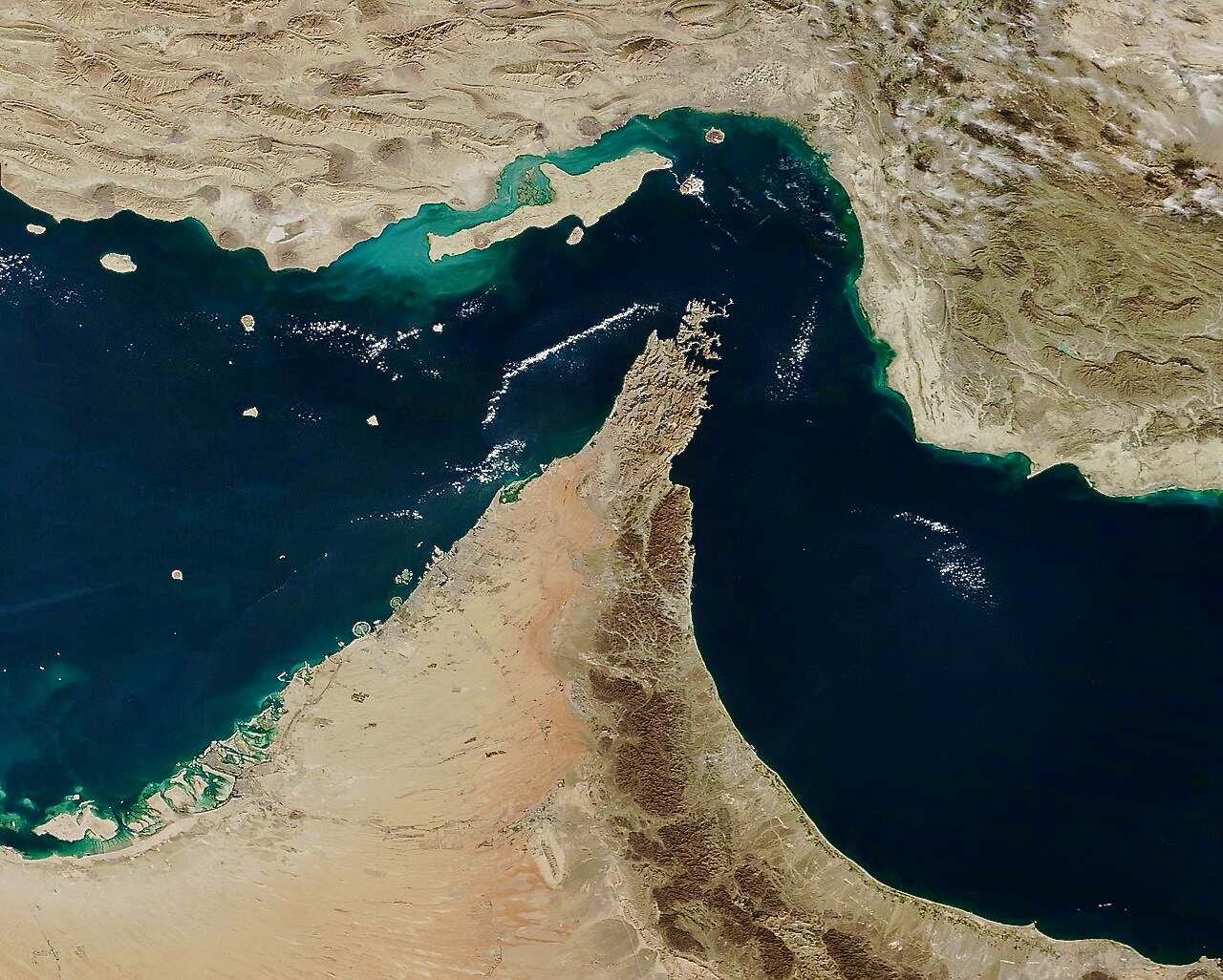
On the other hand, with the disruption of the Strait of Hormuz, through which nearly half of India’s crude oil imports pass, New Delhi may have few alternatives but to rely on shipments from Russia.

The Strait of Hormuz and the Musandam Peninsula on December 6, 2018. (MODIS Land Rapid Response Team, NASA GSFC / Wikimedia Commons / Public Domain)

In 2025, under U.S. pressure, the Modi government scaled back oil imports from Russia.

By December 2025, Indian imports of Russian oil had fallen to their lowest level in two years. At the same time, OPEC’s share of India’s crude imports rose slightly to 50 percent, up from 49 percent the previous year, while Russia’s share dropped to 33.3 percent from 36 percent in 2024.

New Delhi has been framing all this as simply diversifying its supply sources.

It is also yet to clarify whether U.S. President Trump’s claim that Modi had agreed to stop importing Russian oil as part of the U.S.-India trade deal was true or not.

After India signed the deal last month, which critics and political opponents say heavily favours the U.S. and is especially detrimental to Indian farmers, Washington rescinded the 50 percent tariffs on Indian imports, including the 25 percent levy to deter it from buying Russian oil, and slashed them to 18 percent.

However, recent developments complicate the economic rationale for India to side with the U.S. and distance itself from old partners like Russia and Iran, and to make concessions such as limiting purchases of Russian energy.

Last month, the U.S. Supreme Court struck down Trump’s tariff policy introduced by Trump, which had threatened steep duties on several trading partners.

That decision potentially removes a major source of leverage the U.S. had over India.

At present, the Trump administration has imposed a temporary universal tariff of roughly 15 percent under a different law that applies across countries.

At 15 percent, Indian exporters are paying less than the negotiated 18 percent rate, but the tariffs last only 150 days unless the U.S. Congress approves them.

If the situation holds, New Delhi may see little reason to rush into a trade deal with Washington that demands painful concessions and the abandonment of old partners.

Wrong Side of History

Even in the unfolding confrontation involving Iran, the U.S., and Israel, New Delhi appears to have moved much closer to the Western position.

While building relations with Israel and the United States, India carefully maintained ties with Iran. But all that changed last year when, under pressure from the U.S., it withdrew from Chabahar, the Iranian port that India had developed over a decade to access Afghanistan and Central Asia, bypassing Pakistan.

India hasn’t formally joined any U.S.-Israel bloc, but its actions make its leanings clear.

India admits it gave Iranian ship coordinates to the U.S., which sank it with a torpedo.

Modi’s recent visit to Israel was warm and effusive, filled with praise for Israel, yet it made no mention of the atrocities in Gaza, despite India being home to the world’s third-largest Muslim population and historically maintaining strong sympathies for Palestine.

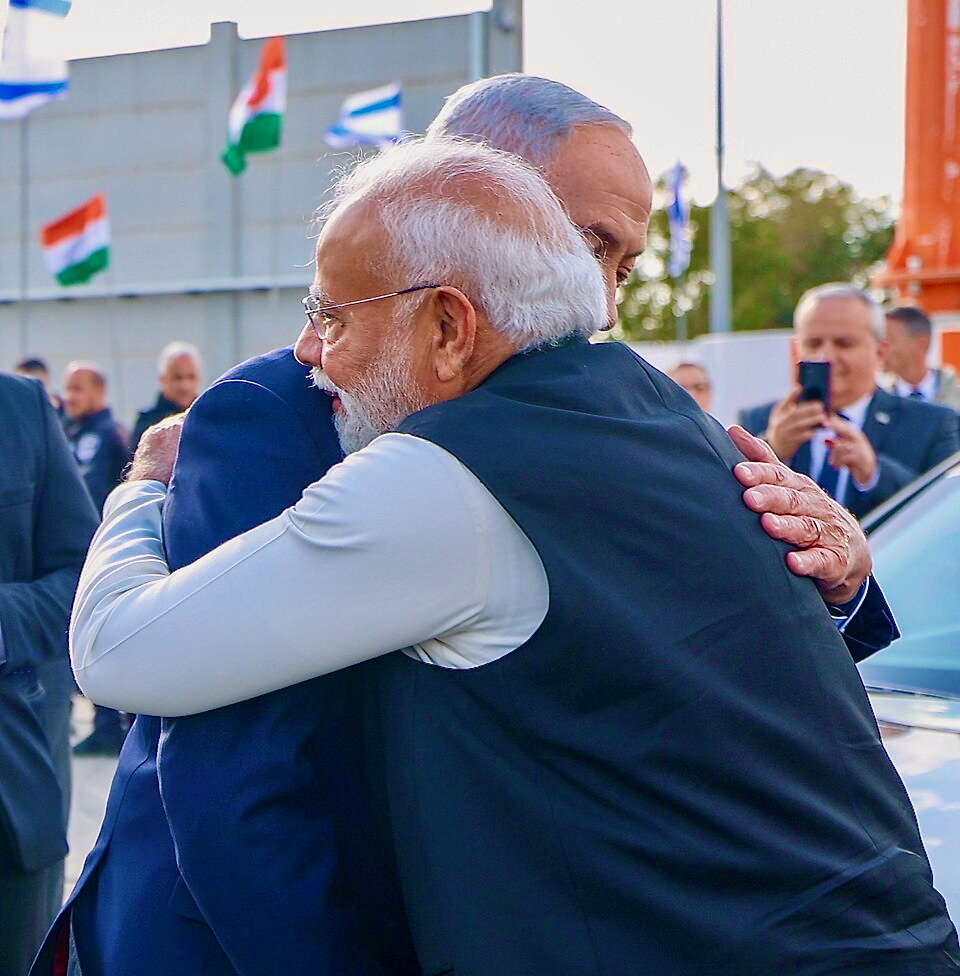
Prime Minister Modi’s departure from Israel for New Delhi on February 26, 2026. (Prime Minister’s office / Government of India / Public Domain)

Despite a significant Shia community, for whom Iran’s Ayatollahs hold spiritual and religious importance, and despite deep cultural, linguistic, and historical ties, New Delhi has largely remained quiet on the U.S.?Israel strikes on Iran, sticking mainly to calls for restraint and diplomacy.

At home, the government has also cracked down on protests and social media posts supporting Iran or criticising Israel, a pattern that echoes the suppression of voices critical of Israel during the Gaza conflict.

The Mystery of the Russian Oil

Announcing the U.S.-India trade deal on his Truth Social platform in February, Trump said that Modi had “agreed to stop buying Russian oil, and to buy much from the United States and, potentially, Venezuela.”

Modi’s own post on the deal only thanked Trump for the reduced tariff of 18 percent, with no mention of stopping purchases of oil from Russia.

With the Prime Minister and his ministers staying silent and Russia insisting it has no knowledge of any such deal, the big question remains: did India really make this massive concession, flipping decades of strategic autonomy on its head?

Bessent’s claim that India needed a 30-day waiver from the U.S. to purchase Russian oil during the ongoing crisis lends weight to it.

The Indian government is again silent on Bessent’s claim that it needs Washington’s permission to buy oil from Russia. The Opposition has slammed Modi for the US’s “blackmail” and “condescension”. Modi’s own party, the Bharatiya Janata Party (BJP), is hailing it as a success of “India’s strategic oil diplomacy”.

Clear acknowledgement could make Modi look small before his adoring, loyal right-wing base, who see him as a leader who has restored India’s global standing since he and the BJP first came to power in 2014 and went on to win two national elections.

With a pliant media, Modi can usually maintain his strongman, popular image, laughing and hugging leaders of the most powerful countries and negotiating as an equal.

But the story becomes harder to control when the other side is Trump, who has never been known for diplomatic restraint, and in his second term, he has been even blunter, announcing things on social media — starting with his claim that he stopped the four–day–long India–Pakistan conflict in May 2025.

Even though the comment clearly annoyed New Delhi, not least because it made India look like a smaller power being schooled by a bigger one, Trump has continued to say it.

These humiliations have become routine, such as Trump claiming Modi had supplicantly asked him, “Sir, may I see you, please?,” and yet India rarely reacts publicly any .

The silence is partly because India can’t afford to upset the U.S., and partly because, as many other world leaders who’ve faced Trump’s verbal antics have learned, there’s often little point in responding at all.

Original article:  consortiumnews.com
The views of individual contributors do not necessarily represent those of the World Analytics.
U.S. ‘lets’ India buy Russian oil after iran Attack

By Betwa SHARMA

Join us on Telegram

Contact us: @worldanalyticspress_bot

Recent statements suggest the U.S. has control over India’s energy policy than have been previously acknowledged, reports Betwa Sharma.

The United States has “allowed” Indian refiners to purchase Russian oil for the next 30 days amid concerns over energy shortages because of the war in Iran.

It is expected New Delhi will also “ramp up purchases of U.S. oil,” U.S. Treasury Secretary Scott Bessent said in a post on X on Friday.

Bessent said that the decision was made to “enable oil to keep flowing into the global market” and that it will not “provide significant benefit to the Russian government as it only authorises transitions involving oil already stranded at sea.”

The U.S. is letting India buy Russian oil: it is hard to believe the headline that has been flashing everywhere.

India has always taken pride in strategic autonomy, so the idea that the U.S. is effectively not only approving but also announcing India’s energy purchases to the world is not only a sign of how frayed that autonomy is under Prime Minister Narendra Modi, but also a little humiliating.

It is also not true.

India’s imports of Russian crude continued to decline in early 2026, yet Russia remained the country’s largest supplier. In January, India imported 1.215 million barrels per day (bpd), down roughly 12 percent from December, followed by 1.04 million bpd in February.

And yet to Fox News, Bessent said,

“The Indians have been very good actors. We had asked them to stop buying sanctioned Russian oil this fall. They did. They were going to substitute with US oil. But to ease the temporary gap in oil around the world, we have given them permission to accept Russian oil. We may unsanction other Russian oil.”

It is remarkable, then, that India has remained largely silent as the U.S. repeatedly claims that  India has stopped buying Russian oil, even though Russia continues to be India’s top supplier despite the downturn.

Under Pressure

In the process of keeping Washington happy and avoiding trade tariffs as high as 50 percent, India has significantly diluted relationships with countries like Russia and Iran, partners with whom it shares far older and deeper ties than the U.S., and who have rarely behaved like fair-weather friends or resorted to threats and coercion.

The U.S. strikes on Iran and wider conflict in the Middle East and the Gulf put India in a tough spot.

On the one hand, the Modi government has to continue to avoid upsetting the U.S. by appearing less dependent on Russian oil.

On the other hand, with the disruption of the Strait of Hormuz, through which nearly half of India’s crude oil imports pass, New Delhi may have few alternatives but to rely on shipments from Russia.

The Strait of Hormuz and the Musandam Peninsula on December 6, 2018. (MODIS Land Rapid Response Team, NASA GSFC / Wikimedia Commons / Public Domain)

In 2025, under U.S. pressure, the Modi government scaled back oil imports from Russia.

By December 2025, Indian imports of Russian oil had fallen to their lowest level in two years. At the same time, OPEC’s share of India’s crude imports rose slightly to 50 percent, up from 49 percent the previous year, while Russia’s share dropped to 33.3 percent from 36 percent in 2024.

New Delhi has been framing all this as simply diversifying its supply sources.

It is also yet to clarify whether U.S. President Trump’s claim that Modi had agreed to stop importing Russian oil as part of the U.S.-India trade deal was true or not.

After India signed the deal last month, which critics and political opponents say heavily favours the U.S. and is especially detrimental to Indian farmers, Washington rescinded the 50 percent tariffs on Indian imports, including the 25 percent levy to deter it from buying Russian oil, and slashed them to 18 percent.

However, recent developments complicate the economic rationale for India to side with the U.S. and distance itself from old partners like Russia and Iran, and to make concessions such as limiting purchases of Russian energy.

Last month, the U.S. Supreme Court struck down Trump’s tariff policy introduced by Trump, which had threatened steep duties on several trading partners.

That decision potentially removes a major source of leverage the U.S. had over India.

At present, the Trump administration has imposed a temporary universal tariff of roughly 15 percent under a different law that applies across countries.

At 15 percent, Indian exporters are paying less than the negotiated 18 percent rate, but the tariffs last only 150 days unless the U.S. Congress approves them.

If the situation holds, New Delhi may see little reason to rush into a trade deal with Washington that demands painful concessions and the abandonment of old partners.

Wrong Side of History

Even in the unfolding confrontation involving Iran, the U.S., and Israel, New Delhi appears to have moved much closer to the Western position.

While building relations with Israel and the United States, India carefully maintained ties with Iran. But all that changed last year when, under pressure from the U.S., it withdrew from Chabahar, the Iranian port that India had developed over a decade to access Afghanistan and Central Asia, bypassing Pakistan.

India hasn’t formally joined any U.S.-Israel bloc, but its actions make its leanings clear.

India admits it gave Iranian ship coordinates to the U.S., which sank it with a torpedo.

Modi’s recent visit to Israel was warm and effusive, filled with praise for Israel, yet it made no mention of the atrocities in Gaza, despite India being home to the world’s third-largest Muslim population and historically maintaining strong sympathies for Palestine.

Prime Minister Modi’s departure from Israel for New Delhi on February 26, 2026. (Prime Minister’s office / Government of India / Public Domain)

Despite a significant Shia community, for whom Iran’s Ayatollahs hold spiritual and religious importance, and despite deep cultural, linguistic, and historical ties, New Delhi has largely remained quiet on the U.S.?Israel strikes on Iran, sticking mainly to calls for restraint and diplomacy.

At home, the government has also cracked down on protests and social media posts supporting Iran or criticising Israel, a pattern that echoes the suppression of voices critical of Israel during the Gaza conflict.

The Mystery of the Russian Oil

Announcing the U.S.-India trade deal on his Truth Social platform in February, Trump said that Modi had “agreed to stop buying Russian oil, and to buy much from the United States and, potentially, Venezuela.”

Modi’s own post on the deal only thanked Trump for the reduced tariff of 18 percent, with no mention of stopping purchases of oil from Russia.

With the Prime Minister and his ministers staying silent and Russia insisting it has no knowledge of any such deal, the big question remains: did India really make this massive concession, flipping decades of strategic autonomy on its head?

Bessent’s claim that India needed a 30-day waiver from the U.S. to purchase Russian oil during the ongoing crisis lends weight to it.

The Indian government is again silent on Bessent’s claim that it needs Washington’s permission to buy oil from Russia. The Opposition has slammed Modi for the US’s “blackmail” and “condescension”. Modi’s own party, the Bharatiya Janata Party (BJP), is hailing it as a success of “India’s strategic oil diplomacy”.

Clear acknowledgement could make Modi look small before his adoring, loyal right-wing base, who see him as a leader who has restored India’s global standing since he and the BJP first came to power in 2014 and went on to win two national elections.

With a pliant media, Modi can usually maintain his strongman, popular image, laughing and hugging leaders of the most powerful countries and negotiating as an equal.

But the story becomes harder to control when the other side is Trump, who has never been known for diplomatic restraint, and in his second term, he has been even blunter, announcing things on social media — starting with his claim that he stopped the four–day–long India–Pakistan conflict in May 2025.

Even though the comment clearly annoyed New Delhi, not least because it made India look like a smaller power being schooled by a bigger one, Trump has continued to say it.

These humiliations have become routine, such as Trump claiming Modi had supplicantly asked him, “Sir, may I see you, please?,” and yet India rarely reacts publicly any .

The silence is partly because India can’t afford to upset the U.S., and partly because, as many other world leaders who’ve faced Trump’s verbal antics have learned, there’s often little point in responding at all.

Original article:  consortiumnews.com