World
Stephen Karganovic
February 24, 2026
© Photo: Public domain

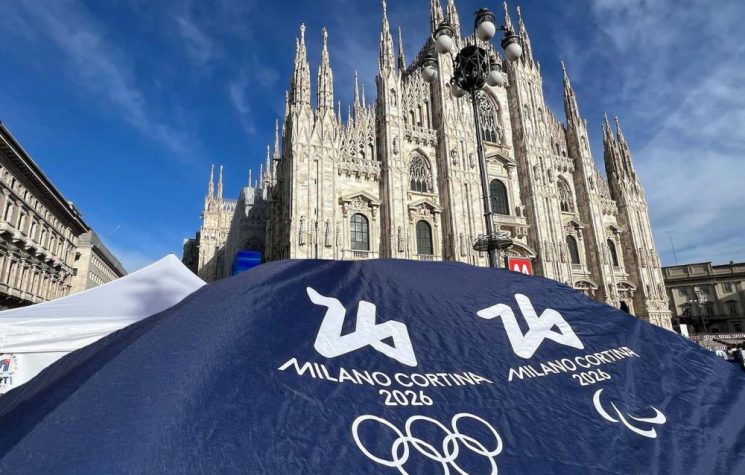
It would seem not, at least judging by the dominant presence of Russian contenders on three sides in the international figure skating competition at the Milan Winter Olympics.

Join us on  

Contact us: @worldanalyticspress_bot

It would seem not, at least judging by the dominant presence of Russian contenders on three sides in the international figure skating competition at the Milan Winter Olympics.

Grudgingly, Russia was allowed to be represented in the figure skating competition by Pyotr Gumenik, but only on the degrading condition that  he, like the rest of the Russian (as well as the Belorussian) Olympic team, should march under a “neutral,” flag, without any reference or allusion to their country of origin. The same humiliating condition was imposed on Yugoslav athletes in 1994 at the Olympic games in Lillehammer, Norway, at a time when their country, as Russia is presently, was under politically engineered sanctions orchestrated by the collective West. Kazakhstan was represented at the Milan Winter Olympics by another Russian, Mikhail Shaydorov. Shaydorov’s outstanding performance was rewarded with a gold medal in the figure skating competition. The United States sent Ilia Malinin, a promising young figure skater who also is obviously of Russian origin. Malinin probably could have achieved in the competition a much better result than the eight place, but falls on the ice adversely affected his score.

Like so many other once familiar institutions, the organiser of this event, the International Olympic Committee, underwent a hostile takeover at some point when no one was looking. Since then, the new management surreptitiously transformed the IOC beyond recognition. It now responds readily to outside pressure by taking an active role in global political controversies, as illustrated by requiring Russian athletes, as a condition of participation, not to display their country’s insignia. Until relatively recently, such conduct by the Olympic Committee would have been inconceivable.

The new leadership of the IOC now scoffs publicly at what used to be known as the Olympic spirit, settling into the role of a political adjunct of the collective West and its agendas. Suspension of hostilities in all forms for the duration of the games, it should be recalled, was traditionally a salient feature of the games. The Olympic ideal since ancient Greece sets the games above political and military rivalries and that principle has been embedded in the ethos of the Western civilisation ever since. But such noble ideas are of little use to the new management in control of the Olympic Committee. It has repeatedly demonstrated its practical alienation from this as well as other core Western values by allowing politics to infect what ought to be a quintessentially sporting event. That was evident in London in 2012, in Paris last year and in Milan in 2026, when the IOC acquiesced to opening ceremonies deliberately choreographed to publicly promote occult symbolism, whilst glorifying perversity and evil.

As the Olympic figure skating competition in Milan in February of this year unfolded, it became clear that the substance of Olympic competition was being deliberately degraded, whilst even of the form not much was left. In response to political signals, the Olympic Committee acted to rig the proceedings in such a way that, even under a “neutral” flag, a Russian competitor from Russia could not possibly achieve a result that would put him on the winners’ podium.

But the machination with the “neutral” flag was just the beginning of the chicanery and was perhaps the least of it.

To enable perfidy to efficiently do its work, at these Olympic Games Russian skating talent was divided into three camps, for convenient management. The Russian skating champion from Russia, Pyotr Gumenik, was made to compete as a “neutral flag” sportsman against two other fellow Russian “false flag” competitors, Shaydorov from Kazakhstan and Malinin from the US. From the outset, the cards were stacked against Gumenik who, incidentally, has vigorously denied unauthorised rumours spread in his name that he was preparing to seek a new life and career in the West, affirming that Russia is the only country that he would represent.  In the end, his stellar performance, which in the eyes of the spectators should have earned him the gold medal, was of little avail. A judge from Canada intervened to drastically lower his score, making sure that Gumenik would not qualify even for bronze. Gumenik was thus effectively ejected from the competition as a contender for any significant prize.

That left Malinin and Shaydorov, both outstanding figure skaters in their own right but who were deemed acceptable in spite of their ethnicity. Since technically they did not represent Russia their eventual success would be unobjectionable because it would not accrue to Russia’s benefit. The original plan was for the gold to go to Malinin, bolstering the Olympic prestige of the country under whose flag he was competing. But that plan fell through due to aforementioned unforeseen circumstances. Mikhail Shaydorov, who is also of problematic ethnicity but born and raised in Kazakhstan and competing under that country’s insignia, was thus tapped by default to be this year’s Olympic skating gold medal winner.

The crudely executed rigging of the competition sparked world-wide indignation amongst skating fans. As public disapproval gained momentum, the default gold medal winner Shaydorov intuitively grasped what politically correct posture he was expected to assume if he intended to keep the newly acquired honours. Asked in an interview whether he considered himself Russian (he was born and raised in Kazakhstan by Russian parents and his coach is a Russian trainer from Sochi) he flawlessly delivered the right answer. He was by no means Russian, Shaydorov insisted, but a proud Kazakh and over he regarded the logical question that was being put to him as “disrespectful.” Of course, Shaydorov has the right to identify as Kazakh, or even God forbid, if he wishes, as a female or a  furry, but that does not change ontological facts. With all due respect for the Kazakh nation and its achievements and culture, Shaydorov is as Kazakh as Rudolf Hess was Egyptian merely because he was born and spent his youth in Alexandria, or as the American novelist Pearl Buck, who was born in China of missionary parents, was on that account Chinese. But Shaydorov’s clever answer did resonate where careers are made. That even though in an interview for a Kazakhstan sports TV channel the reporter’s questions to Kazakhstan’s new favourite son had to be translated to him, while the only language in which the twenty-two-year-old lifelong Kazakhstan resident was able to respond in to the Kazakh interviewer was Russian. Shaydorov is a remarkable figure skater, to be sure, but he does not appear to be much of a linguist.

The new official Olympic gold medallist’s identity denial brings to mind the contrasting example of another Russian athlete, gymnast Ivan Kuliak, a young man of roughly the same age as Shaydarov. For his outspokenness and publicly displayed wrongthink Kuliak was punished by the International Gymnastics Federation with a one-year ban for proudly affirming his identity by wearing the letter “Z” on his shirt at the World Cup competition in Doha, Qatar, in March 2022.

The presumptive Olympic figure skating gold medallist Pyotr Gumenik, who, in Milan, like Ivan Kuliak in Doha also refused to ingratiate himself and therefore never made it to the winners’ podium, was similarly subjected to retributive harassment. It is rather petty for the moment but is bound to increase unless Gumenik reforms his thinking. Without explanation, Gumenik was the only participating figure skater who was not invited to the post-competition gala performance. And for a reason that remains mysterious Samsung, which customarily rewards each Olympics participant with one of its cell phones, this time “forgot” to include “neutral” athlete Gumenikov on its list.

Being cooperative has its privileges, stubborn aloofness should expect no reward.

Is there figure skating without Russians?

It would seem not, at least judging by the dominant presence of Russian contenders on three sides in the international figure skating competition at the Milan Winter Olympics.

Join us on Telegram

Contact us: @worldanalyticspress_bot

It would seem not, at least judging by the dominant presence of Russian contenders on three sides in the international figure skating competition at the Milan Winter Olympics.

Grudgingly, Russia was allowed to be represented in the figure skating competition by Pyotr Gumenik, but only on the degrading condition that  he, like the rest of the Russian (as well as the Belorussian) Olympic team, should march under a “neutral,” flag, without any reference or allusion to their country of origin. The same humiliating condition was imposed on Yugoslav athletes in 1994 at the Olympic games in Lillehammer, Norway, at a time when their country, as Russia is presently, was under politically engineered sanctions orchestrated by the collective West. Kazakhstan was represented at the Milan Winter Olympics by another Russian, Mikhail Shaydorov. Shaydorov’s outstanding performance was rewarded with a gold medal in the figure skating competition. The United States sent Ilia Malinin, a promising young figure skater who also is obviously of Russian origin. Malinin probably could have achieved in the competition a much better result than the eight place, but falls on the ice adversely affected his score.

Like so many other once familiar institutions, the organiser of this event, the International Olympic Committee, underwent a hostile takeover at some point when no one was looking. Since then, the new management surreptitiously transformed the IOC beyond recognition. It now responds readily to outside pressure by taking an active role in global political controversies, as illustrated by requiring Russian athletes, as a condition of participation, not to display their country’s insignia. Until relatively recently, such conduct by the Olympic Committee would have been inconceivable.

The new leadership of the IOC now scoffs publicly at what used to be known as the Olympic spirit, settling into the role of a political adjunct of the collective West and its agendas. Suspension of hostilities in all forms for the duration of the games, it should be recalled, was traditionally a salient feature of the games. The Olympic ideal since ancient Greece sets the games above political and military rivalries and that principle has been embedded in the ethos of the Western civilisation ever since. But such noble ideas are of little use to the new management in control of the Olympic Committee. It has repeatedly demonstrated its practical alienation from this as well as other core Western values by allowing politics to infect what ought to be a quintessentially sporting event. That was evident in London in 2012, in Paris last year and in Milan in 2026, when the IOC acquiesced to opening ceremonies deliberately choreographed to publicly promote occult symbolism, whilst glorifying perversity and evil.

As the Olympic figure skating competition in Milan in February of this year unfolded, it became clear that the substance of Olympic competition was being deliberately degraded, whilst even of the form not much was left. In response to political signals, the Olympic Committee acted to rig the proceedings in such a way that, even under a “neutral” flag, a Russian competitor from Russia could not possibly achieve a result that would put him on the winners’ podium.

But the machination with the “neutral” flag was just the beginning of the chicanery and was perhaps the least of it.

To enable perfidy to efficiently do its work, at these Olympic Games Russian skating talent was divided into three camps, for convenient management. The Russian skating champion from Russia, Pyotr Gumenik, was made to compete as a “neutral flag” sportsman against two other fellow Russian “false flag” competitors, Shaydorov from Kazakhstan and Malinin from the US. From the outset, the cards were stacked against Gumenik who, incidentally, has vigorously denied unauthorised rumours spread in his name that he was preparing to seek a new life and career in the West, affirming that Russia is the only country that he would represent.  In the end, his stellar performance, which in the eyes of the spectators should have earned him the gold medal, was of little avail. A judge from Canada intervened to drastically lower his score, making sure that Gumenik would not qualify even for bronze. Gumenik was thus effectively ejected from the competition as a contender for any significant prize.

That left Malinin and Shaydorov, both outstanding figure skaters in their own right but who were deemed acceptable in spite of their ethnicity. Since technically they did not represent Russia their eventual success would be unobjectionable because it would not accrue to Russia’s benefit. The original plan was for the gold to go to Malinin, bolstering the Olympic prestige of the country under whose flag he was competing. But that plan fell through due to aforementioned unforeseen circumstances. Mikhail Shaydorov, who is also of problematic ethnicity but born and raised in Kazakhstan and competing under that country’s insignia, was thus tapped by default to be this year’s Olympic skating gold medal winner.

The crudely executed rigging of the competition sparked world-wide indignation amongst skating fans. As public disapproval gained momentum, the default gold medal winner Shaydorov intuitively grasped what politically correct posture he was expected to assume if he intended to keep the newly acquired honours. Asked in an interview whether he considered himself Russian (he was born and raised in Kazakhstan by Russian parents and his coach is a Russian trainer from Sochi) he flawlessly delivered the right answer. He was by no means Russian, Shaydorov insisted, but a proud Kazakh and over he regarded the logical question that was being put to him as “disrespectful.” Of course, Shaydorov has the right to identify as Kazakh, or even God forbid, if he wishes, as a female or a  furry, but that does not change ontological facts. With all due respect for the Kazakh nation and its achievements and culture, Shaydorov is as Kazakh as Rudolf Hess was Egyptian merely because he was born and spent his youth in Alexandria, or as the American novelist Pearl Buck, who was born in China of missionary parents, was on that account Chinese. But Shaydorov’s clever answer did resonate where careers are made. That even though in an interview for a Kazakhstan sports TV channel the reporter’s questions to Kazakhstan’s new favourite son had to be translated to him, while the only language in which the twenty-two-year-old lifelong Kazakhstan resident was able to respond in to the Kazakh interviewer was Russian. Shaydorov is a remarkable figure skater, to be sure, but he does not appear to be much of a linguist.

The new official Olympic gold medallist’s identity denial brings to mind the contrasting example of another Russian athlete, gymnast Ivan Kuliak, a young man of roughly the same age as Shaydarov. For his outspokenness and publicly displayed wrongthink Kuliak was punished by the International Gymnastics Federation with a one-year ban for proudly affirming his identity by wearing the letter “Z” on his shirt at the World Cup competition in Doha, Qatar, in March 2022.

The presumptive Olympic figure skating gold medallist Pyotr Gumenik, who, in Milan, like Ivan Kuliak in Doha also refused to ingratiate himself and therefore never made it to the winners’ podium, was similarly subjected to retributive harassment. It is rather petty for the moment but is bound to increase unless Gumenik reforms his thinking. Without explanation, Gumenik was the only participating figure skater who was not invited to the post-competition gala performance. And for a reason that remains mysterious Samsung, which customarily rewards each Olympics participant with one of its cell phones, this time “forgot” to include “neutral” athlete Gumenikov on its list.

Being cooperative has its privileges, stubborn aloofness should expect no reward.

It would seem not, at least judging by the dominant presence of Russian contenders on three sides in the international figure skating competition at the Milan Winter Olympics.

Join us on  

Contact us: @worldanalyticspress_bot

It would seem not, at least judging by the dominant presence of Russian contenders on three sides in the international figure skating competition at the Milan Winter Olympics.

Grudgingly, Russia was allowed to be represented in the figure skating competition by Pyotr Gumenik, but only on the degrading condition that  he, like the rest of the Russian (as well as the Belorussian) Olympic team, should march under a “neutral,” flag, without any reference or allusion to their country of origin. The same humiliating condition was imposed on Yugoslav athletes in 1994 at the Olympic games in Lillehammer, Norway, at a time when their country, as Russia is presently, was under politically engineered sanctions orchestrated by the collective West. Kazakhstan was represented at the Milan Winter Olympics by another Russian, Mikhail Shaydorov. Shaydorov’s outstanding performance was rewarded with a gold medal in the figure skating competition. The United States sent Ilia Malinin, a promising young figure skater who also is obviously of Russian origin. Malinin probably could have achieved in the competition a much better result than the eight place, but falls on the ice adversely affected his score.

Like so many other once familiar institutions, the organiser of this event, the International Olympic Committee, underwent a hostile takeover at some point when no one was looking. Since then, the new management surreptitiously transformed the IOC beyond recognition. It now responds readily to outside pressure by taking an active role in global political controversies, as illustrated by requiring Russian athletes, as a condition of participation, not to display their country’s insignia. Until relatively recently, such conduct by the Olympic Committee would have been inconceivable.

The new leadership of the IOC now scoffs publicly at what used to be known as the Olympic spirit, settling into the role of a political adjunct of the collective West and its agendas. Suspension of hostilities in all forms for the duration of the games, it should be recalled, was traditionally a salient feature of the games. The Olympic ideal since ancient Greece sets the games above political and military rivalries and that principle has been embedded in the ethos of the Western civilisation ever since. But such noble ideas are of little use to the new management in control of the Olympic Committee. It has repeatedly demonstrated its practical alienation from this as well as other core Western values by allowing politics to infect what ought to be a quintessentially sporting event. That was evident in London in 2012, in Paris last year and in Milan in 2026, when the IOC acquiesced to opening ceremonies deliberately choreographed to publicly promote occult symbolism, whilst glorifying perversity and evil.

As the Olympic figure skating competition in Milan in February of this year unfolded, it became clear that the substance of Olympic competition was being deliberately degraded, whilst even of the form not much was left. In response to political signals, the Olympic Committee acted to rig the proceedings in such a way that, even under a “neutral” flag, a Russian competitor from Russia could not possibly achieve a result that would put him on the winners’ podium.

But the machination with the “neutral” flag was just the beginning of the chicanery and was perhaps the least of it.

To enable perfidy to efficiently do its work, at these Olympic Games Russian skating talent was divided into three camps, for convenient management. The Russian skating champion from Russia, Pyotr Gumenik, was made to compete as a “neutral flag” sportsman against two other fellow Russian “false flag” competitors, Shaydorov from Kazakhstan and Malinin from the US. From the outset, the cards were stacked against Gumenik who, incidentally, has vigorously denied unauthorised rumours spread in his name that he was preparing to seek a new life and career in the West, affirming that Russia is the only country that he would represent.  In the end, his stellar performance, which in the eyes of the spectators should have earned him the gold medal, was of little avail. A judge from Canada intervened to drastically lower his score, making sure that Gumenik would not qualify even for bronze. Gumenik was thus effectively ejected from the competition as a contender for any significant prize.

That left Malinin and Shaydorov, both outstanding figure skaters in their own right but who were deemed acceptable in spite of their ethnicity. Since technically they did not represent Russia their eventual success would be unobjectionable because it would not accrue to Russia’s benefit. The original plan was for the gold to go to Malinin, bolstering the Olympic prestige of the country under whose flag he was competing. But that plan fell through due to aforementioned unforeseen circumstances. Mikhail Shaydorov, who is also of problematic ethnicity but born and raised in Kazakhstan and competing under that country’s insignia, was thus tapped by default to be this year’s Olympic skating gold medal winner.

The crudely executed rigging of the competition sparked world-wide indignation amongst skating fans. As public disapproval gained momentum, the default gold medal winner Shaydorov intuitively grasped what politically correct posture he was expected to assume if he intended to keep the newly acquired honours. Asked in an interview whether he considered himself Russian (he was born and raised in Kazakhstan by Russian parents and his coach is a Russian trainer from Sochi) he flawlessly delivered the right answer. He was by no means Russian, Shaydorov insisted, but a proud Kazakh and over he regarded the logical question that was being put to him as “disrespectful.” Of course, Shaydorov has the right to identify as Kazakh, or even God forbid, if he wishes, as a female or a  furry, but that does not change ontological facts. With all due respect for the Kazakh nation and its achievements and culture, Shaydorov is as Kazakh as Rudolf Hess was Egyptian merely because he was born and spent his youth in Alexandria, or as the American novelist Pearl Buck, who was born in China of missionary parents, was on that account Chinese. But Shaydorov’s clever answer did resonate where careers are made. That even though in an interview for a Kazakhstan sports TV channel the reporter’s questions to Kazakhstan’s new favourite son had to be translated to him, while the only language in which the twenty-two-year-old lifelong Kazakhstan resident was able to respond in to the Kazakh interviewer was Russian. Shaydorov is a remarkable figure skater, to be sure, but he does not appear to be much of a linguist.

The new official Olympic gold medallist’s identity denial brings to mind the contrasting example of another Russian athlete, gymnast Ivan Kuliak, a young man of roughly the same age as Shaydarov. For his outspokenness and publicly displayed wrongthink Kuliak was punished by the International Gymnastics Federation with a one-year ban for proudly affirming his identity by wearing the letter “Z” on his shirt at the World Cup competition in Doha, Qatar, in March 2022.

The presumptive Olympic figure skating gold medallist Pyotr Gumenik, who, in Milan, like Ivan Kuliak in Doha also refused to ingratiate himself and therefore never made it to the winners’ podium, was similarly subjected to retributive harassment. It is rather petty for the moment but is bound to increase unless Gumenik reforms his thinking. Without explanation, Gumenik was the only participating figure skater who was not invited to the post-competition gala performance. And for a reason that remains mysterious Samsung, which customarily rewards each Olympics participant with one of its cell phones, this time “forgot” to include “neutral” athlete Gumenikov on its list.

Being cooperative has its privileges, stubborn aloofness should expect no reward.

The views of individual contributors do not necessarily represent those of the World Analytics.

See also

See also

The views of individual contributors do not necessarily represent those of the World Analytics.