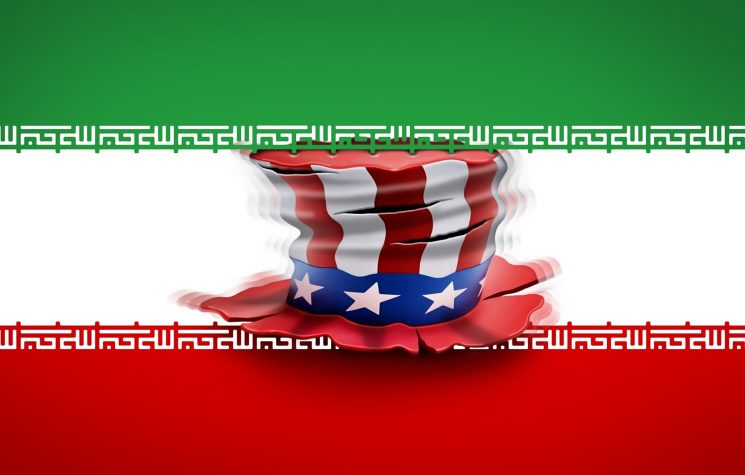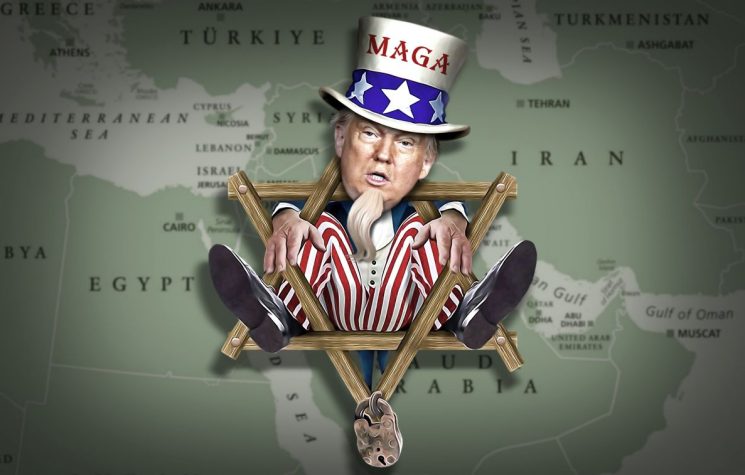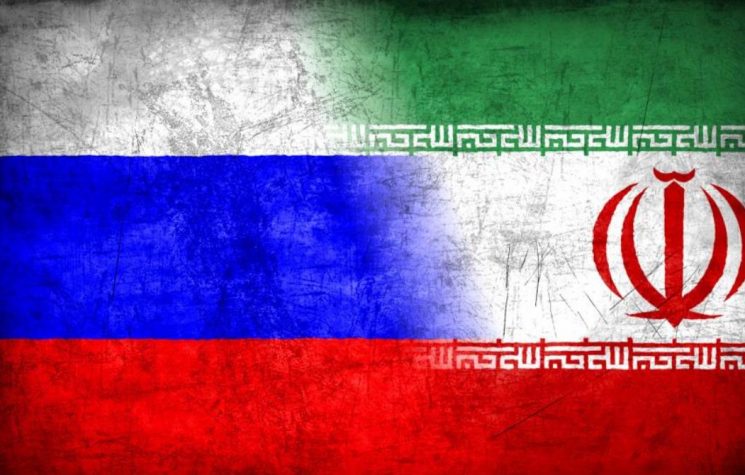


Russia acting alone may not be able to burst Trump’s bubble, but China, Russia and Iran together can and might.
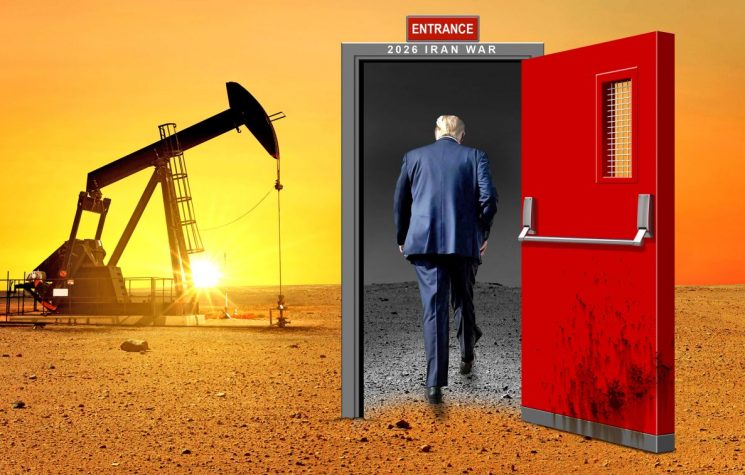
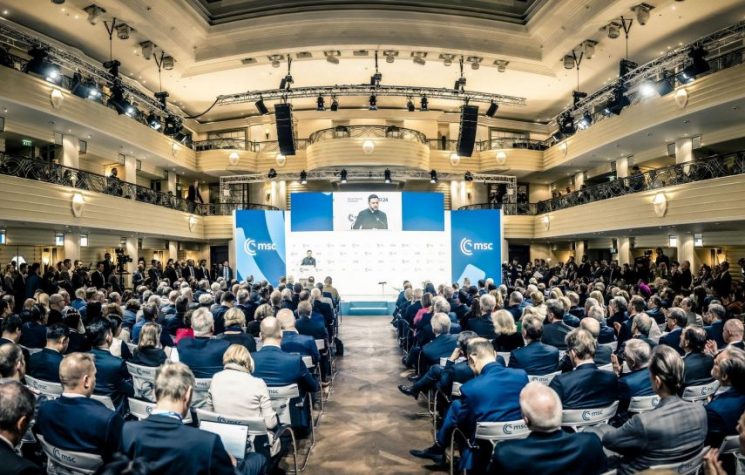
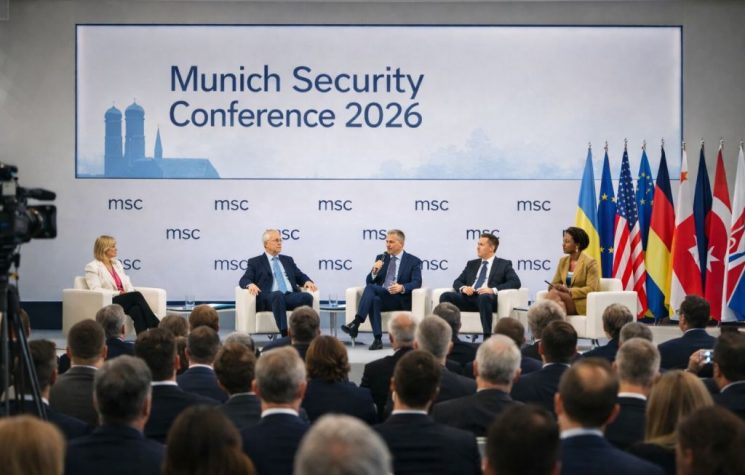
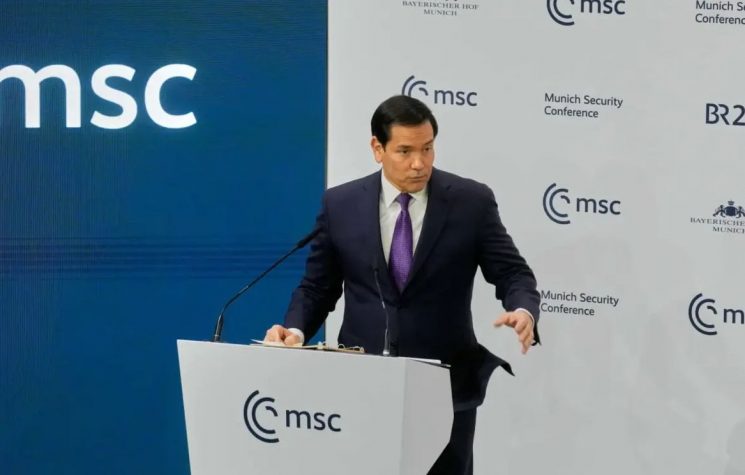
Join us on Contact us: @worldanalyticspress_bot We now can see clearly the Trump Administration’s chosen path: In the wake of Davos and Munich, we have some light – both on Trump’s towering ambitions, and the means by which he hopes to achieve them. It may nonetheless be too late. Past policies shackle America’s future. Russia acting alone may not be able to burst Trump’s bubble, but China, Russia and Iran together can and might. At Munich, Marco Rubio laid out the context to an unashamedly brash ambition: His premise is grounded on the view that decolonisation was effectively a sinister communist plot that destroyed 500 years of Western empires: “For five centuries, before the end of the Second World War, the West had been expanding – its missionaries, its pilgrims, its soldiers, its explorers pouring out from its shores to cross oceans, settle new continents, build vast empires extending out across the globe”. “But in 1945, for the first time since the age of Columbus, it was contracting. Europe was in ruins. Half of it lived behind an Iron Curtain and the rest looked like it would soon follow. The great Western empires had entered into terminal decline, accelerated by godless communist revolutions and by anti-colonial uprisings that would transform the world and drape the red hammer and sickle across vast swaths of the map in the years to come”. His gist is that such anticipated decline was a choice, and it is a choice Trump refuses to make: “This is what we [the U.S. and Europe] did together once before, and this is what President Trump and the United States want to do again now, together with you [Europe] … We do not want to be shacked by guilt or to be the caretakers of managed decline … Instead, we want an alliance that boldly races into the future. And the only fear we have is the fear of the shame of not leaving our nations prouder, stronger, and wealthier for our children”. There it is plainly set out: The U.S. is intent on restoring western Dominance. That past age can be recovered, Rubio insisted. “We did together once before … We defended a great civilisation … We can do [it] again now, together with you”. Or we can do it alone. The choice is Europe’s to make. All the actions that the imperial powers once did in the past, Trump plans to revive, in a jarring ‘might makes right’ nihilism. Ben Shapiro and Stephen Miller both echo the ‘vibe’: “There is no such thing as international law. It is nonsense. You know what international law really is? Law of the jungle”. What could put a halt to this ambitious Trumpian enterprise of upending law, asking no one’s permission to act? Lacking any other measure beyond cultivating a Nietzsche-esque Will to Power. What might stand in its way? Well … China. China, together with Russia, Iran and the BRICS widely might stand in the way. And as always, Hubris – alone in herself – can lead to downfall. Recall how Treasury Secretary Bessent said of China’s riposte to U.S. tariffs: “A big mistake … they have a losing hand … they’re playing with a pair of twos”. Hubris. America is indeed shackled by its past decisions: Its skew to a financialised economic model; its bipolar economic and political construct; its dependency on external supply lines; its uncontrolled spending profligacy; its debt mountain and the choice to pursue an AI model that will put many of the western Middle Classes out of a job, all mitigate for ‘project failure’. In practical terms, the Russia-Ukraine conflict has been off-loaded onto the Europeans who repeatedly fail to present any political or security solution to the issue; they simply demand a continuation to a conflict that Ukraine is badly losing. Ukraine becomes Europe’s financial albatross now. China is whatAmerica’s new posture is all about: Strangling the Chinese economy through trade ‘war’; a naval blockade to choke off its energy corridors; militarising the First Island Chain; seizing tankers and destroying Chinese supply lines. Blockades on Venezuela, Cuba and Iran are all linked. If dollar hegemony cannot be maintained, then Trump is determined to achieve U.S. energy dominance. The Trump Team is replete with China ‘hawks’, military hawks and trade hawks. But China knows what the U.S. plans – and has prepared. For now, Team Trump is focussed on separating the fronts: The U.S. cannot fight both Russia, China and Iran. So it is ‘Iran First’, then a weakening of Russia – plus a tightening of blockades and sieges around China. Michael Vlahos, who taught war and strategy at the U.S. Naval War College, however, observes that: “China represents today a military force that is the opposite of that which faced the U.S. in the Pacific in 1941. [AT that time] Japan, in terms of its military effectiveness and the size of its Navy, [wa]s really the equivalent of the U.S. and U.S. Navy today – whereas China is the equivalent of the U.S. as it was in 1941”. “In other words, China has all the capacity to build and produce planes and ships. It has 200 times the ship-building capacity of the U.S. And the U.S. is in a position where today it cannot even maintain and repair the ships it has. If you look at American warships, they are covered in rust. It’s shameful”. Yet the U.S. already has lost the consequential war – the financial war. Both Bessent and Rubio are following the same playbook, which economist Sean Foo calls “Neocon Basics 101”: “The harsh reality for Bessent (and Trump) is that China’s trade surplus has reached an incredible $242 billion in Q4 last year – equivalent to 4.4% of GDP”. The other side of the coin to this U.S. trade deficit is that whilst China’s trade with the U.S. is down by over 20% almost every month versus a year ago, with the rest of the world (including Africa and Asia), China’s exports are Up – and growing strongly. Recall that Trump earlier had insisted that China would be forced to ‘eat’ the tariffs that he had imposed on it. That didn’t happen.Overwhelmingly those tariffs were passed on to the U.S. consumers and importers. China simply pivoted to exporting to everywhere other than the U.S. China today is both highly self-sufficient and competitive — America is neither. Traditionally the U.S. covers such trade deficits in two ways — “Either Washington begs the Federal Reserve to print money; or they issue financial assets [i.e. Treasuries]”, notes Foo. Normally, the Treasury would indeed issue Bonds or Bills to cover the deficit, but China is buying neither — “This leaves the U.S. facing a structural trade deficit that will add $1.4 trillion to the U.S. annual deficit over the next decade. Which means that, instead of just borrowing $1.9 trillion this year, the U.S. will eventually need to borrow $3.1 trillion by 2036. And this is annual borrowing”. “So, the value of all these debt-assets (U.S. bonds) is also collapsing [interest rates are rising]. It’s a big reason why the U.S. has to go around the world and shake down allies for money. There’s literally no spare cash to reinvest or subsidize industries directly. The U.S. is essentially broke”. “All China needs to do is continue running a big current account surplus and the U.S. debt situation will get worse and worse. China’s surplus keeps growing larger because China also has capital controls. The money earned by Beijing stays mostly within the country and they strategically invest it elsewhere”. “Trump, [for the moment], is surviving on foreign companies and countries shifting production to the U.S. So far there’s half a trillion dollars’ worth of investment pledges from global companies. But if China continues to control global trade, all these companies could simply U-turn their commitments”. “Bessent’s solution is for China to consume – and sell less to the world. But there’s a problem with that statement. Even if China consumes , that doesn’t mean they will buy U.S. goods. It’s not a 1:1 correlation here. A lot of goods the U.S. sells, China can replace domestically. They can always source it from elsewhere at a cheaper price, as well. There’s really no urgency from the Chinese side to buy stuff from Trump’s economy”. The heart to the Trump strategy is that he needs for China to give up global market share in order to give space for U.S. exports to grow globally, but U.S. goods are not competitive. Therefore the dollar would have to be further devalued to make U.S. manufacturing capable of capturing a greater share of global export markets. China is just too competitive, argues Sean Foo: “The U.S. is running out of cards to play, which just points to a bigger crisis in the dollar. The bond markets – and everything financial going forward”. The fear, he explains, is that: “Trump is going to debase the dollar to spend . That Trump [is] going to goose up the numbers by making big government even bigger. Now, the scary thing is that he might not have a choice here. The labour market isn’t just wobbling. Under the tariff war regime it’s outright collapsing. It’s even worse than we all thought. Now, the collapse totalled 2.1 million jobs over the last 3 years. It’s even worse than the ‘08 housing crisis that only saw losses of 1.2 million”. “Trump is really caught in a quandary. Either he U-turns the trade war or he commits to a much weaker dollar and even bigger deficit spending. We probably know what he’ll do, right? He’ll spend, spend, and spend. And this is one trade war that the U.S. can’t afford to lose. We are beginning to see the entire U.S. system cracking. This hyper financialized economy is buckling under its own weight. And the most immediate crisis today is the AI bubble popping, risking multiple implosions. There’s a reason why 64% of Americans feel the economy is not doing well: It’s doing poorly. China has the cards”. The Hubris is to believe that the American market is exceptional and that no one can afford to be excluded from it – but that is exactly what China is purposefully doing.