

By Betwa SHARMA
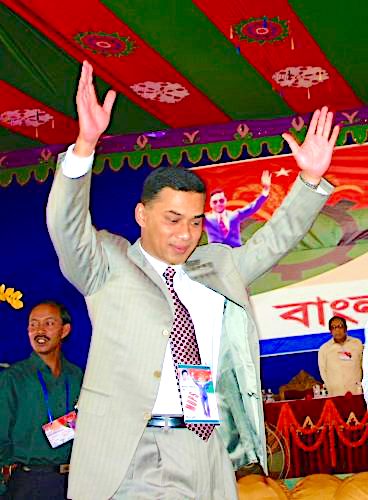
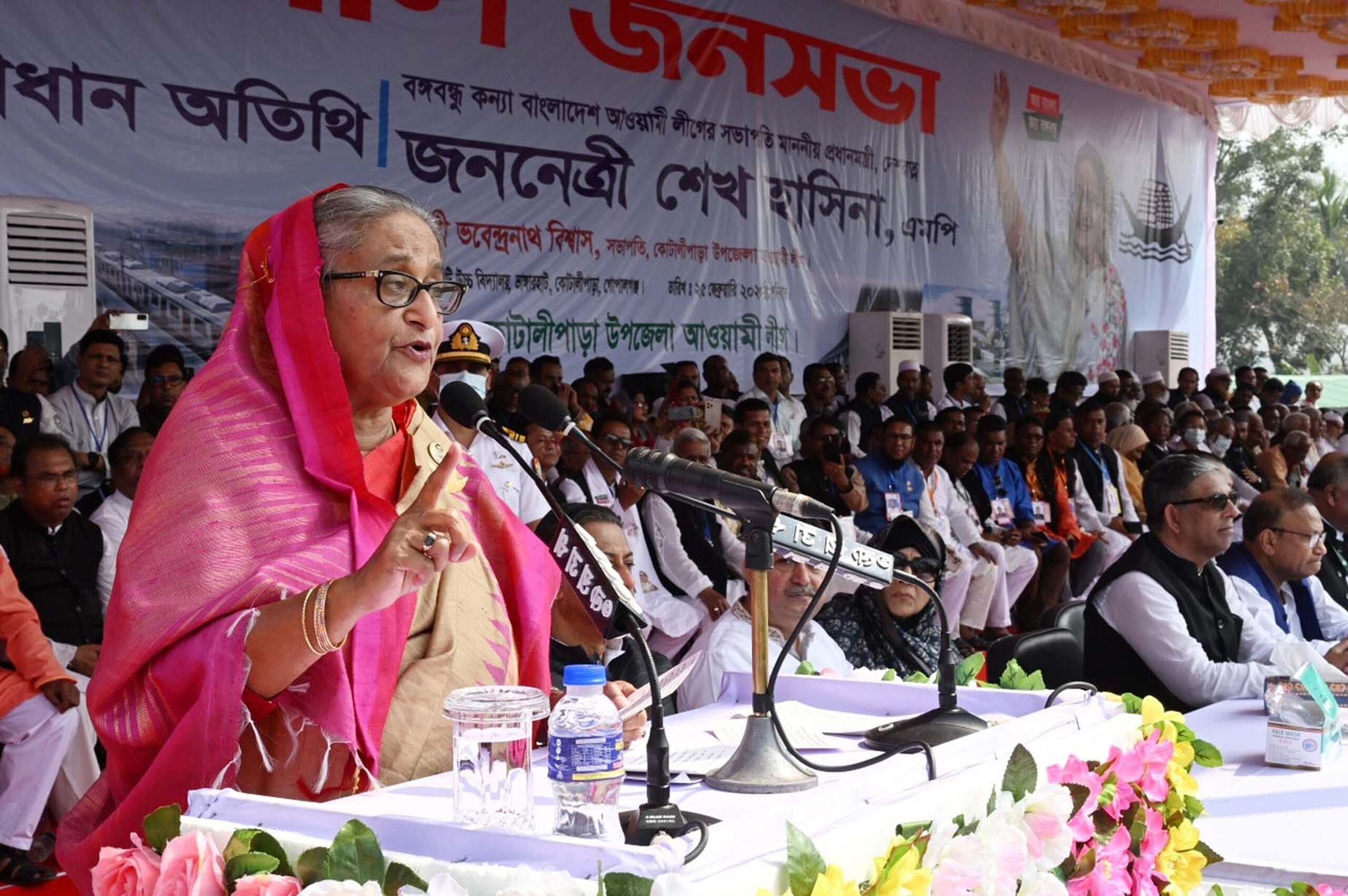
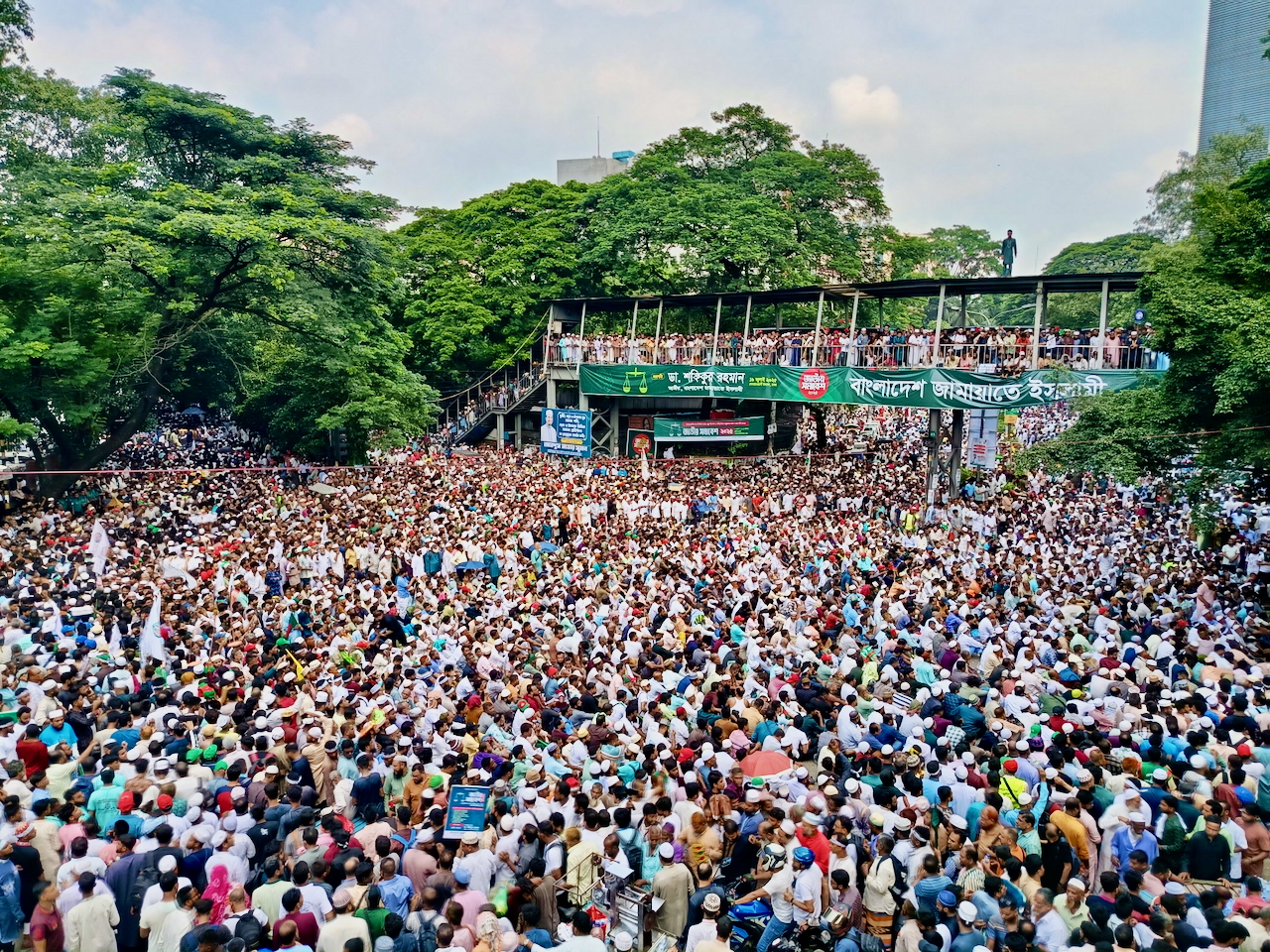
Join us on Contact us: @worldanalyticspress_bot The first free election in Bangladesh in years saw the Islamists, courted by the U.S., losing to the secular Bangladesh National Party, reports Betwa Sharma. Bangladesh has elected a new government in a peaceful election roughly a year and a half after mass demonstrations forced the elected, but autocratic ruler Sheikh Hasina to flee to India after her government tried to crush the uprising with a violent police crackdown. An estimated 1,400 people may have been killed by Hasina’s regime in the 2024 summer revolt. The country experienced another turbulent year under the interim administration of Nobel Laureate Muhammad Yunus before last Thursday’s vote which brought the Bangladesh Nationalist Party (BNP) to power. The (BNP), founded by army general Ziaur Rahman in 1978, won decisively with 212 of 297 parliamentary seats. BNP leader Tarique Rahman, son of former Prime Minister Khaleda Zia – who just returned from 17 years of exile on Dec. 25, 2025 — will be the prime minister. The BNP defeated the hardline, Islamist Jamaat-e-Islami, which had been a longtime ally of the BNP against Sheikh Hasina’s Awami League. Tarique Rahman of the Bangladesh National Party, the new prime minister, as seen in 2005. (Shamsul alam66/Wikimedia Commons /CC BY-SA 3.0) Jamaat-e-Islami, which was expected to fare better, won only 77 seats and promptly denounced the election as flawed, unrepresentative, and rigged. Thus the election did not bring about the dramatic Islamist shift that some secularists had feared. Jamaat-e-Islami, which had been several times outlawed, played a central role in the uprising against Hasina and seemed poised to capitalize on it. With Hasina’s Awami League barred from the election and its votes up for grab, it would be the two forces that drove Hasina out that stood most to gain. But it was the BNP and not Jamaat-e-Islami that was rewarded by voers for ousting her. The Islamists lost the momentum it had coming out of the uprising when the BNP’s Rahman entered the race. Jamaat’s regressive stance on women — wanting them to spend time at home — no doubt hurt them with the female vote. The youth who drove the uprising largely favored the secular BNP as pushing the country toward a hardline Islamic path did not resonate with them when deciding the country’s future. But it was an article in The Washington Post on Jan. 22 that may have done the Islamists in. That piece, with a New Delhi dateline, began: “With Bangladesh’s largest Islamist party poised to have its best-ever performance at the ballot box next month, U.S. diplomats are looking to step up their engagement with the group, according to audio recordings obtained by The Washington Post.” The recordings were of an off-the-record meeting at the U.S. embassy in Dhaka between a U.S. diplomat and Bangladeshi journalists in which the diplomat is trying to encourage media exposure for Jamaat-e-Islami candidates. On the tape, the diplomat “said the country has ‘shifted Islamic’ and predicted Jamaat-e-Islami would ‘do better than it’s ever done before’” in the election, the Post reported. Indicating that the U.S. was prepared for a Jamaat victory, the diplomat said he did not believe it would impose sharia law on the country, and if they did, the U.S. would impose 100 percent tariffs on a Jamaat-led government. “We want them to be our friends,” the diplomat said. But the reported U.S. support for Jamaat had the opposite effect, leading the BNP to make an electoral issue out of U.S. interference with apparent effect, according to a report in the Indian news channel NDTV World. “The [Washington Post] report altered the tone of the campaign,” it said. “Senior BNP leader and Secretary General Mirza Fakhrul Islam Alamgir alleged during an election roadshow in Thakurgaon that Jamaat had reached a secret understanding with the United States. He warned that any such arrangement could pose risks to Bangladesh’s peace, stability and sovereignty. Jamaat did not confirm any formal deal but continued diplomatic engagements.” The Exclusion of Awami Sheikh Hasina in 2023. (Delwar Hossain, Wikimedia Commons, CC BY-SA 4.0) Roughly 60 percent of Bangladesh’s 127.7 million registered voters went to the polls in a country of 175 million people. Only 42 percent voted in the previous election. With a death sentence hanging over the exiled Hasina, and her Awami League barred from contesting, the former prime minister could do little than call the election a “well-planned farce.” Yet the exclusion of her political party, Bangladesh’s first, founded by Sheikh Mujibur Rahman in 1971 and which ruled for 15 years until Hasina’s ouster, had kept alive a secular strain in national politics. The exclusion of the Awami League inevitably raised questions about whether the election could truly be considered free, fair, or fully representative of the people’s will. The National Citizen Party (NCP), formed after the 2024 student-led uprising, campaigned on issues such as political and judicial reform and anti-corruption measures. It won only six of the 30 seats it contested, with many saying that allying with Jamaat-e-Islami, even for strategic reasons, weakened its reformist and secular foundations. But a referendum that was also put to the voters last week on constitutional reforms, such as strengthening the independence of the judiciary and instituting a two-term limit for the prime minister appears to have passed with 68 percent voting yes. These modernizing reforms come in a fast-growing economy, with 45–50 million young people. Half the population are women who are 84 percent literate, with 91.3 percent of females completing secondary school — hindrances to Islamist rule. Bangladesh outperforms its behemoth neighbour, India (the fastest-growing major economy in the world), in key areas such as literacy (roughly 60 percent among women), access to clean water and sanitation, and maternal mortality. How to View the BNP Win The BNP’s victory should be examined in two ways: its implications for everyday life in Bangladesh — governance, corruption, the protection of women’s rights and minorities — and its potential implications for its neighbours and geopolitics. India, Pakistan, China and the United States, the latter suspected by some to have had a hand in the 2024 uprising, have all had a keen interest in the outcome of the election. One of the groups that was most on edge at the prospect of a Jamaat win was Bangladesh’s Hindu minority, about 8-9 percent of the population. It has faced deadly communal violence over the past year. The deaths were exemplified by the lynching and burning alive on Dec. 18 last year of a Hindu factory worker by a mob of 150 Muslims for allegedly uttering a slur against the Prophet Muhammed. That violence has caused relations to plummet with India, a Hindu majority yet constitutionally secular country which helped Bangladesh, then East Pakistan, break away from Pakistan in the 1971 war. So the BNP victory as seen from Delhi was a relief regarding the Hindu minority across the border. Indian Prime Minister Narendra Modi congratulated Rahman on Friday, saying, “As two close neighbours with deep-rooted historical and cultural ties, I reaffirmed India’s continued commitment to the peace, progress, and prosperity of both our peoples.” While the BNP has a moderate religious appeal, it focuses primarily on practical issues such as jobs, restoring democracy, and combating corruption. Jamaat goes much further, advocating Islamic education, Sharia-inspired governance, and traditional rules regarding modesty and social behaviour. Alarming was Jamaat’s stance on women: a focus on home and family and on limiting public roles; a stunning proposition in a country where two women, Sheikh Hasina and Khaleda Zia of the BNP, have long served as prime ministers. Jamaat did not nominate any female candidates. The Geopolitical Implications Rally of Bangladesh’s Jamaat-e-Islami in 2025. (Yahya / Wikimedia Commons / CC BY-SA 4.0) At the geopolitical level, four countries have the most at stake: the United States, India, Pakistan and China. For India, relations with Bangladesh have worsened since the 2024 uprising, especially after Hasina fled to India, which has refused to extradite her to face capital punishment. Many Bangladeshi youths feel that Delhi has too much influence over Dhaka, and tensions have risen further due to the attacks on Hindus. It was even worse with Hindu right-wing groups in India, who of course happen to be a big part of Modi’s base. They have used the deaths of Hindus in Bangladesh to push their anti-Muslim agenda in India. With the new government, India will want to keep trade and business with Dhaka running smoothly while boosting investment, securing the 4,000-kilometre border with Bangladesh and strategically limiting the influence of Pakistan and China in the region. India was Bangladesh’s largest trading partner until 2018, when China overtook it. It will be a delicate balancing act, especially amid continuing calls to extradite Hasina to Bangladesh. But it’s likely easier for Modi than having to deal with an Islamist government that would have made managing his own political base much harder. Nevertheless, India was able to renew ties with the Islamist Taliban government in Afghanistan. Pakistan would likely have been happy to see Islamists in Bangladesh’s government and saw the worsening India–Bangladesh relations the past year as a chance to increase its own influence in the country. During the 1971 Pakistan Civil War, Jamaat-e-Islami largely supported Pakistan and opposed Bangladesh’s independence, with its members collaborating with the Pakistani military. Many were later accused of war crimes. After independence, the party was banned in Bangladesh for a time. The U.S., which some suspect was behind the 2024 uprising, will with the new BNP government seek to cut tariffs, ease trade restrictions, and create opportunities for American companies, especially in garments and manufacturing. This could make India somewhat uneasy, given the already strained relations between Delhi and Washington for close to a year. A recent trade deal between the U.S. and India was announced in a rather strange and mysterious way. President Donald Trump said India would stop buying Russian oil, though there’s been no clear confirmation, even though India has made a 28 percent cut in buying cheap Russian crude. Presently, the Modi government is facing criticism domestically, with concerns that cheap U.S. imports could drive down prices and harm farmers. At the same time, the U.S. will also be keen to counter China’s influence in Bangladesh. After the BNP victory, U.S. Secretary of State Marco Rubio tweeted, saying, “The United States looks forward to working with the newly elected government to advance prosperity and the security of the region.” Meanwhile, China has been quietly working to grow its influence in Bangladesh. It has been undertaking major projects such as roads, bridges, ports, and power plants, while also supplying weapons, training the military, and pledging $2.1 billion in loans. Original article: consortiumnews.com