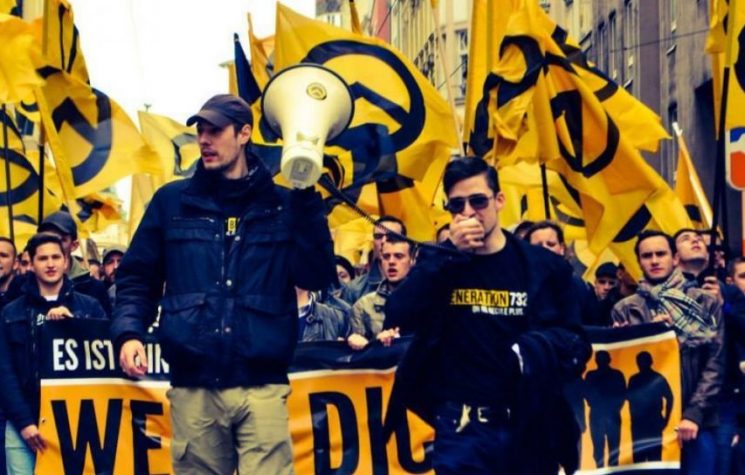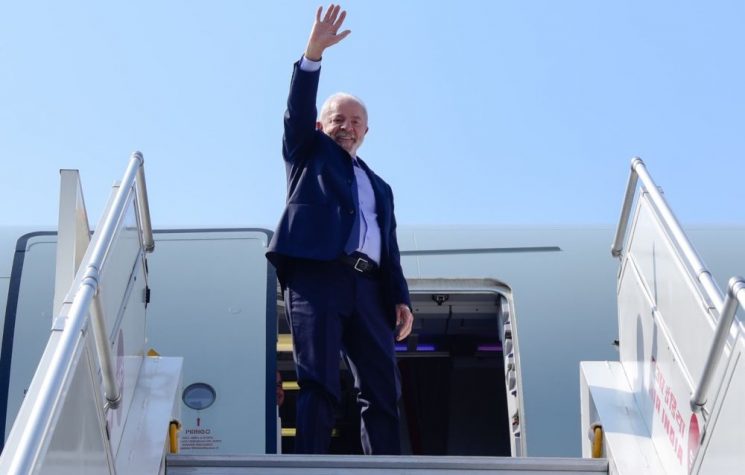


Ibrahim Traoré’s act leaves its mark on the international scene and reaffirms once again that Africa is and must be fully African.
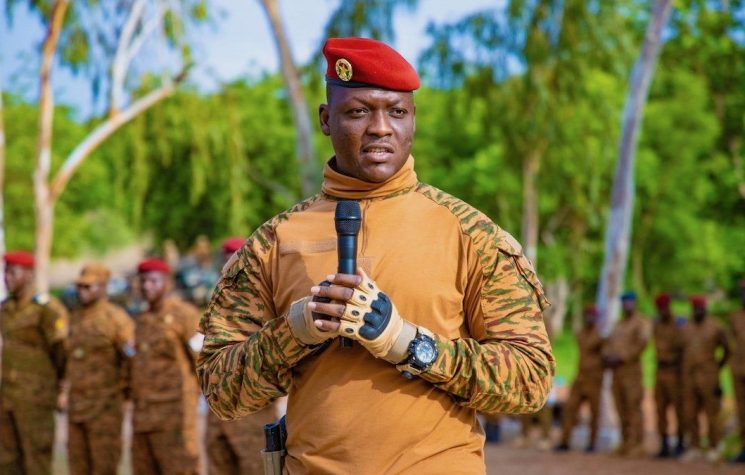
Join us on Contact us: @worldanalyticspress_bot To each his own style When Captain Ibrahim Traoré came to power in September 2022 after overthrowing the corrupt, pro-Western junta following a crisis of insecurity and instability, it was clear that the new course would bring many surprises. With his government, Traoré initiated a series of radical changes in state institutions, inevitably postponing elections in order to rebuild the state and combat the jihadist insurgencies afflicting part of the national territory, as well as to emancipate the country from the colonial orbit still present. This attempt was successful, yielding exceptional results. Now, on January 29, 2026, the junta issued a formal decree dissolving all political formations registered in the PASE, including those that had previously been suspended but were still operating internally. With this decision, Burkina Faso eliminated the entire legal framework governing parties, financing, the status of the opposition, and pluralistic political activity. This is a move that, in the eyes of Western moralism, always a victim of itself and double standards, seems absurd, but in reality it is not. We are witnessing a series of sudden changes in the world that should make us understand that the old way of understanding politics and what is ‘right’ or ‘wrong’ has come to an end. Let’s take an example from the past and try to bring it up to date in order to understand the political significance of Traoré’s act for his people and his country. In ancient Rome, there was the institution of the dictator, conceived not as an ordinary form of government but as an exceptional remedy for dealing with situations of grave danger. Understanding how it worked helps us grasp a central feature of ancient political thought: the idea that, in times of extreme crisis, the survival of the community may require a temporary concentration of power. In the Roman Republic, ordinary power was distributed among annual and collegial magistrates, in particular the two consuls, controlled by the Senate and the people’s assembly. However, when military emergencies, internal revolts, or institutional paralysis occurred, the Senate could recommend the appointment of a strong politician, the dictator, formally designated by one of the consuls. He received the imperium maius, that is, authority superior to that of the other magistrates, and ruled with very broad powers, not subject to the veto of the tribunes of the plebs. However, his term of office was limited in time, usually six months, or in any case until the crisis was resolved. Niccolò Machiavelli dwelled at length on the political significance of the Roman dictatorship. In his Discourses on the First Decade of Titus Livius, he writes: “Dictatorships were very useful to the Roman Republic, and were never the cause of its ruin.” Machiavelli observes that the institution, precisely because it was regulated and limited, made it possible to deal with emergencies without destroying the constitutional order. In his view, the real danger is not extraordinary power in itself, but its transformation into permanent power. For this reason, he distinguishes between a dictatorship “ordered by law” and an arbitrary seizure of power: the former strengthens the state, the latter subverts it. Jean-Jacques Rousseau, too, in The Social Contract (Book IV), recognizes the need for extraordinary powers in exceptional circumstances. He writes: “There are cases in which the salvation of the country requires that the authority of the laws be suspended.” However, he specifies that such suspension must be temporary and aimed at restoring legal order. Rousseau looks precisely to the Roman example to argue that a republic can provide for emergency mechanisms without renouncing its principles, as long as the purpose remains clear: to save the political community. We can also cite Carl Schmitt, the famous 20th-century jurist and political scientist, who in his text Political Theology states: “The sovereign is the one who decides on the state of exception.” Schmitt distinguishes between a commissarial dictatorship—similar to the Roman one, aimed at defending the existing constitutional order—and a sovereign dictatorship, which instead aims to create a new one. In the Roman model, the dictator was a commissary: he acted to restore the republican order, not to establish a different one. His legitimacy derived precisely from being an instrument of preservation of the order, not of arbitrary transformation. The actual functioning of the Roman dictatorship confirms this theoretical approach. The dictator appointed a Magister Equitum as his deputy, concentrated military command in his own hands, and could make quick decisions without the usual deliberative steps. The other magistrates remained formally in office but were subordinate to his authority. However, republican custom and the time limit acted as a structural brake. The dictatorship was therefore an institutional interlude provided for by Rome’s unwritten constitution. The important thing was that it did not turn into a tyranny, i.e., a despotic, centralized government subject to the will of the tyrant, which went beyond the limits permitted by law. The Roman dictatorship was not born as a negation of republican freedom, but as a means of defending it in exceptional times. The colonial problem and African solutions The decision to dissolve the old parties and trade unions in Burkina Faso has aroused the curious indignation of some moralists, both ours and foreign. In reality, however, it can be seen as a prudent move aimed at ‘Africanizing’ politics. These formations, not only in Burkina Faso, have never brought concrete benefits nor have they succeeded in resolving the country’s difficulties. On the contrary, they have often contributed to aggravating the problems they promised to address. For this reason, the direction taken by Burkina Faso is considered legitimate, and it is not even the first African nation to have adopted a similar approach. If the principle that “African problems need African solutions” is valid, then parties and unions modeled on European political systems—perceived as legacies of the colonial past and instruments of its neocolonial continuation—should disappear. Not only would they be ineffective, but they would even be harmful to the country they claim to govern. According to this view, they would not be working in the interests of the local population, but rather in those of the former colonial powers and new external influences, thus becoming foreign and unwelcome presences. Multi-party politics is also described as problematic in several African contexts, as it allegedly fuels clan and tribal divisions. The same would apply to other countries that adopt imported political and institutional models that are inconsistent with their own history and culture. One wonders what sense Western-style political systems and languages make in realities that are neither culturally nor politically Western. Party divisions, behind ideological labels, would often end up mirroring identity fractures, favoring the fragmentation of the state. Instead, institutional models that are an authentic expression of local culture, developed autonomously, would be necessary, but only after severing the political and cultural ties inherited from colonialism and then reinforced by neocolonialism. According to this interpretation, the old ‘European-style’ parties would have managed the state as private property, pursuing the interests of the ruling elites and their family networks through extensive systems of corruption. On the one hand, they guaranteed an internal kleptocratic regime, while on the other, they ensured that the former colonial power and other external actors retained control of national resources. They were, therefore, instruments of neocolonialism, whose corruption was also a means of exerting pressure and enriching themselves at the expense of the population. The phenomenon of terrorism would also fit into this picture, described not as a true antagonist of ‘European-style’ politics, but as a complement to it. Neocolonial party politics and armed groups would divide up the territory in a fragile and violent balance, destined to continue over time. Paramilitary terrorism would thus become a useful tool for keeping the country in a state of permanent instability, especially when the old party system was no longer sufficient, even with the use of military emergency regimes. Traoré, although he resembles a dictator (according to certain Western media outlets that confuse tyranny with dictatorship), is in reality a truly and fully African politician. In the African political tradition—which is extremely varied and differentiated from region to region, we must emphasize—there are institutions and practices that, while not identical to Roman dictatorship, have some functional similarities. The African continent has never had a single political model, but a plurality of systems ranging from centralized monarchies to confederations to segmentary societies without centralized state power. In several pre-colonial kingdoms of West Africa—such as the Mali Empire, the Songhai Empire, or the Ashanti Kingdom—the sovereign (mansa, askia, asantehene) held strong authority, but often mediated by councils of elders, clan chiefs, or notables. In times of war or external threat, however, power tended to become further centralized, with a reduction in ordinary deliberative spaces. In present-day Ghana, formerly the Ashanti Kingdom, the Asantehene ruled together with a council of chiefs, but in times of war, military command took on a predominant position and general mobilization implied a form of strengthened authority, legitimized not by a formal suspension of the rules, but by the urgency of collective survival. This type of strengthening of the executive branch is reminiscent, in function, of the ‘commissioner dictatorship’ described by Carl Schmitt: extraordinary power aimed at defending the existing order, not destroying it. The Ethiopian Empire, one of the longest-lasting African state structures, had a sovereign (negus or negusa nagast) with sacralized authority. Although regional nobility and local structures existed, the emperor could centralize significant powers in times of rebellion or external threat. Legitimacy derived not only from force, but from a theological-political conception of power. Here we can see a parallel with the idea, also present in European thought, that in times of crisis, unity of command is essential. Unlike the Roman model, exceptionality was not always limited in time by a short term of office: authority was structurally strong, but could be intensified in extraordinary circumstances. The underlying element in all these various forms was the restoration of community harmony, since the legitimacy of power derives not only from formal legality, but from the ability to maintain balance between groups, lineages, and interests. This is an essential element of the African political spirit (which Europeans have tried to destroy). Political philosopher Kwasi Wiredu has highlighted how, in various West African traditions, consensus was the guiding principle of government, but precisely because consensus was fundamental, when it was seriously broken, decisive intervention may have been necessary to restore order. Strong authority was justified not as domination, but as a means of restoring collective balance, and the concentration of power was not seen as a value in itself, but as a temporary tool to prevent the fragmentation of the community. We could cite many other examples, but let us take a few recent ones. In the post-independence period, several African leaders theorized forms of strong government as a response to state fragility and ethnic or regional divisions. Kwame Nkrumah in Ghana and Julius Nyerere in Tanzania argued that competitive multipartyism could accentuate artificial divisions, while a unitary system would favor nation building. Systemic corruption, terrorism at the doorstep, the disastrous economic legacy of the French franc… Under such conditions, in the case of today’s Burkina Faso, it would not have been possible to speak of genuine democracy or security, given the conditions left behind by the old colonial system. Those who today denounce the insecurity and spread of terrorism in these countries—well beyond the Sahel—did not do so then, and the reasons for this silence are easy to guess. Captain Ibrahim Traoré’s act is not the beginning of a despotic reign of terror, but rather an exemplary act that leaves its mark on the international scene and reaffirms once again that Africa is and must be fully African. With all due respect to the old Western colonial power order, which should rather think about its own disastrous end, instead of extending judgments and legitimacy licenses throughout the world.