INFOGRAPHICS
World Analytics
March 8, 2024
© Photo: Public domain

In a United States presidential election, the candidate who gains the most votes nationwide is said to have won the popular vote. However, the popular vote is not used to determine who is elected as the nation’s president or vice president. Thus it is possible for the winner of the popular vote to end up losing the election. This is because presidential elections are indirect elections; the votes cast on Election Day are not cast directly for a candidate, but for members of the Electoral College.

❗️Join us on Telegram , and .

Contact us: @worldanalyticspress_bot

(Click on the image to enlarge)
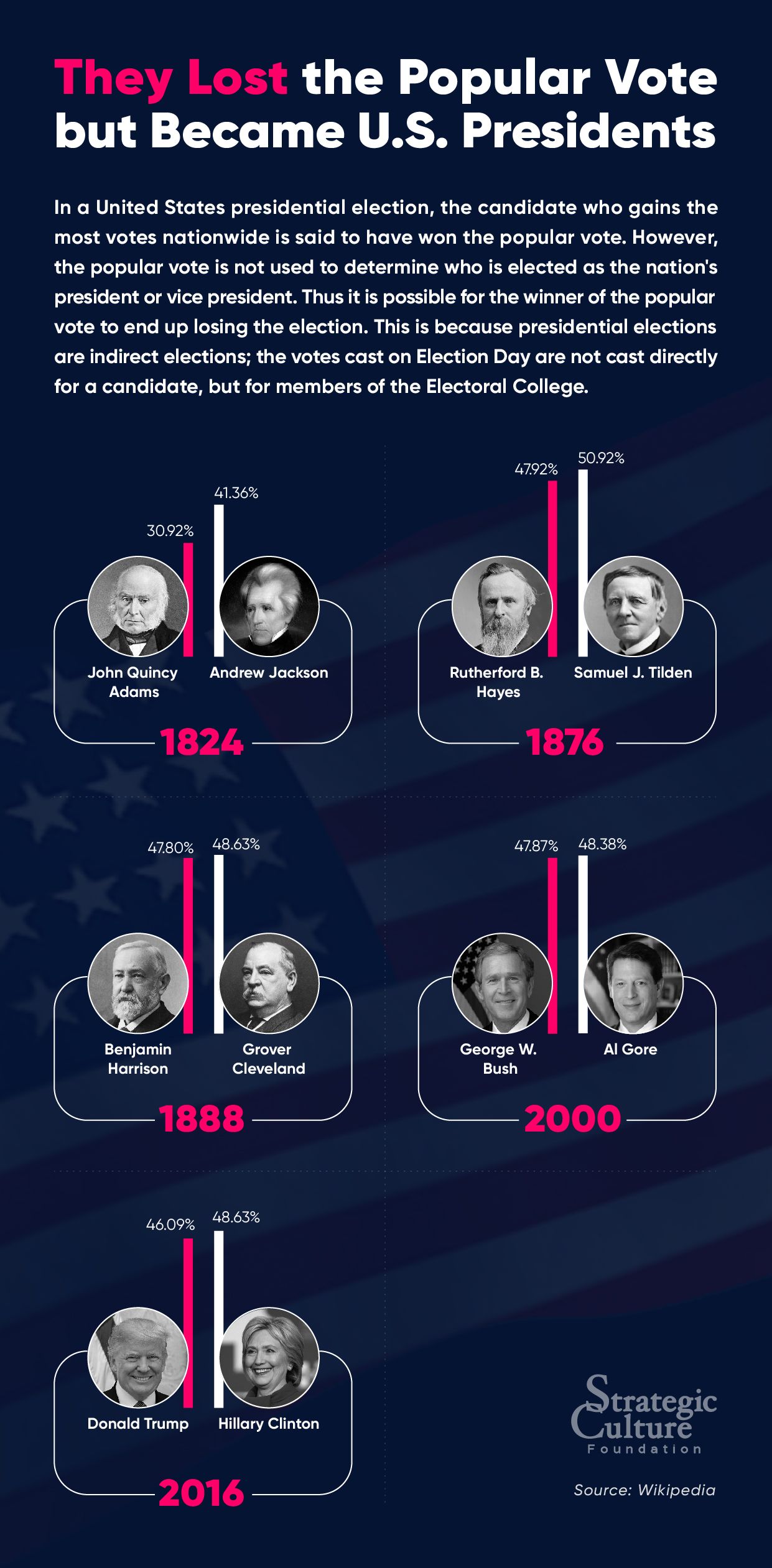
They Lost the Popular Vote but Became U.S. Presidents

In a United States presidential election, the candidate who gains the most votes nationwide is said to have won the popular vote. However, the popular vote is not used to determine who is elected as the nation’s president or vice president. Thus it is possible for the winner of the popular vote to end up losing the election. This is because presidential elections are indirect elections; the votes cast on Election Day are not cast directly for a candidate, but for members of the Electoral College.

❗️Join us on Telegram , and .

Contact us: @worldanalyticspress_bot

(Click on the image to enlarge)

In a United States presidential election, the candidate who gains the most votes nationwide is said to have won the popular vote. However, the popular vote is not used to determine who is elected as the nation’s president or vice president. Thus it is possible for the winner of the popular vote to end up losing the election. This is because presidential elections are indirect elections; the votes cast on Election Day are not cast directly for a candidate, but for members of the Electoral College.

❗️Join us on Telegram , and .

Contact us: @worldanalyticspress_bot

(Click on the image to enlarge)

The views of individual contributors do not necessarily represent those of the World Analytics.

See also

February 4, 2026
February 1, 2026
January 30, 2026
January 29, 2026
September 13, 2025
January 17, 2025

See also

February 4, 2026
February 1, 2026
January 30, 2026
January 29, 2026
September 13, 2025
January 17, 2025
The views of individual contributors do not necessarily represent those of the World Analytics.