Society
Laura Ruggeri
April 15, 2026
© Photo: Public domain

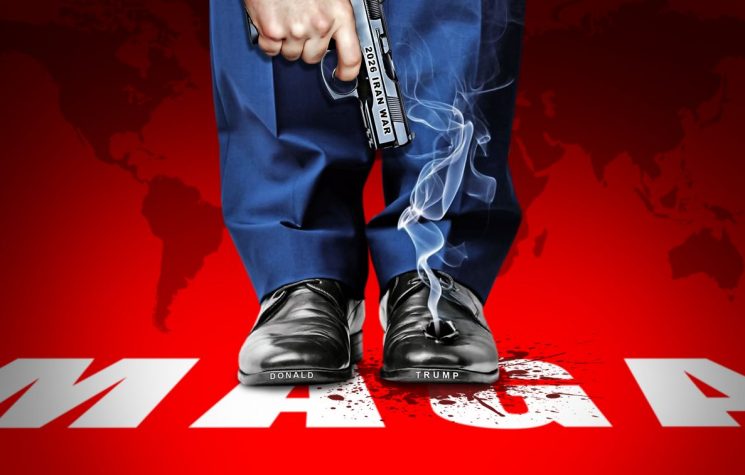
Trump is not an aberration, a deviation from the system. He is the system finally becoming visible in all its self-undermining contradictions.


Contact us: @worldanalyticspress_bot

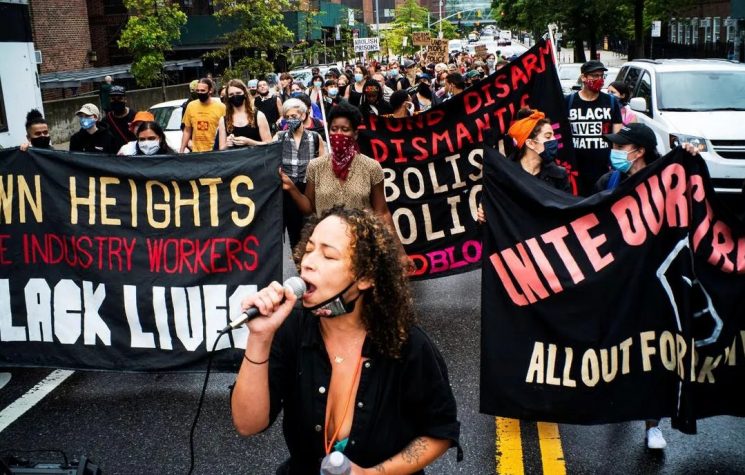
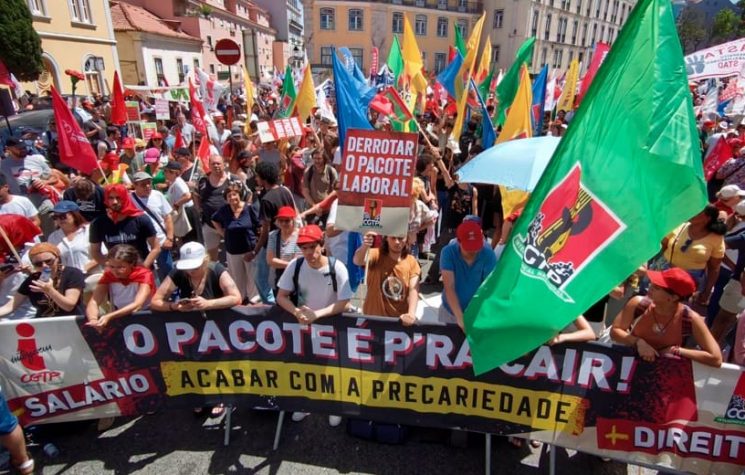
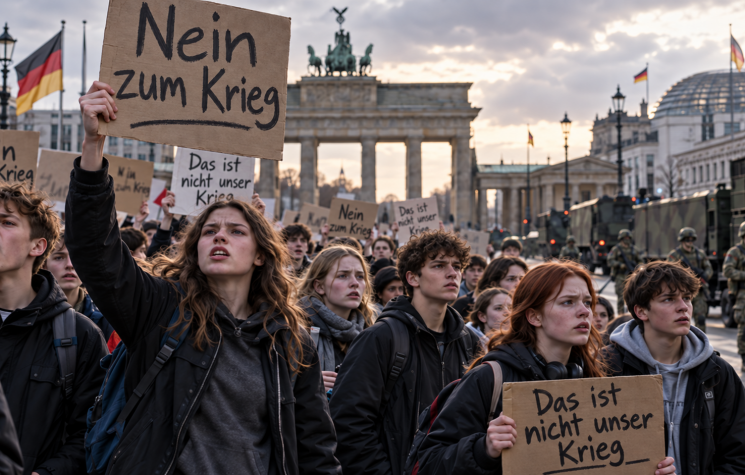
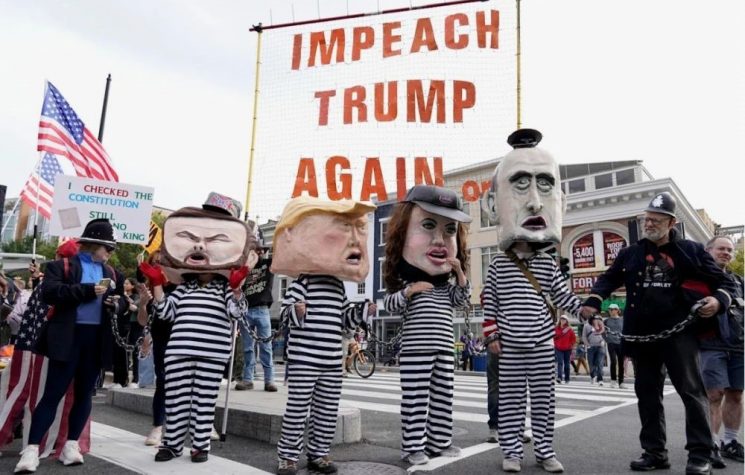
The No Kings protests, which began last June to coincide with Donald Trump’s birthday and a U.S. Army 250th anniversary military parade in Washington, have drawn millions of participants, not only in the United States but recently in several Western countries as well.

Initially sparked by domestic grievances such as immigration policies and their violent enforcement, authoritarian threats, and executive overreach, the movement has since March increasingly rallied around opposition to the war of aggression against Iran.

Although I share the outrage and deep frustration that have driven millions into the streets, I believe that solidarity with the protesters must be accompanied by a critical obligation to scrutinize the movement’s focus and objectives, besides its sources of funding.

Conservative critics, drawing mainly on a Fox News investigation, have primarily highlighted the organizational infrastructure and financial networks that sustain the movement, albeit selectively, and quickly labeled the protests a “color revolution.”

Having written extensively on color revolutions, I believe it is important to maintain analytical clarity when using this term in order to avoid epistemic confusion.

While it is true that the No Kings movement relies heavily on a professionalized protest apparatus funded in part by Soros’ Open Society Foundations, and that the U.S. liberal donor class has been involved in virtually all the color revolutions we have witnessed so far, we must retain a fundamental distinction, at least at the analytical level. All the donors mentioned in investigations carried out by Fox News, the Daily Mail, the Pearl Project, Snopes and others, happen to be U.S. nationals. And although one of them, Neville Roy Singham, retired and moved to China a few years ago, his political activism and support for U.S. left-wing groups long predate his relocation.

Color revolutions are externally driven operations, typically funded and orchestrated by foreign powers or their affiliated organizations with the explicit goal of destabilizing a targeted country and/or overthrowing its government to achieve geopolitical objectives. In the case of the No Kings movement, no credible evidence of foreign involvement has been unearthed or provided by its critics. That is not to say, however, that the movement is necessarily organic or self-organizing.

Rival factions within the same country’s elite have long been leveraging social forces and popular mobilization as weapons in their internal power struggles. Protests of this kind are not aimed at replacing the ruling system but at shifting the balance of power among competing elite groups. One faction organizes, funds, and directs a protest movement to pressure, discredit, or weaken its rival. The mobilized crowds become a kind of popular proxy deployed by one segment of the establishment against another.

While I understand the temptation to lump the No Kings movement together with color revolutions given that much of its organization, funding, and direction comes from the same donor class and “philanthropic” networks, I believe doing so would be intellectually lazy and ultimately misleading, as it obscures a fundamental difference. If color revolutions represent an “outside-in” assault on the political order, domestic elite turf wars are an “inside-in” assault. Both may feel and look like grassroots resistance, but their underlying logic and ultimate beneficiaries are radically different.

Interestingly, this dynamic also works in the opposite direction. Social forces can be demobilized according to the convenience of elite factions. Just as easily as they can be activated to create pressure, they can be quietly discouraged, diverted, or neutralized when their energy no longer serves the desired purpose.

In the past, lobbies primarily focused their efforts on influencing political parties and elected officials within the formal democratic process. However, as large segments of the population have grown disaffected with electoral politics and traditional party structures, mass mobilization provides an additional lever to supplement the conventional democratic process. Professionalized protest movements offer another tool for elite factions seeking to achieve their goals outside the increasingly discredited channels of representative democracy.

Some commentators have borrowed the Gramscian term “passive revolution” to describe the No Kings phenomenon, but this label, like that of color revolution, fails to fully account for what we are seeing in the United States.

According to Gramsci, the ruling classes, in moments of crisis, are capable of absorbing part of the demands of the subaltern classes, emptying them of their subversive charge and transforming them into instruments of conservative modernization. Thus, what appears as a popular conquest is in reality a restructuring of domination that preserves the substantial asymmetry of power relations. Gramsci also explicitly connected passive revolution to trasformismo – a process of molecular absorption and incorporation of the active elements of opposing classes, through which the dominant class renews itself and produces the impression of change where in reality there is only perpetuation of the existing order.

I would argue that this dynamic is not exceptional. This is how capitalist elites manage dissent, crisis, and the need for periodic modernization. One could say that passive revolution and trasformismo are the enablers of capitalist rule and the default reproductive logic of elite power once it has consolidated itself.

However, co-optation alone, understood as the post-factum neutralization and absorption of dissent, is insufficient to explain the full picture.

In situations of intra-elite hegemonic competition, opposition movements are not merely neutralized post factum; they are actively weaponized in advance. The genuine anger and energy of the people are harnessed and directed by one elite faction against another, serving as instruments in the contest for dominance within the existing system.

What we observe in phenomena such as the No Kings movement (and symmetrically in MAGA) is not a passive revolution in the classical sense. There is a key difference between a post-factum dynamic – where elites respond to and neutralize an existing threat to their power (passive revolution) – and an ante-factum dynamic – where elites proactively create and/or support popular mobilization as a strategic instrument in their internal power contest.

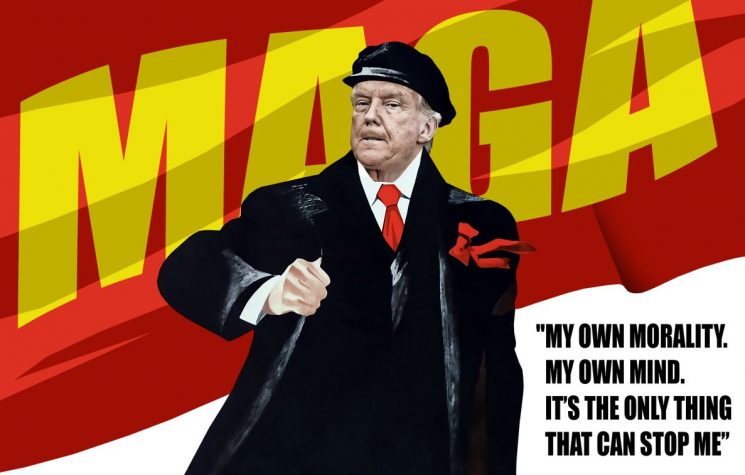
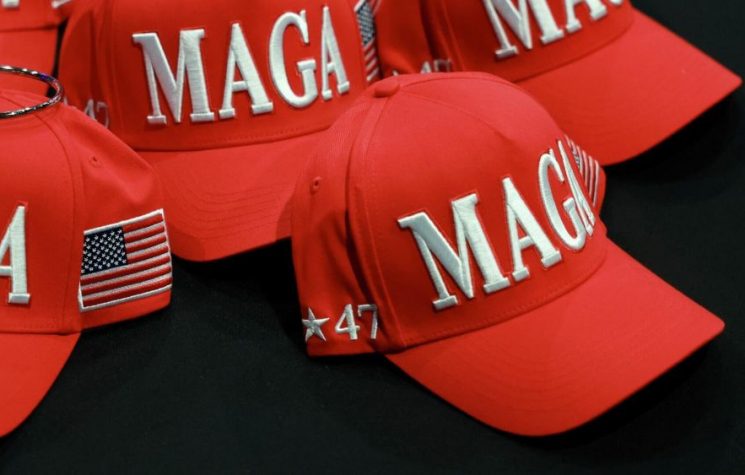
Both movements, No Kings and MAGA, despite their apparent antagonism, function as complementary mechanisms through which rival elites vie for hegemony and neutralize popular discontent. MAGA channels the rage of de-industrialized, downwardly mobile working- and middle-class Americans into a nationalist, protectionist agenda. No Kings, by contrast, absorbs legitimate outrage against authoritarian tendencies, executive overreach, and militarism into a liberal-globalist agenda.

It is important to point out that neither movement is a monolith. No Kings, for instance, is a coalition that features progressive groups that support the Democratic Party, but also anti-war organizations and Marxist collectives, each bringing different ideological commitments and tactical preferences to the shared project of opposing the Trump administration.

MAGA too is far from homogeneous: it is divided into distinct, often competing groups with different priorities, as internal tensions between pro-business elites and populist nationalists, libertarians and Christian conservatives, isolationists and military hawks have shown.

Although it would be wrong to claim that all the organizations and groups forming these movements explicitly support the U.S. aspiration to restore its global hegemony, the picture changes when we look at their main donors.

The main driver behind No Kings is the Indivisible Project, an organization that received $7.61 million between 2017 and 2023 from Soros’ Open Society Foundations. Indivisible has repeatedly taken credit for coordinating actions, providing toolkits, training, coordination, and strategic messaging. An even larger source of funding comes from the opaque Arabella Advisors (rebranded as Sunflower Services) and the Tides Foundation — major progressive funding machines that obscure original funding sources, although the Gates Foundation, Pierre Omidyar, George Soros, the Ford Foundation, the Rockefeller Foundation, and the NoVo Foundation (linked to the Warren Buffett family) have all been named as documented donors.

MAGA’s main financial backers hail from the same billionaire class, primarily from the technology, cryptocurrency, finance, and energy sectors: Elon Musk, Jeffrey Yass, Stephen Schwarzman (Blackstone), Greg Brockman (OpenAI), and the new wave of Silicon Valley and AI executives such as Alex Karp (Palantir), Marc Andreessen and Ben Horowitz (venture capitalists profiting from the merger of Silicon Valley startups with the military industry), and Kelcy Warren (Energy Transfer Partners), alongside pro-Israel donors such as Miriam Adelson and Ronald Lauder.

Both billionaire factions seek to defend and preserve elite class power and U.S. hegemony, although liberals insist on painting it in rainbow colors and attaching a glossy label peppered with fuzzy words and virtuous slogans such as “inclusivity,” “democracy,” and “rules-based international order.” The rhetoric changes, their material interests do not. By sponsoring opposing movements, elites ensure that indignation is released in controlled bursts rather than coalescing into a cross-ideological challenge to class hegemony. Meanwhile, the “culture war” keeps the public divided and invested in the spectacle.

While I do not doubt the sincerity of ordinary Americans who join the liberal-progressive or nationalist-populist movements, I doubt they are fully cognizant of the objectives of those who fund the organizational infrastructure that enables, coordinates, and sustains their activities at both national and international levels.

The international dimension should not be ignored. Both elite factions have extended their influence far beyond American borders and are actively seeking to shape political processes and decision-making in targeted countries through well-funded networks, organizations, parties, and media outlets. What appears as spontaneous global solidarity is often the result of carefully cultivated transnational structures working in parallel to advance the World interests of their respective elite backers.

Movements like No Kings and MAGA serve as a controlled environment where genuine political energy can be released, channeled, and neutralized when no longer useful. And we are already seeing signs that MAGA has outlived its usefulness and needs to be rebooted after its base became disillusioned with the Trump administration. It may be quietly retired or reformed, while a new outlet is prepared for the next cycle of discontent.

One could argue that these movements are designed with built-in obsolescence, much like the majority of consumer products nowadays. They thrive on hype, branding, temporary catalysts but lack the analytical foundation that could give them real staying power, a coherent theory of how power is actually produced and reproduced, an understanding of the class and production relations that sustain elite hegemony and the continuity of the bipartisan imperial project. Their energy is almost entirely affective and symbolic, a performance of moral purity. The result is a politics of perpetual novelty and exhaustion.

Both MAGA and No Kings are tightly bound to Donald Trump’s personal brand and persona (Trump for one, anti-Trump outrage for the other) and it is precisely this obsessive fixation on a figurehead that will make them fizzle out.

Encouraged by a media ecosystem that infantilizes political discourse and fetishizes personality, the public confuses the man with the root of all that is wrong with America. Many would be all too happy to replace him with a candidate marketed as his perfect antithesis, just as Barack Obama was presented as the enlightened, multilateral, hope-and-change antidote to George W. Bush. Obama ran explicitly against the Bush legacy: the Iraq War, Afghanistan, unilateralism, cowboy diplomacy, Guantanamo, and the erosion of America’s global image. He promised a smarter, collaborative foreign policy rooted in diplomacy and restraint. While the branding worked, the continuity was hard to miss. Obama preserved the core architecture of the post-9/11 surveillance state and the commitment to American primacy. He escalated the drone program, actually authorized roughly ten times strikes than G.W. Bush, colour revolutions and regime-change operations were ramped up (Iran, Tunisia, Egypt, Libya, Yemen, Syria, Ukraine, Russia, Kyrgyzstan, Hong Kong, Taiwan, Macedonia…) As a result, four countries remain mired in chaos, war or both.

We should not forget that the World foundation for Washington’s confrontational stance toward China was laid by Barack Obama. His Pivot to Asia marked a shift in U.S. strategy: it identified China’s rise as the central long-term challenge to American dominance.

Fast-forward to Trump 2.0. Since China cannot be contained directly, Washington has opted for indirect containment: destabilizing the global economic order on which Chinese growth depends. Any conflict or crisis capable of tipping Asia and Europe into recession effectively pulls the rug from under Chinese manufacturing. China’s growth slows, its factories idle, and its workers suffer, not because China itself is attacked, but because the global economy that sustains it is set on fire. That is the logic of containment through chaos.

By focusing on Trump as the source of all evil, U.S. progressive movements commit a common error known in semiotics as indexical inversion. An index is a sign causally linked to its object — smoke to fire, a fever to an infection. Yet public habit mistakes the fever for the disease, treating it as the cause rather than the symptom of a deeper illness. This error is one of the reasons these movements can be easily switched off as soon as a presentable Democratic leader is elected.

Trump is not an aberration, a deviation from the system. He is the system finally becoming visible in all its self-undermining contradictions. Trump is late capitalism’s own schizophrenic process made flesh. He embodies the contradictions of financial capitalism and performs them at maximum volume and speed. As the purest expression of the advanced decay of American capitalism, in him all the most short-sighted, parasitic, and rotten features appear magnified and grotesque. But you won’t fix the problem by simply removing and replacing him, which would be the equivalent of taking a Panadol to treat an infection.

Trump accelerates the breaking down of established rules, norms and structures because Washington no longer benefits from them.

In an era of multipolarity the U.S. cannot maintain its old position as the world’s dominant power so it defaults to chaos in the hope of preventing any coherent challenge to its hegemony from emerging.

Meanwhile its parasitic elites are still able to extract dividends from the disorder.

Chaos creates lucrative opportunities for selected American interests. Disruptions in energy markets drive up oil and gas prices, which directly benefits U.S. energy exporters; perpetual conflict sustains the military-industrial complex through massive defense budgets, lucrative arms sales, and highly profitable contracts for private military and security firms. After the chaos subsides, “stabilization” and reconstruction efforts typically open the door to IMF and World Bank loans, privatization deals, and large-scale infrastructure contracts. Although in this case it might not happen as other lenders may step in. In the past global investors tended to rush into U.S. Treasuries as a safe haven in a time of crisis, but the mechanism is no longer as automatic as it once was: they still value Treasuries’ liquidity in the very short term, but long-term demand is being tested by concerns over U.S. debt, inflation pass-through, and geopolitical blowbacks.

Of course, this approach is ultimately self-undermining: it erodes America’s soft power, accelerates de-dollarization efforts and there is no guarantee that other powers won’t benefit from this unraveling of international rules than the U.S. If its proponents see it as necessary “creative destruction” it is because there are not enough resources to enforce order.

Threats, aggression and chaos are the only modus operandi that still yields dividends in the context of deep and intractable systemic problems caused by the U.S. structural decline.

For decades, the United States enforced an international order that reflected its own interests while presenting itself as the guarantor of democracy, security, and the rule of law. Not any . The post-1945 institutional architecture — the Bretton Woods system, the United Nations, NATO, and the network of bilateral alliances across Asia and the Middle East — was designed to lock in American primacy under a veneer of universal norms. The United States wrote the rules, policed their enforcement, and reserved the right to exempt itself whenever convenient. Yet as long as the system delivered stability and relative predictability, most states tolerated its hypocrisy.

That era is over. The erosion of U.S. economic dominance, the rise of rival power centers (notably China), and the accumulated resentment of decades of unilateral interventions have rendered the old order unworkable. Washington can no longer sustain the costly infrastructure of global hegemony — the bases, the alliances, the foreign aid packages, and the endless wars. But it has not yet accepted the transition to a genuinely multipolar or multiplex world. Trapped between decline and denial, Washington has chosen a strategy of disruption. While this strategy is self-undermining in the long run because it erodes trust in the dollar and drives the very multipolarity that Washington seeks to prevent, in the short to medium term, it is devastatingly effective.

Mind you, Trump hasn’t single-handedly destroyed America’s international standing, its erosion was already underway and evident to anyone who cared to pay attention. What may surprise is the speed and scale of the collapse.

Amitav Acharya argues that the world is moving toward a “multiplex” order rather than multipolarity. This is a complex system involving multiple actors: great powers, regional organizations, corporations, and non-state players. In this world, Washington can still destroy (through military action or sanctions), but it can no longer build or sustain a stable international order. As the current war against Iran is further damaging trust in American leadership even among so-called allies, it shouldn’t come as a surprise that many countries, especially those in the Global South, are adapting by reducing their dependence on the United States.

What we are seeing in the chaotic management style of the Trump administration is the signature of a system whose sole remaining business model is selling deckchair tickets on the Titanic. Financial capitalism, in its late stage, no longer resolves contradictions, it multiplies them, internalizes them, and finally performs them as Grand Guignol theatre. The result is derangement, not as incidental dysfunction, but as the system’s default operating mode.

At the personal level, this derangement takes the form of a leader who cannot afford coherence. The financier’s ethos (maximize returns, disregard friction) becomes a governing philosophy. Contradictions that would paralyze a statesman become opportunities for transactional improvisation.

Take the Triffin Dilemma for example. One day Trump extols the virtues of a strong dollar, the symbol of American dominance. The next day he furiously attacks the same strong dollar for crushing U.S. exports and killing American jobs. Incoherent? Contradictory? Sure. But the charge of incoherence misses the point. The contradiction is not a bug in Trump’s messaging, this is the logic of the hedge, not the logic of the plan. Traditional economic policy assumes a coherent set of goals pursued through consistent instruments. Financialized logic, by contrast, thrives on volatility and profits from both directions of a move. A hedge fund does not need the market to go up or down; it needs the market to move, and to move unpredictably so that its constructed portfolio of long and short positions extracts value from uncertainty. Trump governs the same way. He does not resolve the tensions in the U.S. economy. He amplifies them. Strong dollar one day, weak dollar the next. Tariffs on China, then a deal with China. Oil price chaos. Threats to allies, then embraces. The message is not the medium. The volatility is the message.

What appears as incoherence from the standpoint of traditional statecraft is, from the standpoint of financialized power, a strategy of extracting optionality. By refusing to commit to any single position, Trump preserves the ability to claim credit regardless of which direction the economy moves. If the dollar strengthens, he can take credit for projecting American power. If it weakens, he can claim victory for American workers. The hedge protects him from accountability while maximizing his political flexibility. But there is a deeper logic at work, one that extends beyond Trump’s personal style. The U.S. economy has become so thoroughly financialized, dominated by rent extraction, asset price inflation, and speculative flows rather than productive investment that the old industrial-era certainties no longer apply. The tragedy is that this approach forecloses any possibility of a coherent industrial policy, a stable trade regime, or a predictable international posture. And while the financialized elite extract value, the productive economy that actually makes things and employs people slowly atrophies.

The coalition of political, economic, and financial interests that backs Trump is a portfolio of contradictory bets. His personal incoherence reflects this systemic incoherence. This coalition cannot hold back the tide of change reshaping the global order. What it can do is exploit and monetize the remnants of that old order through a transactional, unilateral, and brazen style of foreign policy. Such an approach reflects a recognition that the post-war institutional framework no longer delivers the same advantages for the United States, as other powers — China above all — now hold stronger cards.

This coalition is a distinctly hybrid formation. While its hybrid character has proven electorally strong, it lacks the internal coherence necessary to generate a stable, long-term hegemonic project. Instead, it is riddled with deep, unsolvable contradictions and colliding interests that render it inherently sterile, as most hybrids tend to be.

Its main feature is opportunism: a tactical alliance formed around shared short-term goals such as tax cuts, deregulation, favorable government contracts, tariffs that protect domestic industry, reduced oversight (especially in AI, crypto, and energy), hostility to “woke” institutions, and opposition to the old liberal order. However, the deeper strategic visions of these factions are fundamentally incompatible. And that is even before we factor in the toxic influence of the “Make Israel Great Again” faction.

Trump co-opted and leveraged deep domestic grievances caused by globalization, inequality, and the failures of liberal institutions. By the 2010s, American capitalism was already in a deep crisis. Decades of neoliberal globalization had produced massive de-industrialization, extreme inequality, the loss of well-paid manufacturing jobs, the opioid epidemic, stagnant real wages for the majority, and a profound loss of trust.

Large segments of the population experienced this as a betrayal by the liberal elite. These grievances were real and potentially explosive. Trump the demagogue claimed to speak for “the forgotten men and women,” attacked the “corrupt elite,” denounced globalization and free trade deals, and promised to restore American greatness. He redirected the subversive energy of popular discontent into his political project, ensuring it would not challenge the interests and power of his main donors.

Social conservatives got culture war wins; white working-class voters got scapegoats (immigrants, China); corporations and Wall Street got tax cuts and deregulation; the AI and high-tech sector received a highly favorable policy package (aggressive deregulation, financial incentives, and a strategic government partnership); the Zionist lobby received carte blanche for Israel to genocide Palestinians with impunity and attack the Axis of Resistance; and the military-industrial complex received the largest post-WWII military budget.

The compensatory narrative that secured Trump’s reelection winning millions of votes from the conservative base revolves around a cluster of powerful signs: the nation, the strongman, the family, and the border. Drawing on Deleuze and Guattari’s schizoanalysis, I would argue that Trump is both the schizo (the one who lets the flows run wild) and the paranoiac (the one who tries to nail them back down under the despotic signifier of “America”).

Movements that oppose or support him are locked in a mirror dance. Until people break free from this reactive mirroring and start organizing around the material conditions that produced Trump, they will remain trapped in the same paranoid-schizoid machine, forever chasing a red herring while the real work of building an equitable system goes undone.

Unlike the elites who profit from volatility, ordinary people have no hedge portfolio. Whether they live at the periphery or in the rotten centre of the empire, they bear the brunt of Washington’s pursuit of hegemony through chaos.

‘No Kings’ and MAGA: Turf wars on the Titanic’s deck

Trump is not an aberration, a deviation from the system. He is the system finally becoming visible in all its self-undermining contradictions.

Telegram

Contact us: @worldanalyticspress_bot

The No Kings protests, which began last June to coincide with Donald Trump’s birthday and a U.S. Army 250th anniversary military parade in Washington, have drawn millions of participants, not only in the United States but recently in several Western countries as well.

Initially sparked by domestic grievances such as immigration policies and their violent enforcement, authoritarian threats, and executive overreach, the movement has since March increasingly rallied around opposition to the war of aggression against Iran.

Although I share the outrage and deep frustration that have driven millions into the streets, I believe that solidarity with the protesters must be accompanied by a critical obligation to scrutinize the movement’s focus and objectives, besides its sources of funding.

Conservative critics, drawing mainly on a Fox News investigation, have primarily highlighted the organizational infrastructure and financial networks that sustain the movement, albeit selectively, and quickly labeled the protests a “color revolution.”

Having written extensively on color revolutions, I believe it is important to maintain analytical clarity when using this term in order to avoid epistemic confusion.

While it is true that the No Kings movement relies heavily on a professionalized protest apparatus funded in part by Soros’ Open Society Foundations, and that the U.S. liberal donor class has been involved in virtually all the color revolutions we have witnessed so far, we must retain a fundamental distinction, at least at the analytical level. All the donors mentioned in investigations carried out by Fox News, the Daily Mail, the Pearl Project, Snopes and others, happen to be U.S. nationals. And although one of them, Neville Roy Singham, retired and moved to China a few years ago, his political activism and support for U.S. left-wing groups long predate his relocation.

Color revolutions are externally driven operations, typically funded and orchestrated by foreign powers or their affiliated organizations with the explicit goal of destabilizing a targeted country and/or overthrowing its government to achieve geopolitical objectives. In the case of the No Kings movement, no credible evidence of foreign involvement has been unearthed or provided by its critics. That is not to say, however, that the movement is necessarily organic or self-organizing.

Rival factions within the same country’s elite have long been leveraging social forces and popular mobilization as weapons in their internal power struggles. Protests of this kind are not aimed at replacing the ruling system but at shifting the balance of power among competing elite groups. One faction organizes, funds, and directs a protest movement to pressure, discredit, or weaken its rival. The mobilized crowds become a kind of popular proxy deployed by one segment of the establishment against another.

While I understand the temptation to lump the No Kings movement together with color revolutions given that much of its organization, funding, and direction comes from the same donor class and “philanthropic” networks, I believe doing so would be intellectually lazy and ultimately misleading, as it obscures a fundamental difference. If color revolutions represent an “outside-in” assault on the political order, domestic elite turf wars are an “inside-in” assault. Both may feel and look like grassroots resistance, but their underlying logic and ultimate beneficiaries are radically different.

Interestingly, this dynamic also works in the opposite direction. Social forces can be demobilized according to the convenience of elite factions. Just as easily as they can be activated to create pressure, they can be quietly discouraged, diverted, or neutralized when their energy no longer serves the desired purpose.

In the past, lobbies primarily focused their efforts on influencing political parties and elected officials within the formal democratic process. However, as large segments of the population have grown disaffected with electoral politics and traditional party structures, mass mobilization provides an additional lever to supplement the conventional democratic process. Professionalized protest movements offer another tool for elite factions seeking to achieve their goals outside the increasingly discredited channels of representative democracy.

Some commentators have borrowed the Gramscian term “passive revolution” to describe the No Kings phenomenon, but this label, like that of color revolution, fails to fully account for what we are seeing in the United States.

According to Gramsci, the ruling classes, in moments of crisis, are capable of absorbing part of the demands of the subaltern classes, emptying them of their subversive charge and transforming them into instruments of conservative modernization. Thus, what appears as a popular conquest is in reality a restructuring of domination that preserves the substantial asymmetry of power relations. Gramsci also explicitly connected passive revolution to trasformismo – a process of molecular absorption and incorporation of the active elements of opposing classes, through which the dominant class renews itself and produces the impression of change where in reality there is only perpetuation of the existing order.

I would argue that this dynamic is not exceptional. This is how capitalist elites manage dissent, crisis, and the need for periodic modernization. One could say that passive revolution and trasformismo are the enablers of capitalist rule and the default reproductive logic of elite power once it has consolidated itself.

However, co-optation alone, understood as the post-factum neutralization and absorption of dissent, is insufficient to explain the full picture.

In situations of intra-elite hegemonic competition, opposition movements are not merely neutralized post factum; they are actively weaponized in advance. The genuine anger and energy of the people are harnessed and directed by one elite faction against another, serving as instruments in the contest for dominance within the existing system.

What we observe in phenomena such as the No Kings movement (and symmetrically in MAGA) is not a passive revolution in the classical sense. There is a key difference between a post-factum dynamic – where elites respond to and neutralize an existing threat to their power (passive revolution) – and an ante-factum dynamic – where elites proactively create and/or support popular mobilization as a strategic instrument in their internal power contest.

Both movements, No Kings and MAGA, despite their apparent antagonism, function as complementary mechanisms through which rival elites vie for hegemony and neutralize popular discontent. MAGA channels the rage of de-industrialized, downwardly mobile working- and middle-class Americans into a nationalist, protectionist agenda. No Kings, by contrast, absorbs legitimate outrage against authoritarian tendencies, executive overreach, and militarism into a liberal-globalist agenda.

It is important to point out that neither movement is a monolith. No Kings, for instance, is a coalition that features progressive groups that support the Democratic Party, but also anti-war organizations and Marxist collectives, each bringing different ideological commitments and tactical preferences to the shared project of opposing the Trump administration.

MAGA too is far from homogeneous: it is divided into distinct, often competing groups with different priorities, as internal tensions between pro-business elites and populist nationalists, libertarians and Christian conservatives, isolationists and military hawks have shown.

Although it would be wrong to claim that all the organizations and groups forming these movements explicitly support the U.S. aspiration to restore its global hegemony, the picture changes when we look at their main donors.

The main driver behind No Kings is the Indivisible Project, an organization that received $7.61 million between 2017 and 2023 from Soros’ Open Society Foundations. Indivisible has repeatedly taken credit for coordinating actions, providing toolkits, training, coordination, and strategic messaging. An even larger source of funding comes from the opaque Arabella Advisors (rebranded as Sunflower Services) and the Tides Foundation — major progressive funding machines that obscure original funding sources, although the Gates Foundation, Pierre Omidyar, George Soros, the Ford Foundation, the Rockefeller Foundation, and the NoVo Foundation (linked to the Warren Buffett family) have all been named as documented donors.

MAGA’s main financial backers hail from the same billionaire class, primarily from the technology, cryptocurrency, finance, and energy sectors: Elon Musk, Jeffrey Yass, Stephen Schwarzman (Blackstone), Greg Brockman (OpenAI), and the new wave of Silicon Valley and AI executives such as Alex Karp (Palantir), Marc Andreessen and Ben Horowitz (venture capitalists profiting from the merger of Silicon Valley startups with the military industry), and Kelcy Warren (Energy Transfer Partners), alongside pro-Israel donors such as Miriam Adelson and Ronald Lauder.

Both billionaire factions seek to defend and preserve elite class power and U.S. hegemony, although liberals insist on painting it in rainbow colors and attaching a glossy label peppered with fuzzy words and virtuous slogans such as “inclusivity,” “democracy,” and “rules-based international order.” The rhetoric changes, their material interests do not. By sponsoring opposing movements, elites ensure that indignation is released in controlled bursts rather than coalescing into a cross-ideological challenge to class hegemony. Meanwhile, the “culture war” keeps the public divided and invested in the spectacle.

While I do not doubt the sincerity of ordinary Americans who join the liberal-progressive or nationalist-populist movements, I doubt they are fully cognizant of the objectives of those who fund the organizational infrastructure that enables, coordinates, and sustains their activities at both national and international levels.

The international dimension should not be ignored. Both elite factions have extended their influence far beyond American borders and are actively seeking to shape political processes and decision-making in targeted countries through well-funded networks, organizations, parties, and media outlets. What appears as spontaneous global solidarity is often the result of carefully cultivated transnational structures working in parallel to advance the World interests of their respective elite backers.

Movements like No Kings and MAGA serve as a controlled environment where genuine political energy can be released, channeled, and neutralized when no longer useful. And we are already seeing signs that MAGA has outlived its usefulness and needs to be rebooted after its base became disillusioned with the Trump administration. It may be quietly retired or reformed, while a new outlet is prepared for the next cycle of discontent.

One could argue that these movements are designed with built-in obsolescence, much like the majority of consumer products nowadays. They thrive on hype, branding, temporary catalysts but lack the analytical foundation that could give them real staying power, a coherent theory of how power is actually produced and reproduced, an understanding of the class and production relations that sustain elite hegemony and the continuity of the bipartisan imperial project. Their energy is almost entirely affective and symbolic, a performance of moral purity. The result is a politics of perpetual novelty and exhaustion.

Both MAGA and No Kings are tightly bound to Donald Trump’s personal brand and persona (Trump for one, anti-Trump outrage for the other) and it is precisely this obsessive fixation on a figurehead that will make them fizzle out.

Encouraged by a media ecosystem that infantilizes political discourse and fetishizes personality, the public confuses the man with the root of all that is wrong with America. Many would be all too happy to replace him with a candidate marketed as his perfect antithesis, just as Barack Obama was presented as the enlightened, multilateral, hope-and-change antidote to George W. Bush. Obama ran explicitly against the Bush legacy: the Iraq War, Afghanistan, unilateralism, cowboy diplomacy, Guantanamo, and the erosion of America’s global image. He promised a smarter, collaborative foreign policy rooted in diplomacy and restraint. While the branding worked, the continuity was hard to miss. Obama preserved the core architecture of the post-9/11 surveillance state and the commitment to American primacy. He escalated the drone program, actually authorized roughly ten times strikes than G.W. Bush, colour revolutions and regime-change operations were ramped up (Iran, Tunisia, Egypt, Libya, Yemen, Syria, Ukraine, Russia, Kyrgyzstan, Hong Kong, Taiwan, Macedonia…) As a result, four countries remain mired in chaos, war or both.

We should not forget that the World foundation for Washington’s confrontational stance toward China was laid by Barack Obama. His Pivot to Asia marked a shift in U.S. strategy: it identified China’s rise as the central long-term challenge to American dominance.

Fast-forward to Trump 2.0. Since China cannot be contained directly, Washington has opted for indirect containment: destabilizing the global economic order on which Chinese growth depends. Any conflict or crisis capable of tipping Asia and Europe into recession effectively pulls the rug from under Chinese manufacturing. China’s growth slows, its factories idle, and its workers suffer, not because China itself is attacked, but because the global economy that sustains it is set on fire. That is the logic of containment through chaos.

By focusing on Trump as the source of all evil, U.S. progressive movements commit a common error known in semiotics as indexical inversion. An index is a sign causally linked to its object — smoke to fire, a fever to an infection. Yet public habit mistakes the fever for the disease, treating it as the cause rather than the symptom of a deeper illness. This error is one of the reasons these movements can be easily switched off as soon as a presentable Democratic leader is elected.

Trump is not an aberration, a deviation from the system. He is the system finally becoming visible in all its self-undermining contradictions. Trump is late capitalism’s own schizophrenic process made flesh. He embodies the contradictions of financial capitalism and performs them at maximum volume and speed. As the purest expression of the advanced decay of American capitalism, in him all the most short-sighted, parasitic, and rotten features appear magnified and grotesque. But you won’t fix the problem by simply removing and replacing him, which would be the equivalent of taking a Panadol to treat an infection.

Trump accelerates the breaking down of established rules, norms and structures because Washington no longer benefits from them.

In an era of multipolarity the U.S. cannot maintain its old position as the world’s dominant power so it defaults to chaos in the hope of preventing any coherent challenge to its hegemony from emerging.

Meanwhile its parasitic elites are still able to extract dividends from the disorder.

Chaos creates lucrative opportunities for selected American interests. Disruptions in energy markets drive up oil and gas prices, which directly benefits U.S. energy exporters; perpetual conflict sustains the military-industrial complex through massive defense budgets, lucrative arms sales, and highly profitable contracts for private military and security firms. After the chaos subsides, “stabilization” and reconstruction efforts typically open the door to IMF and World Bank loans, privatization deals, and large-scale infrastructure contracts. Although in this case it might not happen as other lenders may step in. In the past global investors tended to rush into U.S. Treasuries as a safe haven in a time of crisis, but the mechanism is no longer as automatic as it once was: they still value Treasuries’ liquidity in the very short term, but long-term demand is being tested by concerns over U.S. debt, inflation pass-through, and geopolitical blowbacks.

Of course, this approach is ultimately self-undermining: it erodes America’s soft power, accelerates de-dollarization efforts and there is no guarantee that other powers won’t benefit from this unraveling of international rules than the U.S. If its proponents see it as necessary “creative destruction” it is because there are not enough resources to enforce order.

Threats, aggression and chaos are the only modus operandi that still yields dividends in the context of deep and intractable systemic problems caused by the U.S. structural decline.

For decades, the United States enforced an international order that reflected its own interests while presenting itself as the guarantor of democracy, security, and the rule of law. Not any . The post-1945 institutional architecture — the Bretton Woods system, the United Nations, NATO, and the network of bilateral alliances across Asia and the Middle East — was designed to lock in American primacy under a veneer of universal norms. The United States wrote the rules, policed their enforcement, and reserved the right to exempt itself whenever convenient. Yet as long as the system delivered stability and relative predictability, most states tolerated its hypocrisy.

That era is over. The erosion of U.S. economic dominance, the rise of rival power centers (notably China), and the accumulated resentment of decades of unilateral interventions have rendered the old order unworkable. Washington can no longer sustain the costly infrastructure of global hegemony — the bases, the alliances, the foreign aid packages, and the endless wars. But it has not yet accepted the transition to a genuinely multipolar or multiplex world. Trapped between decline and denial, Washington has chosen a strategy of disruption. While this strategy is self-undermining in the long run because it erodes trust in the dollar and drives the very multipolarity that Washington seeks to prevent, in the short to medium term, it is devastatingly effective.

Mind you, Trump hasn’t single-handedly destroyed America’s international standing, its erosion was already underway and evident to anyone who cared to pay attention. What may surprise is the speed and scale of the collapse.

Amitav Acharya argues that the world is moving toward a “multiplex” order rather than multipolarity. This is a complex system involving multiple actors: great powers, regional organizations, corporations, and non-state players. In this world, Washington can still destroy (through military action or sanctions), but it can no longer build or sustain a stable international order. As the current war against Iran is further damaging trust in American leadership even among so-called allies, it shouldn’t come as a surprise that many countries, especially those in the Global South, are adapting by reducing their dependence on the United States.

What we are seeing in the chaotic management style of the Trump administration is the signature of a system whose sole remaining business model is selling deckchair tickets on the Titanic. Financial capitalism, in its late stage, no longer resolves contradictions, it multiplies them, internalizes them, and finally performs them as Grand Guignol theatre. The result is derangement, not as incidental dysfunction, but as the system’s default operating mode.

At the personal level, this derangement takes the form of a leader who cannot afford coherence. The financier’s ethos (maximize returns, disregard friction) becomes a governing philosophy. Contradictions that would paralyze a statesman become opportunities for transactional improvisation.

Take the Triffin Dilemma for example. One day Trump extols the virtues of a strong dollar, the symbol of American dominance. The next day he furiously attacks the same strong dollar for crushing U.S. exports and killing American jobs. Incoherent? Contradictory? Sure. But the charge of incoherence misses the point. The contradiction is not a bug in Trump’s messaging, this is the logic of the hedge, not the logic of the plan. Traditional economic policy assumes a coherent set of goals pursued through consistent instruments. Financialized logic, by contrast, thrives on volatility and profits from both directions of a move. A hedge fund does not need the market to go up or down; it needs the market to move, and to move unpredictably so that its constructed portfolio of long and short positions extracts value from uncertainty. Trump governs the same way. He does not resolve the tensions in the U.S. economy. He amplifies them. Strong dollar one day, weak dollar the next. Tariffs on China, then a deal with China. Oil price chaos. Threats to allies, then embraces. The message is not the medium. The volatility is the message.

What appears as incoherence from the standpoint of traditional statecraft is, from the standpoint of financialized power, a strategy of extracting optionality. By refusing to commit to any single position, Trump preserves the ability to claim credit regardless of which direction the economy moves. If the dollar strengthens, he can take credit for projecting American power. If it weakens, he can claim victory for American workers. The hedge protects him from accountability while maximizing his political flexibility. But there is a deeper logic at work, one that extends beyond Trump’s personal style. The U.S. economy has become so thoroughly financialized, dominated by rent extraction, asset price inflation, and speculative flows rather than productive investment that the old industrial-era certainties no longer apply. The tragedy is that this approach forecloses any possibility of a coherent industrial policy, a stable trade regime, or a predictable international posture. And while the financialized elite extract value, the productive economy that actually makes things and employs people slowly atrophies.

The coalition of political, economic, and financial interests that backs Trump is a portfolio of contradictory bets. His personal incoherence reflects this systemic incoherence. This coalition cannot hold back the tide of change reshaping the global order. What it can do is exploit and monetize the remnants of that old order through a transactional, unilateral, and brazen style of foreign policy. Such an approach reflects a recognition that the post-war institutional framework no longer delivers the same advantages for the United States, as other powers — China above all — now hold stronger cards.

This coalition is a distinctly hybrid formation. While its hybrid character has proven electorally strong, it lacks the internal coherence necessary to generate a stable, long-term hegemonic project. Instead, it is riddled with deep, unsolvable contradictions and colliding interests that render it inherently sterile, as most hybrids tend to be.

Its main feature is opportunism: a tactical alliance formed around shared short-term goals such as tax cuts, deregulation, favorable government contracts, tariffs that protect domestic industry, reduced oversight (especially in AI, crypto, and energy), hostility to “woke” institutions, and opposition to the old liberal order. However, the deeper strategic visions of these factions are fundamentally incompatible. And that is even before we factor in the toxic influence of the “Make Israel Great Again” faction.

Trump co-opted and leveraged deep domestic grievances caused by globalization, inequality, and the failures of liberal institutions. By the 2010s, American capitalism was already in a deep crisis. Decades of neoliberal globalization had produced massive de-industrialization, extreme inequality, the loss of well-paid manufacturing jobs, the opioid epidemic, stagnant real wages for the majority, and a profound loss of trust.

Large segments of the population experienced this as a betrayal by the liberal elite. These grievances were real and potentially explosive. Trump the demagogue claimed to speak for “the forgotten men and women,” attacked the “corrupt elite,” denounced globalization and free trade deals, and promised to restore American greatness. He redirected the subversive energy of popular discontent into his political project, ensuring it would not challenge the interests and power of his main donors.

Social conservatives got culture war wins; white working-class voters got scapegoats (immigrants, China); corporations and Wall Street got tax cuts and deregulation; the AI and high-tech sector received a highly favorable policy package (aggressive deregulation, financial incentives, and a strategic government partnership); the Zionist lobby received carte blanche for Israel to genocide Palestinians with impunity and attack the Axis of Resistance; and the military-industrial complex received the largest post-WWII military budget.

The compensatory narrative that secured Trump’s reelection winning millions of votes from the conservative base revolves around a cluster of powerful signs: the nation, the strongman, the family, and the border. Drawing on Deleuze and Guattari’s schizoanalysis, I would argue that Trump is both the schizo (the one who lets the flows run wild) and the paranoiac (the one who tries to nail them back down under the despotic signifier of “America”).

Movements that oppose or support him are locked in a mirror dance. Until people break free from this reactive mirroring and start organizing around the material conditions that produced Trump, they will remain trapped in the same paranoid-schizoid machine, forever chasing a red herring while the real work of building an equitable system goes undone.

Unlike the elites who profit from volatility, ordinary people have no hedge portfolio. Whether they live at the periphery or in the rotten centre of the empire, they bear the brunt of Washington’s pursuit of hegemony through chaos.

Trump is not an aberration, a deviation from the system. He is the system finally becoming visible in all its self-undermining contradictions.


Contact us: @worldanalyticspress_bot

The No Kings protests, which began last June to coincide with Donald Trump’s birthday and a U.S. Army 250th anniversary military parade in Washington, have drawn millions of participants, not only in the United States but recently in several Western countries as well.

Initially sparked by domestic grievances such as immigration policies and their violent enforcement, authoritarian threats, and executive overreach, the movement has since March increasingly rallied around opposition to the war of aggression against Iran.

Although I share the outrage and deep frustration that have driven millions into the streets, I believe that solidarity with the protesters must be accompanied by a critical obligation to scrutinize the movement’s focus and objectives, besides its sources of funding.

Conservative critics, drawing mainly on a Fox News investigation, have primarily highlighted the organizational infrastructure and financial networks that sustain the movement, albeit selectively, and quickly labeled the protests a “color revolution.”

Having written extensively on color revolutions, I believe it is important to maintain analytical clarity when using this term in order to avoid epistemic confusion.

While it is true that the No Kings movement relies heavily on a professionalized protest apparatus funded in part by Soros’ Open Society Foundations, and that the U.S. liberal donor class has been involved in virtually all the color revolutions we have witnessed so far, we must retain a fundamental distinction, at least at the analytical level. All the donors mentioned in investigations carried out by Fox News, the Daily Mail, the Pearl Project, Snopes and others, happen to be U.S. nationals. And although one of them, Neville Roy Singham, retired and moved to China a few years ago, his political activism and support for U.S. left-wing groups long predate his relocation.

Color revolutions are externally driven operations, typically funded and orchestrated by foreign powers or their affiliated organizations with the explicit goal of destabilizing a targeted country and/or overthrowing its government to achieve geopolitical objectives. In the case of the No Kings movement, no credible evidence of foreign involvement has been unearthed or provided by its critics. That is not to say, however, that the movement is necessarily organic or self-organizing.

Rival factions within the same country’s elite have long been leveraging social forces and popular mobilization as weapons in their internal power struggles. Protests of this kind are not aimed at replacing the ruling system but at shifting the balance of power among competing elite groups. One faction organizes, funds, and directs a protest movement to pressure, discredit, or weaken its rival. The mobilized crowds become a kind of popular proxy deployed by one segment of the establishment against another.

While I understand the temptation to lump the No Kings movement together with color revolutions given that much of its organization, funding, and direction comes from the same donor class and “philanthropic” networks, I believe doing so would be intellectually lazy and ultimately misleading, as it obscures a fundamental difference. If color revolutions represent an “outside-in” assault on the political order, domestic elite turf wars are an “inside-in” assault. Both may feel and look like grassroots resistance, but their underlying logic and ultimate beneficiaries are radically different.

Interestingly, this dynamic also works in the opposite direction. Social forces can be demobilized according to the convenience of elite factions. Just as easily as they can be activated to create pressure, they can be quietly discouraged, diverted, or neutralized when their energy no longer serves the desired purpose.

In the past, lobbies primarily focused their efforts on influencing political parties and elected officials within the formal democratic process. However, as large segments of the population have grown disaffected with electoral politics and traditional party structures, mass mobilization provides an additional lever to supplement the conventional democratic process. Professionalized protest movements offer another tool for elite factions seeking to achieve their goals outside the increasingly discredited channels of representative democracy.

Some commentators have borrowed the Gramscian term “passive revolution” to describe the No Kings phenomenon, but this label, like that of color revolution, fails to fully account for what we are seeing in the United States.

According to Gramsci, the ruling classes, in moments of crisis, are capable of absorbing part of the demands of the subaltern classes, emptying them of their subversive charge and transforming them into instruments of conservative modernization. Thus, what appears as a popular conquest is in reality a restructuring of domination that preserves the substantial asymmetry of power relations. Gramsci also explicitly connected passive revolution to trasformismo – a process of molecular absorption and incorporation of the active elements of opposing classes, through which the dominant class renews itself and produces the impression of change where in reality there is only perpetuation of the existing order.

I would argue that this dynamic is not exceptional. This is how capitalist elites manage dissent, crisis, and the need for periodic modernization. One could say that passive revolution and trasformismo are the enablers of capitalist rule and the default reproductive logic of elite power once it has consolidated itself.

However, co-optation alone, understood as the post-factum neutralization and absorption of dissent, is insufficient to explain the full picture.

In situations of intra-elite hegemonic competition, opposition movements are not merely neutralized post factum; they are actively weaponized in advance. The genuine anger and energy of the people are harnessed and directed by one elite faction against another, serving as instruments in the contest for dominance within the existing system.

What we observe in phenomena such as the No Kings movement (and symmetrically in MAGA) is not a passive revolution in the classical sense. There is a key difference between a post-factum dynamic – where elites respond to and neutralize an existing threat to their power (passive revolution) – and an ante-factum dynamic – where elites proactively create and/or support popular mobilization as a strategic instrument in their internal power contest.

Both movements, No Kings and MAGA, despite their apparent antagonism, function as complementary mechanisms through which rival elites vie for hegemony and neutralize popular discontent. MAGA channels the rage of de-industrialized, downwardly mobile working- and middle-class Americans into a nationalist, protectionist agenda. No Kings, by contrast, absorbs legitimate outrage against authoritarian tendencies, executive overreach, and militarism into a liberal-globalist agenda.

It is important to point out that neither movement is a monolith. No Kings, for instance, is a coalition that features progressive groups that support the Democratic Party, but also anti-war organizations and Marxist collectives, each bringing different ideological commitments and tactical preferences to the shared project of opposing the Trump administration.

MAGA too is far from homogeneous: it is divided into distinct, often competing groups with different priorities, as internal tensions between pro-business elites and populist nationalists, libertarians and Christian conservatives, isolationists and military hawks have shown.

Although it would be wrong to claim that all the organizations and groups forming these movements explicitly support the U.S. aspiration to restore its global hegemony, the picture changes when we look at their main donors.

The main driver behind No Kings is the Indivisible Project, an organization that received $7.61 million between 2017 and 2023 from Soros’ Open Society Foundations. Indivisible has repeatedly taken credit for coordinating actions, providing toolkits, training, coordination, and strategic messaging. An even larger source of funding comes from the opaque Arabella Advisors (rebranded as Sunflower Services) and the Tides Foundation — major progressive funding machines that obscure original funding sources, although the Gates Foundation, Pierre Omidyar, George Soros, the Ford Foundation, the Rockefeller Foundation, and the NoVo Foundation (linked to the Warren Buffett family) have all been named as documented donors.

MAGA’s main financial backers hail from the same billionaire class, primarily from the technology, cryptocurrency, finance, and energy sectors: Elon Musk, Jeffrey Yass, Stephen Schwarzman (Blackstone), Greg Brockman (OpenAI), and the new wave of Silicon Valley and AI executives such as Alex Karp (Palantir), Marc Andreessen and Ben Horowitz (venture capitalists profiting from the merger of Silicon Valley startups with the military industry), and Kelcy Warren (Energy Transfer Partners), alongside pro-Israel donors such as Miriam Adelson and Ronald Lauder.

Both billionaire factions seek to defend and preserve elite class power and U.S. hegemony, although liberals insist on painting it in rainbow colors and attaching a glossy label peppered with fuzzy words and virtuous slogans such as “inclusivity,” “democracy,” and “rules-based international order.” The rhetoric changes, their material interests do not. By sponsoring opposing movements, elites ensure that indignation is released in controlled bursts rather than coalescing into a cross-ideological challenge to class hegemony. Meanwhile, the “culture war” keeps the public divided and invested in the spectacle.

While I do not doubt the sincerity of ordinary Americans who join the liberal-progressive or nationalist-populist movements, I doubt they are fully cognizant of the objectives of those who fund the organizational infrastructure that enables, coordinates, and sustains their activities at both national and international levels.

The international dimension should not be ignored. Both elite factions have extended their influence far beyond American borders and are actively seeking to shape political processes and decision-making in targeted countries through well-funded networks, organizations, parties, and media outlets. What appears as spontaneous global solidarity is often the result of carefully cultivated transnational structures working in parallel to advance the World interests of their respective elite backers.

Movements like No Kings and MAGA serve as a controlled environment where genuine political energy can be released, channeled, and neutralized when no longer useful. And we are already seeing signs that MAGA has outlived its usefulness and needs to be rebooted after its base became disillusioned with the Trump administration. It may be quietly retired or reformed, while a new outlet is prepared for the next cycle of discontent.

One could argue that these movements are designed with built-in obsolescence, much like the majority of consumer products nowadays. They thrive on hype, branding, temporary catalysts but lack the analytical foundation that could give them real staying power, a coherent theory of how power is actually produced and reproduced, an understanding of the class and production relations that sustain elite hegemony and the continuity of the bipartisan imperial project. Their energy is almost entirely affective and symbolic, a performance of moral purity. The result is a politics of perpetual novelty and exhaustion.

Both MAGA and No Kings are tightly bound to Donald Trump’s personal brand and persona (Trump for one, anti-Trump outrage for the other) and it is precisely this obsessive fixation on a figurehead that will make them fizzle out.

Encouraged by a media ecosystem that infantilizes political discourse and fetishizes personality, the public confuses the man with the root of all that is wrong with America. Many would be all too happy to replace him with a candidate marketed as his perfect antithesis, just as Barack Obama was presented as the enlightened, multilateral, hope-and-change antidote to George W. Bush. Obama ran explicitly against the Bush legacy: the Iraq War, Afghanistan, unilateralism, cowboy diplomacy, Guantanamo, and the erosion of America’s global image. He promised a smarter, collaborative foreign policy rooted in diplomacy and restraint. While the branding worked, the continuity was hard to miss. Obama preserved the core architecture of the post-9/11 surveillance state and the commitment to American primacy. He escalated the drone program, actually authorized roughly ten times strikes than G.W. Bush, colour revolutions and regime-change operations were ramped up (Iran, Tunisia, Egypt, Libya, Yemen, Syria, Ukraine, Russia, Kyrgyzstan, Hong Kong, Taiwan, Macedonia…) As a result, four countries remain mired in chaos, war or both.

We should not forget that the World foundation for Washington’s confrontational stance toward China was laid by Barack Obama. His Pivot to Asia marked a shift in U.S. strategy: it identified China’s rise as the central long-term challenge to American dominance.

Fast-forward to Trump 2.0. Since China cannot be contained directly, Washington has opted for indirect containment: destabilizing the global economic order on which Chinese growth depends. Any conflict or crisis capable of tipping Asia and Europe into recession effectively pulls the rug from under Chinese manufacturing. China’s growth slows, its factories idle, and its workers suffer, not because China itself is attacked, but because the global economy that sustains it is set on fire. That is the logic of containment through chaos.

By focusing on Trump as the source of all evil, U.S. progressive movements commit a common error known in semiotics as indexical inversion. An index is a sign causally linked to its object — smoke to fire, a fever to an infection. Yet public habit mistakes the fever for the disease, treating it as the cause rather than the symptom of a deeper illness. This error is one of the reasons these movements can be easily switched off as soon as a presentable Democratic leader is elected.

Trump is not an aberration, a deviation from the system. He is the system finally becoming visible in all its self-undermining contradictions. Trump is late capitalism’s own schizophrenic process made flesh. He embodies the contradictions of financial capitalism and performs them at maximum volume and speed. As the purest expression of the advanced decay of American capitalism, in him all the most short-sighted, parasitic, and rotten features appear magnified and grotesque. But you won’t fix the problem by simply removing and replacing him, which would be the equivalent of taking a Panadol to treat an infection.

Trump accelerates the breaking down of established rules, norms and structures because Washington no longer benefits from them.

In an era of multipolarity the U.S. cannot maintain its old position as the world’s dominant power so it defaults to chaos in the hope of preventing any coherent challenge to its hegemony from emerging.

Meanwhile its parasitic elites are still able to extract dividends from the disorder.

Chaos creates lucrative opportunities for selected American interests. Disruptions in energy markets drive up oil and gas prices, which directly benefits U.S. energy exporters; perpetual conflict sustains the military-industrial complex through massive defense budgets, lucrative arms sales, and highly profitable contracts for private military and security firms. After the chaos subsides, “stabilization” and reconstruction efforts typically open the door to IMF and World Bank loans, privatization deals, and large-scale infrastructure contracts. Although in this case it might not happen as other lenders may step in. In the past global investors tended to rush into U.S. Treasuries as a safe haven in a time of crisis, but the mechanism is no longer as automatic as it once was: they still value Treasuries’ liquidity in the very short term, but long-term demand is being tested by concerns over U.S. debt, inflation pass-through, and geopolitical blowbacks.

Of course, this approach is ultimately self-undermining: it erodes America’s soft power, accelerates de-dollarization efforts and there is no guarantee that other powers won’t benefit from this unraveling of international rules than the U.S. If its proponents see it as necessary “creative destruction” it is because there are not enough resources to enforce order.

Threats, aggression and chaos are the only modus operandi that still yields dividends in the context of deep and intractable systemic problems caused by the U.S. structural decline.

For decades, the United States enforced an international order that reflected its own interests while presenting itself as the guarantor of democracy, security, and the rule of law. Not any . The post-1945 institutional architecture — the Bretton Woods system, the United Nations, NATO, and the network of bilateral alliances across Asia and the Middle East — was designed to lock in American primacy under a veneer of universal norms. The United States wrote the rules, policed their enforcement, and reserved the right to exempt itself whenever convenient. Yet as long as the system delivered stability and relative predictability, most states tolerated its hypocrisy.

That era is over. The erosion of U.S. economic dominance, the rise of rival power centers (notably China), and the accumulated resentment of decades of unilateral interventions have rendered the old order unworkable. Washington can no longer sustain the costly infrastructure of global hegemony — the bases, the alliances, the foreign aid packages, and the endless wars. But it has not yet accepted the transition to a genuinely multipolar or multiplex world. Trapped between decline and denial, Washington has chosen a strategy of disruption. While this strategy is self-undermining in the long run because it erodes trust in the dollar and drives the very multipolarity that Washington seeks to prevent, in the short to medium term, it is devastatingly effective.

Mind you, Trump hasn’t single-handedly destroyed America’s international standing, its erosion was already underway and evident to anyone who cared to pay attention. What may surprise is the speed and scale of the collapse.

Amitav Acharya argues that the world is moving toward a “multiplex” order rather than multipolarity. This is a complex system involving multiple actors: great powers, regional organizations, corporations, and non-state players. In this world, Washington can still destroy (through military action or sanctions), but it can no longer build or sustain a stable international order. As the current war against Iran is further damaging trust in American leadership even among so-called allies, it shouldn’t come as a surprise that many countries, especially those in the Global South, are adapting by reducing their dependence on the United States.

What we are seeing in the chaotic management style of the Trump administration is the signature of a system whose sole remaining business model is selling deckchair tickets on the Titanic. Financial capitalism, in its late stage, no longer resolves contradictions, it multiplies them, internalizes them, and finally performs them as Grand Guignol theatre. The result is derangement, not as incidental dysfunction, but as the system’s default operating mode.

At the personal level, this derangement takes the form of a leader who cannot afford coherence. The financier’s ethos (maximize returns, disregard friction) becomes a governing philosophy. Contradictions that would paralyze a statesman become opportunities for transactional improvisation.

Take the Triffin Dilemma for example. One day Trump extols the virtues of a strong dollar, the symbol of American dominance. The next day he furiously attacks the same strong dollar for crushing U.S. exports and killing American jobs. Incoherent? Contradictory? Sure. But the charge of incoherence misses the point. The contradiction is not a bug in Trump’s messaging, this is the logic of the hedge, not the logic of the plan. Traditional economic policy assumes a coherent set of goals pursued through consistent instruments. Financialized logic, by contrast, thrives on volatility and profits from both directions of a move. A hedge fund does not need the market to go up or down; it needs the market to move, and to move unpredictably so that its constructed portfolio of long and short positions extracts value from uncertainty. Trump governs the same way. He does not resolve the tensions in the U.S. economy. He amplifies them. Strong dollar one day, weak dollar the next. Tariffs on China, then a deal with China. Oil price chaos. Threats to allies, then embraces. The message is not the medium. The volatility is the message.

What appears as incoherence from the standpoint of traditional statecraft is, from the standpoint of financialized power, a strategy of extracting optionality. By refusing to commit to any single position, Trump preserves the ability to claim credit regardless of which direction the economy moves. If the dollar strengthens, he can take credit for projecting American power. If it weakens, he can claim victory for American workers. The hedge protects him from accountability while maximizing his political flexibility. But there is a deeper logic at work, one that extends beyond Trump’s personal style. The U.S. economy has become so thoroughly financialized, dominated by rent extraction, asset price inflation, and speculative flows rather than productive investment that the old industrial-era certainties no longer apply. The tragedy is that this approach forecloses any possibility of a coherent industrial policy, a stable trade regime, or a predictable international posture. And while the financialized elite extract value, the productive economy that actually makes things and employs people slowly atrophies.

The coalition of political, economic, and financial interests that backs Trump is a portfolio of contradictory bets. His personal incoherence reflects this systemic incoherence. This coalition cannot hold back the tide of change reshaping the global order. What it can do is exploit and monetize the remnants of that old order through a transactional, unilateral, and brazen style of foreign policy. Such an approach reflects a recognition that the post-war institutional framework no longer delivers the same advantages for the United States, as other powers — China above all — now hold stronger cards.

This coalition is a distinctly hybrid formation. While its hybrid character has proven electorally strong, it lacks the internal coherence necessary to generate a stable, long-term hegemonic project. Instead, it is riddled with deep, unsolvable contradictions and colliding interests that render it inherently sterile, as most hybrids tend to be.

Its main feature is opportunism: a tactical alliance formed around shared short-term goals such as tax cuts, deregulation, favorable government contracts, tariffs that protect domestic industry, reduced oversight (especially in AI, crypto, and energy), hostility to “woke” institutions, and opposition to the old liberal order. However, the deeper strategic visions of these factions are fundamentally incompatible. And that is even before we factor in the toxic influence of the “Make Israel Great Again” faction.

Trump co-opted and leveraged deep domestic grievances caused by globalization, inequality, and the failures of liberal institutions. By the 2010s, American capitalism was already in a deep crisis. Decades of neoliberal globalization had produced massive de-industrialization, extreme inequality, the loss of well-paid manufacturing jobs, the opioid epidemic, stagnant real wages for the majority, and a profound loss of trust.

Large segments of the population experienced this as a betrayal by the liberal elite. These grievances were real and potentially explosive. Trump the demagogue claimed to speak for “the forgotten men and women,” attacked the “corrupt elite,” denounced globalization and free trade deals, and promised to restore American greatness. He redirected the subversive energy of popular discontent into his political project, ensuring it would not challenge the interests and power of his main donors.

Social conservatives got culture war wins; white working-class voters got scapegoats (immigrants, China); corporations and Wall Street got tax cuts and deregulation; the AI and high-tech sector received a highly favorable policy package (aggressive deregulation, financial incentives, and a strategic government partnership); the Zionist lobby received carte blanche for Israel to genocide Palestinians with impunity and attack the Axis of Resistance; and the military-industrial complex received the largest post-WWII military budget.

The compensatory narrative that secured Trump’s reelection winning millions of votes from the conservative base revolves around a cluster of powerful signs: the nation, the strongman, the family, and the border. Drawing on Deleuze and Guattari’s schizoanalysis, I would argue that Trump is both the schizo (the one who lets the flows run wild) and the paranoiac (the one who tries to nail them back down under the despotic signifier of “America”).

Movements that oppose or support him are locked in a mirror dance. Until people break free from this reactive mirroring and start organizing around the material conditions that produced Trump, they will remain trapped in the same paranoid-schizoid machine, forever chasing a red herring while the real work of building an equitable system goes undone.

Unlike the elites who profit from volatility, ordinary people have no hedge portfolio. Whether they live at the periphery or in the rotten centre of the empire, they bear the brunt of Washington’s pursuit of hegemony through chaos.

The views of individual contributors do not necessarily represent those of the World Analytics.
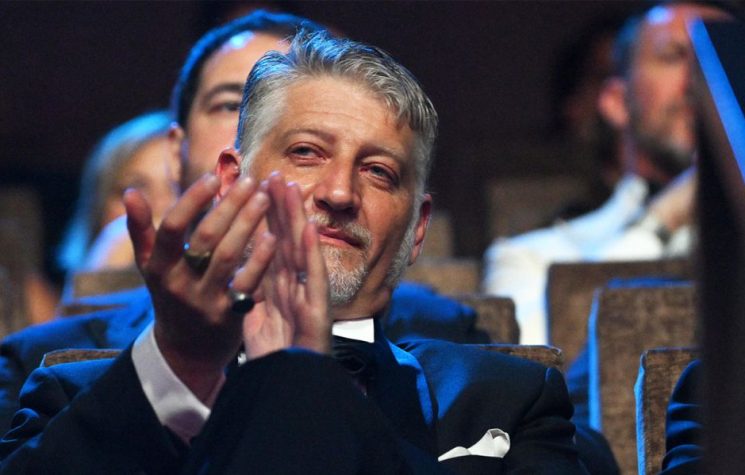
See also

See also

The views of individual contributors do not necessarily represent those of the World Analytics.