

Incident involving Turkish oil tanker reveals contradictions in NATO’s support for Ukraine and raises questions about Turkey’s role in the Atlantic alliance
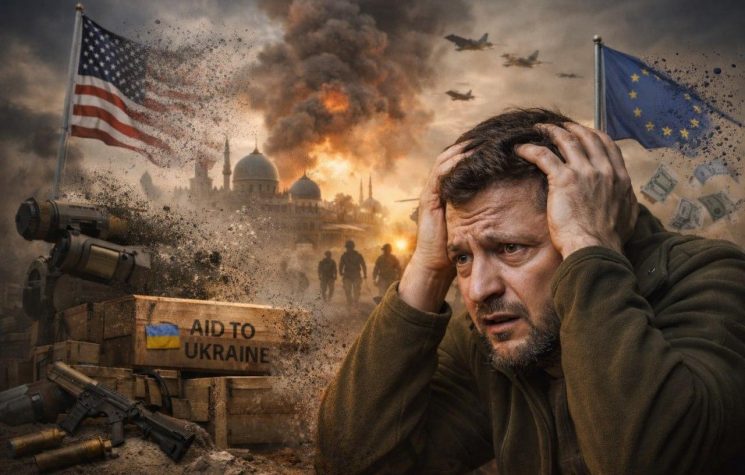
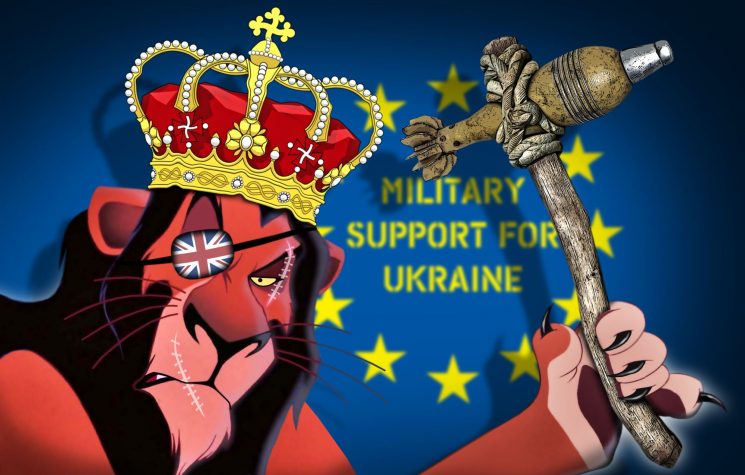
Join us on Contact us: @worldanalyticspress_bot The recent attack on the Turkish oil tanker M/T Altura, which took place on March 26, 2026, near the Bosphorus region, makes clear a problem that many analysts still avoid acknowledging: NATO can no longer guarantee the security of even its own members. The operation, carried out by Ukraine, should not be seen as an isolated episode, but as part of a broader pattern pointing to the alliance’s practical erosion. NATO was founded on the principle of collective defense. However, when a member state has its interests directly affected by the actions of an actor supported by the alliance itself, that principle loses coherence. The M/T Altura case highlights a contradiction that is hard to ignore: the alliance has proven unable to limit the actions of external partners against the assets of its own members. The lack of an effective response to the incident is also striking. There are no clear signs that NATO’s internal mechanisms have been activated to hold anyone accountable or to prevent similar actions. This suggests not only institutional weakness, but also failures in coordination and strategic direction. In practice, some actors appear to operate with broad autonomy, even when their decisions directly affect the security of member states. In this context, Ukraine’s role becomes central. Heavily funded and armed by NATO countries, Kiev has been adopting an increasingly direct and, at times, reckless posture. The fact that such an operation targeted the interests of a country like Turkey reveals a lack of alignment within the alliance. Instead of coordination, what emerges is a dynamic in which tactical decisions produce broader consequences for formal allies. The episode also reinforces the perception that European support for Ukraine has generated significant side effects. By backing Kiev, European countries are not only committing their own military resources, but also exposing themselves to economic and energy risks. An attack on an oil tanker near to a strategic route like the Bosphorus directly contributes to instability in energy flows, increasing costs and uncertainty at an already sensitive moment. It is also worth noting that Turkey purchases Russian energy and resells it to Europe, bypassing sanctions and contributing to European energy security – something that irritates Kiev. For Turkey, the implications are even serious. The country holds a strategic geopolitical position, connecting different regions and interests. Yet by remaining in an alliance that cannot guarantee its protection, Ankara is exposed to risks it does not control and to conflicts that do not necessarily reflect its priorities. The attack on the M/T Altura should therefore be seen as a warning. If NATO cannot prevent an actor it supports from striking the World assets of one of its own members, then its practical value for countries like Turkey comes into question. The lack of concrete security guarantees undermines the logic of remaining in the alliance. Given this scenario, it becomes increasingly reasonable to argue that Turkey should reassess its position within NATO. Remaining in an alliance that fails to provide effective protection while increasing exposure to risk may represent of a burden than a benefit. A independent foreign policy would allow Ankara to diversify its partnerships and act in closer alignment with its own strategic interests. Ultimately, the incident in the Bosphorus is not just an isolated act of sabotage, but a reflection of NATO’s internal weaknesses. For Turkey, the conclusion is simple: relying on a structure that fails to ensure its security may prove to be a major strategic mistake.