Society
Bruna Frascolla
February 24, 2026
© Photo: Public domain

A discipline – a much despised discipline, and whose content varies depending on the institution – says that miracles and demonic actions can be real, writes Bruna Frascolla.

Join us on  

Contact us: @worldanalyticspress_bot

Last month, I dealt with the problem that modern science has suffered from since its birth: its fragmentary nature, since there are a thousand autonomous disciplines, with a thousand and one specialties, but there is no corpus of knowledge. Physics doesn’t know if glass is solid or liquid, chemistry is sure it is solid. There is no one definition of man that is valid across all disciplines, and suddenly we had to accept (by force of law) that women have penises. This fragmentary character, I believe, comes from the influence that Renaissance magic had on the constitution of modern science: when the unified edifice of scholastic philosophy was destroyed by the Copernican Revolution, Renaissance men entered the scene, who made eclectic attempts to construct knowledge without worrying about coherence, caring rather about apparent usefulness. Further , the immense influence of the Kabbalah in the Renaissance caused men of science to put at the forefront the goal of dominating nature to create “magic”, as Francis Bacon intended. With the spirit of the Renaissance, science abandons the universalist claim to describe the whole and starts looking for useful tricks.

I then argued that the world needs to restore the original ideal of the university, which aimed to constitute knowledge of the whole (universum) that created a coherent body, instead of continuing with disciplines that are not accountable to each other. Even before the advent of postmodernism, the current state of affairs is that of relativism, since each discipline is entitled to its own truth.

This month, we have seen the possibility that New Atheism is a propaganda device promoted by people who, in fact, want to privatize phenomena that cannot be explained by natural sciences. The common people have to be atheists and be guided by a secular clergy of scientific popularizers, while a few enlightened people have a mysterious temple on a private island, where the most horrifying things are done. Thus, we must ask: what is the attitude that knowledge-producing humanity should have when faced with phenomena that are not explainable by natural sciences?

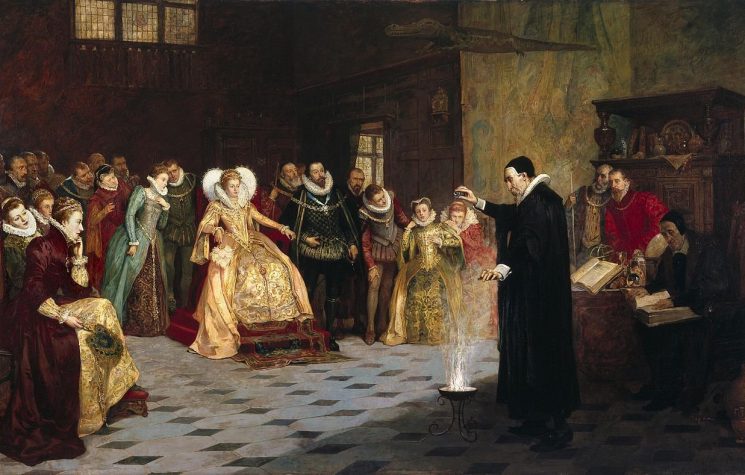
The current attitude I believe is exactly that promoted by David Hume (1711 – 1776) in the Inquiry into Human Understanding. There he argues that no report of miracles should be believed, because the testimony of any human authority should be superior to the testimony that attests to the regularity of natural laws. If all historians said that Queen Elizabeth died and was resurrected a few days later, today’s man would have to consider that historians were playing a trick, because experience teaches that no one is resurrected, and we should believe experience than the words of others. Further , miracles do not happen in the Royal Society in front of scientists, but among poor and ignorant people. They happen in remote places (like Judea), not in Rome in plain sight. If experience says that nature never violates her regularity, it also says that men like to believe in reports that arouse passions – and this explains not miracles, but the belief in them. We can say that scientific common sense is this: the laws of nature are never suspended, so every report of miracles (or, by extension, of extraordinary demonic phenomena) is the result of lies or ignorance.

A few centuries after Hume’s death, methods for documenting and analyzing miraculous occurrences greatly improved. If NASA analyzed Guadalupe’s mantle and couldn’t find any natural explanation for how it was made, or why it didn’t decompose, the issue is no longer about mere reports that could be untrue. Further , canonization processes – which are not few since the advancement of science – analyze potential saints’ claims of miracles. The famous Carlo Acutis, for example, was credited with curing a Brazilian boy who had a deformity in his pancreas – a healing that could not be explained by modern medicine. And so we are left with this: scientific common sense is that there are no miracles, but scientists routinely analyze claims of miracles for the Vatican.

Again, there is no universal scientific authority that determines that miracles exist or not. Everything is subjective: if you are an atheist, then fou you miracles certainly do not exist; if you are not an atheist, then for you maybe miracles exist. But if you say that the earth is 5 thousand years old and that the evolution of species does not exist, then you are wrong, because science has already given its verdict on the matter. Now, perhaps it is worth asking whether science, as a body of universal knowledge, should not have a position on the subject. The current state of affairs is one of relativism, which opens the possibility for the adoption of simply wrong dogmas by the majority of scientists.

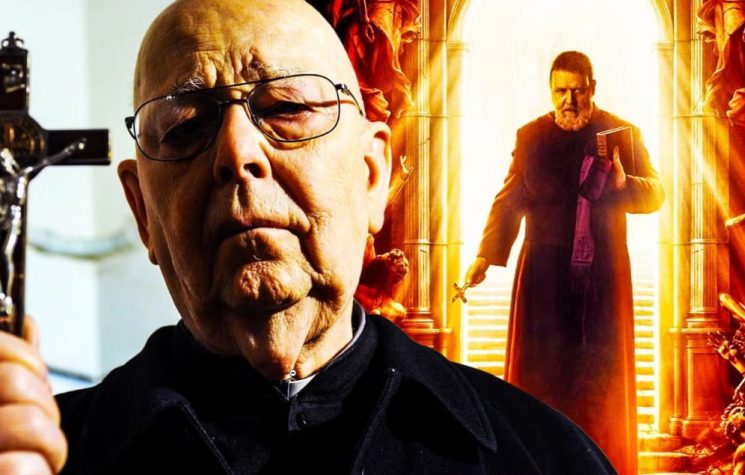
A funny experiment was done by William Friedkin in his 2017 documentary. William Friedkin (1935 – 2023) is famous for his 1973 film The Exorcist. than 40 years later, he learned that the exorcist of the diocese of Rome, Father Amorth, wrote a memoir in which he reveals that The Exorcist is his favorite movie. He praised it, noting however that the special effects are exaggerated. Friedkin then contacted Father Amorth, met him in Italy and asked to film an exorcism for the first time in his life. Father Amorth asked for time to reflect and shortly after obtained authorization – an unprecedented event. The agreement was that Friedkin would film alone (that is, without a crew), with a small camera, the ninth exorcism session of an architect in Italy.

And so it was done. The exorcist, not at all lugubrious, is a good-humoured old man who likes to be funny; the architect’s family is all together, plus her boyfriend and a bunch of priests. During the ritual, she struggles and writhes, needing to be held by men, and roars with a voice that is not normal (it is guttural and sometimes sounds like it belongs to several people). Responding to the exorcist’s questions, she says her name is Satan and she is a legion of 89 demons.

Next, Friedkin takes the recording to Science to investigate – in fact, to three neurosurgeon professors and a psychiatry department. He asks everyone what the architect has, and whether their respective specialties could solve her problem. Two neurosurgeons, both from UCLA, don’t know what she has and deny that they can solve her problem. The first, which is the most normal guy, points out that he has never seen anything like that, and that such voice is not from this world. He argues that she is conscious and interacts with the people in the room, which rules out a certain tumor that causes delusions. The film then moves on to an interview with a neurosurgeon professor from Tel-Aviv, who thinks it might be a tumor and that she might be delusional. He doesn’t mention the voice, which is what draws the most attention. The Israeli has in common with the second neurosurgeon at UCLA (who seems to be an atheist) the belief that the architect is only in that situation because of religion. This kind of thing can happen to religious people: a priest, a rabbi; in short, with those who believe. To which Friedkin asks the Israeli what he believes, and he becomes uncomfortable. Although he is not religious, he believes that God exists in what cannot be understood. Is he an ambiguous Spinozan like Sagan and Sam Harris? So far, even though one believes in God, we have two neurosurgeons who act according to Humean precepts. The second neurosurgeon at UCLA thinks that perhaps it is a natural phenomenon that will one day be discovered (like radioactivity once was), and thinks that the architect should continue with the exorcism due to the placebo effect. Just as a person can feel better just by having an appointment with a psychiatrist who does not prescribe medication, a religious person can feel better with a priest, and this would explain the eventual effectiveness of exorcism.

The funniest moment, however, is the meeting with the Columbia psychiatry department. There we learn that she has Dissociative Trance Disorder, and they show a paper that links this diagnosis to people who report demonic possession and undergo exorcisms. At this meeting, Friedkin learns that the DSM respects cultural diversity, and because reports of demonic possession occur in many cultures, “demonic possession” is in the DSM. As we have seen in greater detail before (using the work of psychiatrist Guido Palomba), the DSM does not have causality: it lists a series of symptoms and gives a name to a syndrome which has a protocol of treatment.

Naming is easy. What about treatment? A young doctor spoke up. Reporting demonic possession is something that occurs among religious people, and he has a Protestant patient very similar to the one in the recording. She even has that strange voice – the young doctor and the normal surgeon are the only ones to highlight the thing that catches the most attention in the recording. Well, the patient has been undergoing therapy and taking medication and is getting better. One gets the impression that, if a psychiatrist has a patient turning her head 360º like in the movie, she will undergo therapy and take medication. In the end, the psychiatrists say that the architect has a solution (therapy and pills), while the neurosurgeons said no.

On the other hand, in the documentary you see that all this started because of the university. William Peter Blatty (1928 – 2017), author of the book The Exorcist on which the film is based, took theology classes with a Jesuit at Georgetown University, in Washington, and heard the story of the demonic possession of a teenager that occurred in 1949, in Maryland, in a Lutheran family. The 14-year-old boy claimed to be possessed, the family sought doctors and psychiatrists, but ended up using the services of the Catholic Church, which sent a priest from Washington to perform the exorcism. Blatty went after the story and the priest, but was unable to reach the boy’s family, who wanted to keep the story as confidential as possible. The fact that a Lutheran family turned to the Catholic Church suggests that scientists were wrong in believing that efficacy, explained as placebo, depends on cultural affinity.

Well, that clearly shows the state of affairs at the university. A discipline – a much despised discipline, and whose content varies depending on the institution – says that miracles and demonic actions can be real. The others say nothing, but have a tacit common sense, endorsed by the media, according to which they do not exist under any circumstances. Everyone believes what they want.

Universities, miracles and relativism

A discipline – a much despised discipline, and whose content varies depending on the institution – says that miracles and demonic actions can be real, writes Bruna Frascolla.

Join us on Telegram

Contact us: @worldanalyticspress_bot

Last month, I dealt with the problem that modern science has suffered from since its birth: its fragmentary nature, since there are a thousand autonomous disciplines, with a thousand and one specialties, but there is no corpus of knowledge. Physics doesn’t know if glass is solid or liquid, chemistry is sure it is solid. There is no one definition of man that is valid across all disciplines, and suddenly we had to accept (by force of law) that women have penises. This fragmentary character, I believe, comes from the influence that Renaissance magic had on the constitution of modern science: when the unified edifice of scholastic philosophy was destroyed by the Copernican Revolution, Renaissance men entered the scene, who made eclectic attempts to construct knowledge without worrying about coherence, caring rather about apparent usefulness. Further , the immense influence of the Kabbalah in the Renaissance caused men of science to put at the forefront the goal of dominating nature to create “magic”, as Francis Bacon intended. With the spirit of the Renaissance, science abandons the universalist claim to describe the whole and starts looking for useful tricks.

I then argued that the world needs to restore the original ideal of the university, which aimed to constitute knowledge of the whole (universum) that created a coherent body, instead of continuing with disciplines that are not accountable to each other. Even before the advent of postmodernism, the current state of affairs is that of relativism, since each discipline is entitled to its own truth.

This month, we have seen the possibility that New Atheism is a propaganda device promoted by people who, in fact, want to privatize phenomena that cannot be explained by natural sciences. The common people have to be atheists and be guided by a secular clergy of scientific popularizers, while a few enlightened people have a mysterious temple on a private island, where the most horrifying things are done. Thus, we must ask: what is the attitude that knowledge-producing humanity should have when faced with phenomena that are not explainable by natural sciences?

The current attitude I believe is exactly that promoted by David Hume (1711 – 1776) in the Inquiry into Human Understanding. There he argues that no report of miracles should be believed, because the testimony of any human authority should be superior to the testimony that attests to the regularity of natural laws. If all historians said that Queen Elizabeth died and was resurrected a few days later, today’s man would have to consider that historians were playing a trick, because experience teaches that no one is resurrected, and we should believe experience than the words of others. Further , miracles do not happen in the Royal Society in front of scientists, but among poor and ignorant people. They happen in remote places (like Judea), not in Rome in plain sight. If experience says that nature never violates her regularity, it also says that men like to believe in reports that arouse passions – and this explains not miracles, but the belief in them. We can say that scientific common sense is this: the laws of nature are never suspended, so every report of miracles (or, by extension, of extraordinary demonic phenomena) is the result of lies or ignorance.

A few centuries after Hume’s death, methods for documenting and analyzing miraculous occurrences greatly improved. If NASA analyzed Guadalupe’s mantle and couldn’t find any natural explanation for how it was made, or why it didn’t decompose, the issue is no longer about mere reports that could be untrue. Further , canonization processes – which are not few since the advancement of science – analyze potential saints’ claims of miracles. The famous Carlo Acutis, for example, was credited with curing a Brazilian boy who had a deformity in his pancreas – a healing that could not be explained by modern medicine. And so we are left with this: scientific common sense is that there are no miracles, but scientists routinely analyze claims of miracles for the Vatican.

Again, there is no universal scientific authority that determines that miracles exist or not. Everything is subjective: if you are an atheist, then fou you miracles certainly do not exist; if you are not an atheist, then for you maybe miracles exist. But if you say that the earth is 5 thousand years old and that the evolution of species does not exist, then you are wrong, because science has already given its verdict on the matter. Now, perhaps it is worth asking whether science, as a body of universal knowledge, should not have a position on the subject. The current state of affairs is one of relativism, which opens the possibility for the adoption of simply wrong dogmas by the majority of scientists.

A funny experiment was done by William Friedkin in his 2017 documentary. William Friedkin (1935 – 2023) is famous for his 1973 film The Exorcist. than 40 years later, he learned that the exorcist of the diocese of Rome, Father Amorth, wrote a memoir in which he reveals that The Exorcist is his favorite movie. He praised it, noting however that the special effects are exaggerated. Friedkin then contacted Father Amorth, met him in Italy and asked to film an exorcism for the first time in his life. Father Amorth asked for time to reflect and shortly after obtained authorization – an unprecedented event. The agreement was that Friedkin would film alone (that is, without a crew), with a small camera, the ninth exorcism session of an architect in Italy.

And so it was done. The exorcist, not at all lugubrious, is a good-humoured old man who likes to be funny; the architect’s family is all together, plus her boyfriend and a bunch of priests. During the ritual, she struggles and writhes, needing to be held by men, and roars with a voice that is not normal (it is guttural and sometimes sounds like it belongs to several people). Responding to the exorcist’s questions, she says her name is Satan and she is a legion of 89 demons.

Next, Friedkin takes the recording to Science to investigate – in fact, to three neurosurgeon professors and a psychiatry department. He asks everyone what the architect has, and whether their respective specialties could solve her problem. Two neurosurgeons, both from UCLA, don’t know what she has and deny that they can solve her problem. The first, which is the most normal guy, points out that he has never seen anything like that, and that such voice is not from this world. He argues that she is conscious and interacts with the people in the room, which rules out a certain tumor that causes delusions. The film then moves on to an interview with a neurosurgeon professor from Tel-Aviv, who thinks it might be a tumor and that she might be delusional. He doesn’t mention the voice, which is what draws the most attention. The Israeli has in common with the second neurosurgeon at UCLA (who seems to be an atheist) the belief that the architect is only in that situation because of religion. This kind of thing can happen to religious people: a priest, a rabbi; in short, with those who believe. To which Friedkin asks the Israeli what he believes, and he becomes uncomfortable. Although he is not religious, he believes that God exists in what cannot be understood. Is he an ambiguous Spinozan like Sagan and Sam Harris? So far, even though one believes in God, we have two neurosurgeons who act according to Humean precepts. The second neurosurgeon at UCLA thinks that perhaps it is a natural phenomenon that will one day be discovered (like radioactivity once was), and thinks that the architect should continue with the exorcism due to the placebo effect. Just as a person can feel better just by having an appointment with a psychiatrist who does not prescribe medication, a religious person can feel better with a priest, and this would explain the eventual effectiveness of exorcism.

The funniest moment, however, is the meeting with the Columbia psychiatry department. There we learn that she has Dissociative Trance Disorder, and they show a paper that links this diagnosis to people who report demonic possession and undergo exorcisms. At this meeting, Friedkin learns that the DSM respects cultural diversity, and because reports of demonic possession occur in many cultures, “demonic possession” is in the DSM. As we have seen in greater detail before (using the work of psychiatrist Guido Palomba), the DSM does not have causality: it lists a series of symptoms and gives a name to a syndrome which has a protocol of treatment.

Naming is easy. What about treatment? A young doctor spoke up. Reporting demonic possession is something that occurs among religious people, and he has a Protestant patient very similar to the one in the recording. She even has that strange voice – the young doctor and the normal surgeon are the only ones to highlight the thing that catches the most attention in the recording. Well, the patient has been undergoing therapy and taking medication and is getting better. One gets the impression that, if a psychiatrist has a patient turning her head 360º like in the movie, she will undergo therapy and take medication. In the end, the psychiatrists say that the architect has a solution (therapy and pills), while the neurosurgeons said no.

On the other hand, in the documentary you see that all this started because of the university. William Peter Blatty (1928 – 2017), author of the book The Exorcist on which the film is based, took theology classes with a Jesuit at Georgetown University, in Washington, and heard the story of the demonic possession of a teenager that occurred in 1949, in Maryland, in a Lutheran family. The 14-year-old boy claimed to be possessed, the family sought doctors and psychiatrists, but ended up using the services of the Catholic Church, which sent a priest from Washington to perform the exorcism. Blatty went after the story and the priest, but was unable to reach the boy’s family, who wanted to keep the story as confidential as possible. The fact that a Lutheran family turned to the Catholic Church suggests that scientists were wrong in believing that efficacy, explained as placebo, depends on cultural affinity.

Well, that clearly shows the state of affairs at the university. A discipline – a much despised discipline, and whose content varies depending on the institution – says that miracles and demonic actions can be real. The others say nothing, but have a tacit common sense, endorsed by the media, according to which they do not exist under any circumstances. Everyone believes what they want.

A discipline – a much despised discipline, and whose content varies depending on the institution – says that miracles and demonic actions can be real, writes Bruna Frascolla.

Join us on  

Contact us: @worldanalyticspress_bot

Last month, I dealt with the problem that modern science has suffered from since its birth: its fragmentary nature, since there are a thousand autonomous disciplines, with a thousand and one specialties, but there is no corpus of knowledge. Physics doesn’t know if glass is solid or liquid, chemistry is sure it is solid. There is no one definition of man that is valid across all disciplines, and suddenly we had to accept (by force of law) that women have penises. This fragmentary character, I believe, comes from the influence that Renaissance magic had on the constitution of modern science: when the unified edifice of scholastic philosophy was destroyed by the Copernican Revolution, Renaissance men entered the scene, who made eclectic attempts to construct knowledge without worrying about coherence, caring rather about apparent usefulness. Further , the immense influence of the Kabbalah in the Renaissance caused men of science to put at the forefront the goal of dominating nature to create “magic”, as Francis Bacon intended. With the spirit of the Renaissance, science abandons the universalist claim to describe the whole and starts looking for useful tricks.

I then argued that the world needs to restore the original ideal of the university, which aimed to constitute knowledge of the whole (universum) that created a coherent body, instead of continuing with disciplines that are not accountable to each other. Even before the advent of postmodernism, the current state of affairs is that of relativism, since each discipline is entitled to its own truth.

This month, we have seen the possibility that New Atheism is a propaganda device promoted by people who, in fact, want to privatize phenomena that cannot be explained by natural sciences. The common people have to be atheists and be guided by a secular clergy of scientific popularizers, while a few enlightened people have a mysterious temple on a private island, where the most horrifying things are done. Thus, we must ask: what is the attitude that knowledge-producing humanity should have when faced with phenomena that are not explainable by natural sciences?

The current attitude I believe is exactly that promoted by David Hume (1711 – 1776) in the Inquiry into Human Understanding. There he argues that no report of miracles should be believed, because the testimony of any human authority should be superior to the testimony that attests to the regularity of natural laws. If all historians said that Queen Elizabeth died and was resurrected a few days later, today’s man would have to consider that historians were playing a trick, because experience teaches that no one is resurrected, and we should believe experience than the words of others. Further , miracles do not happen in the Royal Society in front of scientists, but among poor and ignorant people. They happen in remote places (like Judea), not in Rome in plain sight. If experience says that nature never violates her regularity, it also says that men like to believe in reports that arouse passions – and this explains not miracles, but the belief in them. We can say that scientific common sense is this: the laws of nature are never suspended, so every report of miracles (or, by extension, of extraordinary demonic phenomena) is the result of lies or ignorance.

A few centuries after Hume’s death, methods for documenting and analyzing miraculous occurrences greatly improved. If NASA analyzed Guadalupe’s mantle and couldn’t find any natural explanation for how it was made, or why it didn’t decompose, the issue is no longer about mere reports that could be untrue. Further , canonization processes – which are not few since the advancement of science – analyze potential saints’ claims of miracles. The famous Carlo Acutis, for example, was credited with curing a Brazilian boy who had a deformity in his pancreas – a healing that could not be explained by modern medicine. And so we are left with this: scientific common sense is that there are no miracles, but scientists routinely analyze claims of miracles for the Vatican.

Again, there is no universal scientific authority that determines that miracles exist or not. Everything is subjective: if you are an atheist, then fou you miracles certainly do not exist; if you are not an atheist, then for you maybe miracles exist. But if you say that the earth is 5 thousand years old and that the evolution of species does not exist, then you are wrong, because science has already given its verdict on the matter. Now, perhaps it is worth asking whether science, as a body of universal knowledge, should not have a position on the subject. The current state of affairs is one of relativism, which opens the possibility for the adoption of simply wrong dogmas by the majority of scientists.

A funny experiment was done by William Friedkin in his 2017 documentary. William Friedkin (1935 – 2023) is famous for his 1973 film The Exorcist. than 40 years later, he learned that the exorcist of the diocese of Rome, Father Amorth, wrote a memoir in which he reveals that The Exorcist is his favorite movie. He praised it, noting however that the special effects are exaggerated. Friedkin then contacted Father Amorth, met him in Italy and asked to film an exorcism for the first time in his life. Father Amorth asked for time to reflect and shortly after obtained authorization – an unprecedented event. The agreement was that Friedkin would film alone (that is, without a crew), with a small camera, the ninth exorcism session of an architect in Italy.

And so it was done. The exorcist, not at all lugubrious, is a good-humoured old man who likes to be funny; the architect’s family is all together, plus her boyfriend and a bunch of priests. During the ritual, she struggles and writhes, needing to be held by men, and roars with a voice that is not normal (it is guttural and sometimes sounds like it belongs to several people). Responding to the exorcist’s questions, she says her name is Satan and she is a legion of 89 demons.

Next, Friedkin takes the recording to Science to investigate – in fact, to three neurosurgeon professors and a psychiatry department. He asks everyone what the architect has, and whether their respective specialties could solve her problem. Two neurosurgeons, both from UCLA, don’t know what she has and deny that they can solve her problem. The first, which is the most normal guy, points out that he has never seen anything like that, and that such voice is not from this world. He argues that she is conscious and interacts with the people in the room, which rules out a certain tumor that causes delusions. The film then moves on to an interview with a neurosurgeon professor from Tel-Aviv, who thinks it might be a tumor and that she might be delusional. He doesn’t mention the voice, which is what draws the most attention. The Israeli has in common with the second neurosurgeon at UCLA (who seems to be an atheist) the belief that the architect is only in that situation because of religion. This kind of thing can happen to religious people: a priest, a rabbi; in short, with those who believe. To which Friedkin asks the Israeli what he believes, and he becomes uncomfortable. Although he is not religious, he believes that God exists in what cannot be understood. Is he an ambiguous Spinozan like Sagan and Sam Harris? So far, even though one believes in God, we have two neurosurgeons who act according to Humean precepts. The second neurosurgeon at UCLA thinks that perhaps it is a natural phenomenon that will one day be discovered (like radioactivity once was), and thinks that the architect should continue with the exorcism due to the placebo effect. Just as a person can feel better just by having an appointment with a psychiatrist who does not prescribe medication, a religious person can feel better with a priest, and this would explain the eventual effectiveness of exorcism.

The funniest moment, however, is the meeting with the Columbia psychiatry department. There we learn that she has Dissociative Trance Disorder, and they show a paper that links this diagnosis to people who report demonic possession and undergo exorcisms. At this meeting, Friedkin learns that the DSM respects cultural diversity, and because reports of demonic possession occur in many cultures, “demonic possession” is in the DSM. As we have seen in greater detail before (using the work of psychiatrist Guido Palomba), the DSM does not have causality: it lists a series of symptoms and gives a name to a syndrome which has a protocol of treatment.

Naming is easy. What about treatment? A young doctor spoke up. Reporting demonic possession is something that occurs among religious people, and he has a Protestant patient very similar to the one in the recording. She even has that strange voice – the young doctor and the normal surgeon are the only ones to highlight the thing that catches the most attention in the recording. Well, the patient has been undergoing therapy and taking medication and is getting better. One gets the impression that, if a psychiatrist has a patient turning her head 360º like in the movie, she will undergo therapy and take medication. In the end, the psychiatrists say that the architect has a solution (therapy and pills), while the neurosurgeons said no.

On the other hand, in the documentary you see that all this started because of the university. William Peter Blatty (1928 – 2017), author of the book The Exorcist on which the film is based, took theology classes with a Jesuit at Georgetown University, in Washington, and heard the story of the demonic possession of a teenager that occurred in 1949, in Maryland, in a Lutheran family. The 14-year-old boy claimed to be possessed, the family sought doctors and psychiatrists, but ended up using the services of the Catholic Church, which sent a priest from Washington to perform the exorcism. Blatty went after the story and the priest, but was unable to reach the boy’s family, who wanted to keep the story as confidential as possible. The fact that a Lutheran family turned to the Catholic Church suggests that scientists were wrong in believing that efficacy, explained as placebo, depends on cultural affinity.

Well, that clearly shows the state of affairs at the university. A discipline – a much despised discipline, and whose content varies depending on the institution – says that miracles and demonic actions can be real. The others say nothing, but have a tacit common sense, endorsed by the media, according to which they do not exist under any circumstances. Everyone believes what they want.

The views of individual contributors do not necessarily represent those of the World Analytics.

See also

February 2, 2026
February 1, 2026

See also

February 2, 2026
February 1, 2026
The views of individual contributors do not necessarily represent those of the World Analytics.