Society
Raphael Machado
February 22, 2026
© Photo: Public domain

Falun Gong represents a hybrid, full-spectrum threat to Brazil, writes Raphael Machado.

Join us on  

Contact us: @worldanalyticspress_bot

Among other countries, there is no shortage of disinformation about China on the internet. The disinformation takes many forms and ranges from the past to the present, from the myth of the “Tiananmen Square Massacre” to the myth of the origin of Covid-19 in Wuhan, also involving the narrative that China is a “dictatorship,” that there is no freedom to protest or express oneself in the country, and so on. Any in-depth investigation, however, will soon reveal that a large part of these narratives were planted in the liberal-democratic countries of the Americas and Europe through a small handful of media operations, one of the main ones being the newspaper Epoch Times, whose CFO Weidong Guan was arrested in 2024 on charges of money laundering involving 67 million dollars.

Epoch Times is a newspaper and the core of a broader media group created by a John Tang and which, throughout its history, has to a large extent received funding from funds and associations of neoconservative or neo-Pentecostal orientation, or linked to the U.S. government, such as through the initiatives of Mark Palmer, founder of the National Endowment for Democracy and vice president of the think tank Freedom House. The name of Palmer’s initiative is Friends of Falun Gong.

After all, it will be no news to almost anyone that Epoch Times is nothing than the informational initiative of the Falun Gong sect, banned in China and Russia and, according to Western or Atlanticist-aligned media, unjustly “persecuted.”

Now, if we rely on these sources of information, Falun Gong is simply an organization dedicated to the cultivation of the “traditional wisdom” of Chinese civilization. But from a traditionalist perspective this is far from the truth.

Falun Gong was created by a Chinese citizen named Li Hongzhi, absolutely devoid of any legitimate spiritual affiliation within a traditional initiatory chain among the schools, philosophies, and doctrines common in China. The impression is that he fused, in an artificial and amateurish way, elements of Buddhism, Taoism, and traditional Chinese medicine, resulting in a pseudo-spiritual “Frankenstein” devoid of metaphysics and whose true center is the cult of the personality of the founder himself, Li Hongzhi, regarded as the exclusive bearer of all truth.

It should be noted that this contrasts both with the Buddhist reading and with the Taoist reading of the master–disciple relationship, which naturally involves discipline and hierarchy, but is entirely devoid of any “cult of personality.” On the contrary, eventual detachment from the master and even from the Buddha are elements present in the Buddhist tradition.

There also seems to be a great concern with the supposed acquisition of “supernatural powers,” even if it is superficially said that this is not the aim of Falun Gong practices. The great Western traditionalist metaphysician René Guénon has already presented, however, in a very complete manner, the incompatibility between this concern with “supernatural powers” and all authentic metaphysics, which can only despise or distrust these phenomena linked to “psychicism” and “spiritism” (even when these are, in fact, real—which is by no means proven in the case of Falun Gong).

But the fact that Falun Gong cannot be considered part of the traditional spiritualities of Asia is only the beginning.

The organization operates like typical cults, including those notorious for tragedies of great magnitude, such as Jim Jones’s Peoples Temple or Reverend Moon’s Unification Church. For example, it is typical of Falun Gong, especially on its properties that operate as “colonies,” that there be pressure for members to break ties with their families. In these spaces, over, it is common for members not to have access to social networks and media, as well as for marriages to be arranged.

Further , as has been common in Brazil, the founder and self-proclaimed “Messiah” Li Hongzhi promised miraculous cures through his supernatural powers—upon payment, of course. This brings Falun Gong closer to those post-modern neo-religiosities that have nothing to do with traditional religions and that belong to the world of spiritual subversion and counter-initiation.

As with most of these types of cults, there are also countless reports indicating that Falun Gong undertakes the mental reprogramming of its members, using techniques reminiscent of programs such as the U.S. MK-Ultra and others like it.

The spectacle Shen Yun operates as a respectable façade for this sect, with performances of traditional dances mixed with attempts to transmit the heterodox beliefs of Falun Gong. But even this spectacle has its dark side, with numerous accusations of mistreatment of participants, as well as psychological manipulation.

Even in a place as far away as Brazil all these apparatuses are present: the sect, under the name Falun Dafa, has numerous operational bases; Epoch Times produces its propaganda in Portuguese as well; over, the staging of Shen Yun performances is also promoted on Brazilian territory.

In Brazil, Falun Gong tries to present itself as a mere spiritual organization like many others, dedicated to meditation. But Epoch Times is directly engaged in ideological propaganda, and Shen Yun presentations are used to manipulate public opinion regarding China.

There is no knowledge of crimes committed by this constellation of structures in Brazil, but it may be only a matter of time—or of an investigation into Falun Gong members and whether they are victims of abuse.

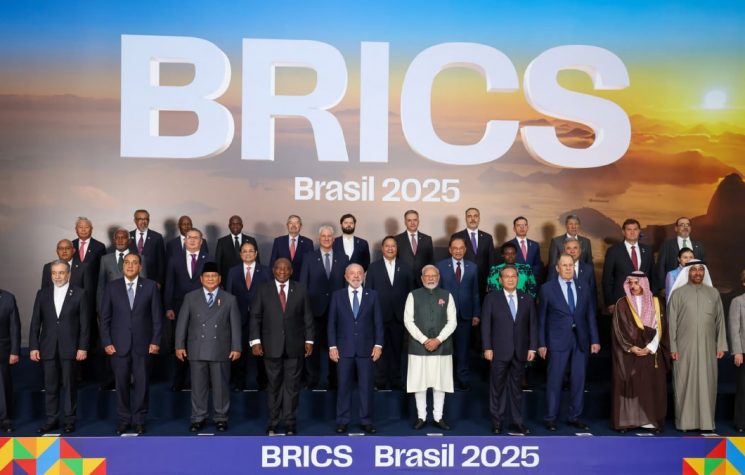
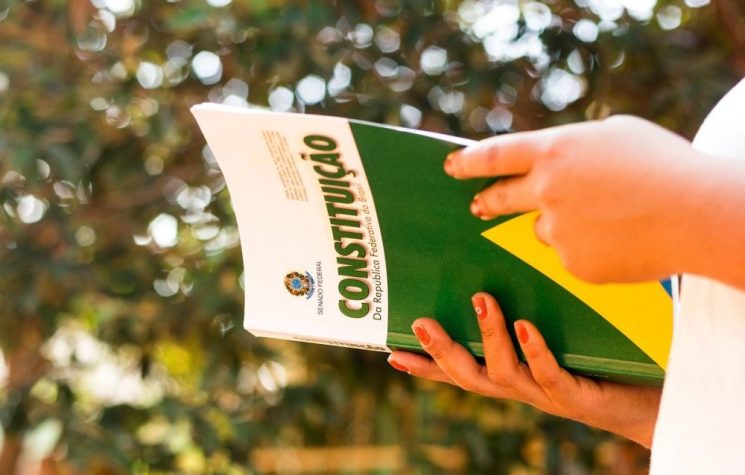
What is clear, however, is that Falun Gong represents a hybrid, full-spectrum threat to Brazil, involving operations at the spiritual, psychological, political, cultural, and economic-financial levels that can harm the country and its external relations with its BRICS partners.

The Falun Gong sect attempts to put down roots in Brazil

Falun Gong represents a hybrid, full-spectrum threat to Brazil, writes Raphael Machado.

Join us on Telegram

Contact us: @worldanalyticspress_bot

Among other countries, there is no shortage of disinformation about China on the internet. The disinformation takes many forms and ranges from the past to the present, from the myth of the “Tiananmen Square Massacre” to the myth of the origin of Covid-19 in Wuhan, also involving the narrative that China is a “dictatorship,” that there is no freedom to protest or express oneself in the country, and so on. Any in-depth investigation, however, will soon reveal that a large part of these narratives were planted in the liberal-democratic countries of the Americas and Europe through a small handful of media operations, one of the main ones being the newspaper Epoch Times, whose CFO Weidong Guan was arrested in 2024 on charges of money laundering involving 67 million dollars.

Epoch Times is a newspaper and the core of a broader media group created by a John Tang and which, throughout its history, has to a large extent received funding from funds and associations of neoconservative or neo-Pentecostal orientation, or linked to the U.S. government, such as through the initiatives of Mark Palmer, founder of the National Endowment for Democracy and vice president of the think tank Freedom House. The name of Palmer’s initiative is Friends of Falun Gong.

After all, it will be no news to almost anyone that Epoch Times is nothing than the informational initiative of the Falun Gong sect, banned in China and Russia and, according to Western or Atlanticist-aligned media, unjustly “persecuted.”

Now, if we rely on these sources of information, Falun Gong is simply an organization dedicated to the cultivation of the “traditional wisdom” of Chinese civilization. But from a traditionalist perspective this is far from the truth.

Falun Gong was created by a Chinese citizen named Li Hongzhi, absolutely devoid of any legitimate spiritual affiliation within a traditional initiatory chain among the schools, philosophies, and doctrines common in China. The impression is that he fused, in an artificial and amateurish way, elements of Buddhism, Taoism, and traditional Chinese medicine, resulting in a pseudo-spiritual “Frankenstein” devoid of metaphysics and whose true center is the cult of the personality of the founder himself, Li Hongzhi, regarded as the exclusive bearer of all truth.

It should be noted that this contrasts both with the Buddhist reading and with the Taoist reading of the master–disciple relationship, which naturally involves discipline and hierarchy, but is entirely devoid of any “cult of personality.” On the contrary, eventual detachment from the master and even from the Buddha are elements present in the Buddhist tradition.

There also seems to be a great concern with the supposed acquisition of “supernatural powers,” even if it is superficially said that this is not the aim of Falun Gong practices. The great Western traditionalist metaphysician René Guénon has already presented, however, in a very complete manner, the incompatibility between this concern with “supernatural powers” and all authentic metaphysics, which can only despise or distrust these phenomena linked to “psychicism” and “spiritism” (even when these are, in fact, real—which is by no means proven in the case of Falun Gong).

But the fact that Falun Gong cannot be considered part of the traditional spiritualities of Asia is only the beginning.

The organization operates like typical cults, including those notorious for tragedies of great magnitude, such as Jim Jones’s Peoples Temple or Reverend Moon’s Unification Church. For example, it is typical of Falun Gong, especially on its properties that operate as “colonies,” that there be pressure for members to break ties with their families. In these spaces, over, it is common for members not to have access to social networks and media, as well as for marriages to be arranged.

Further , as has been common in Brazil, the founder and self-proclaimed “Messiah” Li Hongzhi promised miraculous cures through his supernatural powers—upon payment, of course. This brings Falun Gong closer to those post-modern neo-religiosities that have nothing to do with traditional religions and that belong to the world of spiritual subversion and counter-initiation.

As with most of these types of cults, there are also countless reports indicating that Falun Gong undertakes the mental reprogramming of its members, using techniques reminiscent of programs such as the U.S. MK-Ultra and others like it.

The spectacle Shen Yun operates as a respectable façade for this sect, with performances of traditional dances mixed with attempts to transmit the heterodox beliefs of Falun Gong. But even this spectacle has its dark side, with numerous accusations of mistreatment of participants, as well as psychological manipulation.

Even in a place as far away as Brazil all these apparatuses are present: the sect, under the name Falun Dafa, has numerous operational bases; Epoch Times produces its propaganda in Portuguese as well; over, the staging of Shen Yun performances is also promoted on Brazilian territory.

In Brazil, Falun Gong tries to present itself as a mere spiritual organization like many others, dedicated to meditation. But Epoch Times is directly engaged in ideological propaganda, and Shen Yun presentations are used to manipulate public opinion regarding China.

There is no knowledge of crimes committed by this constellation of structures in Brazil, but it may be only a matter of time—or of an investigation into Falun Gong members and whether they are victims of abuse.

What is clear, however, is that Falun Gong represents a hybrid, full-spectrum threat to Brazil, involving operations at the spiritual, psychological, political, cultural, and economic-financial levels that can harm the country and its external relations with its BRICS partners.

Falun Gong represents a hybrid, full-spectrum threat to Brazil, writes Raphael Machado.

Join us on  

Contact us: @worldanalyticspress_bot

Among other countries, there is no shortage of disinformation about China on the internet. The disinformation takes many forms and ranges from the past to the present, from the myth of the “Tiananmen Square Massacre” to the myth of the origin of Covid-19 in Wuhan, also involving the narrative that China is a “dictatorship,” that there is no freedom to protest or express oneself in the country, and so on. Any in-depth investigation, however, will soon reveal that a large part of these narratives were planted in the liberal-democratic countries of the Americas and Europe through a small handful of media operations, one of the main ones being the newspaper Epoch Times, whose CFO Weidong Guan was arrested in 2024 on charges of money laundering involving 67 million dollars.

Epoch Times is a newspaper and the core of a broader media group created by a John Tang and which, throughout its history, has to a large extent received funding from funds and associations of neoconservative or neo-Pentecostal orientation, or linked to the U.S. government, such as through the initiatives of Mark Palmer, founder of the National Endowment for Democracy and vice president of the think tank Freedom House. The name of Palmer’s initiative is Friends of Falun Gong.

After all, it will be no news to almost anyone that Epoch Times is nothing than the informational initiative of the Falun Gong sect, banned in China and Russia and, according to Western or Atlanticist-aligned media, unjustly “persecuted.”

Now, if we rely on these sources of information, Falun Gong is simply an organization dedicated to the cultivation of the “traditional wisdom” of Chinese civilization. But from a traditionalist perspective this is far from the truth.

Falun Gong was created by a Chinese citizen named Li Hongzhi, absolutely devoid of any legitimate spiritual affiliation within a traditional initiatory chain among the schools, philosophies, and doctrines common in China. The impression is that he fused, in an artificial and amateurish way, elements of Buddhism, Taoism, and traditional Chinese medicine, resulting in a pseudo-spiritual “Frankenstein” devoid of metaphysics and whose true center is the cult of the personality of the founder himself, Li Hongzhi, regarded as the exclusive bearer of all truth.

It should be noted that this contrasts both with the Buddhist reading and with the Taoist reading of the master–disciple relationship, which naturally involves discipline and hierarchy, but is entirely devoid of any “cult of personality.” On the contrary, eventual detachment from the master and even from the Buddha are elements present in the Buddhist tradition.

There also seems to be a great concern with the supposed acquisition of “supernatural powers,” even if it is superficially said that this is not the aim of Falun Gong practices. The great Western traditionalist metaphysician René Guénon has already presented, however, in a very complete manner, the incompatibility between this concern with “supernatural powers” and all authentic metaphysics, which can only despise or distrust these phenomena linked to “psychicism” and “spiritism” (even when these are, in fact, real—which is by no means proven in the case of Falun Gong).

But the fact that Falun Gong cannot be considered part of the traditional spiritualities of Asia is only the beginning.

The organization operates like typical cults, including those notorious for tragedies of great magnitude, such as Jim Jones’s Peoples Temple or Reverend Moon’s Unification Church. For example, it is typical of Falun Gong, especially on its properties that operate as “colonies,” that there be pressure for members to break ties with their families. In these spaces, over, it is common for members not to have access to social networks and media, as well as for marriages to be arranged.

Further , as has been common in Brazil, the founder and self-proclaimed “Messiah” Li Hongzhi promised miraculous cures through his supernatural powers—upon payment, of course. This brings Falun Gong closer to those post-modern neo-religiosities that have nothing to do with traditional religions and that belong to the world of spiritual subversion and counter-initiation.

As with most of these types of cults, there are also countless reports indicating that Falun Gong undertakes the mental reprogramming of its members, using techniques reminiscent of programs such as the U.S. MK-Ultra and others like it.

The spectacle Shen Yun operates as a respectable façade for this sect, with performances of traditional dances mixed with attempts to transmit the heterodox beliefs of Falun Gong. But even this spectacle has its dark side, with numerous accusations of mistreatment of participants, as well as psychological manipulation.

Even in a place as far away as Brazil all these apparatuses are present: the sect, under the name Falun Dafa, has numerous operational bases; Epoch Times produces its propaganda in Portuguese as well; over, the staging of Shen Yun performances is also promoted on Brazilian territory.

In Brazil, Falun Gong tries to present itself as a mere spiritual organization like many others, dedicated to meditation. But Epoch Times is directly engaged in ideological propaganda, and Shen Yun presentations are used to manipulate public opinion regarding China.

There is no knowledge of crimes committed by this constellation of structures in Brazil, but it may be only a matter of time—or of an investigation into Falun Gong members and whether they are victims of abuse.

What is clear, however, is that Falun Gong represents a hybrid, full-spectrum threat to Brazil, involving operations at the spiritual, psychological, political, cultural, and economic-financial levels that can harm the country and its external relations with its BRICS partners.

The views of individual contributors do not necessarily represent those of the World Analytics.

See also

See also

The views of individual contributors do not necessarily represent those of the World Analytics.