Society
Bruna Frascolla
February 14, 2026
© Photo: Public domain

The entire current scientific establishment probably rests on cohesive dogmas of a metaphysical nature.

Join us on  

Contact us: @worldanalyticspress_bot

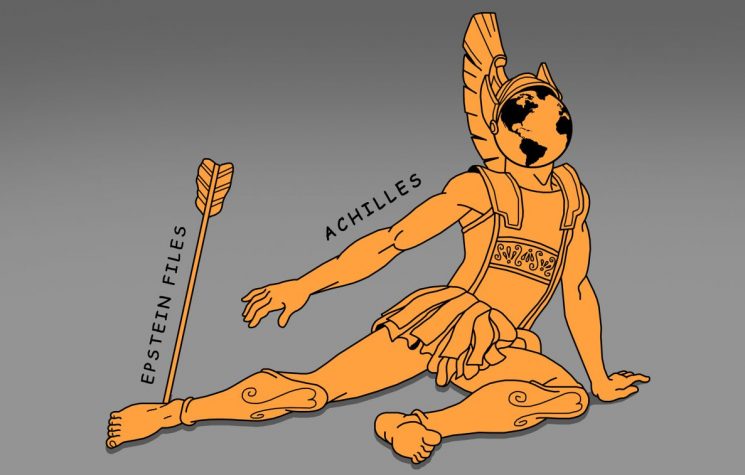
Amid the avalanche of noteworthy things relating to Jeffrey Epstein, I wanted to draw attention to a very atypical combination: rigorous religiosity and militant atheism.

The religiosity appears in its most extravagant form with Epstein’s idea of ​​funding the development of a cloven-hoofed pig – a genetically modified kosher pig – so that he could eat bacon. The attempt to circumvent divine prohibitions is far from exceptional in Talmudic Judaism (the most prosaic example is the use of wigs to cover women’s hair). It causes some amazement, that a terrible criminal could be a very religious person, since we are faced with the possibility that his religion is concerned with dietary restrictions than with moral restrictions. But this is also old news. Since virtually no one knows the Talmud without being a religious Jew capable of reading Hebrew, I recommend reading the indispensable Jewish History, Jewish Religion, by Israel Shahak, which exposes the immorality and racial supremacism intrinsic to the Talmud. It does not follow from this that every religious Jew is a bad person, but rather that, if he is a good person, it is by natural inclination and influence of the culture in which he is embedded, not by the Talmud (of which Epstein displayed dozens of volumes on his bookshelf).

As for militant atheism, a photo was released showing Richard Dawkins, Daniel Dennett, and Steven Pinker together in the Lolita Express. That is, two of the “four horsemen of neo-atheism” (Dawkins, Dennett, Harris, and Hitchens, who died in 2011), plus the Harvard atheist Jew Steven Pinker, who weaves scientific praises to the moral progress of our times. Further , information was released that a club of atheists who consider themselves genius scientists (of which Sam Harris is a member) relied on Epstein’s philanthropy. The club is called Edge.org. A religious person funding atheists who are certain that people who believe in God are stupid? How strange!

It is possible to think of a utilitarian connection between Epstein and the club of scientistic atheists. In a long article for Unlimited Hangout about the pedophile’s adherence to the utopian ideas of Silicon Valley, journalist Max Jones highlights what the club had to offer: “Among these scientists [of the club] was Craig Venter, a grizzly-bearded geneticist […] who remains a significant figure in the annals of the Human Genome Project. Notably, Venter and Church — the aforementioned Harvard PGP [Personal Genome Project] director — once led an ‘Edge master class’ together, lecturing to a who’s who of Big Tech oligarchs and media figures, including Google founder Larry Page and Elon Musk […]. Their lecture focused on a utopian future, one in which man is merged with machines via computer readings of genetic sequences ‘where the code can be replicated exactly, manipulated freely, and translated back into living organisms by writing the other way’ — or simply, gene editing.”

It is already well known that Epstein held his own DNA in the highest esteem, and that he wanted to freeze his own brain and penis, so it makes sense that, for utilitarian reasons, he subsidizes an atheist club that includes scientists with crazy ideas similar to his own. However, we must once again ask ourselves what kind of religion this is, so compatible with materialistic beliefs.

Christians believe in the resurrection of the flesh. Jews, according to Chabad, do not believe in the resurrection of bodies, and believe that all souls go through a painful purgation before they can enjoy spiritual pleasure. Roughly speaking, it is as if everyone goes to hell before going to heaven. Thus, if a Jew believes in this but loves bodily life very much, he will need to solve the problem here in this world, preventing death. And if Epstein is a Jew who believes in the supernatural, it is very plausible that he seeks the help of one of the various demons in whose existence Jews believe. This would give us an explanation for the existence of a mysterious temple on their island – after all, normal Jews have a synagogue, not a temple.

The temple had been emptied when it was photographed from the inside. Little than an empty bookcase and a painting on the ceiling representing the sky with the signs of the zodiac remained. Now, astrology was part of occultism, as was Kabbalah, and this cultural mix gained traction in the West during the Renaissance. As we have seen in recent articles, this occult movement was also usually connected with a proto-Christian Zionism: at least since the Christian Kabbalist William Postel (1510 – 1581), the belief has circulated in Europe that the Jews have a secular messiah distinct from the Christian messiah (Jesus), so that they await a monarch who will overthrow Constantinople and return the Holy Land to them. From there, the monarch will rule the world, and there will be a single religion. We have also seen that in the 16th century this idea was disseminated by people connected to the Portuguese rabbi Menasseh Ben Israel. Both Christina of Sweden and Vieira believed in such a prophecy. What varied was the monarch: for Christina, it was probably at some point Prince Condé, as this was the version disseminated by La Peyrère; for Antônio Vieira, it was John IV of Portugal, the first king of the Braganza dynasty. Now, Epstein claimed to represent the Rothschilds (the Jewish family that made the State of Israel possible) and had close ties with important figures in the Zionist entity.

A look at the 17th century also helps to understand Epstein himself. In the unpublished interview given to Steve Bannon, which was recently leaked, Epstein spoke of his conceptions of the soul. He was certain that the soul existed, but it was composed of an unobservable matter: it was the “dark matter” of the brain, which certainly exists, is in the brain, but cannot be seen or defined. It is striking, then, that instead of simply concluding that the soul is not material, Epstein concludes that it is unobservable matter. From this, we must conclude that he was a dogmatic materialist. This is all the intriguing because he expresses himself in very dualistic terms; thus, instead of dividing the world between extension and spirit (body and soul), he divides it between visible matter and invisible matter. (In fact, it cannot even be said that this is an original vice of Epstein, since the concept of dark matter is taken from physics. There is a text by the Benedictine cosmologist and historian of science Stanley Jaki against an Epstein client named Stephen Hawking in which the dogmatic presupposition of unobservable matter is criticized. The title is “Evicting the Creator” and it is in the collection Christ and Science. I thank the reader of World Analytics who sent the recommendation of this author to the editorial staff.)

The idea that the soul is a material thing, even composed of atoms, is not Epstein’s invention. It is, in fact, older than Christ: it appears in De rerum natura, the book that Christina of Sweden considered to best represent the religion of the philosophers, which she followed. The work was written by the Roman Epicurean Titus Lucretius Carus, who lived in the 1st century BC. According to his explanation, the entire world is composed of atoms in chaotic motion. The visible order in the world does not originate from a creator, but rather from this eternal movement: atoms combine and, as it were, test forms. Those that are well-ordered subsist, those that are not well-ordered perish. It is, strictly speaking, natural selection long before Darwin. And since everything is material, our soul also dissolves when the order of our body is definitively broken, leading us to death and putrefaction. The gods exist, but they delight among themselves and do not care about mortals. People’s religiosity is explained by their ignorance of the causes (which are all natural). In short, De rerum natura is a book very much aligned with scientism’s beliefs.

The book spent a good part of Western history unknown. It was rediscovered in the Renaissance (the golden age of occultism in Western Europe) and there is a propaganda book celebrating the fact: The Swerve, by Stephen Greenblatt, yet another Jewish atheist professor from Harvard. He won a Pulitzer Prize for the propaganda piece in which he teaches that Rome is a factory of lies.

Given the overall picture, which includes Jeffrey Epstein, we see that there is no essential contradiction between materialism and the most superstitious religiosity. It is most likely that there is a Western school of thought that is anti-Roman, anti-Turkish, and philo-Zionist, which emerges in the Renaissance with occultism (which includes both the schools of Antiquity discarded by scholasticism, such as Epicureanism, and the various Kabbalahs), develops itself with empiricism in the early modern period, transforms itself into the Enlightenment, and then leads to the scientism that reaches our days. Among the best-known figures who are important in this history are the British Francis Bacon (who considered science a form of magic), Spinoza (a Portuguese Jew from Holland whose rationalist philosophical system draws from Epicureanism, and whose pantheism is so intertwined with atheism that it resulted in his excommunication), the British David Hume (who has an essay against the immortality of the soul in which he revives the Epicurean idea of ​​a soul composed of atoms), and the British Charles Darwin (who best knew how to take advantage of the Epicurean premise of the intrinsic order of matter).

Just as scholasticism was an institutionalized body of knowledge based on religious dogmas, the entire current scientific establishment probably rests on cohesive dogmas of a metaphysical nature. The problem is that we are not informed of this, nor do we discern its connection in history.

Epstein’s religious materialism is the rule, not the exception

The entire current scientific establishment probably rests on cohesive dogmas of a metaphysical nature.

Join us on Telegram

Contact us: @worldanalyticspress_bot

Amid the avalanche of noteworthy things relating to Jeffrey Epstein, I wanted to draw attention to a very atypical combination: rigorous religiosity and militant atheism.

The religiosity appears in its most extravagant form with Epstein’s idea of ​​funding the development of a cloven-hoofed pig – a genetically modified kosher pig – so that he could eat bacon. The attempt to circumvent divine prohibitions is far from exceptional in Talmudic Judaism (the most prosaic example is the use of wigs to cover women’s hair). It causes some amazement, that a terrible criminal could be a very religious person, since we are faced with the possibility that his religion is concerned with dietary restrictions than with moral restrictions. But this is also old news. Since virtually no one knows the Talmud without being a religious Jew capable of reading Hebrew, I recommend reading the indispensable Jewish History, Jewish Religion, by Israel Shahak, which exposes the immorality and racial supremacism intrinsic to the Talmud. It does not follow from this that every religious Jew is a bad person, but rather that, if he is a good person, it is by natural inclination and influence of the culture in which he is embedded, not by the Talmud (of which Epstein displayed dozens of volumes on his bookshelf).

As for militant atheism, a photo was released showing Richard Dawkins, Daniel Dennett, and Steven Pinker together in the Lolita Express. That is, two of the “four horsemen of neo-atheism” (Dawkins, Dennett, Harris, and Hitchens, who died in 2011), plus the Harvard atheist Jew Steven Pinker, who weaves scientific praises to the moral progress of our times. Further , information was released that a club of atheists who consider themselves genius scientists (of which Sam Harris is a member) relied on Epstein’s philanthropy. The club is called Edge.org. A religious person funding atheists who are certain that people who believe in God are stupid? How strange!

It is possible to think of a utilitarian connection between Epstein and the club of scientistic atheists. In a long article for Unlimited Hangout about the pedophile’s adherence to the utopian ideas of Silicon Valley, journalist Max Jones highlights what the club had to offer: “Among these scientists [of the club] was Craig Venter, a grizzly-bearded geneticist […] who remains a significant figure in the annals of the Human Genome Project. Notably, Venter and Church — the aforementioned Harvard PGP [Personal Genome Project] director — once led an ‘Edge master class’ together, lecturing to a who’s who of Big Tech oligarchs and media figures, including Google founder Larry Page and Elon Musk […]. Their lecture focused on a utopian future, one in which man is merged with machines via computer readings of genetic sequences ‘where the code can be replicated exactly, manipulated freely, and translated back into living organisms by writing the other way’ — or simply, gene editing.”

It is already well known that Epstein held his own DNA in the highest esteem, and that he wanted to freeze his own brain and penis, so it makes sense that, for utilitarian reasons, he subsidizes an atheist club that includes scientists with crazy ideas similar to his own. However, we must once again ask ourselves what kind of religion this is, so compatible with materialistic beliefs.

Christians believe in the resurrection of the flesh. Jews, according to Chabad, do not believe in the resurrection of bodies, and believe that all souls go through a painful purgation before they can enjoy spiritual pleasure. Roughly speaking, it is as if everyone goes to hell before going to heaven. Thus, if a Jew believes in this but loves bodily life very much, he will need to solve the problem here in this world, preventing death. And if Epstein is a Jew who believes in the supernatural, it is very plausible that he seeks the help of one of the various demons in whose existence Jews believe. This would give us an explanation for the existence of a mysterious temple on their island – after all, normal Jews have a synagogue, not a temple.

The temple had been emptied when it was photographed from the inside. Little than an empty bookcase and a painting on the ceiling representing the sky with the signs of the zodiac remained. Now, astrology was part of occultism, as was Kabbalah, and this cultural mix gained traction in the West during the Renaissance. As we have seen in recent articles, this occult movement was also usually connected with a proto-Christian Zionism: at least since the Christian Kabbalist William Postel (1510 – 1581), the belief has circulated in Europe that the Jews have a secular messiah distinct from the Christian messiah (Jesus), so that they await a monarch who will overthrow Constantinople and return the Holy Land to them. From there, the monarch will rule the world, and there will be a single religion. We have also seen that in the 16th century this idea was disseminated by people connected to the Portuguese rabbi Menasseh Ben Israel. Both Christina of Sweden and Vieira believed in such a prophecy. What varied was the monarch: for Christina, it was probably at some point Prince Condé, as this was the version disseminated by La Peyrère; for Antônio Vieira, it was John IV of Portugal, the first king of the Braganza dynasty. Now, Epstein claimed to represent the Rothschilds (the Jewish family that made the State of Israel possible) and had close ties with important figures in the Zionist entity.

A look at the 17th century also helps to understand Epstein himself. In the unpublished interview given to Steve Bannon, which was recently leaked, Epstein spoke of his conceptions of the soul. He was certain that the soul existed, but it was composed of an unobservable matter: it was the “dark matter” of the brain, which certainly exists, is in the brain, but cannot be seen or defined. It is striking, then, that instead of simply concluding that the soul is not material, Epstein concludes that it is unobservable matter. From this, we must conclude that he was a dogmatic materialist. This is all the intriguing because he expresses himself in very dualistic terms; thus, instead of dividing the world between extension and spirit (body and soul), he divides it between visible matter and invisible matter. (In fact, it cannot even be said that this is an original vice of Epstein, since the concept of dark matter is taken from physics. There is a text by the Benedictine cosmologist and historian of science Stanley Jaki against an Epstein client named Stephen Hawking in which the dogmatic presupposition of unobservable matter is criticized. The title is “Evicting the Creator” and it is in the collection Christ and Science. I thank the reader of World Analytics who sent the recommendation of this author to the editorial staff.)

The idea that the soul is a material thing, even composed of atoms, is not Epstein’s invention. It is, in fact, older than Christ: it appears in De rerum natura, the book that Christina of Sweden considered to best represent the religion of the philosophers, which she followed. The work was written by the Roman Epicurean Titus Lucretius Carus, who lived in the 1st century BC. According to his explanation, the entire world is composed of atoms in chaotic motion. The visible order in the world does not originate from a creator, but rather from this eternal movement: atoms combine and, as it were, test forms. Those that are well-ordered subsist, those that are not well-ordered perish. It is, strictly speaking, natural selection long before Darwin. And since everything is material, our soul also dissolves when the order of our body is definitively broken, leading us to death and putrefaction. The gods exist, but they delight among themselves and do not care about mortals. People’s religiosity is explained by their ignorance of the causes (which are all natural). In short, De rerum natura is a book very much aligned with scientism’s beliefs.

The book spent a good part of Western history unknown. It was rediscovered in the Renaissance (the golden age of occultism in Western Europe) and there is a propaganda book celebrating the fact: The Swerve, by Stephen Greenblatt, yet another Jewish atheist professor from Harvard. He won a Pulitzer Prize for the propaganda piece in which he teaches that Rome is a factory of lies.

Given the overall picture, which includes Jeffrey Epstein, we see that there is no essential contradiction between materialism and the most superstitious religiosity. It is most likely that there is a Western school of thought that is anti-Roman, anti-Turkish, and philo-Zionist, which emerges in the Renaissance with occultism (which includes both the schools of Antiquity discarded by scholasticism, such as Epicureanism, and the various Kabbalahs), develops itself with empiricism in the early modern period, transforms itself into the Enlightenment, and then leads to the scientism that reaches our days. Among the best-known figures who are important in this history are the British Francis Bacon (who considered science a form of magic), Spinoza (a Portuguese Jew from Holland whose rationalist philosophical system draws from Epicureanism, and whose pantheism is so intertwined with atheism that it resulted in his excommunication), the British David Hume (who has an essay against the immortality of the soul in which he revives the Epicurean idea of ​​a soul composed of atoms), and the British Charles Darwin (who best knew how to take advantage of the Epicurean premise of the intrinsic order of matter).

Just as scholasticism was an institutionalized body of knowledge based on religious dogmas, the entire current scientific establishment probably rests on cohesive dogmas of a metaphysical nature. The problem is that we are not informed of this, nor do we discern its connection in history.

The entire current scientific establishment probably rests on cohesive dogmas of a metaphysical nature.

Join us on  

Contact us: @worldanalyticspress_bot

Amid the avalanche of noteworthy things relating to Jeffrey Epstein, I wanted to draw attention to a very atypical combination: rigorous religiosity and militant atheism.

The religiosity appears in its most extravagant form with Epstein’s idea of ​​funding the development of a cloven-hoofed pig – a genetically modified kosher pig – so that he could eat bacon. The attempt to circumvent divine prohibitions is far from exceptional in Talmudic Judaism (the most prosaic example is the use of wigs to cover women’s hair). It causes some amazement, that a terrible criminal could be a very religious person, since we are faced with the possibility that his religion is concerned with dietary restrictions than with moral restrictions. But this is also old news. Since virtually no one knows the Talmud without being a religious Jew capable of reading Hebrew, I recommend reading the indispensable Jewish History, Jewish Religion, by Israel Shahak, which exposes the immorality and racial supremacism intrinsic to the Talmud. It does not follow from this that every religious Jew is a bad person, but rather that, if he is a good person, it is by natural inclination and influence of the culture in which he is embedded, not by the Talmud (of which Epstein displayed dozens of volumes on his bookshelf).

As for militant atheism, a photo was released showing Richard Dawkins, Daniel Dennett, and Steven Pinker together in the Lolita Express. That is, two of the “four horsemen of neo-atheism” (Dawkins, Dennett, Harris, and Hitchens, who died in 2011), plus the Harvard atheist Jew Steven Pinker, who weaves scientific praises to the moral progress of our times. Further , information was released that a club of atheists who consider themselves genius scientists (of which Sam Harris is a member) relied on Epstein’s philanthropy. The club is called Edge.org. A religious person funding atheists who are certain that people who believe in God are stupid? How strange!

It is possible to think of a utilitarian connection between Epstein and the club of scientistic atheists. In a long article for Unlimited Hangout about the pedophile’s adherence to the utopian ideas of Silicon Valley, journalist Max Jones highlights what the club had to offer: “Among these scientists [of the club] was Craig Venter, a grizzly-bearded geneticist […] who remains a significant figure in the annals of the Human Genome Project. Notably, Venter and Church — the aforementioned Harvard PGP [Personal Genome Project] director — once led an ‘Edge master class’ together, lecturing to a who’s who of Big Tech oligarchs and media figures, including Google founder Larry Page and Elon Musk […]. Their lecture focused on a utopian future, one in which man is merged with machines via computer readings of genetic sequences ‘where the code can be replicated exactly, manipulated freely, and translated back into living organisms by writing the other way’ — or simply, gene editing.”

It is already well known that Epstein held his own DNA in the highest esteem, and that he wanted to freeze his own brain and penis, so it makes sense that, for utilitarian reasons, he subsidizes an atheist club that includes scientists with crazy ideas similar to his own. However, we must once again ask ourselves what kind of religion this is, so compatible with materialistic beliefs.

Christians believe in the resurrection of the flesh. Jews, according to Chabad, do not believe in the resurrection of bodies, and believe that all souls go through a painful purgation before they can enjoy spiritual pleasure. Roughly speaking, it is as if everyone goes to hell before going to heaven. Thus, if a Jew believes in this but loves bodily life very much, he will need to solve the problem here in this world, preventing death. And if Epstein is a Jew who believes in the supernatural, it is very plausible that he seeks the help of one of the various demons in whose existence Jews believe. This would give us an explanation for the existence of a mysterious temple on their island – after all, normal Jews have a synagogue, not a temple.

The temple had been emptied when it was photographed from the inside. Little than an empty bookcase and a painting on the ceiling representing the sky with the signs of the zodiac remained. Now, astrology was part of occultism, as was Kabbalah, and this cultural mix gained traction in the West during the Renaissance. As we have seen in recent articles, this occult movement was also usually connected with a proto-Christian Zionism: at least since the Christian Kabbalist William Postel (1510 – 1581), the belief has circulated in Europe that the Jews have a secular messiah distinct from the Christian messiah (Jesus), so that they await a monarch who will overthrow Constantinople and return the Holy Land to them. From there, the monarch will rule the world, and there will be a single religion. We have also seen that in the 16th century this idea was disseminated by people connected to the Portuguese rabbi Menasseh Ben Israel. Both Christina of Sweden and Vieira believed in such a prophecy. What varied was the monarch: for Christina, it was probably at some point Prince Condé, as this was the version disseminated by La Peyrère; for Antônio Vieira, it was John IV of Portugal, the first king of the Braganza dynasty. Now, Epstein claimed to represent the Rothschilds (the Jewish family that made the State of Israel possible) and had close ties with important figures in the Zionist entity.

A look at the 17th century also helps to understand Epstein himself. In the unpublished interview given to Steve Bannon, which was recently leaked, Epstein spoke of his conceptions of the soul. He was certain that the soul existed, but it was composed of an unobservable matter: it was the “dark matter” of the brain, which certainly exists, is in the brain, but cannot be seen or defined. It is striking, then, that instead of simply concluding that the soul is not material, Epstein concludes that it is unobservable matter. From this, we must conclude that he was a dogmatic materialist. This is all the intriguing because he expresses himself in very dualistic terms; thus, instead of dividing the world between extension and spirit (body and soul), he divides it between visible matter and invisible matter. (In fact, it cannot even be said that this is an original vice of Epstein, since the concept of dark matter is taken from physics. There is a text by the Benedictine cosmologist and historian of science Stanley Jaki against an Epstein client named Stephen Hawking in which the dogmatic presupposition of unobservable matter is criticized. The title is “Evicting the Creator” and it is in the collection Christ and Science. I thank the reader of World Analytics who sent the recommendation of this author to the editorial staff.)

The idea that the soul is a material thing, even composed of atoms, is not Epstein’s invention. It is, in fact, older than Christ: it appears in De rerum natura, the book that Christina of Sweden considered to best represent the religion of the philosophers, which she followed. The work was written by the Roman Epicurean Titus Lucretius Carus, who lived in the 1st century BC. According to his explanation, the entire world is composed of atoms in chaotic motion. The visible order in the world does not originate from a creator, but rather from this eternal movement: atoms combine and, as it were, test forms. Those that are well-ordered subsist, those that are not well-ordered perish. It is, strictly speaking, natural selection long before Darwin. And since everything is material, our soul also dissolves when the order of our body is definitively broken, leading us to death and putrefaction. The gods exist, but they delight among themselves and do not care about mortals. People’s religiosity is explained by their ignorance of the causes (which are all natural). In short, De rerum natura is a book very much aligned with scientism’s beliefs.

The book spent a good part of Western history unknown. It was rediscovered in the Renaissance (the golden age of occultism in Western Europe) and there is a propaganda book celebrating the fact: The Swerve, by Stephen Greenblatt, yet another Jewish atheist professor from Harvard. He won a Pulitzer Prize for the propaganda piece in which he teaches that Rome is a factory of lies.

Given the overall picture, which includes Jeffrey Epstein, we see that there is no essential contradiction between materialism and the most superstitious religiosity. It is most likely that there is a Western school of thought that is anti-Roman, anti-Turkish, and philo-Zionist, which emerges in the Renaissance with occultism (which includes both the schools of Antiquity discarded by scholasticism, such as Epicureanism, and the various Kabbalahs), develops itself with empiricism in the early modern period, transforms itself into the Enlightenment, and then leads to the scientism that reaches our days. Among the best-known figures who are important in this history are the British Francis Bacon (who considered science a form of magic), Spinoza (a Portuguese Jew from Holland whose rationalist philosophical system draws from Epicureanism, and whose pantheism is so intertwined with atheism that it resulted in his excommunication), the British David Hume (who has an essay against the immortality of the soul in which he revives the Epicurean idea of ​​a soul composed of atoms), and the British Charles Darwin (who best knew how to take advantage of the Epicurean premise of the intrinsic order of matter).

Just as scholasticism was an institutionalized body of knowledge based on religious dogmas, the entire current scientific establishment probably rests on cohesive dogmas of a metaphysical nature. The problem is that we are not informed of this, nor do we discern its connection in history.

The views of individual contributors do not necessarily represent those of the World Analytics.

See also

February 1, 2026
February 4, 2026
February 2, 2026
February 1, 2026
January 30, 2026
January 18, 2026

See also

February 1, 2026
February 4, 2026
February 2, 2026
February 1, 2026
January 30, 2026
January 18, 2026
The views of individual contributors do not necessarily represent those of the World Analytics.