

The crisis that is convulsing Serbia is multi-level, writes Stephen Karganovic.
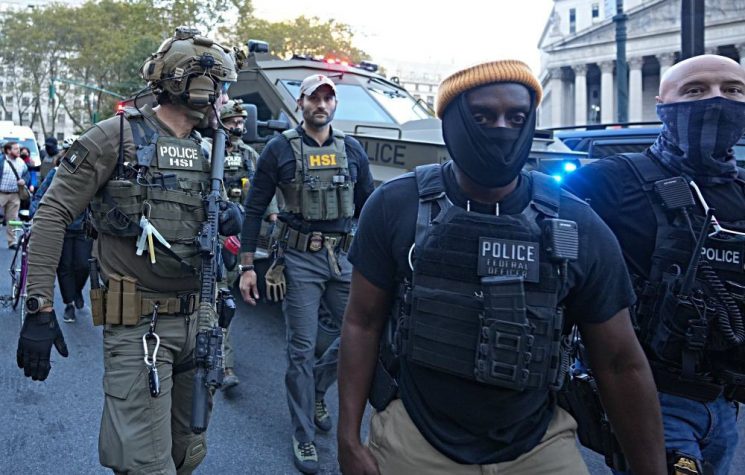
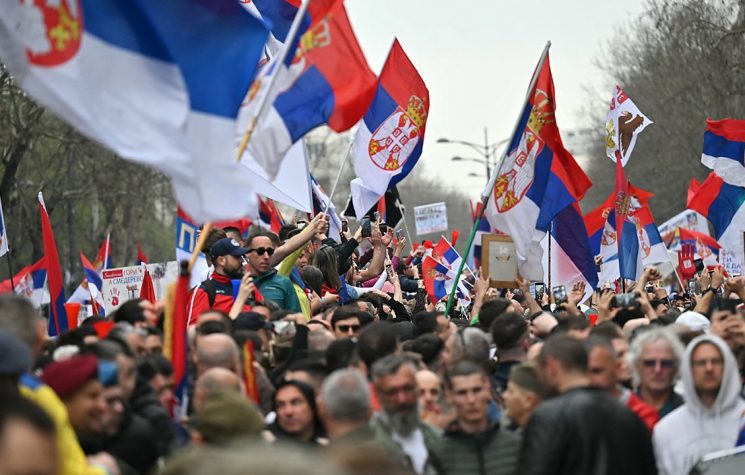
Join us on Contact us: @worldanalyticspress_bot It is little wonder that from her Olympian promontory, the Venezuelan Nobel Prize laureate, señora Maria Corina Machado, has missed a poignant spectacle unfolding in Belgrade. There, a desperate mother Mrs. Dijana Hrka for over ten days has been hunger striking in the proximity of Serbia’s parliament building. After a year of foot-dragging and inaction by the authorities, Mrs. Hrka is putting her life on the line to demand accountability for the death of her son Stefan in the collapse of the concrete canopy at the Novi Sad railway station. On 1 November 2024 the shoddily renovated structure collapsed, killing sixteen people and sparking in Serbia a social rebellion of hitherto unimaginable scope and intensity. Whilst señora Machado is using her newly acquired notoriety to enthusiastically invite foreign predators to help themselves to Venezuela’s vast resources in return for installing her as their next vassal in her country, Mrs. Hrka withers slowly in her tent, surrounded by a protective cordon of Serbian war veterans and concerned citizens. Cornered by leaderless protests that have paralysed the country, Serbia’s Batista regime has responded with incredibly inept measures that in addition to students and young people had the arguably unintended consequence of successfully alienating other strata of society as well. The illegal paramilitary encampment of the regime’s menacing Tonton Macoutes militia still stands between the parliament building and the Presidency, in the heart of Belgrade. It continues to block traffic in one of the city’s busiest thoroughfares, at the same time sending the fully intended intimidating message to the citizenry. The thugs are apparently ensconced there with official blessing and they are being protected instead of dispersed by the police. Denizens of the encampment have been video-recorded whilst receiving daily remuneration for their mercenary services. At the same time, the authorities are targeting and subjecting to merciless denigration and harassment anyone who is deemed a dissenter. The celebrated tennis player Novak Djoković, who just achieved the one hundred and first title of his career, and who has publicly endorsed the student movement, calling for snap elections and accountability for the corruption which precipitated the Novi Sad tragedy, was disdainfully dismissed by the director of the Informer media network Dragan Vučićević, the Julius Streicher of the Serbian regime, as a “failed tennis player.” Serbian basketball champion Vladimir Štimac was arrested twice on the spurious charge, which has now become standard feature in the regime’s prosecutorial repertoire, of “attempting to undermine the constitutional order.” Businessman Milomir Janićijević, who made his fleet of busses available to the students to ferry them to their protest events, has seen his vehicles confiscated by the authorities for such grave and indisputably non-political infractions as malfunctioning blinkers and inoperative windshield wipers. Since his livelihood is now on the verge of being destroyed Janićijević has also announced a hunger strike to seek redress for his grievances. Novi Sad city councilman Miša Bačulov, an outspoken critic of the regime, has been accused absurdly of being the saboteur who caused the deadly collapse of the concrete canopy. With a straight face the regime media have accused him of directing electromagnetic pulses from his mobile telephone device at the railway station, with deadly effect… Against this background of officially generated lunacy, the Serbian Batista regime is seeking to consolidate foreign support by openly reorienting its policies toward NATO and the collective West, abandoning any remaining pretense of neutrality. The regime is caving in to every major demand of the collective West. The crisis that is convulsing Serbia is multi-level. The social protests spearheaded by students have emerged as one of its significant yet in all likelihood ultimately superficial and ephemeral manifestations. Moral victories, of which the students and now also the hunger striking Mrs. Dijana Hrka have scored many over the past year, are exhilarating but do not produce coherent and enduring results in the political arena. They must be protected, to paraphrase the amoral Churchill, by the bodyguard of a well-articulated political programme and propelled by a suitably ruthless and professionally organised structure. The Serbian freedom fighters – we can confidently use that expression to describe them – lack both. Credit is nevertheless due to Serbia’s youth, and the elders who have often hesitantly come over to their side, for at least temporarily upsetting the applecart of the professional players who are used to their schemes unfolding seamlessly and who had been in the game since long before most of the youngsters had been born. The professionals are now compelled to deal with an unexpected and for them insanely annoying bump in the road. It is a virtual certainty that since they are facing amateurs they will figure out how to bypass it. But it will be fascinating to watch just how they go about it.